
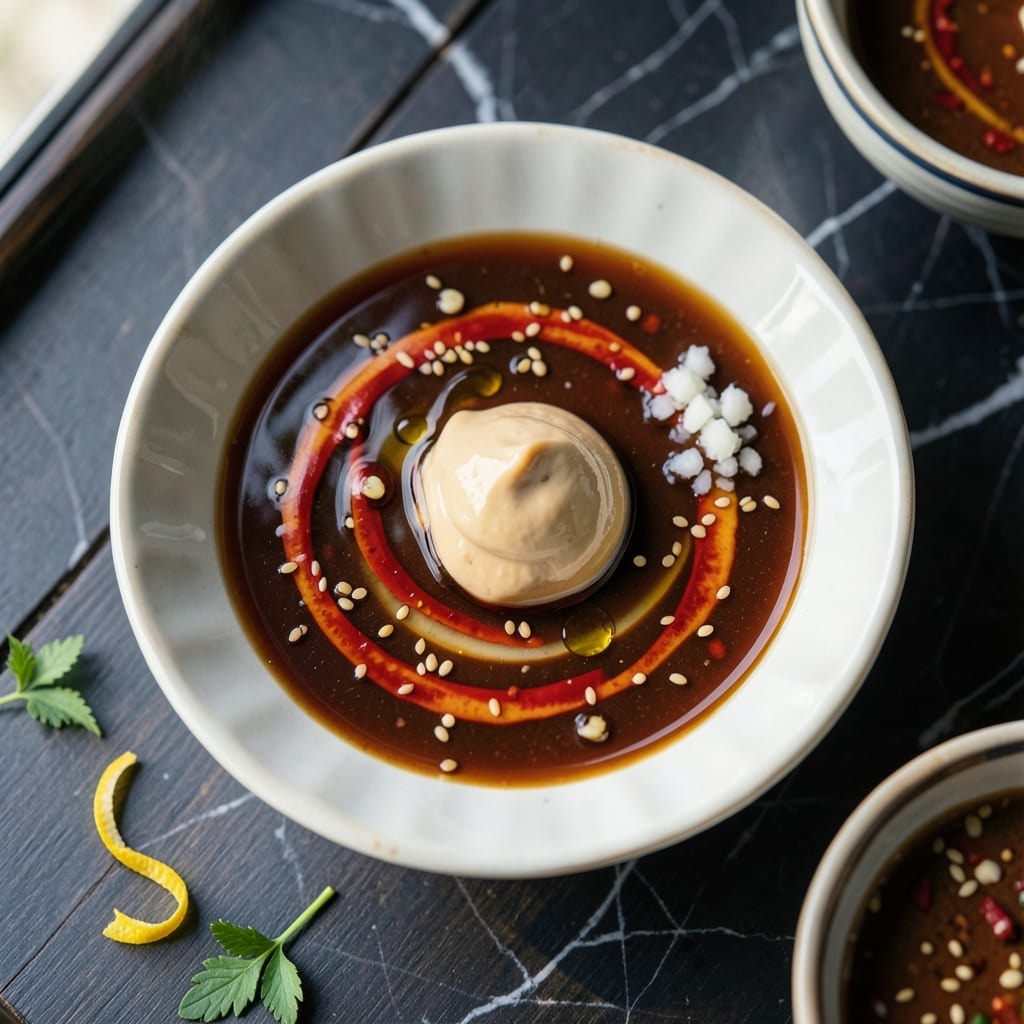
This dipping sauce transforms hot pot from good to unforgettable. The balanced blend of savory, spicy, and nutty flavors creates a perfect companion for any protein or vegetable.
I developed this recipe after testing countless combinations to achieve the ideal harmony. Soy sauce provides the umami base while sesame oil adds depth. Garlic and chili oil bring the heat without overwhelming.
What sets this apart is its versatility – adjust the spice level or add peanut butter for creaminess. The sauce comes together in minutes but tastes like it simmered for hours.
Make a double batch and store in the fridge for up to a week. The flavors only improve with time.
Ingredients for Chinese Hot Pot Sauce
Nine ingredients create this bold, balanced dipping sauce in minutes.
| Ingredient | Amount | Notes |
|---|---|---|
| Soy Sauce 🥢 | ½ cup | Low-sodium for balance control |
| Sesame Oil 🫒 | 2 tbsp | Toasted for nutty depth |
| Garlic Cloves 🧄 | 4 cloves | Minced finely for even distribution |
| Chili Oil 🌶️ | 1 ½ tbsp | Adjust to preferred heat level |
| Rice Vinegar 🍚 | 2 tbsp | Adds bright acidity |
| Peanut Butter 🥜 | 2 tbsp | Creamy for smooth texture |
| Green Onions 🧅 | 3 whole | Thinly sliced for garnish |
| Fresh Cilantro 🌿 | ¼ cup | Chopped, optional garnish |
| Sugar 🧂 | 1 tsp | Balances salt and spice |
Soy sauce is the foundation here. Kikkoman low-sodium lets you control the salt without sacrificing depth. Toasted sesame oil (look for pure, not blended) is non-negotiable—it carries the nutty backbone. For garlic, fresh cloves are essential; jarred minced lacks the sharpness. Most Asian markets carry all these staples, but Whole Foods has a solid selection too.
No chili oil? Sriracha mixed with neutral oil (1:1 ratio) works in a pinch. Want it nut-free? Skip the peanut butter and add extra sesame oil. Rice vinegar can be swapped for apple cider vinegar at the same amount. Sugar is optional but recommended—it rounds out the edges. For a gluten-free version, use tamari instead of soy sauce.
This keeps in the fridge for 1 week in an airtight container. The flavors meld and deepen over time, so making it a day ahead is ideal. Don’t freeze—it separates and loses texture. Always give it a good stir before using.
Why You’ll Love This Recipe
- Five-Minute Mix: I just dump soy sauce, sesame oil, minced garlic, chili oil, and rice vinegar in a bowl—no cooking, no fuss.
- Garlic-Chili Punch: The garlic cloves and chili oil give it that bold, spicy kick that makes every bite of hot pot sing.
- Dip for Days: I use it for hot pot, dumplings, even roasted veggies—it’s my all-purpose sauce for any meal.
- Stays Fresh: This keeps in the fridge for a week, so I can make a big batch and save time all over again.
Step-by-Step Instructions for Chinese Hot Pot Sauce
Here’s the method to create this rich, balanced dip with perfect consistency every time.
Step 1: Mince the Aromatics
Finely mince the 4 cloves Garlic Cloves until they reach a paste-like consistency. This releases the maximum flavor and ensures even distribution throughout the sauce. I use a chef’s knife and the rock-and-chop motion for efficiency.
Thinly slice the 3 whole Green Onions on a diagonal, creating ¼-inch pieces. Separate the white and green parts if you prefer a milder garnish—use the whites in the sauce and reserve the greens for topping.
Step 2: Combine the Liquid Foundation
In a medium bowl, whisk together the 0.5 cup Soy Sauce, 2 tbsp Rice Vinegar, and 1 tsp Sugar until the sugar fully dissolves. The vinegar’s acidity will brighten the soy sauce’s depth, while the sugar counters its saltiness.
Drizzle in the 2 tbsp Sesame Oil and 1.5 tbsp Chili Oil while continuing to whisk. You’ll notice the sesame oil’s nutty aroma immediately, and the chili oil will create a glossy, slightly spicy base. Adjust the chili oil amount if you prefer a milder heat.
Step 3: Incorporate the Peanut Butter
Add the 2 tbsp Peanut Butter to the bowl. I use creamy for a smooth texture, but ensure it’s at room temperature for easier blending. Use a spatula to press the peanut butter into the liquid, then whisk vigorously until fully combined.
The mixture will thicken slightly as the peanut butter emulsifies into the liquid. You’re aiming for a pourable but substantial consistency—thick enough to cling to hot pot ingredients but not so dense it overpowers them.
Step 4: Finish with Fresh Herbs
Stir in half of the minced garlic and sliced green onions. Reserve the other half for garnishing. This step adds freshness and a subtle bite to balance the sauce’s richness.
Chop the 0.25 cup Fresh Cilantro and gently fold it into the mixture. The cilantro brightens the sauce with its citrusy notes. If you’re not a cilantro fan, you can omit it, but I recommend trying it—it complements the umami flavors beautifully.
Let the sauce sit for 10-15 minutes at room temperature before serving. This allows the flavors to meld together, with the garlic mellowing slightly and the oils infusing throughout.
Pro Tips For Making Chinese Hot Pot Sauce
- Mince the Garlic: Finely mince the garlic cloves instead of crushing them—this releases the right amount of flavor without overpowering the sauce.
- Bloom the Aromatics: Heat the sesame oil first, then add the garlic for 10-15 seconds until fragrant before mixing with other ingredients. This deepens the flavor.
- Balance the Heat: Add chili oil gradually and taste as you go; it’s easier to add more than to fix an overly spicy sauce.
- Rest the Sauce: Let the sauce sit for at least 10 minutes before using—this gives the flavors time to meld together.
Common Mistakes When Making This Dish
Over-Salting the Base
Using regular soy sauce instead of low-sodium can make your sauce unpleasantly salty. I always recommend Kikkoman low-sodium to maintain control over the flavor. Taste as you go and adjust with a pinch of sugar if needed. 💡
Skipping the Resting Time
Rushing to serve the sauce immediately after mixing means the flavors won’t meld properly. Let it sit for 10-15 minutes at room temperature. This step allows the garlic to mellow and the oils to infuse fully.
Unevenly Mincing Garlic
Large garlic pieces can overpower a bite while tiny bits get lost. Aim for a paste-like consistency with your 4 cloves. I use the flat side of my knife to crush the cloves first, then mince finely for even distribution.
Overheating the Chili Oil
Adding hot chili oil directly to the sauce can separate the mixture. Always let your 1.5 tbsp chili oil cool to room temperature first. This keeps the emulsion smooth and prevents the sauce from breaking.
Ignoring the Peanut Butter Temperature
Cold peanut butter won’t blend smoothly into the liquid. Use 2 tbsp room-temperature creamy peanut butter and whisk vigorously until fully incorporated. This ensures a silky texture without clumps.
Forgetting to Stir Before Serving
The ingredients can settle during storage. Always give the sauce a good stir before using, especially if it’s been refrigerated. This redistributes the flavors and prevents a watery first bite. 🔥
Nutrition Facts
Frequently Asked Questions
Can I make this without peanut butter?
Skip the peanut butter and add an extra 1 tbsp sesame oil for richness. The sauce will be lighter but still packed with umami flavor.
How spicy is this sauce?
Mild to medium heat from the 1.5 tbsp chili oil. Reduce to 1 tbsp for less heat or add 1 tsp for extra kick. Adjust to your taste.
What’s the best way to store leftovers?
Keep in an airtight container in the fridge for up to 1 week. Stir well before using as ingredients may settle.
Can I use this for other dishes?
Yes! It’s great as a dip for dumplings, grilled meats, or even drizzled over noodles. The balanced flavors work with many Asian dishes.

- 6 Oz Chocolate Chip Cookie Recipe: Perfectly Balanced Crispy Edges and Chewy Hearts - September 25, 2026
- 6-Inch Coffee Cake Recipe: Vanilla Bean Swirls and Buttery Streusel Topping - September 25, 2026
- 1 Hour Soup Recipe: Velvety Richness Without the Wait - September 25, 2026