
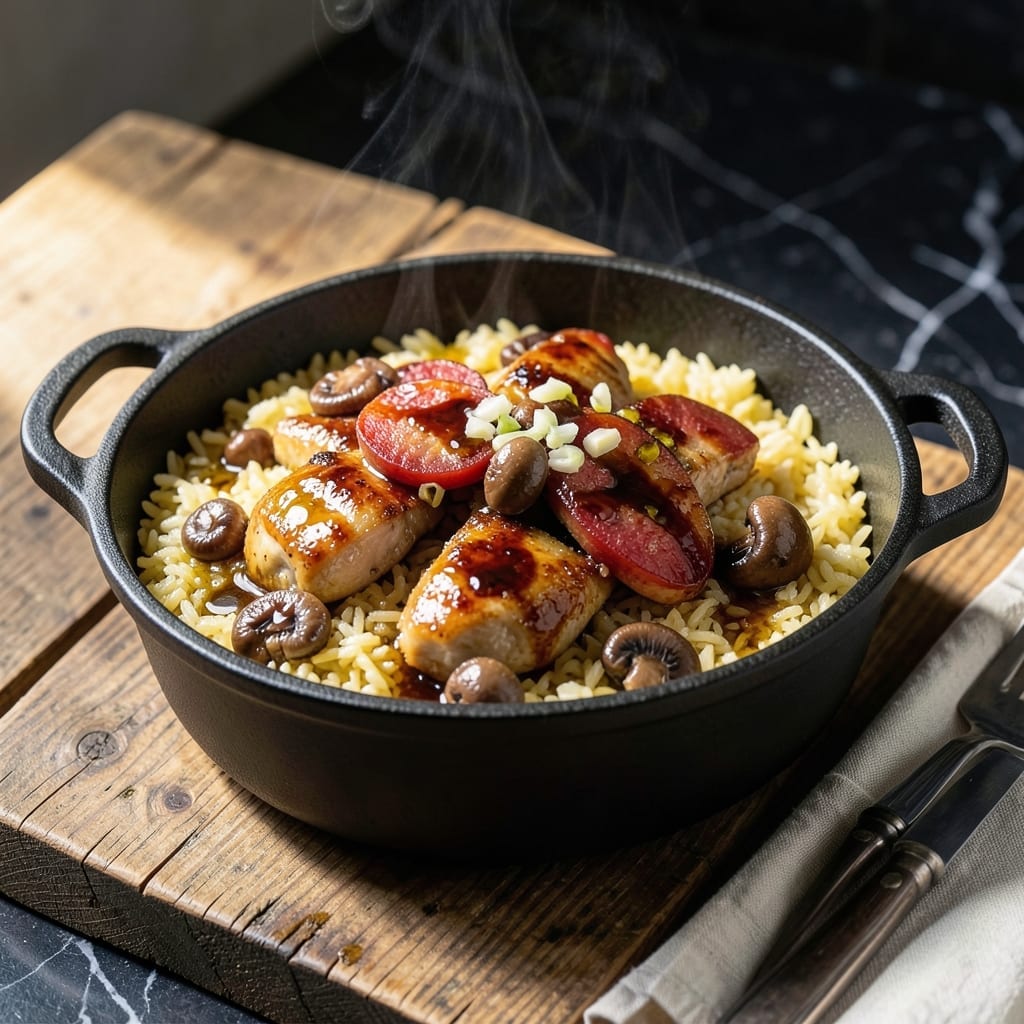
This traditional Chinese one-pot meal delivers crispy golden rice at the bottom with fragrant toppings throughout. I perfected this method after years of testing heat levels and layering techniques.
The secret lies in pre-frying the rice to create that signature crispy crust, then steaming it with savory toppings. Each grain absorbs the flavors while maintaining its texture.
What emerges is a dish with contrasting layers – the bottom offers satisfying crunch while the top stays soft and aromatic. It’s a complete meal that’s both comforting and impressive.
Serve directly from the pot for maximum impact. This technique never fails to deliver the promised texture and depth of flavor.
Ingredients for Chinese Pot Rice
Traditional ingredients for a one-pot dish with crispy bottom and fragrant toppings.
| Ingredient | Amount | Notes |
|---|---|---|
| Jasmine Rice 🍚 | 2 cups | Rinsed and drained thoroughly |
| Chicken Thighs 🍗 | 1 ½ lb | Boneless, skin-on, cut into bite-sized pieces |
| Chinese Sausage 🌭 | 2 whole | Lap cheong, sliced thinly |
| Dried Shiitake Mushrooms 🍄 | ½ oz | Rehydrated and sliced |
| Garlic Cloves 🧄 | 4 cloves | Minced finely |
| Fresh Ginger 🌿 | 1 tbsp | Grated or minced |
| Light Soy Sauce 🫒 | 2 tbsp | For marinating chicken |
| Dark Soy Sauce 🫒 | 1 tbsp | For color and depth |
| Oyster Sauce 🥜 | 1 tbsp | Or vegetarian oyster sauce |
| Shaoxing Wine 🍶 | 2 tbsp | Dry sherry works as substitute |
| Sesame Oil 🫒 | 1 tbsp | Toasted, for aroma |
| Green Onions 🧅 | ½ cup | Chopped, for garnish |
| Dried Shrimp 🦐 | 1 tbsp | Optional, for umami |
| Neutral Oil 🛢️ | 3 tbsp | For frying and searing |
| White Pepper 🧂 | ½ tsp | Ground, for seasoning |
The rice foundation demands high-quality jasmine—look for Thai-grown brands like Elephant or Rose at Asian markets or well-stocked Whole Foods. The chicken thighs must be skin-on for proper rendering; bone-in adds depth but requires longer cooking. Chinese sausage (lap cheong) is non-negotiable for authenticity; Uwajimaya or 99 Ranch carry excellent versions with the right sweet-savory balance.
Substitute dried shiitake with fresh if available (use 4 oz and slice thin). Vegetarian oyster sauce (like Lee Kum Kee’s version) replaces traditional perfectly. No Shaoxing wine? Dry sherry at equal volume works, though slightly less complex. For a seafood-free version, omit dried shrimp and add a dash of msg for umami depth. Regular soy sauce can replace light in a pinch, but expect less nuanced flavor.
Store dried shiitake in airtight containers for up to 1 year. Fresh ginger and garlic keep 3 weeks unpeeled in the fridge. Cooked leftovers reheat beautifully—crisp the bottom again in a hot pan. The dish tastes even better the next day as flavors meld.
Why You’ll Love This Recipe
- One-Pot Magic: I throw everything in a single pot, even the dried shiitakes soak right in the rice, and the oven does the rest.
- Umami Bomb: The combo of Chinese sausage, garlic, and those rehydrated mushrooms hits you with layers of savory goodness in every bite.
- Feeds a Hungry Table: I make a big batch on Sunday and we’re set for easy lunches all week—reheats beautifully.
- Budget Stretcher: Chicken thighs and a little sausage go a long way, filling us up without emptying my wallet.
Step-by-Step Instructions for Chinese Pot Rice
Master the technique for achieving that coveted crispy bottom and aromatic toppings in this classic dish.
Step 1: Marinate the Chicken and Prepare Aromatics
Combine the 1.5 lb chicken thighs with 2 tbsp light soy sauce, 1 tbsp dark soy sauce, 1 tbsp oyster sauce, 2 tbsp Shaoxing wine, 1 tbsp fresh ginger, and 0.5 tsp white pepper. Mix thoroughly to ensure each piece is evenly coated.
Let the chicken marinate for at least 20 minutes while you thinly slice the 2 whole Chinese sausage, rehydrate and slice the 0.5 oz dried shiitake mushrooms, and mince the 4 cloves garlic cloves. This marinating time allows the flavors to penetrate deeply into the meat.
Soak the 1 tbsp dried shrimp in warm water for 10 minutes to soften, then drain. This ingredient adds a subtle umami depth that defines authentic pot rice.
Step 2: Par-Cook the Rice
Rinse the 2 cups jasmine rice thoroughly until the water runs clear, then drain completely. This step removes excess starch, preventing a gummy texture.
In a heatproof bowl, combine the rice with 2 cups water and let it soak for 15 minutes. Drain the rice, reserving the starchy water. Par-cook the rice in a pot with the reserved water for 5 minutes over medium-high heat, then drain again. The grains should still have a slight bite to them.
Step 3: Layer and Cook to Crispy Perfection
Heat 2 tbsp neutral oil in a heavy pot or Dutch oven over medium heat. Add the marinated chicken, Chinese sausage, dried shrimp, and dried shiitake mushrooms. Sear for 3-4 minutes until the chicken is cooked through and the sausage begins to render its fat.
Add the minced garlic cloves and cook for 30 seconds until fragrant. Stir in the par-cooked rice, breaking up any clumps, and drizzle with 1 tbsp sesame oil. Spread the mixture evenly in the pot, pressing down gently with a spatula to compact the rice.
Cover the pot and cook over low heat for 10 minutes. Then, increase the heat to medium-high and cook uncovered for another 5-7 minutes, allowing the bottom to develop a golden, crispy crust. Listen for a faint crackling sound—this indicates the crisp is forming.
Step 4: Finish and Garnish
Once the bottom is deep golden brown and crispy, remove from heat. Let the pot sit covered for 5 minutes to allow the steam to settle. This resting period ensures the crispy layer sets properly.
Garnish with 0.5 cup green onions, finely chopped. Serve immediately by scooping portions from the pot, ensuring each serving includes some of the prized crispy bottom. The contrast between the fragrant toppings and the crispy rice underneath is what makes this dish exceptional.
Pro Tips For Making Chinese Pot Rice
- Soak the Mushrooms: Rehydrate dried shiitake mushrooms in warm water for at least 20 minutes—I learned this the hard way when my rice turned out chewy because the mushrooms were still tough.
- Render the Sausage: Slice the Chinese sausage thin and pan-fry it first to release its fat and deepen the flavor before adding it to the rice.
- Brown the Chicken: Sear the chicken thighs until golden before layering them over the rice—this keeps them juicy and adds a ton of flavor to the dish.
- Use Day-Old Rice: If you’re in a rush, rinse the jasmine rice and let it drain for 10 minutes, but for the best texture, use leftover rice from the fridge.
Regional Styles of These Flavors
Cantonese Style
This is the version I grew up with in Guangzhou, using lap cheong and dried shrimp for that authentic umami punch. The key is cooking the rice at medium-low heat for 20 minutes with a tight lid to trap steam. 🗺️
Shanghai Approach
In Shanghai, they often use glutinous rice for a stickier texture and add salted pork instead of sausage. The technique involves pre-frying the pork until crispy before layering with rice. This creates a different but equally delicious texture profile.
Taiwanese Adaptation
Taiwanese versions often incorporate five-spice powder in the marinade for chicken. They also prefer brown rice for a nuttier flavor. The cooking time extends to 30 minutes to ensure the brown rice cooks through completely.
Malaysian Variation
In Malaysia, the dish often includes lemongrass and pandan leaves for aromatic depth. They sometimes use basmati rice instead of jasmine, which gives a lighter texture. The cooking method remains similar but with these fragrant additions.
The result is a more perfumed version that pairs beautifully with spicy sambal on the side.
Fujian Method
Fujian cooks often add dried scallops for an extra seafood dimension. They also use less oil in the initial frying step, making it slightly healthier. The crispy bottom forms more slowly but develops a more delicate crunch.
Nutrition Facts
Frequently Asked Questions
Why does my rice not get crispy?
Press the rice down firmly before covering and cook over medium-high heat for 5-7 minutes uncovered. Use a heavy pot for even heat distribution.
Can I use regular soy sauce instead of both light and dark?
Yes, but use 3 tbsp regular soy sauce total. The flavor will be less complex without dark soy’s depth. Light soy provides saltiness while dark adds color.
How do I know when it’s done?
Listen for a faint crackling sound and check for a deep golden crust at the bottom. The top rice should be tender with no hard bits.
Can I make this vegetarian?
Replace chicken with tofu and use vegetarian oyster sauce. Add extra mushrooms and 1 tsp msg for umami. The crispy rice technique remains the same.

- 6 Oz Chocolate Chip Cookie Recipe: Perfectly Balanced Crispy Edges and Chewy Hearts - September 25, 2026
- 6-Inch Coffee Cake Recipe: Vanilla Bean Swirls and Buttery Streusel Topping - September 25, 2026
- 1 Hour Soup Recipe: Velvety Richness Without the Wait - September 25, 2026