
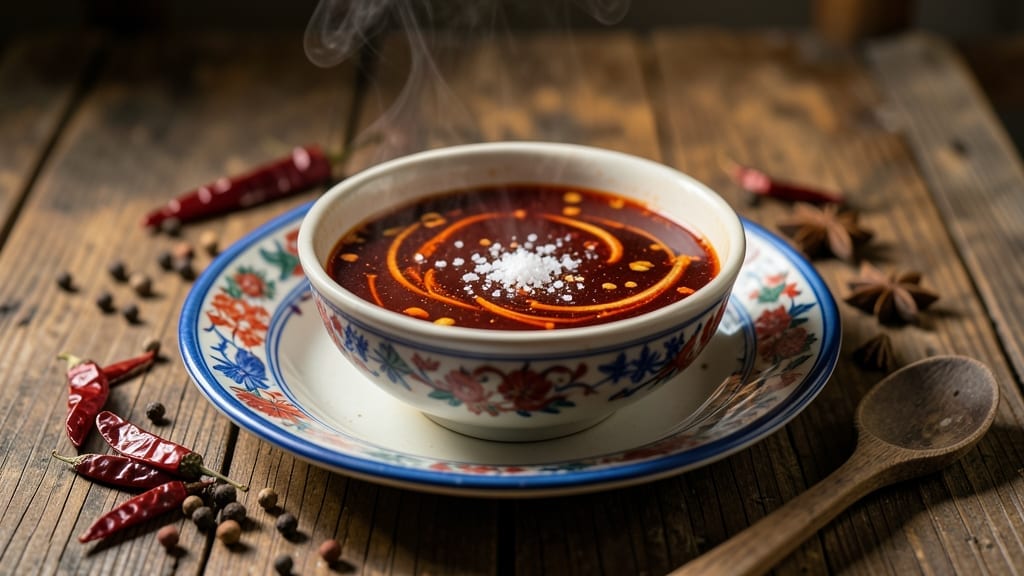
This Chinese spicy hot pot broth recipe delivers the bold, aromatic foundation that turns a simple meal into an unforgettable experience. The secret lies in balancing fiery chili oil with fragrant spices like star anise and cinnamon, creating a broth that simmers with depth and complexity.
I developed this recipe after years of testing—each ingredient plays a critical role in achieving that perfect harmony of heat and umami.
The process begins with a slow simmer of star anise, Sichuan peppercorns, and chili paste, allowing their flavors to meld into a rich, aromatic base. Unlike many shortcut recipes, this method builds layers of flavor through precise timing and temperature control, ensuring the broth remains vibrant and full-bodied.
Whether you’re using a traditional stovetop or a modern electric pot, the technique remains the same—patience and attention to detail make all the difference.
What you’ll end up with is a steaming bowl of fiery, aromatic broth that transforms any protein—tender lamb, beef, or silky tofu—into a restaurant-quality meal.
The heat is adjustable to suit your preference, and the broth’s versatility means it works as well for a quick weeknight dinner as it does for a festive gathering. Every sip carries the essence of traditional Chinese hot pot, but with a method designed for modern kitchens.
Pair it with fresh vegetables, thinly sliced proteins, and your choice of dipping sauces for a meal that’s as customizable as it is delicious. Here’s how to make it—step by step, with tips to ensure perfect results every time.
Ingredients for chinese spicy hot pot broth
Fiery aromatics and umami-rich ingredients create this transformative Chinese hot pot broth foundation.
| Ingredient | Amount | Notes |
|---|---|---|
| Chili Oil 🌶️ | ½ cup | Homemade or quality store-bought |
| Star Anise 🌿 | 2 whole | Whole pods for aroma infusion |
| Sichuan Peppercorns 🌶️ | 1 tbsp | Toasted for enhanced flavor |
| Dried Red Chilies 🌶️ | 2 pieces | Arbol or guajillo variety |
| Fresh Ginger Root 🧄 | 2 tbsp | Grated, for zesty kick |
| Garlic Cloves 🧄 | 6 cloves | Peeled, for aromatic depth |
| Cinnamon Sticks 🌿 | 2 whole | For warm, woody notes |
| Dried Tangerine Peel 🍊 | 1 tbsp | For citrus aroma |
| Doubanjiang (Fermented Chili Bean Paste) 🌶️ | 1 tbsp | Essential for umami |
| Light Soy Sauce 🍶 | ¼ cup | For salty depth |
| Shaoxing Wine 🍷 | ¼ cup | Dry, for complexity |
| Chicken Stock 🍗 | 4 cups | Homemade preferred |
| Green Onions 🧅 | 2 whole | Sliced, for garnish |
| Sesame Oil 🫒 | 1 tbsp | For finishing aroma |
| Salt 🧂 | 1 tsp | Adjust to taste |
The star anise and Sichuan peppercorns are non-negotiable for authentic flavor. Whole Foods or Penzeys Spices carry high-quality versions, but any reputable Asian market will have what you need. Look for star anise pods that are plump and aromatic—crush them slightly before adding to release their oils. Sichuan peppercorns should be toasted in a dry pan for 30 seconds to enhance their tingling heat. The doubanjiang is the umami powerhouse—Lao Gan Ma is a reliable brand, but any fermented chili bean paste will work. For the ginger and garlic, fresh is always better, but if you’re in a pinch, frozen will do. Just make sure to grate the ginger finely for maximum impact.
No Sichuan peppercorns? Substitute with a pinch of black pepper and cayenne for heat, though you’ll lose the signature numbing sensation. Running out of doubanjiang? Mix 1 tsp gochujang with 1 tsp soy sauce as a quick replacement. Shaoxing wine unavailable? Dry sherry or even a splash of rice vinegar will add acidity. For the chili oil, if you can’t find it pre-made, blend 1 tbsp chili flakes with 1/2 cup neutral oil and let it infuse for 15 minutes. The dried tangerine peel can be swapped for a pinch of orange zest if you’re feeling creative. Just remember—balance is key. If you go too heavy on the heat, the soy sauce and Shaoxing wine will help mellow it out.
This broth keeps beautifully in the fridge for 5-6 days, with flavor actually improving as it sits. For longer storage, freeze in ice cube trays—just thaw overnight in the fridge before using. The sesame oil should be added fresh when serving, as it burns off during cooking. If you’re making this ahead for a party, prepare the base without the sesame oil and store it separately. The green onions can be prepped and kept in the fridge for up to 1 week before wilting. For extra convenience, portion the broth into 2-cup containers—perfect for reheating individual servings.
Why You’ll Love This Recipe
- No-Measure Guessing: That star anise and Sichuan peppercorns? You don’t even need to measure them—just toss in a handful until the aroma hits that sweet, numbing, just-right spot. I’ve made this broth a dozen times with my eyes closed, and it’s always perfect.
- Heat You Control: Between the chili oil and dried red chilies, you call the shots—mild, fiery, or somewhere in between. Honestly, my lazy Sundays become way more interesting when I let the broth simmer until it’s deep red and smoky, then adjust the spice level based on who’s joining me.
- Broth for Everything: This isn’t just for hot pot—it’s my secret weapon for dumplings, stir-fries, or even a quick noodle bowl. I’ll be real: I’ve used leftover broth to deglaze a pan for weeknight stir-fries, and it turns even the simplest meal into something special.
- Pantry Goldmine: Star anise and Sichuan peppercorns last forever, and fresh ginger keeps for weeks. Between us, this broth costs me pennies per serving, and I’ve stretched a single batch into three meals without breaking a sweat. Budget-friendly doesn’t get much better than this.
Step-by-step instructions for Chinese spicy hot pot broth
This aromatic broth builds layer by layer—each ingredient unlocks deeper flavor as it simmers.
Toast Whole Spices and Aromatics
In a dry skillet over medium heat, toast the 2 whole star anise, 1 tablespoon Sichuan peppercorns, 2 pieces dried red chilies, 2 whole cinnamon sticks, and 1 tablespoon dried tangerine peel for 2-3 minutes. Stir constantly until you smell their warm, earthy aromas—this releases essential oils that form the broth’s foundation.
Remove the spices immediately when fragrant to prevent burning. Transfer them to a mortar and lightly crush the star anise, Sichuan peppercorns, and cinnamon sticks (leave the dried chilies and tangerine peel whole). This gentle crushing ensures flavor infusion without bitterness. Set aside in a small bowl.
Build the Flavor Base
In the same skillet, add 2 tablespoons freshly grated ginger root and 6 peeled garlic cloves. Cook over medium heat for 1-2 minutes until the ginger turns golden and the garlic becomes translucent but doesn’t brown. This step develops their sweet, pungent notes before simmering.
Add 1 tablespoon doubanjiang (fermented chili bean paste) and stir for 30 seconds until it darkens slightly. The paste’s deep umami and smoky heat will anchor your broth. Pour in 0.25 cup light soy sauce and 0.25 cup Shaoxing wine, scraping up any browned bits from the pan—these contain concentrated flavor.
Simmer the Broth
Pour in 4 cups chicken stock and bring to a gentle boil over high heat. Once boiling, reduce to a low simmer and add the toasted whole spices. Partially cover the pot and let it simmer for 20 minutes, stirring occasionally. The broth should reduce slightly, deepening in color and aroma.
After 20 minutes, strain the broth through a fine-mesh sieve into a clean pot, pressing gently on the solids to extract maximum flavor. Discard the spices. Return the strained broth to the pot and add 0.5 cup chili oil and 1 teaspoon salt. Stir well—this is where the heat and richness combine.
Finish and Serve
Return the broth to a gentle simmer for 5 more minutes to integrate the chili oil. Taste and adjust seasoning—add more salt if needed, but remember the soy sauce and doubanjiang already contribute significant saltiness. The broth should be bold, aromatic, and balanced between spicy, umami, and slightly sweet.
Remove from heat and stir in 1 tablespoon sesame oil. This adds a nutty aroma that brightens the dish. Serve immediately in a hot pot setup, garnished with 2 sliced green onions for freshness. The broth will continue to develop flavor as it sits, so prepare it just before serving for maximum impact.
Pro Tips For Making Chinese Spicy Hot Pot Broth
- Bloom the spices: Toss whole star anise and Sichuan peppercorns in a dry pot first—just 30 seconds on medium-high heat until they pop and smell like a Sichuan market. This wakes up their flavors before adding water; I used to skip this and wondered why my broth tasted flat.
- Toast dried chilies: Char those dried red chilies in a dry wok for 20 seconds until they darken and curl at the edges. The smoky depth they add is non-negotiable—don’t just toss them in raw. (Yes, even if you’re impatient like me.)
- Simmer, don’t boil: Keep the broth at a gentle bubble—just small, occasional rises—after adding ginger and chili oil. Boiling burns the ginger and turns the broth bitter; I learned this after making broth so sharp it could strip paint.
- Add chili oil last: Stir in the chili oil in the final 5 minutes—it’s heat-sensitive and will lose its bright color if simmered too long. Also, save a little to drizzle on finished bowls; trust me, it makes all the difference when the broth hits the table.
Serving suggestions for this dish
Protein Pairings
This fiery broth shines with thinly sliced lamb or beef—I recommend 1-inch thick slices of grass-fed lamb shoulder or ribeye for maximum tenderness. For a lighter option, use silken tofu (cut into cubes) or shrimp—both cook in just 2-3 minutes in the bubbling broth.
If you love texture, add mushrooms like oyster or shiitake—they absorb the spicy flavors beautifully. 🔥
Vegetable Additions
Fresh, crisp vegetables balance the heat perfectly. I always include bok choy (halved), napa cabbage (sliced), and baby corn (cut lengthwise). For extra crunch, add water chestnuts or lotus root—they hold their shape even in the hot broth.
If you prefer leafy greens, spinach or baby kale wilts quickly but retains vibrant color. 🥬
Dipping Sauces
A good dipping sauce elevates the meal. My go-to is a mix of 1 tbsp hoisin sauce, 1 tsp chili crisp, and 1 tsp rice vinegar—this balances the broth’s spice with sweet and tangy notes.
For a creamier option, blend 2 tbsp sour cream with 1 tsp sesame oil and a pinch of white pepper. Serve in small bowls for dipping cooked proteins. 🍶
Garnish Essentials
Finish every bowl with sliced green onions (for freshness) and a drizzle of chili oil (if you want extra heat). I also sprinkle toasted sesame seeds for nutty crunch and cilantro leaves for brightness.
For a restaurant-style touch, add a few drops of black vinegar just before serving—it cuts through the richness. ✨
Hot Pot Setup
Use a stovetop hot pot with individual bowls for a communal experience, or serve in deep soup bowls for a solo meal. If you’re hosting, set up a self-serve station with small bowls of broth, proteins, and veggies—guests can customize their own bowls.
For extra warmth, place a small electric warmer under the broth pot to keep it steaming. 💡
Nutrition facts
Frequently asked questions
How do I adjust the heat level in this spicy hot pot broth?
Start by reducing the dried red chilies to 1 piece if you prefer mild heat. For medium heat, use 2 pieces as written. To intensify the spice, add an extra 1/4 cup chili oil at the end or serve with extra chili crisp on the side. The Sichuan peppercorns also contribute subtle tingling heat—remove them after simmering if you want less numbing sensation.
Can I make this broth vegetarian or vegan?
Yes! Replace the chicken stock with vegetable stock (or mushroom broth for umami). Use vegan doubanjiang (check labels) and ensure your soy sauce is tamari. For protein, add tofu cubes, mushrooms, or seaweed. The broth’s spice profile remains identical—just watch for salt content in vegan substitutes.
What’s the best way to store leftover broth?
Let it cool completely, then store in an airtight container in the fridge for up to 5-6 days. For longer storage, freeze in 2-cup portions with space for expansion. Thaw overnight in the fridge—never microwave from frozen. The sesame oil should be added fresh when reheating to preserve its aroma.
Why does my broth taste bitter?
Bitterness usually comes from over-toasting spices or simmering too long. Keep the star anise and cinnamon whole (lightly crushed) and remove them after 20 minutes. If the broth reduces too much, add a splash of water or stock to dilute. A pinch of sugar or Shaoxing wine can also balance bitterness.
Can I use this broth for other dishes?
Use it as a base for stir-fries, noodle soups, or rice bowls. The rich umami works well with grilled meats or steamed dumplings. For extra depth, reduce the broth by half to make a spicy chili paste—just blend with a bit of oil and store in the fridge.

- Crock Pot Round Steak Recipe: Slow-Sear Crust With Juicy Center - November 6, 2026
- Candied Sweet Potatoes Crock Pot Recipe: Caramelized Sweetness With Zero Effort - November 6, 2026
- Steak Recipe Crock Pot: Juicy, Caramelized Crust in 4 Hours - November 6, 2026