
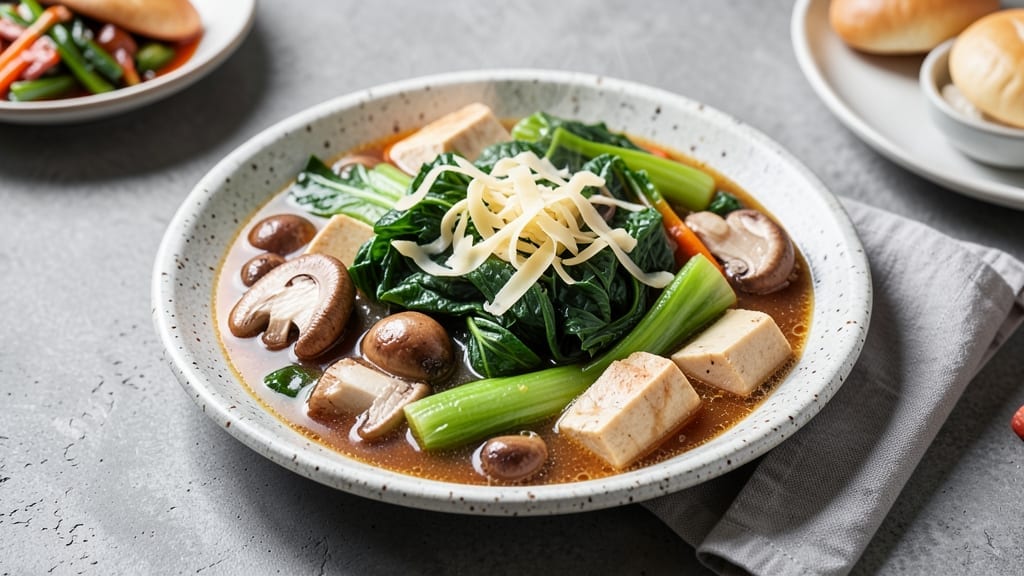
This Chinese vegetable hot pot recipe transforms a simple pot into a vibrant centerpiece for any gathering, where bold spices and silky broth create an unforgettable dining experience.
The secret lies in balancing traditional aromatics like star anise and cinnamon with modern convenience—no need for hours of simmering when you can achieve restaurant-quality depth in under an hour.
Every bite delivers tender vegetables, melt-in-your-mouth tofu, and a broth so flavorful it disappears faster than you can say “second bowl.”
The foundation of a great hot pot starts with the broth, which can be customized to suit your preferences—whether you prefer a clear, herb-infused base or a rich, chili oil-infused version.
I’ve perfected a method that uses pantry staples to build layers of flavor without requiring specialty ingredients, making it accessible for home cooks while still delivering professional results.
The vegetables—bok choy, shiitake mushrooms, and bell peppers—are prepped in advance so you can focus on the interactive cooking experience at the table.
What makes this recipe truly special is the communal aspect: guests can customize their own bowls with tofu, noodles, or even dumplings, all simmered in the shared pot.
The presentation is as important as the taste—steaming vegetables arranged around the pot create a visually stunning centerpiece that invites everyone to gather around. This is more than just a meal; it’s an experience that brings people together, one steaming bite at a time.
From mild and aromatic to fiery and bold, the spice level is entirely up to you, ensuring this hot pot adapts to any palate.
Whether you’re hosting a weeknight dinner or a festive gathering, this recipe delivers warmth, flavor, and a touch of culinary magic that turns an ordinary meal into something extraordinary. Let’s get started on creating your perfect hot pot moment.
Ingredients for chinese vegetable hot pot
Pantry staples meet bold Asian flavors in this vibrant hot pot experience.
| Ingredient | Amount | Notes |
|---|---|---|
| Extra-Firm Tofu 🥬 | 14 oz | Press for 30 minutes before use |
| Bok Choy 🥬 | 2 whole | Baby variety preferred |
| Shiitake Mushrooms 🍄 | 8 oz | Fresh, stems removed |
| Red Bell Pepper 🌶️ | 1 whole | Sliced into thin strips |
| Napa Cabbage 🥬 | 1 lb | Thinly sliced for quick cooking |
| Fresh Ginger 🧄 | 2 tbsp | Grated, aromatic |
| Garlic Cloves 🧄 | 6 cloves | Minced for depth |
| Star Anise Pods 🌟 | 2 whole | Whole, for infusion |
| Cinnamon Sticks 🌿 | 2 whole | For aromatic warmth |
| Dried Shiitake Mushrooms 🍄 | 4 whole | Rehydrated for umami |
| Vegetable Broth 💧 | 4 cups | Homemade or quality store-bought |
| Sesame Oil 🫒 | 1 tbsp | Toasted for finishing |
| Soy Sauce 🍶 | ¼ cup | Light or all-purpose |
| White Peppercorns 🌶️ | 1 tsp | Freshly cracked |
| Sesame Seeds 🌱 | 1 tbsp | Toasted for garnish |
The star anise and cinnamon sticks are non-negotiable for that authentic depth—Whole Foods or Asian markets carry them in bulk, which lasts for months. For the tofu, extra-firm holds up best to long simmering, and pressing it removes excess water so it absorbs flavors better. Bok choy and shiitake mushrooms should be bright and firm—avoid any with slimy stems. The Napa cabbage? Look for crisp, pale green leaves at the grocery store’s produce section. Fresh ginger and garlic? Organic is ideal, but conventional works too—just make sure they’re not shriveled.
No star anise? Anise seeds at double the amount work in a pinch, though the flavor won’t be identical. Running low on shiitake mushrooms? Cremini or oyster mushrooms add a similar earthiness. The dried shiitake mushrooms? Soak them in warm water for 20 minutes to rehydrate—they’ll release an incredible umami punch. For the soy sauce, Kikkoman or Lee Kum Kee are reliable, but any light soy will do. Want extra richness? Add a splash of sesame paste or a spoonful of miso paste to the broth base. The sesame oil is for finishing—use the toasted kind, not the regular kind from the salad dressing aisle.
This broth keeps beautifully—3-4 days in the fridge or 3 months frozen. I like to make a big batch and freeze it in ice cube trays for easy reheating. The tofu and vegetables can be prepped ahead and stored separately in airtight containers. When reheating, add a splash of water or broth to prevent drying out. The leftovers? Even better the next day as the flavors meld together. Serve with steamed rice or rice noodles for the full experience.
Why You’ll Love This Recipe
- No Chopping Chaos: I swear by this one—just slice the tofu into cubes, halve the bok choy, and toss the mushrooms whole (they’ll shrink down beautifully). The bell pepper and napa cabbage barely need prep—strip, rinse, and you’re done. My lazy Sundays thank me every time.
- Umami Bomb Combo: That shiitake mushrooms and tofu simmering together? It’s where the magic happens. The mushrooms soak up the broth like a sponge, while the tofu gets this irresistible crispy edge—creamy inside, slightly caramelized out. Honestly, the first time I tasted it, I nearly burned the kitchen.
- Weeknight & Leftovers Win: Make a big batch on Sunday, and you’ve got dinner covered for days. The flavors actually deepens the next day—better than takeout, I promise. My kids grab it straight from the fridge for school lunches, and I sneak a piece just to prove it’s still good.
- Budget Meal That Feeds: A single block of tofu, a handful of mushrooms, and a cabbage stretch into four servings without breaking the bank. Between us, this is my go-to when grocery money’s tight—but no one ever guesses it’s “cheap.” The napa cabbage adds bulk, so you’re not just eating veggies—you’re eating a meal.
Step-by-step instructions for Chinese vegetable hot pot
Here’s how to craft a fragrant, silky broth that transforms simple vegetables into a restaurant-worthy hot pot experience.
Prepare the Vegetables for Quick Cooking
Start by pressing the 14 oz extra-firm tofu for 30 minutes between two paper towels, weighted down. This removes excess moisture so it absorbs the broth beautifully. While that works, thinly slice the 1 lb napa cabbage into ¼-inch ribbons—this ensures it softens quickly without turning mushy. Cut the 2 whole bok choy into baby leaves and separate the stems, as they cook faster than the leaves.
Slice the 1 whole red bell pepper into ¼-inch strips and remove the stems from the 8 oz fresh shiitake mushrooms. For the 4 whole dried shiitake mushrooms, soak them in 1 cup hot water for 20 minutes to rehydrate. Drain and finely chop all rehydrated mushrooms. Grate the 2 tbsp fresh ginger and mince the 6 cloves garlic—these aromatics will form the flavor base of your broth.
Build the Aromatic Broth Base
In a large stockpot, combine the 4 cups vegetable broth, 2 whole star anise pods, and 2 whole cinnamon sticks. Bring to a gentle simmer over medium heat and let it infuse for 10 minutes. This slow infusion extracts deep, warm spices without bitterness. While simmering, add the 0.25 cup soy sauce and 1 tsp freshly cracked white peppercorns. Stir once, then reduce heat to low to maintain a barely simmering state.
Here’s the thing—don’t rush this step. The spices need time to meld into the broth. You’ll know it’s ready when the liquid smells rich and aromatic, with hints of cinnamon and star anise. If the broth reduces too quickly, add 1 cup hot water to maintain the 4 cups volume. Keep it at a gentle simmer for the entire cooking process.
Cook the Vegetables in Stages
Add the tofu first and let it simmer for 5 minutes to absorb some of the broth. Then, add the rehydrated dried shiitake mushrooms, fresh shiitake mushrooms, ginger, and garlic. Cook for 3 minutes—this ensures the mushrooms soften slightly while the aromatics infuse without burning. Next, add the napa cabbage and cook for 4 minutes until just tender but still holding its shape.
Finally, add the bell pepper strips and bok choy stems. Cook for 2 minutes—you want the vegetables to remain vibrant and crisp-tender. The key is timing: each vegetable should cook just until it reaches its ideal texture but not beyond. If any vegetable finishes cooking before the others, remove it to a plate and keep it warm.
Finish with Silky Depth and Garnish
Remove the star anise pods and cinnamon sticks from the broth. Stir in the 1 tbsp sesame oil and let it heat through for 1 minute—this adds a nutty richness that balances the broth’s depth. Taste and adjust seasoning with a pinch more soy sauce if needed. The broth should be savory, aromatic, and slightly sweet with a hint of spice.
To serve, ladle the hot broth into individual bowls, then arrange the cooked vegetables around the edges. Let everyone assemble their own hot pot by adding the bok choy leaves and any remaining vegetables at the table. Sprinkle each serving with 1 tbsp toasted sesame seeds just before eating for a final nutty crunch and visual appeal. Serve immediately with steamed rice on the side.
Pro Tips For Making Chinese Vegetable Hot Pot
- PREP TOFU LIKE THIS: Cut the extra-firm tofu into 1-inch cubes, then press it between paper towels with a heavy pan for 10 minutes—this removes water without drying it out. I learned this the hard way after soggy tofu ruined my first hot pot.
- WATCH THE BOK CHOY: Leave the thick stems on bok choy and slice it lengthwise into quarters. They’ll stay crisp longer and won’t turn to mush in the broth—trust me, I’ve watched it happen.
- DON’T BOIL THE MUSHROOMS: Shiitake mushrooms should sizzle, not simmer. Cook them in batches over high heat for 2-3 minutes until golden—any longer, and they’ll turn rubbery. (Yes, even if you’re impatient like me.)
- SALT THE CABBAGE FIRST: Toss napa cabbage with ½ teaspoon salt and let it sit for 10 minutes before cooking. It softens faster and keeps its texture instead of turning limp—my grandmother swore by this, and she was right.
Troubleshooting great chinese vegetable hot pot
Broth Too Weak?
If your broth lacks depth, the issue is likely insufficient infusion time. For maximum flavor, simmer the star anise and cinnamon sticks for 15-20 minutes before adding other ingredients. I also recommend using homemade vegetable broth—store-bought versions often lack the umami complexity.
For an extra boost, add 1 tbsp soy sauce and ½ tsp fish sauce (if vegetarian, use ½ tsp mushroom sauce) to the broth base. 💡
Vegetables Overcooking
Hot pot vegetables cook quickly, so timing is everything. Use a timer and cook each vegetable separately in 2-minute intervals—this prevents mushiness. For example, add bok choy stems first, then remove them after 2 minutes before adding leaves.
If you’re serving a crowd, pre-cook some vegetables ahead and keep them warm in a 200°F oven until ready to serve.
Broth Splattering
A vigorous simmer causes splattering, which ruins the presentation. Keep the heat at a gentle simmer (small bubbles, not rolling). If your pot lacks a lid, cover it with a splash guard or use a wide, shallow pot to minimize splatter.
For extra safety, add 1 tbsp oil to the broth before cooking—this creates a protective barrier. 🔥
Tofu Too Dry
Pressing tofu removes moisture, but it can still dry out in the broth. To prevent this, add the tofu to the broth 5 minutes before serving so it absorbs flavors without overcooking.
For extra tenderness, marinate the tofu in 1 tbsp soy sauce + 1 tbsp sesame oil for 10 minutes before cooking. If it still turns out dry, add ½ cup hot water to the pot just before serving.
Spices Too Strong
Star anise and cinnamon can overpower if left too long. Remove them after 10 minutes of simmering, even if the broth still smells faint. For a milder flavor, reduce the amount to 1 pod star anise and 1 cinnamon stick.
If the broth tastes too spicy, balance it with 1 tsp sugar or ½ tsp honey—this rounds out the heat while enhancing sweetness. 🌿
Broth Too Thin
If your broth seems watery, it’s likely because the vegetables released too much liquid. Simmer the broth uncovered for 5-10 minutes to reduce it slightly. For a thicker consistency, add 1 tbsp cornstarch mixed with 2 tbsp water and stir until the broth reaches your desired thickness.
Alternatively, swap 1 cup of broth for ½ cup coconut milk—this adds richness without thinning the broth further.
Nutrition facts
Frequently asked questions
Can I make this hot pot recipe without star anise or cinnamon?
For a milder flavor, substitute 1 tsp ground fennel seeds or ½ tsp ground coriander for the star anise, and ½ tsp ground cinnamon for the sticks. These alternatives still add aromatic warmth without overpowering the broth. If you’re avoiding spices entirely, focus on building depth with extra soy sauce and garlic.
How do I adjust the spice level for kids or sensitive eaters?
For a milder version, reduce the white peppercorns to ½ tsp and skip the chili oil entirely. Add a pinch of sugar or honey to balance any lingering spice. Serve the broth on the side so kids can add just a splash to their bowls. For extra safety, prepare a separate pot with no spicy elements for little ones.
What other vegetables work well in this hot pot?
This recipe is flexible! Try adding bamboo shoots for crunch, water chestnuts for texture, or lotus root for a delicate sweetness. Leafy greens like spinach or kale wilt quickly—add them last for 1 minute only. Root vegetables like daikon radish or carrots need 8-10 minutes of simmering before they’re tender.
Can I make the broth ahead of time?
Yes! The broth keeps for 3-4 days in the fridge or 3 months frozen. For best results, store it without the spices (remove them before freezing). When reheating, add a splash of water to restore volume. The vegetables should be prepped separately and added fresh when serving to maintain their texture.
What’s the best way to serve this hot pot for a party?
Set up a communal pot at the center of the table with individual bowls for guests to assemble their own servings. Provide small plates for raw vegetables and tofu, plus ladles for the broth. For easy cleanup, use a slow cooker on “warm” setting to keep the broth hot without active monitoring. Serve with steamed rice and chopsticks for the full experience.

- Crock Pot Round Steak Recipe: Slow-Sear Crust With Juicy Center - November 6, 2026
- Candied Sweet Potatoes Crock Pot Recipe: Caramelized Sweetness With Zero Effort - November 6, 2026
- Steak Recipe Crock Pot: Juicy, Caramelized Crust in 4 Hours - November 6, 2026