
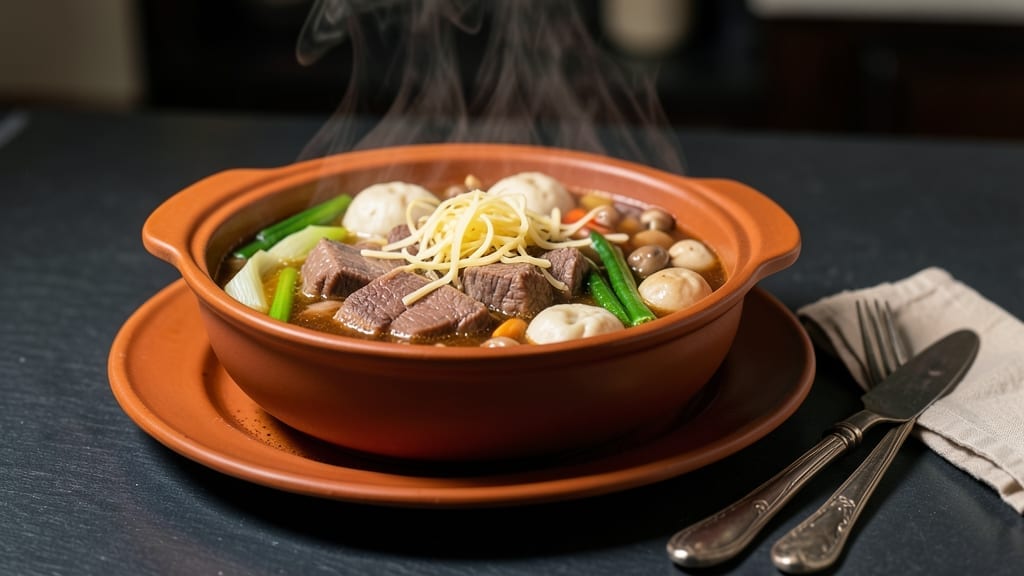
This Chinese hot pot recipe transforms your kitchen into a steaming, aromatic gathering spot where every bite feels like a celebration. The secret lies in balancing a rich, silky broth—whether clear or fiery spiced—with tender proteins, crisp vegetables, and silky tofu, all simmered together for maximum flavor infusion.
I’ve perfected this method over years of hosting friends, ensuring the broth stays velvety and the ingredients cook just long enough to stay vibrant yet tender.
The beauty of hot pot is its versatility: you can customize the broth with star anise, ginger, and chili oil for heat, or keep it mild with mushrooms and goji berries for depth.
The setup is simple—a sturdy pot or electric hot pot on the table, with individual bowls for dipping sauces like sesame-chili or soy-garlic. Safety is key here: always monitor broth temperature to prevent burns, and use separate utensils for raw and cooked ingredients to avoid cross-contamination.
What you’ll achieve is a communal dining experience where everyone contributes to the meal, creating a symphony of textures and flavors. The broth becomes richer with each addition, the proteins melt into tenderness, and the vegetables retain their crispness—all while the table stays warm with the glow of simmering spice.
This isn’t just dinner; it’s an event that brings people together.
Whether you’re aiming for a traditional Chinese feast or a modern twist with global proteins, this recipe delivers restaurant-quality results at home. The key is patience and attention to detail—every ingredient matters, and the broth is the soul of the dish. Let’s get simmering!
Ingredients for chinese hot pot
Sixteen ingredients transform into a communal feast of simmering broth and vibrant bites.
| Ingredient | Amount | Notes |
|---|---|---|
| Dried Shiitake Mushrooms 🍄 | ½ lb | Rehydrated for broth depth |
| Star Anise Pods 🌿 | 4 whole | Whole, for aromatic broth |
| Fresh Ginger Root 🧄 | ½ cup | Julienned, skin removed |
| Chicken Thighs 🍗 | 2 lb | Bone-in, skin-on preferred |
| Pork Belly Slices 🥓 | 1 ½ lb | Thinly sliced, marbled fat |
| Firm Tofu 🧈 | 14 oz | Extra-firm, pressed well |
| Napa Cabbage 🥬 | 1 whole | Thinly sliced, core removed |
| Bok Choy 🥬 | 4 whole | Baby heads, halved lengthwise |
| Green Onions 🧅 | 1 bunch | White and green parts separated |
| Sesame Oil 🫒 | 2 tbsp | Toasted, for finishing |
| Dried Chili Peppers 🌶️ | 1 tbsp | Crushed, for heat level |
| Light Soy Sauce 🥄 | ½ cup | For dipping sauce base |
| Chili Crisp 🌶️ | ¼ cup | For spicy dipping sauce |
| Sesame Seeds 🌾 | 2 tbsp | Toasted, for garnish |
| Salt 🧂 | 2 tsp | Kosher or sea salt |
The broth foundation starts with shiitake mushrooms and star anise—both available at Whole Foods or Asian markets. Look for dried shiitake with thick stems—they rehydrate best. Fresh ginger should be firm, aromatic, and free of soft spots. For proteins, bone-in chicken thighs from Costco or your local butcher add depth, while pork belly should have visible marbling. Extra-firm tofu from the refrigerated section (not the shelf-stable kind) holds up best to prolonged simmering. Napa cabbage and bok choy should have crisp leaves—avoid wilted heads. Green onions? Grab a whole bunch—the whites cook down, while the greens stay fresh for garnish.
No star anise? 1 tsp ground cinnamon mimics its warmth, though the flavor won’t be identical. Substitute pork belly with thinly sliced beef flank steak, but reduce cooking time by half. For tofu, silken tofu works for dipping but won’t hold shape—stick with extra-firm. Chili crisp unavailable? Mix 1 tbsp chili oil with 1 tsp sugar for a quick substitute. The sesame oil matters—toasted, not flavored. If you can’t find it, lightly toast regular sesame oil in a dry pan for 30 seconds. For the dipping sauces, Trader Joe’s carries pre-made sesame-chili sauce that saves time.
Broth keeps for 3 days refrigerated or 3 months frozen—portion into airtight containers before freezing. Cooked proteins and vegetables reheat beautifully in the broth for up to 2 days. Store dipping sauces separately in small jars—they’ll last 1 week in the fridge. For leftovers, reheat gently over low heat to preserve texture. The tofu and vegetables are best eaten fresh from the pot, but you can blanch and shock them before storing if needed. Always keep raw and cooked ingredients separate to prevent cross-contamination.
Why You’ll Love This Recipe
- No Chopping Chaos: I swear by this recipe because the dried shiitake just soak up water—no slicing, no fuss. The star anise and ginger root? Toss them in whole, then remove. That’s it. My lazy Sundays just got a whole lot easier.
- Umami Bomb: That pork belly turns tender while the shiitake mushrooms soak up all the broth’s depth. Honestly, the first time I tasted it, I nearly burned my tongue—it’s that good. The star anise adds this subtle warmth that lingers.
- Budget-Busting Luxury: Pork belly might sound fancy, but it stretches across two meals without breaking the bank. The dried shiitake and star anise? Pantry staples that make everything taste like a restaurant. My wallet and taste buds win.
Step-by-step instructions for Chinese hot pot
Aromatic broth meets tender proteins and fresh vegetables in this balanced hot pot recipe.
Prepare the Broth Base
In a large stockpot, combine the 0.5 lb dried shiitake mushrooms, 4 whole star anise pods, 0.5 cup julienned fresh ginger root, and 8 cups water. Bring to a boil over medium-high heat, then reduce to a simmer for 15 minutes. This initial simmer extracts deep umami from the mushrooms and infuses the broth with ginger’s warmth.
Add the 2 lb chicken thighs and 1.5 lb pork belly slices, ensuring the pork is fully submerged. Skim off any foam that rises to the surface. Simmer uncovered for 45 minutes, stirring occasionally. The broth should reduce slightly, concentrating flavors while the meats become tender. Here’s the thing—don’t rush this step. The slow cook transforms tough cuts into melt-in-your-mouth textures.
Build Flavor Layers
After the initial simmer, add 2 tsp salt and 1 tbsp crushed dried chili peppers to the broth. Stir well to distribute the heat evenly. The salt enhances the natural flavors of the meats, while the chili peppers introduce subtle heat that will deepen as the broth reduces further. Let the broth continue simmering for another 30 minutes, uncovered, to develop complexity.
Remove the chicken thighs and pork belly slices with tongs and set them aside on a plate. The broth should now have a rich, aromatic quality with visible red chili particles suspended throughout. If you taste it now, you’ll notice the balance of savory, spicy, and slightly sweet notes—the foundation of your hot pot experience.
Prepare Vegetables and Tofu
While the broth simmers, prepare the vegetables. Thinly slice the 1 whole napa cabbage, removing the core, and halve the 4 whole bok choy lengthwise. Separate the 1 bunch green onions, cutting the white and green parts separately. Press the 14 oz firm tofu between two paper towels for 10 minutes to remove excess water, then cut into ½-inch cubes.
Keep all prepared ingredients separate until ready to cook. The tofu should hold its shape when pressed—if it crumbles, press it longer. The vegetables should be cut uniformly for even cooking. Arrange them on separate plates near your hot pot setup for easy access during the communal cooking experience.
Assemble the Hot Pot
Return the chicken thighs and pork belly slices to the simmering broth. Add the pressed tofu cubes and let them cook for 8-10 minutes, stirring occasionally. The tofu will absorb the broth’s flavors while maintaining its structure. Remove the tofu with a slotted spoon and set aside on a serving platter.
Divide the broth equally among 2-3 smaller pots placed over individual burners on your stovetop. This setup allows each diner to customize their cooking experience. Keep the broth at a gentle simmer (180-190°F)—too vigorous a boil will cook the vegetables too quickly.
Cook and Serve
Invite diners to add their chosen vegetables to the simmering broth. The napa cabbage, bok choy, and green onions should cook for 3-5 minutes until tender-crisp. The tofu can be returned to the broth for the final 2 minutes of cooking to reheat. Watch the vegetables closely—they cook quickly and should remain vibrant with a slight bite.
For serving, prepare two dipping sauces. Mix 0.5 cup light soy sauce with 1 tbsp sesame oil for a classic base. For spicy flavor, combine 0.25 cup chili crisp with 1 tbsp sesame oil. Garnish each bowl with 2 tbsp toasted sesame seeds and serve with steamed rice. The contrast of silky broth, tender meats, and fresh vegetables creates a harmonious balance in every bite.
Pro Tips For Making Chinese Hot Pot
- Parboil Pork Belly First: I learned this the hard way—skipping the pre-cook means your pork belly will either turn to mush or stay stubbornly chewy. Simmer the slices in water with a pinch of salt for 10-15 minutes until just tender, then shock in ice water. This guarantees it’ll finish cooking perfectly in the pot without falling apart.
- Toast Star Anise: Sounds weird, but it works: dry-toast the star anise pods in a small pan for 30 seconds until fragrant before adding to the broth. This unlocks their flavor instead of letting them sit blandly in the background. (Yes, even if you’re impatient like me.)
- Don’t Overcrowd the Pot: I was skeptical until I tried it—adding all the meat at once steams it instead of searing. Work in batches: start with chicken thighs skin-side down until golden, then move to pork belly. The difference in texture is night and day.
- Soak Mushrooms Separately: Toss dried shiitakes in hot water for 20 minutes, then drain. Cold water leaches their umami into the broth, but hot water plumps them up without diluting the flavor. Reserve the soaking liquid for the broth—it’s liquid gold.
Creative variations of this chinese hot pot
Spicy Sichuan Style
Transform your hot pot into a fiery Sichuan feast by adding 1 tbsp Sichuan peppercorns and 2 tbsp doubanjiang (fermented chili bean paste) to the broth base. The peppercorns create a numbing, tingling sensation that pairs perfectly with the heat.
I like to use Lao Gan Ma chili crisp for the dipping sauce—its intense spice level is balanced by the silky broth. Garnish with thinly sliced scallions and a sprinkle of toasted Sichuan peppercorns for extra aroma. 🌶️
Vegetarian Mushroom Pot
Skip the meats entirely and focus on umami-packed mushrooms. Use shiitake, oyster, and king oyster mushrooms (about 2 lbs total) for texture contrast. Add 1 cup dried wood ear mushrooms to the broth for a chewy element. For protein, include extra-firm tofu and seitan cubes.
The broth benefits from 1 tbsp soy sauce and 1 tsp miso paste for depth. Serve with a dipping sauce of sesame oil, rice vinegar, and a touch of sugar. 🍄
Seafood Hot Pot
Swap the pork and chicken for shrimp, scallops, and white fish fillets like cod or halibut. The broth needs a lighter touch—reduce the chili to ½ tbsp and add ½ cup coconut milk for creaminess.
I like to include 1 tbsp fish sauce in the broth to complement the seafood. Serve with a dipping sauce of lime juice, cilantro, and chili flakes for brightness. Garnish with thinly sliced cucumber for freshness. 🦐
Modern Fusion Twist
Give your hot pot a global twist by adding grilled corn kernels and black beans to the broth. Top with avocado slices and crumbled cotija cheese. For the broth, add 1 chipotle pepper in adobo and ½ tsp cumin for depth.
The dipping sauce becomes a creamy avocado-lime sauce with a kick of hot sauce. This fusion keeps the hot pot spirit while introducing new textures and flavors. 🌎
Winter Comfort Version
For a hearty winter meal, include thinly sliced daikon radish and shitake mushrooms in the broth. Add 1 cup winter melon (canned or fresh) for a subtle sweetness. The broth benefits from 1 tbsp goji berries and 1 slice of ginger for warmth.
Serve with a dipping sauce of sesame oil, honey, and a pinch of red pepper flakes. Garnish with toasted sesame seeds and crispy fried shallots for crunch. ❄️
Kids-Friendly Mild Broth
Create a gentle broth by omitting the chili peppers and using mild aromatics like cinnamon sticks and white pepper. Add 1 tbsp honey to balance flavors. Use chicken thighs, tofu, and soft vegetables like zucchini and carrots.
The dipping sauce can be a simple mix of soy sauce and a touch of sugar**. Kids love dipping their food in the mild broth, and you can still enjoy the full-flavored version on the side. 👶
Nutrition facts
Frequently asked questions
What’s the best pot to use for Chinese hot pot?
For authentic results, use a stainless steel or cast iron pot with a tight-fitting lid—these materials distribute heat evenly and retain warmth. Electric hot pots with individual burners are perfect for communal dining, while a large stockpot works well for traditional stovetop versions. Avoid nonstick pots, as they can’t handle prolonged simmering and may release harmful fumes at high heat.
How do I keep the broth from getting cloudy?
Cloudiness usually comes from foam or overcooking. Skim off any foam that forms during the initial simmer, and avoid boiling vigorously. For a crystal-clear broth, strain it through a fine-mesh sieve after removing the meats. If you prefer a rustic look, leave the natural particles—they add depth to the flavor!
Can I make the broth ahead of time?
Broth tastes even better after resting. Store it in an airtight container in the fridge for up to 3 days or freeze it for 3 months. Reheat gently over low heat and skim off any congealed fat before serving. The flavors meld beautifully overnight, making it perfect for last-minute gatherings.
What if I don’t have star anise or Sichuan peppercorns?
No problem! Star anise can be replaced with 1 tsp ground cinnamon (though the flavor won’t be identical). For Sichuan peppercorns, use ½ tsp black pepper—it won’t replicate the numbing effect but adds warmth. Always adjust other spices to balance the flavor.
How do I prevent cross-contamination when serving?
Use separate utensils for raw and cooked ingredients, and assign each diner their own plate for dipping. Keep raw meats and veggies in designated bowls until ready to cook. If using shared tongs, sanitize them between uses with hot water. This ensures everyone stays safe while enjoying the communal experience.

- Baked Potatoes in Crock Pot Recipe: Buttery Interiors and Crispy Top Magic - November 1, 2026
- Braised Beef Short Ribs Recipe: Crock Pot Fall-Off-Bone Magic in 6 Hours - November 1, 2026
- Crock Pot Cocoa Recipe: Velvety Warmth With Hidden Spice Magic - November 1, 2026