
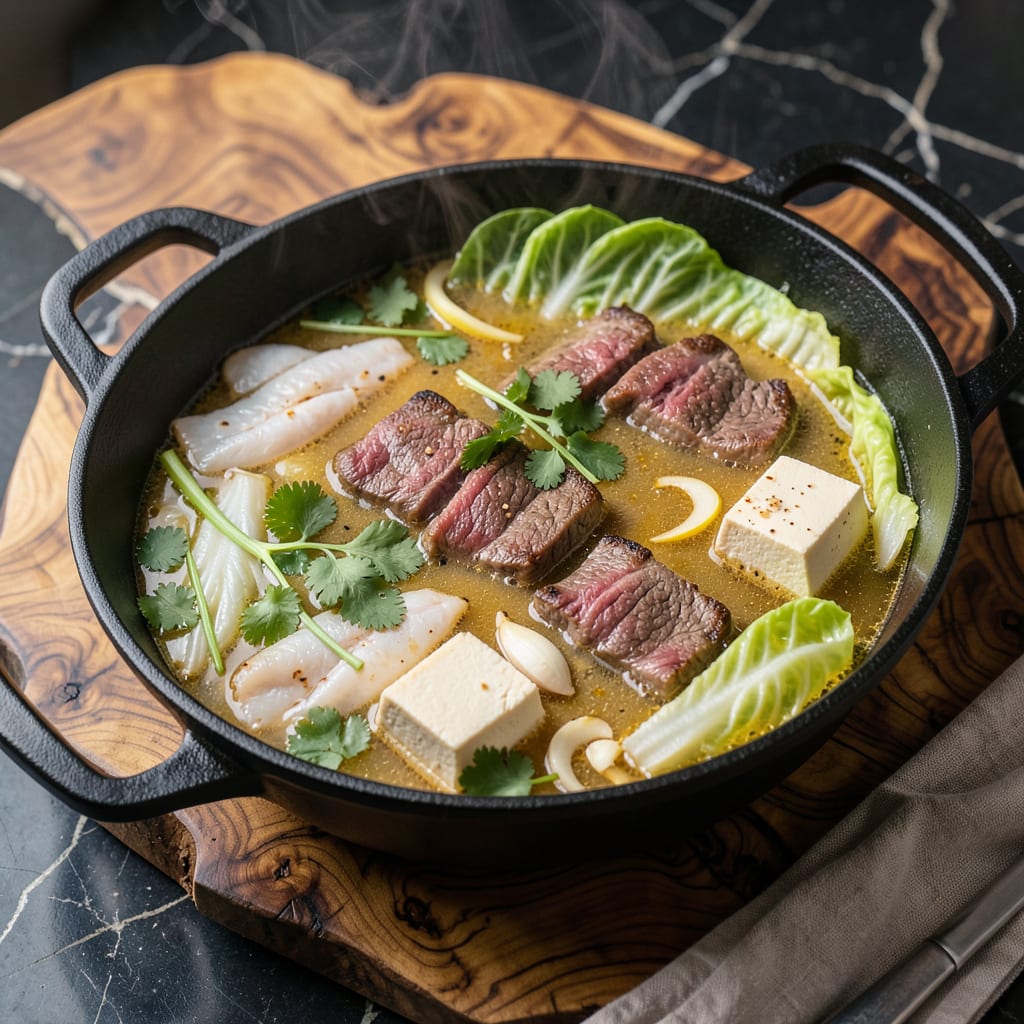
There’s nothing like gathering around a bubbling hot pot, and this cilantro version takes the experience to a whole new level. The secret is in the broth—a fragrant, herb-infused base that simmers for just 30 minutes but tastes like it’s been developing all day. I’ve made this countless times for friends who now request it every winter.
What makes this special is how the cilantro transforms the broth into something bright and aromatic without overpowering. You’ll get tender proteins, crisp vegetables, and that perfect balance of heat and freshness. The best part? Everyone customizes their bowl exactly how they like it. No fancy equipment needed—just a pot, some fresh ingredients, and good company.
Ingredients for Cilantro Hot Pot
Fresh herbs and pantry staples create this aromatic hot pot everyone will love customizing.
| Ingredient | Amount | Notes |
|---|---|---|
| Fresh Cilantro 🌿 | 2 cups | Stems included for depth |
| Chicken Broth 🍲 | 8 cups | Low-sodium preferred |
| Thinly Sliced Beef 🥩 | ¾ lb | Ribeye or sirloin works best |
| White Fish Fillets 🐟 | ½ lb | Cod or tilapia recommended |
| Extra-Firm Tofu 🧈 | 14 oz | Pressed and cubed |
| Napa Cabbage 🥬 | 1 whole | Thinly sliced crosswise |
| Shiitake Mushrooms 🍄 | 8 oz | Fresh, stems removed |
| Baby Spinach 🥬 | 4 cups | Loosely packed |
| Rice Noodles 🍜 | 8 oz | Dried, vermicelli style |
| Garlic Cloves 🧄 | 6 cloves | Thinly sliced for broth |
| Fresh Ginger 🌿 | 2 tbsp | Julienned for infusion |
| Soy Sauce 🫙 | ⅓ cup | Low-sodium variety |
| Rice Vinegar 🍶 | 2 tbsp | Unseasoned preferred |
| Sambal Oelek 🌶️ | 1 tbsp | Adjust for heat preference |
| Sesame Oil 🫒 | 1 tbsp | Toasted for aroma |
The cilantro is everything here—farmers market bunches have more punch than grocery store. I use both leaves and stems (they’re packed with flavor). For the broth, low-sodium chicken broth lets you control the salt. If you’re vegetarian, mushroom or kombu broth works beautifully. The proteins are flexible: thinly sliced ribeye melts in seconds, while firm white fish holds its shape. Asian markets have the best tofu for this—extra-firm pressed soaks up broth like a sponge (worth the extra trip).
No sambal oelek? Sriracha or gochujang can stand in (adjust quantities—gochujang is thicker). Out of rice vinegar? Apple cider vinegar at half the amount works. The mushrooms can be cremini or oyster if shiitake are pricey. For gluten-free, swap soy sauce for tamari or coconut aminos. The noodles are optional—udon or ramen work too, just adjust cook time. Pro tip: freeze extra cilantro stems in broth for future batches.
Broth keeps 3 days refrigerated or 3 months frozen (strain out solids first). Prep proteins and veggies ahead—store in separate containers. The ginger and garlic can be sliced and frozen in broth portions. Leftovers? Reheat broth gently, add fresh noodles/veggies. I always make double broth—it’s even better the next day when flavors meld (trust me on this).
Why You’ll Love This Recipe
- One-Pot Magic: I love that everything—beef, fish, tofu—cooks right in the broth while I just stir in the cilantro at the end. No extra pans, no complicated timing.
- That Cilantro Kick: Honestly, the fresh cilantro doesn’t just garnish—it transforms the broth into something bright and herby, cutting through the richness of the beef and fish. It’s the kind of flavor that makes you go back for seconds.
- Flexible Feast: I’ve served this for lazy Sundays with friends and as a quick weeknight dinner (yes, even on a Tuesday). Swap the proteins based on what’s on sale—shrimp works too.
- Leftovers? Yes, Please: The broth soaks into the tofu overnight, making it even better the next day. I pack it for lunch, and it reheats like a dream—no sad, soggy leftovers here.
Step-by-Step Instructions for Cilantro Hot Pot
This fragrant hot pot comes together quickly once you build the aromatic broth foundation.
Step 1: Infuse the Broth with Aromatics
In a large pot over medium-high heat, combine the 8 cups Chicken Broth, 6 cloves Garlic Cloves, 2 tbsp Fresh Ginger, and 1 tbsp Sesame Oil. Bring to a gentle simmer, then reduce heat to medium-low and let it steep for 10 minutes.
This slow infusion allows the ginger and garlic to release their essential oils into the broth without becoming bitter. You’ll notice the kitchen filling with warm, toasty aromas – that’s your signal the broth base is developing properly. The sesame oil adds a nutty depth that balances the cilantro’s brightness.
Step 2: Build the Cilantro Broth Base
Add the 2 cups Fresh Cilantro (stems and all) to the simmering broth along with the 0.33 cup Soy Sauce, 2 tbsp Rice Vinegar, and 1 tbsp Sambal Oelek. Let this simmer uncovered for another 15 minutes at medium-low heat.
The cilantro stems release a more herbaceous, slightly citrusy flavor than the leaves alone. As it simmers, the broth will turn a vibrant green and develop a complex aroma where the umami from soy sauce, the tang from vinegar, and the heat from sambal oelek all come into balance. Taste and adjust the heat level now if needed – the sambal will mellow slightly as it cooks.
Step 3: Prepare the Hot Pot Ingredients
While the broth simmers, prepare your hot pot ingredients: thinly slice the napa cabbage crosswise into ribbons, remove stems from the shiitake mushrooms, cube the 14 oz Extra-Firm Tofu, and portion the 0.75 lb Thinly Sliced Beef and 0.5 lb White Fish Fillets into individual serving pieces.
Arrange all ingredients on a large platter in separate piles. The key to hot pot success is having everything ready to cook at the table. Soak the 8 oz Rice Noodles in warm water for 10 minutes to soften them before adding to the pot. This preparation ensures your guests can enjoy the meal without waiting for ingredients to be prepped.
Step 4: Assemble and Serve the Hot Pot
Strain the broth through a fine-mesh sieve into a hot pot vessel or large serving bowl, pressing on the solids to extract maximum flavor. Return the clean broth to medium heat and bring to a gentle simmer. Arrange the prepared platter of ingredients around the hot pot with small bowls for individual servings.
The beauty of hot pot is in the communal experience. Let each person cook their ingredients to their preferred doneness: the beef and fish will cook in 1-2 minutes, tofu in 3-4 minutes, mushrooms and cabbage in 2-3 minutes, and noodles in 1 minute. The spinach can be added at the very end as it only needs 30 seconds to wilt.
Step 5: Enjoy with Traditional Accompaniments
Serve the hot pot with small bowls of the remaining 4 cups Baby Spinach for guests to add fresh to their bowls. The residual heat from the broth will gently wilt the spinach without overcooking it. Provide additional cilantro leaves for garnish if desired.
Encourage everyone to build their perfect bowl by selecting ingredients from the simmering broth. The flavors will continue to develop as the meal progresses, with the broth becoming richer and more complex as it absorbs flavors from all the cooked ingredients. This creates a dynamic eating experience where each bowl tastes slightly different from the last.
Regional Styles of These Flavors
Sichuan Spicy Style
For a fiery Sichuan twist, add 2 tbsp Sichuan peppercorns and 1 tbsp doubanjiang (fermented chili bean paste) to the broth. I love how the peppercorns create that signature tingling sensation that pairs perfectly with cilantro’s brightness. Serve with chili oil and crushed peanuts for dipping. 🌶️
Thai Coconut Variation
Swap half the chicken broth for 2 cups coconut milk and add 3 stalks lemongrass (bruised) and 4 kaffir lime leaves to the simmering broth. The coconut mellows the cilantro while the citrusy notes from lemongrass create a completely different but equally delicious profile. I always add fresh Thai basil at the table.
Japanese Miso Style
Stir in 3 tbsp white miso paste and 1 tbsp mirin after straining the broth. This creates a richer, umami-packed base that still lets the cilantro shine. I recommend serving with udon noodles instead of rice noodles and adding enoki mushrooms for texture contrast. The miso adds a wonderful depth that evolves as you cook more ingredients in it.
Vietnamese Pho-Inspired
Add 2 star anise pods, 1 cinnamon stick, and 3 cloves to the broth while simmering. This creates a warm, aromatic base reminiscent of pho but with cilantro’s freshness. I love serving this version with bean sprouts and lime wedges on the side. The spices infuse beautifully without overpowering the herbaceous notes.
Korean Kimchi Style
Stir in 1 cup chopped kimchi and 1 tbsp gochujang during the final 5 minutes of broth simmering. The fermented flavors from kimchi add incredible complexity, while gochujang gives it that signature Korean heat. I always serve this with soft tofu and scallion pancakes on the side. The tangy, spicy broth is addictive!
Vegetarian Mushroom Base
Replace chicken broth with 8 cups mushroom broth and add 4 dried shiitake mushrooms to steep with the aromatics. This creates a deeply savory, meaty broth that still lets the cilantro shine. I love using king oyster mushrooms sliced thinly as a meat substitute—they absorb the broth flavors beautifully while maintaining great texture.
Nutrition Facts
Frequently Asked Questions
Can I make this ahead of time?
The broth can be prepared 1 day in advance and refrigerated. In fact, the flavors deepen overnight! Just reheat gently before serving. Prep all ingredients and store separately in the fridge until ready to cook.
What if someone dislikes cilantro?
Simply reduce the cilantro to 1 cup in the broth and serve extra on the side. The stems provide subtle flavor without the strong “soapy” taste some detect. Thai basil makes a great alternative garnish for cilantro-sensitive guests.
How do I adjust the spice level?
Start with ½ tbsp sambal oelek for mild heat. For extra kick, add 1 tsp at a time while simmering. Remember the heat intensifies as the broth reduces, so taste frequently. Serve chili oil on the side for individual control.
Can I use frozen seafood?
Yes, but thaw completely in the fridge first. Frozen shrimp or fish should be patted dry before adding to prevent watering down the broth. Cook frozen proteins 30 seconds longer than fresh to ensure they’re heated through.
What’s the best pot to use?
A wide, shallow electric hot pot or stovetop-safe stoneware works best. For tabletop cooking, use a portable butane burner. Avoid cast iron—it retains too much heat and can overcook delicate ingredients.

- 8 Bean Soup Recipe Crock Pot: Hearty Vegetable Medley in One Pot - September 25, 2026
- 4C Bread Crumbs Meatballs Recipe: Crispy Crust and Juicy Centers - September 25, 2026
- 6 Oz Chocolate Chip Cookie Recipe: Perfectly Balanced Crispy Edges and Chewy Hearts - September 25, 2026