
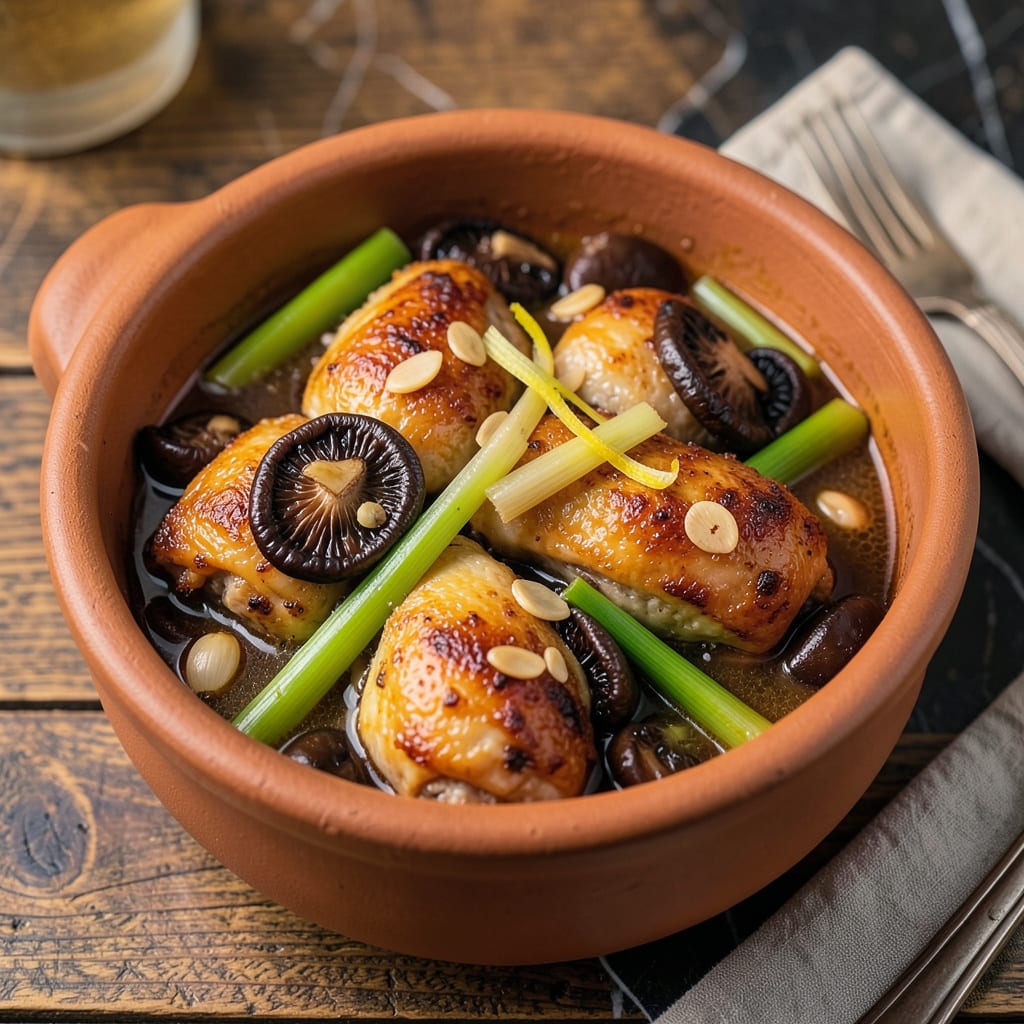
There’s something deeply satisfying about cooking clay-pot chicken—the way the unglazed pot transforms simple ingredients into a meal with fall-off-the-bone tenderness. This traditional method, rooted in Chinese home cooking, relies on the clay pot’s ability to distribute heat evenly and retain moisture, creating layers of flavor that stovetop methods can’t match.
The beauty of this recipe lies in its simplicity: a balanced marinade, careful layering of aromatics, and gentle braising. By the time the dish finishes cooking, you’ll have tender chicken infused with garlic, ginger, and soy, all nestled in a rich, savory sauce. It’s the kind of meal that feels special enough for guests but remains approachable for any weeknight.
Ingredients for Clay-pot Chicken
This traditional clay-pot preparation relies on bone-in chicken, aromatic layers, and a balanced soy-based marinade for authentic tenderness.
| Ingredient | Amount | Notes |
|---|---|---|
| Chicken Thighs 🍗 | 2 lb | Bone-in, skin-on for optimal texture |
| Light Soy Sauce 🫙 | 3 tbsp | Low-sodium preferred for balance |
| Dark Soy Sauce 🫙 | 1 tbsp | For depth and caramelization |
| Shaoxing Wine 🍶 | 2 tbsp | Dry sherry as alternative |
| Rock Sugar 🍬 | 1 piece | Or substitute with 1 tsp granulated sugar |
| Garlic Cloves 🧄 | 6 cloves | Thinly sliced for even distribution |
| Fresh Ginger 🌿 | 1 piece | 2-inch knob, julienned |
| Scallions 🧅 | 4 whole | Cut into 2-inch segments |
| Dried Shiitake Mushrooms 🍄 | 4 whole | Rehydrated, stems removed |
| Neutral Oil 🫒 | 1 tbsp | Avocado or grapeseed preferred |
| Sesame Oil 🫒 | 1 tsp | Toasted for finishing aroma |
| White Pepper 🌶️ | ½ tsp | Freshly ground for potency |
| Cornstarch 🌾 | 1 tsp | For sauce thickening |
| Cilantro 🌿 | ¼ cup | Fresh, for garnish |
The chicken thighs are non-negotiable for this preparation—bone-in, skin-on ensures the collagen-rich meat achieves the promised fall-off-the-bone texture. Opt for organic or pasture-raised when possible; the fat quality directly impacts the final dish’s richness. For the soy sauces, Pearl River Bridge or Lee Kum Kee brands offer consistent quality. Shaoxing wine can be found at Asian specialty markets—avoid cooking wine labeled for general use, as its flavor profile is inferior.
Substitutions must preserve the dish’s integrity. Replace Shaoxing wine with dry sherry at equal volume, though the depth will differ slightly. For gluten-free adaptation, use tamari instead of soy sauce and verify cornstarch is certified gluten-free. Rock sugar can be omitted in favor of granulated, but reduce quantity by half to avoid over-sweetening. Dried shiitakes are essential—fresh mushrooms lack the concentrated umami required for this preparation.
Preparation efficiency is key. Rehydrate mushrooms in warm water 30 minutes prior to cooking; reserve the soaking liquid for deglazing. The marinade components (soy sauces, wine, sugar) can be pre-mixed and stored refrigerated for 24 hours. Completed dish holds well at room temperature for 2 hours—ideal for family-style service. Leftovers refrigerate for 3 days or freeze for 1 month, though texture changes slightly upon reheating.
Why You’ll Love This Recipe
- I’ll be real: the leftovers might outshine the original. The flavors deepen overnight, and those thighs soak up every last bit of sauce. Cold, room temp, or reheated—it’s my secret weapon for lunchbox envy.
- Five-Ingredient Magic: Honestly, the hardest part is remembering to soak the clay pot. Toss chicken thighs with light and dark soy, a splash of Shaoxing wine, and rock sugar—no chopping, no fuss. The oven does the rest while I pretend I’m a Cantonese grandma.
- Caramelized Gold Rush: That first bite where the sauce reduces into sticky, salty-sweet glaze? I’ll fight you for the crispy edges. The rock sugar melts into the soy-wine bath, turning humble thighs into something you’d pay double for at a dim sum spot.
- My Lazy Dinner Party Star: Between us, this is the dish I make when I want to look like I tried. Serve it straight from the clay pot with steamed rice and greens—suddenly it’s a “centerpiece” instead of “I forgot to grocery shop.” (Yes, even on a Tuesday night.)
Step-by-Step Instructions for Clay-Pot Chicken
This method delivers perfectly tender chicken with rich, caramelized flavors in a single pot.
Step 1: Prepare the Ingredients for Optimal Flavor
Begin by rehydrating the 4 whole dried shiitake mushrooms in hot water for 20 minutes until softened. Remove stems and slice caps into ¼-inch strips. Thinly slice the 6 cloves garlic cloves and julienne the 1 piece fresh ginger into matchsticks. Cut the 4 whole scallions into 2-inch segments, separating white and green parts.
Pat the 2 lb chicken thighs dry with paper towels, then trim excess skin and fat. Cut each thigh into 2-3 pieces for even cooking. This preparation ensures all components cook uniformly while maximizing surface area for sauce absorption.
Step 2: Build the Flavor Foundation
Heat a clay pot or heavy Dutch oven over medium-high heat until hot. Add the 1 tbsp neutral oil and swirl to coat. Arrange the chicken pieces skin-side down in a single layer and sear undisturbed for 4-5 minutes until the skin develops a deep golden-brown crust.
Flip the chicken and add the 3 tbsp light soy sauce, 1 tbsp dark soy sauce, 2 tbsp Shaoxing wine, and 1 piece rock sugar. The sugars in the soy sauces and wine will begin caramelizing immediately, creating a rich, glossy base for the sauce.
Step 3: Simmer for Fall-Off-the-Bone Tenderness
Add the prepared mushrooms, garlic, ginger, and white scallion segments to the pot. Reduce heat to low and cover. Simmer gently for 30 minutes, stirring occasionally to prevent sticking. The low, steady heat allows the chicken to become exceptionally tender while the aromatics infuse the sauce.
After 30 minutes, uncover and increase heat to medium. In a small bowl, whisk the 1 tsp cornstarch with 1 tablespoon of the cooking liquid, then stir this slurry into the pot. Simmer uncovered for 5-7 minutes until the sauce thickens to a velvety consistency that coats the back of a spoon.
Step 4: Finish and Serve
Remove from heat and stir in the 0.5 tsp white pepper and 1 tsp sesame oil. The white pepper adds subtle warmth without overpowering, while the sesame oil contributes a nutty aroma. Taste and adjust seasoning if needed—the sauce should balance salty, sweet, and umami notes.
Garnish with the remaining green scallion segments and 0.25 cup cilantro. Serve immediately with steamed rice to soak up the luxurious sauce. The chicken should be so tender it nearly falls apart at the touch of your chopsticks, with each piece coated in the glossy, flavorful reduction.
Regional Styles of This clay-pot chicken
Cantonese Tradition
The Cantonese version of this dish is all about balance—sweet, salty, and umami harmonize beautifully. I learned from my grandmother to use double the rock sugar (about 2 pieces) for a slightly sweeter profile that caramelizes into a glossy glaze. The key is low-and-slow simmering for 45 minutes to develop deep flavors. 💛
In Hong Kong, clay-pot chicken is often served with steamed jasmine rice and blanched gai lan (Chinese broccoli). The rice soaks up the rich sauce, while the bitter greens cut through the richness. I always add 1 star anise pod during simmering for subtle complexity.
Sichuan Spicy Twist
For a fiery Sichuan adaptation, I stir in 1 tbsp chili bean paste (doubanjiang) and 1 tsp Sichuan peppercorns during the searing stage. The peppercorns create that signature numbing heat (mala) that makes Sichuan cuisine so addictive. Reduce the rock sugar to ½ piece to balance the heat.
This version pairs perfectly with mantou (steamed buns) to mop up the spicy sauce. I like to finish with chopped preserved mustard greens for extra tang. The contrast between the tender chicken and bold spices is incredible.
Taiwanese Home Style
Taiwanese home cooks often add ½ cup diced potatoes to the pot, which soak up the flavors and add heartiness. My aunt taught me to use rice wine instead of Shaoxing for a lighter touch. The potatoes should be parboiled for 5 minutes first to ensure they cook through.
This version typically includes baby corn and carrot slices for color and texture. The sauce tends to be thinner, almost broth-like, perfect for serving over vermicelli noodles instead of rice.
Malaysian Nyonya Fusion
The Nyonya version incorporates lemongrass and galangal alongside the ginger and garlic. I bruise 2 stalks lemongrass and add 3 slices galangal during simmering. The result is a fragrant, citrusy aroma that’s distinctly Southeast Asian.
This variation often includes kaffir lime leaves and finishes with fresh Thai basil. The chicken becomes even more aromatic, with bright, herbal notes cutting through the richness. Serve with coconut rice for a complete meal.
Japanese Adaptation
In Japan, this dish often uses mirin instead of rock sugar for sweetness, creating a more delicate flavor profile. I add 1 tbsp mirin and 1 tsp dashi powder to the sauce for umami depth. The chicken is typically cut into bite-sized pieces before cooking.
Japanese versions frequently include shimeji mushrooms alongside shiitakes and finish with mitsuba (Japanese parsley). The presentation is cleaner, often served in individual clay pots with steamed white rice on the side.
Modern Western Fusion
For a contemporary take, I’ve experimented with adding 1 tbsp miso paste and ½ cup chicken stock to the sauce. This creates a richer, more complex base while keeping the dish approachable. The miso adds a wonderful fermented depth that pairs well with the soy sauces.
This version works beautifully with roasted baby potatoes and sautéed kale as sides. I sometimes finish with toasted sesame seeds for extra crunch and visual appeal. It’s become my go-to for impressing guests who aren’t familiar with traditional clay-pot cooking. ✨
Nutrition Facts
Frequently Asked Questions
What if I don’t have a clay pot?
A heavy Dutch oven or cast-iron skillet works beautifully as a substitute. Both retain heat well, though you may need to adjust cooking time slightly. Avoid thin metal pots—they won’t provide the same even heat distribution.
Can I use chicken breasts instead of thighs?
Thighs are ideal for their fat content and collagen, but breasts can work if cooked carefully. Reduce simmering time to 20 minutes to prevent drying out. The texture won’t be as rich, but the flavors will still shine.
Why did my sauce turn out too salty?
Soy sauces vary in saltiness by brand. If this happens, add ½ cup water and simmer uncovered for 5 minutes to dilute. Next time, reduce light soy sauce to 2 tbsp and taste before adding more.
How do I prevent the chicken from sticking?
Ensure your pot is properly heated before adding oil, and don’t move the chicken during searing. If using a clay pot, soak it in water for 10 minutes before cooking to prevent cracking and sticking.

- 8 Bean Soup Recipe Crock Pot: Hearty Vegetable Medley in One Pot - September 25, 2026
- 4C Bread Crumbs Meatballs Recipe: Crispy Crust and Juicy Centers - September 25, 2026
- 6 Oz Chocolate Chip Cookie Recipe: Perfectly Balanced Crispy Edges and Chewy Hearts - September 25, 2026