
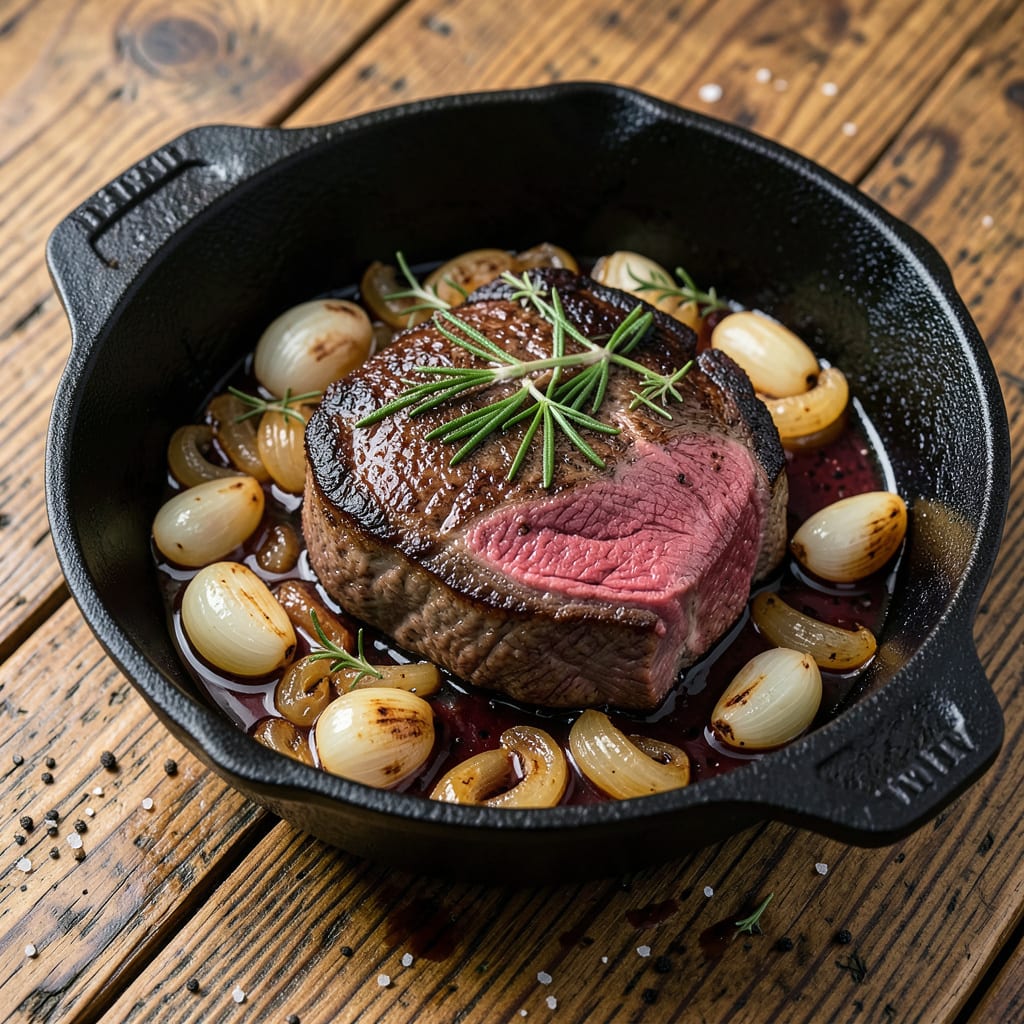
Slow-cooked ribeye delivers fall-apart tenderness without sacrificing rich beef flavor—a game-changer for busy cooks. This method transforms an expensive cut into a foolproof meal by letting the crockpot do the work. The key lies in proper searing before slow cooking, which locks in juices while building deep, caramelized flavor.
With just 5 hours on low heat, you’ll achieve steakhouse-quality results with minimal effort. The gentle cooking process breaks down connective tissue while preserving the ribeye’s natural marbling, ensuring every bite remains juicy and flavorful. Pair with simple sides for a complete meal that feels indulgent but comes together easily.
Ingredients for Ribeye Crockpot
Optimal ribeye selection and precise seasoning transform this slow-cooked dish into a restaurant-quality experience with minimal active preparation.
| Ingredient | Amount | Notes |
|---|---|---|
| Bone-in Ribeye Steak 🥩 | 3 lb | 1.5-inch thick, well-marbled |
| Kosher Salt 🧂 | 1 ½ tbsp | Diamond Crystal preferred for even seasoning |
| Coarsely Ground Black Pepper 🌶️ | 1 tbsp | Freshly ground for optimal flavor |
| Garlic Cloves 🧄 | 6 cloves | Smashed, not minced |
| Fresh Rosemary Sprigs 🌿 | 3 whole | 6-inch length, divided |
| Fresh Thyme Sprigs 🌿 | 4 whole | 6-inch length, divided |
| Unsalted Butter 🧈 | 4 tbsp | European-style preferred for higher fat content |
| Low-Sodium Beef Stock 💧 | 1 cup | Homemade or high-quality store-bought |
| Dry Red Wine 🍷 | ½ cup | Cabernet Sauvignon or Merlot recommended |
| Worcestershire Sauce 💧 | 1 tbsp | Lea & Perrins preferred |
| Extra-Virgin Olive Oil 🫒 | 2 tbsp | High smoke point variety for searing |
| Yellow Onion 🧅 | 1 whole | Large, quartered with skin on |
| Bay Leaves 🌿 | 2 whole | Dried, not crushed |
| Crushed Red Pepper Flakes 🌶️ | ½ tsp | Adjust for heat preference |
The ribeye quality determines final texture and flavor. USDA Prime grade offers superior marbling, though Choice works acceptably. Source from local butchers or high-end grocery chains like Whole Foods for consistent quality. Bone-in cuts provide richer flavor during slow cooking. For the beef stock, homemade yields superior depth, but Pacific Foods or Kettle & Fire brands offer excellent commercial alternatives. The fresh herbs should be vibrant green with no wilting—farmers markets often provide better quality than supermarket offerings.
Substitutions require careful consideration to maintain flavor balance. Ribeye steaks can be replaced with New York strip, though cooking time may require adjustment. For alcohol-free preparation, substitute the red wine with additional beef stock plus 1 tsp red wine vinegar. Dried herbs may be used at one-third the quantity of fresh, though flavor intensity will differ. The Worcestershire sauce is essential for umami development—Annie’s Organic provides a suitable vegetarian alternative if needed. Butter alternatives like ghee or olive oil lack the same flavor profile but function adequately.
Proper storage extends ingredient viability. Fresh herbs maintain quality for 5-7 days when wrapped in damp paper towels and refrigerated in sealed containers. Unused beef stock freezes effectively for 6 months. The ribeye should be cooked immediately after purchase for optimal freshness, though it may be refrigerated for 24-36 hours if necessary. Prepared leftovers reheat well, maintaining tenderness for 3-4 days when stored airtight in refrigeration.
Why You’ll Love This Recipe
- Set-It-and-Forget-It Luxury: I toss the ribeye in with garlic, rosemary, and a heavy hand of black pepper before work—come dinner time, my kitchen smells like a steakhouse and I’ve barely lifted a finger. The crockpot does all the heavy lifting while I’m doing everything else.
- That Crust-Then-Melt Thing: Here’s what sold me—the sear you get from finishing the steak in a screaming-hot pan after it slow-cooks in its own juices. Juicy, fall-apart center with that salty, peppery crust? It’s the reason I make this twice a month.
- Date Night or Tuesday Night: I’ve served this with candlelight and a nice red, and I’ve also slid it onto paper plates between soccer practice and bedtime. The bone-in ribeye feels fancy enough for company but unfussy enough for a weeknight when I’m too tired to think.
- Leftovers That Don’t Suffer: Honestly, I sometimes make this just for the next-day steak tacos or chopped over greens. The meat stays tender, the garlic-rosemary broth soaks into everything, and suddenly lunch solves itself for two days straight. No sad, dried-out steak here.
Step-by-Step Instructions for Ribeye Crockpot
This method transforms a well-marbled ribeye into fork-tender perfection with minimal active cooking time.
Step 1: Sear the Ribeye for Depth of Flavor
Pat the 3 lb bone-in ribeye steak completely dry with paper towels. This ensures proper browning rather than steaming. Heat 2 tbsp extra-virgin olive oil in a large skillet over medium-high heat until shimmering but not smoking.
Season the steak aggressively with 1.5 tbsp kosher salt and 1 tbsp coarsely ground black pepper, pressing the seasoning into all surfaces. Sear for 4-5 minutes per side until a deep, mahogany crust forms. The steak should release easily from the pan when properly seared. Transfer to a plate and set aside.
Step 2: Build the Aromatic Base
In the same skillet, reduce heat to medium and add 1 whole yellow onion (quartered with skin on), 6 cloves garlic cloves (smashed), 3 whole fresh rosemary sprigs, and 4 whole fresh thyme sprigs. Cook for 3-4 minutes, stirring occasionally, until the garlic begins to soften and the herbs become fragrant.
Deglaze the pan with 0.5 cup dry red wine, scraping up all browned bits from the bottom. Add 1 tbsp Worcestershire sauce, 2 whole bay leaves, and 0.5 tsp crushed red pepper flakes. Simmer for 2 minutes until the liquid reduces by half and the alcohol cooks off.
Step 3: Slow Cook to Tenderness
Transfer the seared ribeye to your crockpot and pour the aromatic mixture over it. Add 1 cup low-sodium beef stock and 4 tbsp unsalted butter, distributing the butter evenly around the steak. The liquid should come about halfway up the steak—this prevents overcooking while ensuring even heat distribution.
Cover and cook on low for 6-7 hours or until the internal temperature reaches 195-200°F and the meat is probe-tender. Avoid opening the lid during cooking, as this extends the cooking time by 20-30 minutes each time. The steak is done when it easily pulls apart with tongs.
Step 4: Rest and Serve
Carefully transfer the ribeye to a cutting board, tent loosely with foil, and let rest for 15 minutes. This allows the juices to redistribute throughout the meat. Meanwhile, skim excess fat from the cooking liquid and reduce on the stovetop over medium-high heat for 5-7 minutes until slightly thickened.
Slice the steak against the grain into 1-inch thick pieces and arrange on a platter. Spoon the reduced cooking liquid over the top, ensuring each piece is well-coated. The finished dish should have fall-apart tenderness with a rich, herb-infused sauce that clings to the meat.
Flavor Customization for This Recipe
Herb-Forward Variation
For a more aromatic profile, double the fresh herbs by adding 3 additional rosemary sprigs and 2 more thyme sprigs. I also like to include 1 tbsp fresh sage leaves tied with kitchen twine for easy removal. This creates a fragrant, garden-fresh essence that permeates the meat during the long cook. 🌿
Spicy Kick Option
To add heat, increase the crushed red pepper flakes to 1 full teaspoon and add 1 chopped jalapeño (seeds included) to the aromatic base. For smoky depth, stir in ½ tsp smoked paprika when searing the steak. The slow cooking mellows the heat while building complex layers of flavor.
Umami Boost
Enhance the savory notes by adding 2 tbsp soy sauce and 1 tbsp balsamic vinegar to the cooking liquid. I also recommend 1 oz dried porcini mushrooms (rehydrated in the beef stock) for earthy richness. These ingredients create a deeper, more satisfying sauce that clings beautifully to the tender meat.
Wine-Infused Version
For wine lovers, replace the ½ cup red wine with 1 full cup and reduce the beef stock to ½ cup. Use a bold Cabernet Sauvignon or Syrah for best results. The extended reduction time concentrates the wine’s fruit notes, creating a luxurious pan sauce. 🍷
Garlic Lover’s Twist
Double the garlic to 12 cloves and add 1 tbsp garlic powder to the initial seasoning. For extra richness, stir in 2 tbsp roasted garlic paste during the last hour of cooking. This creates an intensely garlicky sauce that pairs wonderfully with crusty bread for dipping.
Butter-Basted Luxury
For ultra-decadent results, increase the butter to 8 tbsp and add 2 tbsp heavy cream during the final reduction. I finish with a pat of truffle butter melted over each serving. This creates a velvety, restaurant-quality sauce that elevates the entire dish. ✨
Nutrition Facts
Frequently Asked Questions
Do I need to sear the steak first?
Yes, searing is crucial for developing deep flavor. The high-heat browning creates a caramelized crust that enhances the final dish’s richness. Skip this step only if you’re extremely short on time, but expect less complex flavor.
Can I use a smaller cut of ribeye?
but adjust cooking time accordingly. A 1-2 lb ribeye will typically need 4-5 hours on low. Use a meat thermometer to check for 195-200°F internal temperature for perfect tenderness.
What’s the best way to store leftovers?
Cool completely before transferring to an airtight container. Refrigerated leftovers stay fresh for 3-4 days, while frozen portions maintain quality for 2-3 months. Reheat gently in the sauce to prevent drying out.
Why did my steak turn out dry?
Overcooking is the most common cause. Ensure you’re cooking on low heat and checking temperature with a probe thermometer. Also, avoid opening the lid during cooking, as this releases moisture and extends cooking time.

- 8 Bean Soup Recipe Crock Pot: Hearty Vegetable Medley in One Pot - September 25, 2026
- 4C Bread Crumbs Meatballs Recipe: Crispy Crust and Juicy Centers - September 25, 2026
- 6 Oz Chocolate Chip Cookie Recipe: Perfectly Balanced Crispy Edges and Chewy Hearts - September 25, 2026