
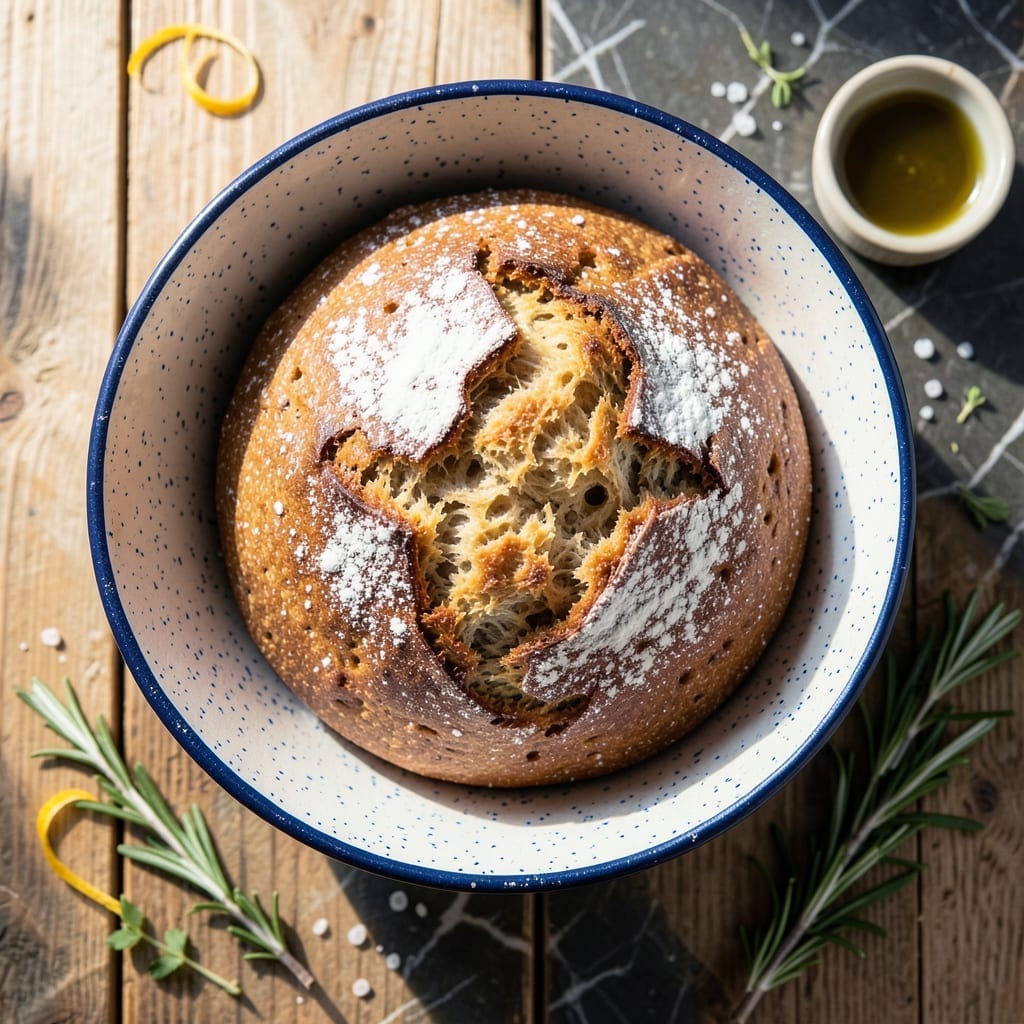
This no-knead crock pot bread delivers crusty perfection with almost no effort on your part. The slow cooker creates the ideal steamy environment for developing a golden, crispy crust while keeping the interior soft and airy.
I perfected this method after years of experimenting with various bread-making techniques. The beauty lies in its simplicity—just mix the ingredients, let the dough rise, then cook it in your crock pot. No special equipment or advanced skills required.
What emerges is a rustic loaf with a shatteringly crisp exterior and a tender, open crumb. The process takes about 2 hours from start to finish, with most of that time being hands-off.
Serve it warm with butter or use it for sandwiches. This method consistently produces bakery-quality results in your own kitchen.
Ingredients for Crock Pot Bread
Pantry staples plus a slow cooker yield crusty, bakery-style bread at home.
| Ingredient | Amount | Notes |
|---|---|---|
| All-Purpose Flour 🌾 | 4 cups | Plus extra for dusting |
| Warm Water 💧 | 1 ½ cups | About 110°F for yeast activation |
| Active Dry Yeast 🍞 | 2 ¼ tsp | One 0.25 oz packet |
| Granulated Sugar 🧂 | 1 tbsp | Feeds the yeast |
| Kosher Salt 🧂 | 2 tsp | Diamond Crystal preferred |
| Olive Oil 🫒 | 2 tbsp | For greasing and texture |
| Cornmeal 🌽 | ¼ cup | For dusting crock pot |
| Honey 🍯 | 1 tbsp | Optional for slight sweetness |
| Unsalted Butter 🧈 | 2 tbsp | For serving, melted |
The flour is your foundation—King Arthur or Gold Medal all-purpose work perfectly. Yeast freshness is key (check the expiration date), and warm water at 110°F wakes it up without killing it. I grab my yeast from Costco in bulk—it stays fresh in the freezer for months. The salt should be kosher, not table salt, to avoid over-salting the dough.
No honey? Sugar at a 1:1 ratio works fine. Short on cornmeal? Extra flour or oatmeal can dust the crock pot instead. The olive oil can be any neutral oil (vegetable, canola) if that’s what you’ve got. For a richer loaf, swap 1 cup water for 1 cup warm milk—just don’t use cold straight from the fridge.
Store leftover bread wrapped in foil at room temp for 2-3 days, or slice and freeze for up to 3 months. Reheat frozen slices in a toaster or oven at 350°F for 10 minutes.
Why You’ll Love This Recipe
- Set It and Forget: I just mix flour, yeast, sugar, and salt with warm water, dump it in the crock pot, and walk away.
- Warm, Yeasty Comfort: That first bite—soft inside with a buttery crust—tastes like home.
- Feeds the Week: One batch makes sandwiches for days, or toast for breakfast, or even garlic bread for dinner.
- Pennies per Loaf: All-purpose flour and basic pantry staples mean I spend less than a dollar on bread that outshines bakery loaves.
Step-by-Step Instructions for Crock Pot Bread
This no-fuss method delivers a crusty loaf with minimal hands-on time.
Step 1: Activate the Yeast and Mix the Dough
In a large mixing bowl, combine the 1.5 cups warm water, 2.25 tsp active dry yeast, and 1 tbsp granulated sugar. Let it sit for 5-7 minutes until the mixture becomes frothy and bubbly—this is how you know the yeast is alive and active.
Add the 4 cups all-purpose flour, 2 tsp kosher salt, and 1 tbsp honey to the yeast mixture. Stir with a wooden spoon until a shaggy dough forms. It will look rough and sticky, but that’s exactly what you want for this no-knead method.
Drizzle in the 2 tbsp olive oil and mix until just combined. The dough will be tacky but should pull away from the sides of the bowl. Don’t overmix—this keeps the bread tender.
Step 2: Proof the Dough Until Doubled
Cover the bowl with a damp kitchen towel or plastic wrap and let the dough rise at room temperature for 1 to 1.5 hours. You’re looking for it to double in size, with bubbles forming on the surface.
This step is where the magic happens. The yeast ferments the sugars, creating air pockets that will give your bread its light, airy texture. If your kitchen is cool, you might need the full 1.5 hours—just be patient.
Once doubled, give the dough a quick stir to deflate it slightly. This redistributes the yeast and ensures even baking.
Step 3: Prepare the Crock Pot and Shape the Dough
Lightly grease the inside of your crock pot with a bit of the olive oil, then sprinkle the 0.25 cup cornmeal evenly across the bottom. This prevents sticking and adds a subtle crunch to the crust.
Transfer the dough to the prepared crock pot, shaping it into a round loaf. The dough will be sticky, so wet your hands slightly to make handling easier. Smooth the top with damp fingers for an even finish.
Cover the crock pot with the lid and let the dough rise again for 30-45 minutes while you preheat the oven to 375°F. The second rise ensures the loaf has enough structure to hold its shape during baking.
Step 4: Bake to Crusty Perfection
Once the oven is preheated, place the crock pot (with the lid on) in the oven and bake for 50-55 minutes. The lid traps steam, which is key for developing a crispy, golden crust.
After 50 minutes, remove the lid and bake for an additional 10-15 minutes to deepen the color and crisp the crust. You’ll know it’s done when the loaf is deep golden brown and sounds hollow when tapped on the bottom.
Use oven mitts to carefully remove the crock pot from the oven. Let the bread cool in the pot for 5 minutes, then transfer it to a wire rack to cool completely.
Step 5: Serve Warm with Butter
Once the bread is cool enough to handle but still warm, slice it and serve with the 2 tbsp unsalted butter, melted. The butter soaks into the crust, adding richness and shine.
This loaf is best enjoyed fresh, with a crisp exterior giving way to a soft, airy interior. If you have leftovers, store them in an airtight container and toast slices to revive the crust.
Pro Tips For Making Crock Pot Bread
- Test Your Yeast: I learned this the hard way—mix your active dry yeast with the warm water and sugar first and wait 5-10 minutes for a foamy layer to form. If it doesn’t bubble, your yeast is dead and your bread won’t rise.
- Grease the Liner: Sounds weird, but it works: coat the inside of your crock pot liner with oil or butter before adding the dough. This keeps the bread from sticking and makes cleanup a breeze.
- Skip Cold Water: Warm water is non-negotiable—anything too hot kills the yeast, but cold water won’t activate it. Aim for about 110°F, or just warm enough to feel comfortable on your wrist.
- Resist Early Peeking: After adding the dough, resist the urge to lift the lid for at least the first hour. Every time you open it, you lose heat and risk collapsing the rising bread.
Flavor Customization for This Recipe
Herb-Infused Bread
For a savory twist, add 2 tbsp chopped fresh rosemary or 1 tbsp dried Italian seasoning to the dough with the flour. This creates an aromatic loaf perfect for pairing with olive oil dips. I love the earthy notes rosemary adds to the crust. 🌿
Cheesy Garlic Loaf
Mix 1 cup shredded sharp cheddar and 2 minced garlic cloves into the dough. Before baking, sprinkle ¼ cup grated Parmesan on top for extra flavor. The cheese melts into gooey pockets, making this a family favorite.
Sweet Cinnamon Swirl
Knead 2 tbsp brown sugar and 1 tsp cinnamon into the dough for a sweet version. After shaping, drizzle with 2 tbsp melted butter and sprinkle with extra cinnamon sugar before baking. This tastes like a cozy weekend breakfast.
Whole Wheat Option
Swap 2 cups all-purpose flour for 2 cups whole wheat flour for a nuttier, heartier loaf. Add 1 extra tbsp water as whole wheat absorbs more liquid. The crust becomes denser but still delicious with a rich, toasty flavor.
Seeded Crunch
Add 2 tbsp mixed seeds (sunflower, sesame, or poppy) to the dough or sprinkle on top before baking. Toast the seeds in a dry pan for 2 minutes first to enhance their flavor. This adds a delightful texture contrast.
Honey Butter Glaze
Combine 2 tbsp melted butter and 1 tbsp honey to brush on the warm loaf after baking. The glaze soaks into the crust, creating a sweet, glossy finish that’s irresistible. 💛
Nutrition Facts
Frequently Asked Questions
Can I use a different type of flour?
Yes! Swap up to 2 cups of all-purpose for whole wheat or bread flour. Whole wheat will make a denser loaf, so add 1 extra tbsp water. Bread flour creates a chewier texture.
Why did my bread turn out dense?
Dense bread usually means the yeast didn’t activate properly. Check your water temperature—it should be 110°F. Also, ensure your yeast isn’t expired and give it the full 1.5 hours to rise.
How do I know when it’s done?
The loaf should be deep golden brown and sound hollow when tapped on the bottom. If unsure, use a thermometer—internal temp should reach 190-200°F.

- 6 Oz Chocolate Chip Cookie Recipe: Perfectly Balanced Crispy Edges and Chewy Hearts - September 25, 2026
- 6-Inch Coffee Cake Recipe: Vanilla Bean Swirls and Buttery Streusel Topping - September 25, 2026
- 1 Hour Soup Recipe: Velvety Richness Without the Wait - September 25, 2026