
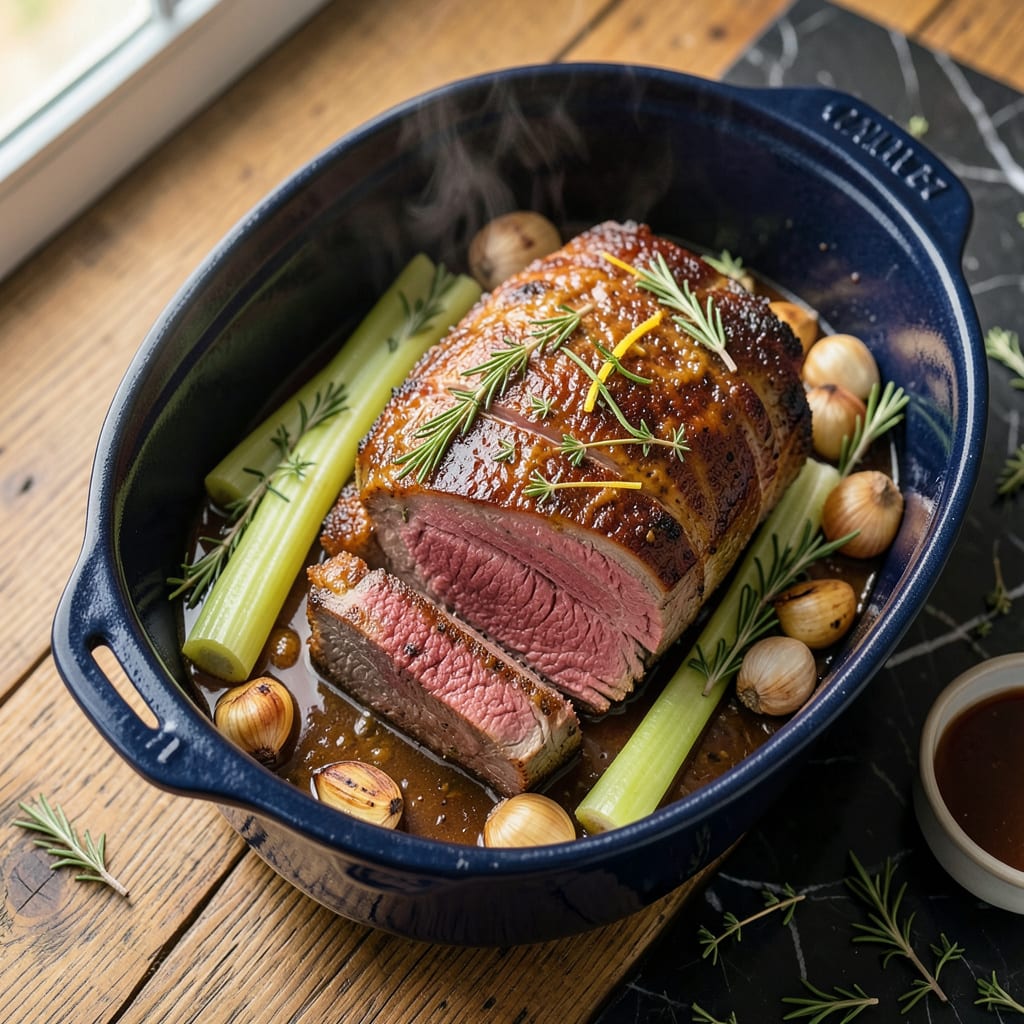
Achieving perfect prime rib doesn’t require an expensive roasting pan or hours of oven monitoring—your crock pot delivers restaurant-quality results with minimal effort. This method transforms a luxurious cut into fall-apart tender meat, every time.
The secret lies in a herb-crusted sear before slow cooking, which locks in juices while building deep flavor. Set to low for 6-8 hours, and you’ll have prime rib with a rosy pink center and rich, beefy aroma that fills your kitchen.
Ingredients for Crock Pot Prime Rib
This luxurious cut needs just pantry herbs and a few aromatics to become your most impressive slow-cooked meal yet.
| Ingredient | Amount | Notes |
|---|---|---|
| Bone-in Prime Rib Roast 🥩 | 4 lb | Ribeye end preferred, well-marbled |
| Kosher Salt 🧂 | 2 tbsp | Diamond Crystal preferred for even seasoning |
| Freshly Ground Black Pepper 🌶️ | 2 tbsp | Coarse grind for crust formation |
| Garlic Cloves 🧄 | 8 cloves | Minced to paste consistency |
| Fresh Rosemary Sprigs 🌿 | 4 whole | Leaves stripped and finely chopped |
| Fresh Thyme Sprigs 🍃 | 6 whole | Leaves stripped for herb crust |
| Extra-Virgin Olive Oil 🫒 | ¼ cup | High-quality for searing |
| Dijon Mustard 🟡 | 3 tbsp | Smooth variety for crust adhesion |
| Beef Broth 🍲 | 1 cup | Low-sodium preferred |
| Worcestershire Sauce 💧 | 2 tbsp | Lea & Perrins recommended |
| Unsalted Butter 🧈 | 2 tbsp | For finishing baste |
| Red Wine 🍷 | ½ cup | Dry variety like Cabernet |
| Yellow Onion 🧅 | 1 whole | Thickly sliced for aroma |
| Carrots 🥕 | 2 whole | Cut into 3-inch chunks |
| Celery Stalks 🌿 | 2 whole | Cut into 3-inch pieces |
[recipeingredientscaler]
The prime rib is the star—look for USDA Choice or Prime with abundant marbling. I source mine from Costco for consistent quality at better prices (their Prime grade is excellent). The bone-in ribeye end gives you that classic presentation and extra flavor. If your butcher offers dry-aged, grab it—the slow cooker will amplify that nutty depth. Don’t skimp on the Kosher salt; Diamond Crystal’s flake structure dissolves perfectly into that crust (morton’s works too, just reduce by 25%).
No red wine? Extra beef broth with 1 tsp balsamic vinegar mimics the acidity. Fresh herbs are ideal, but dried at one-third quantity works in a pinch (rehydrate in the broth first). For the mustard, whole-grain Dijon adds texture if you prefer. Worried about the Worcestershire? Anchovy-free versions exist (like Annie’s), though traditional adds umami. The vegetables are flexible—parsnips or leeks make great swaps for carrots/celery.
The herb crust can be prepped 12 hours ahead—store refrigerated in an airtight container. Leftovers (if you have any) keep 4-5 days refrigerated, or freeze sliced portions for 3 months. I like to strain and reduce the cooking liquid into a jus—it’s liquid gold for serving. The butter baste is worth using; it adds that final restaurant-quality sheen.
Why You’ll Love This Recipe
- Set It and Forget: I’ve made this while answering emails, folding laundry, and even during my kid’s soccer practice. Five minutes to rub the roast with salt, pepper, and smashed garlic, then the crock pot does the rest—no basting, no stress.
- That Garlic-Rosemary Crust: When the rosemary and garlic meld into the fat cap during the slow cook, it forms this sticky, fragrant crust. I’ve had people ask if I seared it first (I didn’t)—that’s how deep the flavor goes.
- Holiday Hero (Yes, Even Tuesday): This is my secret for Christmas dinner and the random Sunday when I crave something fancy but can’t be bothered. One roast feeds six with leftovers, and it’s just as impressive sliced thin for sandwiches as it is plattered for guests.
- Leftover Luxury: Prime rib sandwiches with horseradish mayo, prime rib hash for breakfast, or just cold slices straight from the fridge—this keeps giving. Honestly, I sometimes make it just for the leftovers, because they’re that good.
Step-by-Step Instructions for Crock Pot Prime Rib
This method transforms your prime rib into fork-tender perfection with minimal effort and maximum flavor.
Step 1: Create the Herb Crust Base
Begin by preparing your herb paste that will form the flavor foundation. In a small bowl, combine the 2 tbsp freshly ground black pepper, 2 tbsp kosher salt, 8 cloves garlic cloves (minced to a fine paste), and the leaves from 4 whole fresh rosemary sprigs and 6 whole fresh thyme sprigs (finely chopped). The coarse grind of pepper creates that signature crust texture while the fresh herbs infuse every bite with aromatic depth.
Add the 3 tbsp Dijon mustard and 0.25 cup extra-virgin olive oil to the herb mixture, stirring until you achieve a thick, spreadable paste. This combination not only seasons the meat but creates a protective barrier that locks in moisture during the long cooking process. The mustard’s acidity helps tenderize the surface while the oil ensures even coverage.
Step 2: Sear and Season the Prime Rib
Pat the 4 lb bone-in prime rib roast completely dry with paper towels – this ensures proper browning. Heat a large skillet over medium-high heat until very hot. Sear the roast on all sides for 2-3 minutes per side until you develop a deep golden crust. This initial sear creates the Maillard reaction that builds complex flavors throughout the cooking process.
Transfer the seared roast to a clean surface and immediately apply the herb paste mixture, pressing it firmly onto all surfaces of the meat. The residual heat from searing helps the paste adhere better. Place the thickly sliced yellow onion, 2 whole carrots (cut into 3-inch chunks), and 2 whole celery stalks (cut into 3-inch pieces) in the bottom of your crock pot – these will form an aromatic bed that elevates the meat as it cooks.
Step 3: Slow Cook to Perfection
Place the seasoned prime rib on top of the vegetable bed in your crock pot. Pour in the 1 cup beef broth, 0.5 cup red wine, and 2 tbsp Worcestershire sauce around (not over) the meat. The liquid should come about halfway up the roast – this creates the perfect moist environment without steaming the crust you worked so hard to create.
Cover and cook on low setting for 6-8 hours or until the internal temperature reaches 135°F for medium-rare. The slow, gentle heat breaks down connective tissues while keeping the meat incredibly tender. Resist the temptation to peek during cooking – every time you lift the lid, you add 20-30 minutes to your cooking time and risk temperature fluctuations.
Step 4: Rest and Finish with Butter Baste
Once the prime rib reaches your desired doneness, carefully transfer it to a cutting board and tent loosely with foil. Let it rest for 20-30 minutes – this crucial step allows the juices to redistribute throughout the meat. While it rests, strain the cooking liquids from the crock pot into a saucepan and skim off any excess fat.
Simmer the strained liquids over medium heat until reduced by half, then whisk in the 2 tbsp unsalted butter until fully incorporated. This creates a rich, velvety jus that complements the herb-crusted meat perfectly. Slice the prime rib against the grain and serve immediately with the reduced jus spooned over each serving.
Troubleshooting Perfect Results
Overcooked Meat
If your prime rib turns out tougher than expected, it likely cooked too long. Remember that crock pots vary—some run hotter than others. Next time, start checking the internal temperature after 5 hours on low. I always use a meat thermometer (ThermoPro is my go-to) to avoid guesswork. The moment it hits 130°F, pull it out—it’ll rise another 5°F while resting. 🌡️
Weak Herb Crust
When the crust doesn’t form properly, it’s usually because the paste wasn’t applied thickly enough or the sear wasn’t hot enough. Make sure your skillet is ripping hot before adding the roast—you should see smoke when you place it in. Press the herb mixture firmly onto all surfaces, using about ¼ cup of paste for a 4 lb roast. The mustard in the paste helps it adhere during cooking.
Dry Results
Dry prime rib often means there wasn’t enough liquid in the crock pot. The vegetables and broth should come about halfway up the meat. If you notice the liquid level dropping below that during cooking, add ½ cup hot beef broth to replenish. Also, avoid trimming too much fat before cooking—that marbling is your insurance against dryness. I learned this the hard way after over-trimming my first attempt!
Uneven Cooking
If one end is more done than the other, your roast might be too large for your crock pot. For even cooking, the meat should fit comfortably with 1-2 inches of space on all sides. Consider cutting a 6+ lb roast in half before cooking. Also, rotate the roast 180 degrees halfway through cooking if your crock pot has hot spots (most do near the edges).
Bland Flavor
When the flavor falls flat, it’s typically because the sear wasn’t deep enough or the herbs lost potency. Don’t rush the searing step—aim for a dark golden crust on all sides. For the herbs, I’ve found that doubling the thyme (to 12 sprigs) adds noticeable depth without overpowering. A splash of balsamic vinegar in the cooking liquid also brightens flavors beautifully.
Sauce Too Thin
If your jus doesn’t reduce properly, you likely didn’t simmer it long enough. After straining, bring it to a rolling boil, then reduce to medium-low heat. Let it simmer uncovered for 10-15 minutes, stirring occasionally. For extra richness, whisk in a cornstarch slurry (1 tsp cornstarch + 1 tbsp cold water) during the last minute. This trick saves my sauces every time! ✨
Nutrition Facts
Frequently Asked Questions
Do I need to sear the roast first?
Searing creates a flavorful crust through the Maillard reaction. Heat your skillet to medium-high and sear each side for 2-3 minutes until deep golden brown. This step locks in juices and adds complexity to the final dish.
Can I use a boneless roast instead?
Yes, but bone-in delivers better flavor and moisture. For boneless, reduce cooking time by 1-2 hours and check temperature early. The bone acts as an insulator, so boneless cooks faster and risks drying out more easily.
What if my crock pot runs hot?
Start checking temperature after 4 hours on low. Some models run hotter—use a meat thermometer to monitor. If it’s cooking too fast, switch to warm setting or prop the lid slightly to reduce heat retention.
How do I adjust for a larger roast?
For roasts over 5 lbs, increase cooking time by 1-1.5 hours per additional pound. Ensure your crock pot can accommodate it with 1-2 inches of clearance. Consider cutting very large roasts in half for even cooking.
Can I make this ahead of time?
The herb paste can be prepared 12 hours ahead and refrigerated. Cooked prime rib keeps 4-5 days refrigerated or 3 months frozen. Reheat gently in the cooking juices to maintain moisture.

- 8 Bean Soup Recipe Crock Pot: Hearty Vegetable Medley in One Pot - September 25, 2026
- 4C Bread Crumbs Meatballs Recipe: Crispy Crust and Juicy Centers - September 25, 2026
- 6 Oz Chocolate Chip Cookie Recipe: Perfectly Balanced Crispy Edges and Chewy Hearts - September 25, 2026