
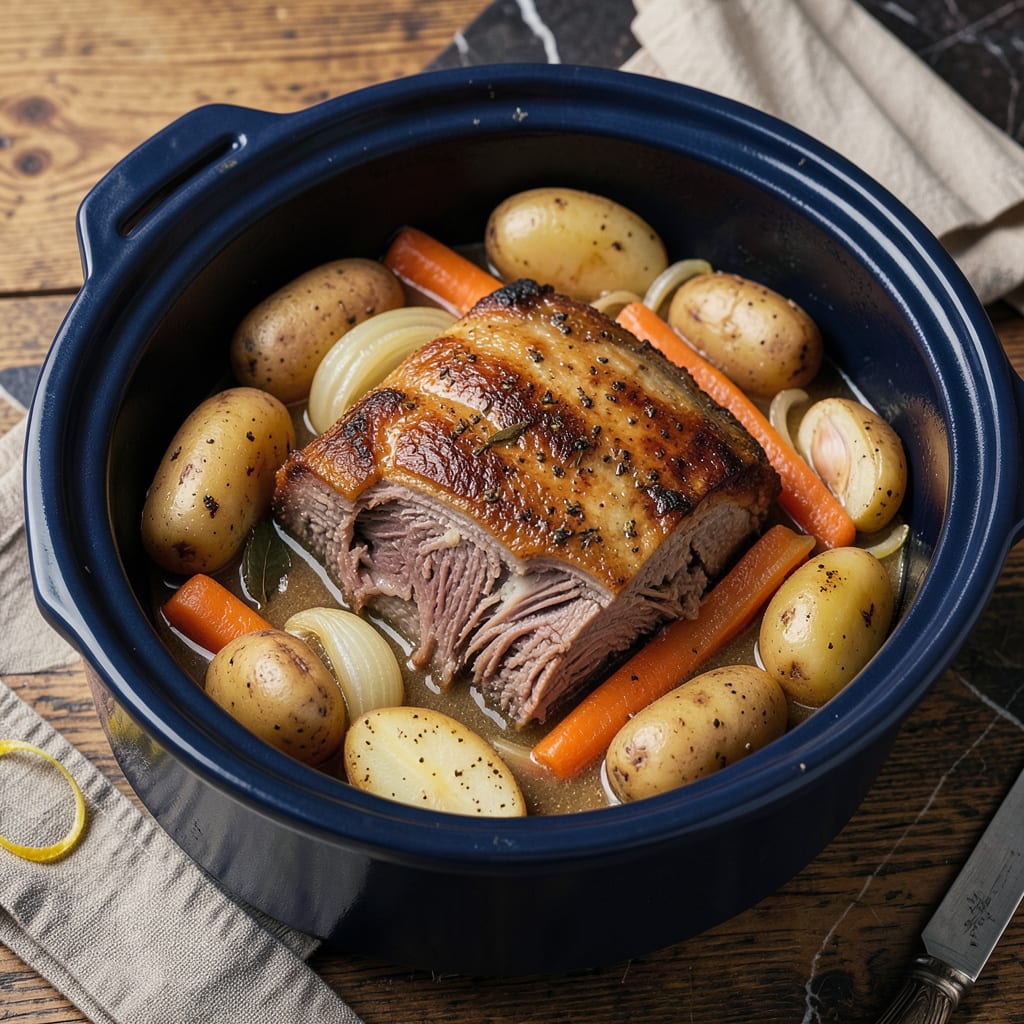
The crockpot transforms corned beef from tough to fall-apart tender with almost no effort. This method guarantees perfectly cooked meat every time, using simple ingredients and hands-off preparation. The slow cooker’s gentle heat breaks down the fibers while infusing flavor from aromatic spices and vegetables.
By the end of the cooking process, you’ll have juicy, flavorful corned beef that practically melts at the touch of a fork. The beauty of this approach lies in its simplicity—just layer the ingredients, set the timer, and let the crockpot do the work while you focus on other things.
Ingredients for Crockpot Recipe for Corned Beef
Quality corned beef and aromatic vegetables combine for effortless, restaurant-worthy results in your slow cooker.
| Ingredient | Amount | Notes |
|---|---|---|
| Corned Beef Brisket 🥩 | 3 lb | Flat-cut, with spice packet |
| Russet Potatoes 🥔 | 1 ½ lb | Peeled, cut into 2-inch chunks |
| Yellow Onion 🧅 | 1 whole | Quartered, layers separated |
| Carrots 🥕 | 4 whole | Peeled, cut into 3-inch pieces |
| Garlic Cloves 🧄 | 6 cloves | Smashed, peeled |
| Beef Broth 💧 | 2 cups | Low-sodium preferred |
| Apple Cider Vinegar 🍏 | ¼ cup | Balances richness |
| Brown Sugar 🍚 | 2 tbsp | Light or dark |
| Whole Grain Mustard 🟡 | 1 tbsp | Dijon works as substitute |
| Bay Leaves 🌿 | 2 whole | Dried, for aromatic depth |
| Black Peppercorns 🌶️ | 1 tsp | Whole, for slow infusion |
| Kosher Salt 🧂 | 1 tsp | Adjust to taste post-cooking |
[recipeingredientscaler]
The corned beef quality determines the final texture. Flat-cut brisket yields the most consistent tenderness, while point-cut offers more marbling but can shred unevenly. Most grocery stores stock pre-brined corned beef with included spice packets—use these for convenience, though homemade spice blends allow for customization. For vegetables, firm, fresh potatoes and carrots hold their shape best during the long cook time. Avoid waxy potatoes (like red or new potatoes) as they turn mealy.
No spice packet? Substitute with 1 tbsp pickling spice or a blend of mustard seeds, coriander, and allspice. The apple cider vinegar can be replaced with white vinegar or dry white wine for similar acidity. If avoiding sugar, maple syrup at half the quantity provides sweetness without overpowering. For gluten-free needs, verify the corned beef contains no wheat-based binders and use gluten-free mustard. The broth can be vegetable-based if preferred.
Store uncooked corned beef in its brine for up to 5 days refrigerated. Post-cooking, the meat keeps well for 4 days in its juices, while vegetables soften further upon storage. For longer preservation, freeze the cooked beef (without vegetables) for 2-3 months. Reheat gently in the cooking liquid to maintain moisture. The spice-infused broth makes excellent soup base—strain and refrigerate for 1 week or freeze for 3 months.
Why You’ll Love This Recipe
- Dump-and-Go Magic: I’ve made this on mornings when I’m still half-asleep—just toss in the brisket, chunk the potatoes and carrots (no peeling, because who has time?), and let the slow cooker do its thing. The garlic cloves and onion practically melt into the broth while you’re at work or chasing kids.
- That Fall-Apart Tender Bite: Here’s what sold me—the first time I pulled the brisket apart with a fork, it practically dissolved. The potatoes soak up all that rich, garlicky broth, and the carrots? Sweet with just enough bite. It’s the kind of meal that makes you pause mid-bite and think, “Yeah, I nailed this.”
- St. Paddy’s and Tuesday Night: I serve this every March 17th, obviously, but also on random Wednesdays when I need something hearty. The leftovers make killer sandwiches (rye bread + mustard + extra brine for dipping), and the broth? Freeze it for soup later. It’s my secret weapon for feeding a crowd or just my picky nephew who “doesn’t like potatoes” (he eats three helpings).
- One Brisket, Three Meals: Honestly, a 4-pound corned beef brisket costs less than takeout for my family, and it stretches forever. First night: the full spread with veggies. Night two: Reuben-style melts with the leftovers. Night three? Hash with those potatoes and a fried egg on top. Between us, I’ve stretched it to four meals when I’m feeling thrifty.
Step-by-Step Instructions for Crockpot Corned Beef
This method delivers perfectly tender meat with minimal active cooking time and maximum flavor development.
Step 1: Prepare the Corned Beef and Aromatics
Rinse the 3 lb corned beef brisket under cold water to remove excess brine from the packaging. Pat it completely dry with paper towels, then place it in the bottom of your slow cooker. The included spice packet contains essential seasoning, so sprinkle it evenly over both sides of the brisket.
Arrange the 1 whole yellow onion (quartered), 6 cloves garlic cloves (smashed), 2 whole bay leaves, and 1 tsp black peppercorns around the brisket. These aromatics will infuse the meat with deep, savory flavor as it cooks slowly. Don’t skip this step—it’s what transforms good corned beef into exceptional corned beef.
Step 2: Create the Braising Liquid
In a medium bowl, whisk together the 2 cups beef broth, 0.25 cup apple cider vinegar, 2 tbsp brown sugar, and 1 tbsp whole grain mustard until the sugar dissolves completely. The vinegar provides necessary acidity to balance the richness of the meat, while the sugar and mustard create a subtle sweet-tangy complexity.
Pour this liquid mixture over the brisket in the slow cooker, ensuring it covers about two-thirds of the meat. Add the 1 tsp kosher salt to the liquid. The liquid should come up the sides of the brisket but not completely submerge it—this allows the top to develop a lightly caramelized exterior while the bottom braises.
Step 3: Cook on Low Heat for Optimal Tenderness
Cover the slow cooker and set it to low heat for 8-9 hours. This extended cooking time at a gentle temperature allows the connective tissues in the brisket to break down completely, resulting in that signature fall-apart texture. Resist the temptation to check or stir during cooking—each time you lift the lid, you add 20-30 minutes to the cooking time.
You’ll know the corned beef is ready when a fork inserted into the thickest part slides in with absolutely no resistance. The meat should pull apart easily with just a gentle tug. At this point, the internal temperature should register 195-200°F on an instant-read thermometer.
Step 4: Add Vegetables and Finish Cooking
During the last 2 hours of cooking, add the 1.5 lb russet potatoes (cut into 2-inch chunks) and 4 whole carrots (cut into 3-inch pieces) to the slow cooker. Nestle them into the liquid around the brisket. The vegetables will absorb the rich, meaty flavors while becoming perfectly tender.
After the additional 2 hours, check that the potatoes are fork-tender and the carrots can be pierced easily with a knife. If needed, cook for an additional 30 minutes until all vegetables reach the desired doneness. The liquid should have reduced slightly, creating a flavorful broth for serving.
Step 5: Rest and Serve
Transfer the corned beef to a cutting board and let it rest for 10-15 minutes before slicing. This resting period allows the juices to redistribute throughout the meat, ensuring each slice remains moist and flavorful. Slice the brisket against the grain into ¼-inch thick pieces for optimal tenderness.
Arrange the sliced corned beef on a platter with the potatoes and carrots. Ladle some of the cooking liquid over the top to keep everything moist. The meat should be so tender it nearly melts at the touch of a fork, with a subtle sweet-savory balance from the braising liquid. Serve immediately with extra mustard on the side if desired.
Troubleshooting This Recipe
Tough Corned Beef
If your corned beef turns out tough instead of fall-apart tender, it likely didn’t cook long enough. The connective tissues in brisket need 8-9 hours on low to fully break down. I always check tenderness with a fork—if it doesn’t slide in effortlessly, give it another 1-2 hours. Remember, every slow cooker runs slightly differently. 🌡️
Dry or Overcooked
Dryness usually happens when there’s not enough liquid or the cook time was too long. Make sure your braising liquid covers at least two-thirds of the meat. If you notice the liquid reducing too much during cooking, add 1 cup warm water or broth to replenish it. The meat should always be partially submerged.
Vegetables Too Soft
Mushy vegetables mean they cooked too long. Add them only during the last 2 hours of cooking as directed. For firmer results, cut potatoes into larger 3-inch chunks instead of 2-inch. Carrots hold up better when left whole or halved lengthwise. I’ve found russet potatoes stay firmer than red potatoes.
Bland Flavor
If your corned beef lacks depth, it probably needs more seasoning or acidity. The included spice packet is essential—don’t skip it! For extra flavor, add 1 extra tbsp whole grain mustard or 1 tbsp apple cider vinegar to the braising liquid. A splash of Guinness stout instead of broth adds wonderful richness too.
Too Salty
Corned beef can sometimes taste overly salty from the brining process. To fix this, rinse the brisket thoroughly before cooking and reduce the added kosher salt to ½ tsp. You can also soak the meat in cold water for 30 minutes before cooking to draw out excess salt. Serve with unsalted butter on the vegetables to balance flavors.
Uneven Cooking
If parts of your brisket are tender while others remain tough, the meat might have been folded or overlapping in the slow cooker. Arrange the brisket in a single layer, fat-side up. For very large pieces, consider cutting the brisket in half to ensure even cooking. Rotate the meat halfway through if your slow cooker has hot spots. A meat thermometer helps verify doneness—aim for 195-200°F throughout. 💡
Nutrition Facts
Frequently Asked Questions
Can I cook this on high instead of low?
While possible, cooking on high heat isn’t ideal. You’ll need 4-5 hours instead of 8-9, but the texture won’t be as tender. The slow, gentle heat is what breaks down the connective tissues perfectly. If you’re short on time, try 6 hours on high as a compromise.
What if I don’t have the spice packet?
No problem! Substitute with 1 tbsp pickling spice or make your own blend: 1 tsp mustard seeds, ½ tsp coriander, ½ tsp allspice, and 4 whole cloves. The key flavors come from these warm spices.
Can I add cabbage instead of potatoes?
Add 1 small head of cabbage cut into wedges during the last 2 hours of cooking. It will absorb the rich flavors beautifully. For extra tenderness, place wedges on top of the meat so they steam perfectly.
Why is my corned beef still pink inside?
Corned beef stays pink even when fully cooked due to the curing process (nitrates in the brine). It’s safe to eat at 195°F internal temperature. The pink color doesn’t indicate rawness—it’s just the chemical reaction from curing.

- 8 Bean Soup Recipe Crock Pot: Hearty Vegetable Medley in One Pot - September 25, 2026
- 4C Bread Crumbs Meatballs Recipe: Crispy Crust and Juicy Centers - September 25, 2026
- 6 Oz Chocolate Chip Cookie Recipe: Perfectly Balanced Crispy Edges and Chewy Hearts - September 25, 2026