
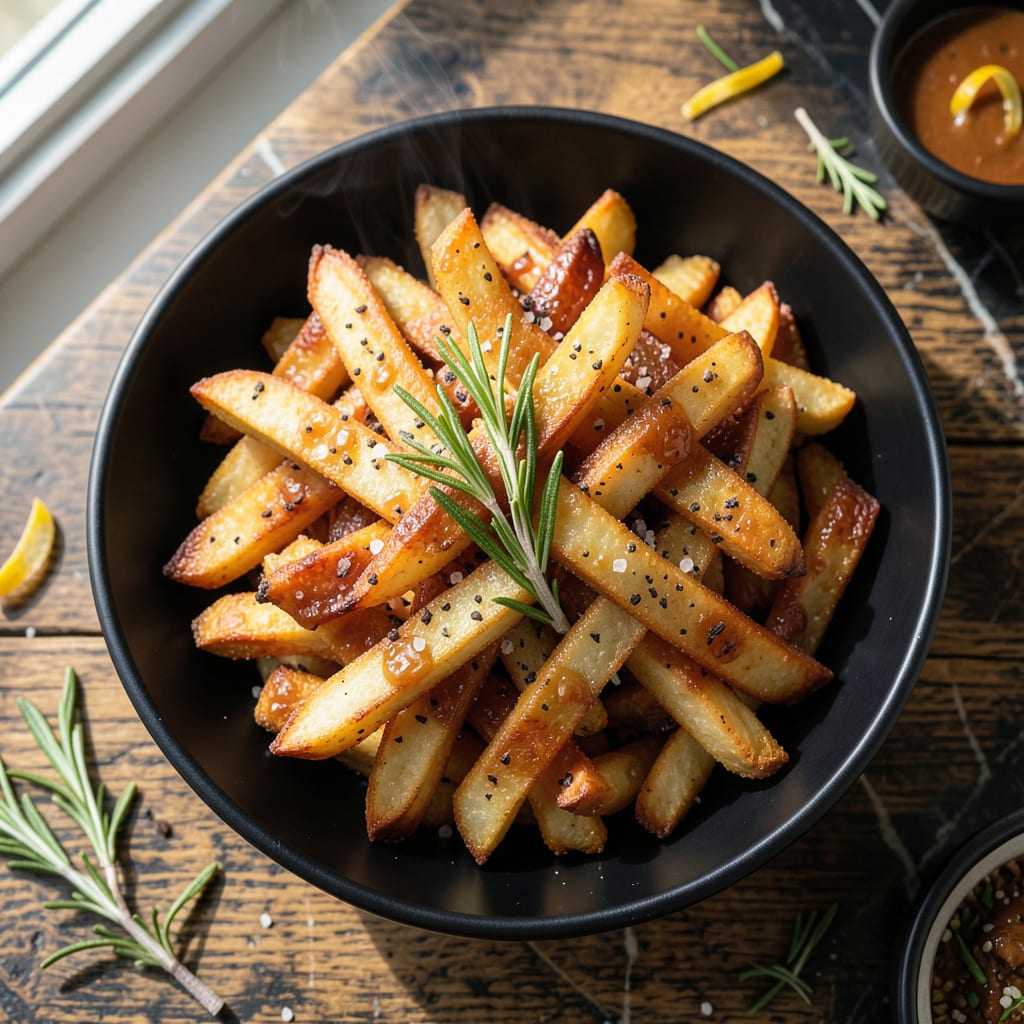
There’s a reason top chefs swear by duck fat for fries—it delivers unmatched crispiness and rich flavor that vegetable oil can’t replicate. This method transforms humble potatoes into golden, shatteringly crispy sticks with a velvety interior.
By double-frying at precise temperatures, you’ll achieve professional results at home. The duck fat imparts a subtle depth that elevates every bite without overpowering. Perfect for pairing with burgers, steaks, or as a standalone indulgence.
Ingredients for Duck Fat Fries
Transform humble potatoes into golden perfection with these precise ingredients for professional results at home.
| Ingredient | Amount | Notes |
|---|---|---|
| Russet Potatoes 🥔 | 2 ½ lb | Peeled, cut into 1/4-inch sticks |
| Duck Fat 🦆 | 4 cups | Rendered, for frying |
| Sea Salt 🧂 | 1 tbsp | Fine grain, plus more to taste |
| Freshly Ground Black Pepper 🌶️ | 1 tsp | Coarse grind preferred |
| Garlic Powder 🧄 | 1 tsp | For seasoning finish |
| Fresh Rosemary 🌿 | 2 tbsp | Finely chopped, optional garnish |
| Fresh Parsley 🍃 | 2 tbsp | Finely chopped, for garnish |
| White Vinegar 💧 | ¼ cup | For potato soak |
| Ice ❄️ | 2 cups | For water soak |
| Water 💧 | 4 cups | Cold, for soaking potatoes |
| Vegetable Oil 🫒 | 2 tbsp | For initial blanching if needed |
| Lemon Wedges 🍋 | 4 pieces | For serving, optional |
The duck fat is non-negotiable for authentic crispiness. Rendered duck fat from D’Artagnan or local butchers offers superior quality and depth of flavor. Look for fat that is clear and odor-free, indicating proper rendering. Russet potatoes are ideal for their high starch content, which ensures a fluffy interior. Organic potatoes from a farmers market or Whole Foods often have better texture and flavor.
Short on duck fat? Beef tallow at a 1:1 ratio offers a similar richness, though the flavor profile will differ. For a vegetarian option, avocado oil provides a high smoke point but lacks the depth. No fresh rosemary? Dried rosemary at one-third the amount works, though the aroma won’t be as vibrant. The vinegar soak is crucial—apple cider vinegar can substitute if white vinegar isn’t available.
Store rendered duck fat in an airtight container in the refrigerator for up to 6 months. Potatoes should be kept in a cool, dark place and used within 2 weeks for optimal texture. Once fried, the fries are best served immediately but can be reheated in a 400°F oven for 5-10 minutes to restore crispiness.
Why You’ll Love This Recipe
- One Pot Wonder: I just toss the russets in melted duck fat, season, and bake—no deep fryer mess.
- Rich & Crispy: That first bite with the golden crust and fluffy center? Pure indulgence.
- Weeknight Hero: Honestly, it’s fancy enough for guests but simple enough for a solo treat.
- Budget Stretch: A little duck fat goes a long way, and leftover fries reheat beautifully.
Step-by-Step Instructions for Duck Fat Fries
Here is the method. Tested, precise, delivers on the crispy promise every time.
Step 1: Soak and Blanch the Russet Potatoes
Combine the 4 cups water, 2 cups ice, and 0.25 cup white vinegar in a large bowl. Add the peeled and cut 2.5 lb russet potatoes and soak for 30 minutes. This acidulated water removes excess starch, preventing gummy centers and promoting maximum crispness.
Drain and rinse the potato sticks, then pat them completely dry with clean kitchen towels. Any residual moisture will cause the duck fat to splatter violently when frying. The sticks should feel dry to the touch and have a slightly matte appearance.
Step 2: Initial Blanch in Duck Fat
In a heavy-bottomed pot or deep fryer, heat the 4 cups duck fat to 300°F over medium heat. The rendered duck fat should shimmer but not smoke—this lower temperature cooks the potatoes through without browning.
Working in batches to avoid overcrowding, carefully lower the potato sticks into the hot fat. Fry for 6-8 minutes until the sticks are soft and translucent but not yet colored. Use a slotted spoon to transfer them to a wire rack set over a baking sheet. This allows air circulation to prevent steaming.
Step 3: Final Fry for Maximum Crispness
Increase the heat to bring the duck fat to 375°F. The fat is ready when a wooden chopstick inserted into it produces rapid, steady bubbles. This higher temperature will create that signature golden, shatteringly crisp exterior.
Fry the par-cooked potatoes in batches again for 3-4 minutes until they achieve a deep golden brown color. The sticks should sizzle vigorously and float to the surface when done. Remove with a slotted spoon and drain on fresh paper towels to absorb any excess fat.
Step 4: Season and Serve Immediately
While the fries are still hot, transfer them to a large bowl. Sprinkle evenly with the 1 tbsp sea salt, 1 tsp freshly ground black pepper, and 1 tsp garlic powder. Toss gently but thoroughly to ensure even coating—the seasoning should cling to the ridged surface of each stick.
Garnish with the 2 tbsp fresh rosemary and 2 tbsp fresh parsley if desired. Serve immediately with the 4 pieces lemon wedges on the side. The contrast of the crisp exterior, fluffy interior, and rich duck fat flavor is best experienced fresh from the fryer.
Pro Tips For Making Duck Fat Fries
- Soak the Potatoes: Cut your russets into sticks and soak them in cold water for at least 30 minutes—I learned this the hard way after ending up with gummy fries more than once. It washes off excess starch so they crisp up properly in the duck fat.
- Heat the Fat First: Get your duck fat smoking hot (around 375°F) before adding the potatoes. After burning a batch by rushing this step, I now wait until a test stick sizzles immediately when it hits the fat.
- Skip the Overcrowding: Fry in small batches so each piece has room to brown. I used to cram them all in to save time, but they just steamed instead of getting that golden duck-fat crust.
- Season While Hot: Toss the fries with sea salt, pepper, and garlic powder right as they come out of the fat. Sounds weird, but it works: the seasoning sticks better to the hot, oily surface than if you wait.
Regional Styles of This duck fat fries
French Classic Style
In France, these fries are called pommes de terre frites au saindoux, a staple in bistros. The French insist on using 100% duck fat for the most authentic flavor. I love the subtle richness it adds, making every bite feel luxurious. They’re often served with Dijon mustard or aioli for dipping. 💛
Belgian Adaptation
Belgian frites are thicker and often fried in beef tallow, but duck fat works beautifully here too. The key is cutting potatoes into ½-inch sticks and frying at 325°F for the first cook. Serve in a paper cone with a variety of sauces for that street-food experience.
Southern US Twist
In the American South, duck fat fries often get a Cajun kick. After frying, toss them with 1 tbsp Cajun seasoning—I prefer Tony Chachere’s brand. The spice blend adds a smoky heat that pairs perfectly with the duck fat’s richness. Serve with remoulade sauce for an extra layer of flavor.
British Gourmet
UK chefs love serving these as triple-cooked chips, a method that involves baking, cooling, then frying twice. The duck fat version takes this to another level. I recommend using Maris Piper potatoes for their perfect texture. Finish with a sprinkle of Maldon sea salt for that signature crunch. 🔥
Spanish Tapas
For a tapas-style serving, cut potatoes into ⅓-inch sticks and fry until extra crispy. Serve with bravas sauce or a simple garlic aioli. The Spanish love the contrast of the crispy fries with the creamy, spicy dipping sauces.
Nutrition Facts
Frequently Asked Questions
Can I reuse the duck fat after frying?
Strain the cooled fat through a fine-mesh sieve to remove food particles, then store in an airtight container in the fridge for up to 3 months. Reheating works perfectly for future batches.
What’s the best potato for extra crispiness?
Russet potatoes are ideal due to their high starch content. For even better results, soak cut sticks in cold, vinegared water for 30 minutes before frying to remove excess starch.
Why do my fries turn out soggy?
Overcrowding the pot lowers the fat temperature too much. Fry in small batches at 375°F for the final crisp. Also, ensure potatoes are fully dry after soaking to prevent splattering.

- 8 Bean Soup Recipe Crock Pot: Hearty Vegetable Medley in One Pot - September 25, 2026
- 4C Bread Crumbs Meatballs Recipe: Crispy Crust and Juicy Centers - September 25, 2026
- 6 Oz Chocolate Chip Cookie Recipe: Perfectly Balanced Crispy Edges and Chewy Hearts - September 25, 2026