
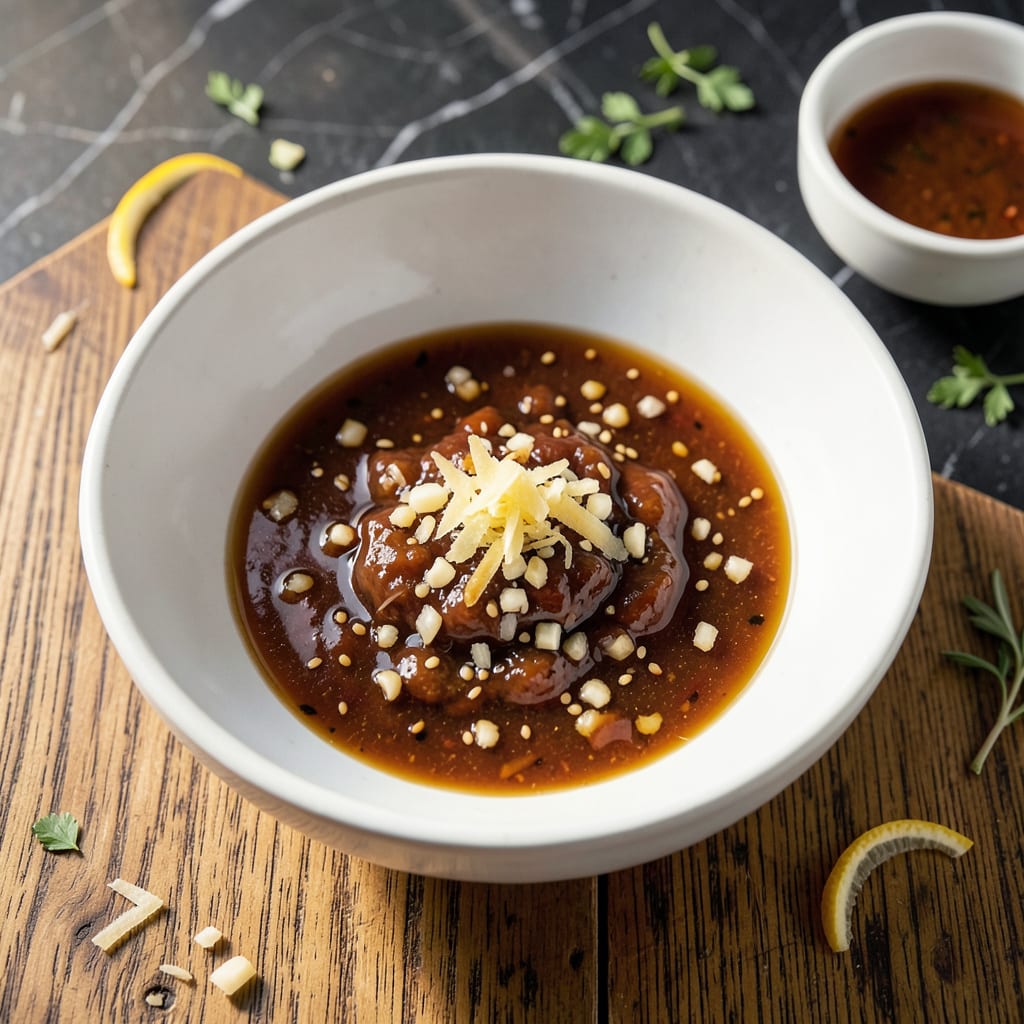
This light yet flavorful dressing brings authentic Asian taste to any salad without excess fat. A careful balance of rice vinegar, fresh ginger, and toasted sesame oil creates a tangy, aromatic blend that enhances without overpowering.
Whisk it together in 5 minutes using simple pantry staples. The result is a versatile, low-calorie dressing that stays fresh in the fridge for up to a week, ready to elevate greens or double as a marinade.
Ingredients for Low Fat Asian Salad Dressing
Nine pantry staples create this light, tangy dressing with bold Asian flavors.
| Ingredient | Amount | Notes |
|---|---|---|
| Rice Vinegar 🍶 | ½ cup | Unseasoned variety preferred |
| Low-Sodium Soy Sauce 🫒 | ¼ cup | Or tamari for gluten-free |
| Toasted Sesame Oil 🫒 | 1 tbsp | Pure, not blended |
| Fresh Ginger Root 🌿 | 1 tbsp | Peeled and grated |
| Garlic Cloves 🧄 | 2 cloves | Minced finely |
| Maple Syrup 🍁 | 2 tbsp | Or agave for similar sweetness |
| Dijon Mustard 🟡 | 1 tsp | For a subtle tang |
| Water 💧 | 2 tbsp | To thin as needed |
| Red Pepper Flakes 🌶️ | ¼ tsp | Adjust for heat preference |
The rice vinegar is key here—Kikkoman or Marukan are reliable brands with consistent quality. For the sesame oil, look for 100% toasted sesame oil (not the blended kind) at Whole Foods or any Asian market. The ginger should be firm with smooth skin; older roots get fibrous. Fresh is non-negotiable for that bright, zingy flavor. Most grocery stores carry everything you need in the international aisle.
No rice vinegar? Apple cider vinegar works in a pinch, though the flavor shifts slightly. Out of maple syrup? Agave or honey (if not strictly vegan) are good swaps. For a nut-free version, skip the sesame oil and add 1 tsp toasted sesame seeds instead. The soy sauce can be coconut aminos for a gluten-free, lower-sodium option. The Dijon adds depth but can be omitted if you prefer a simpler profile.
This keeps beautifully in the fridge for 1 week. Store in a sealed jar and give it a good shake before each use—the ginger tends to settle. For longer storage, freeze in ice cube trays for up to 3 months. Thaw in the fridge overnight before using.
Why You’ll Love This Recipe
- 5-Minute Whisk: I just dump everything in a jar, shake, and it’s ready—no blender, no fuss.
- Umami Bomb: The ginger and garlic in that soy-vinegar base hit all the right savory notes without heaviness.
- Weeknight Hero: I drizzle this on greens, grain bowls, or even grilled chicken—works with everything.
- Pantry Staples: Rice vinegar, soy sauce, and sesame oil are always in my cupboard, so I’m never without it.
Step-by-Step Instructions for Low Fat Asian Salad Dressing
This simple method ensures a perfectly balanced dressing with vibrant flavor and smooth consistency.
Step 1: Combine Acid and Umami Base
In a medium bowl, whisk together the 0.5 cup Rice Vinegar and 0.25 cup Low-Sodium Soy Sauce until fully incorporated. This combination creates the bright, tangy foundation that defines the dressing’s character.
I always start with these two ingredients first because the vinegar helps dissolve the maple syrup more evenly. You’ll notice the mixture turns a rich amber color as the soy sauce blends in, which is exactly what you want to see.
Step 2: Add Sweetener and Aromatics
Next, add the 2 tbsp Maple Syrup, 1 tbsp grated Fresh Ginger Root, and minced 2 cloves Garlic Cloves. The maple syrup adds natural sweetness that balances the acidity, while the ginger and garlic provide warmth and depth.
Whisk vigorously for 30 seconds to ensure the grated ginger and minced garlic distribute evenly throughout the mixture. You should see small ginger fibers suspended in the liquid, and the aroma will become noticeably more complex at this stage.
Step 3: Emulsify with Oil and Mustard
Slowly drizzle in the 1 tbsp Toasted Sesame Oil while whisking continuously. This slow incorporation creates a temporary emulsion that gives the dressing body. Then add the 1 tsp Dijon Mustard, which acts as a natural emulsifier.
The mustard also adds a subtle sharpness that enhances the overall flavor profile. After adding it, whisk for another 20 seconds until the dressing takes on a slightly creamy appearance, though it will still be more liquid than traditional vinaigrettes.
Step 4: Adjust Consistency and Season
Add the 2 tbsp Water and 0.25 tsp Red Pepper Flakes. The water thins the dressing to the perfect pourable consistency for coating salad greens, while the red pepper flakes add a gentle heat that builds with each bite.
Whisk one final time for 15 seconds and taste. The flavors should be balanced—tangy from the vinegar, savory from the soy sauce, sweet from the maple syrup, with a warm finish from the ginger, garlic, and red pepper. If you prefer more heat, you can add additional red pepper flakes at this point.
Step 5: Rest and Serve
Let the dressing rest for 10 minutes at room temperature before using. This allows the flavors to meld together fully. You’ll notice the ginger and garlic flavors mellow slightly while the overall taste becomes more harmonious.
Give it a quick whisk before drizzling over your salad. The dressing should coat the back of a spoon lightly but still flow easily. Store any leftovers in an airtight container in the refrigerator for up to 5 days, shaking well before each use as the ingredients may separate slightly over time.
Pro Tips For Making Low Fat Asian Salad Dressing
- Bloom the Aromatics: Cook the minced ginger and garlic in 1 teaspoon of the sesame oil for 30 seconds over medium heat before mixing—this pulls out their full flavor without burning them.
- Measure Sesame Oil Last: Toasted sesame oil is strong, so pour it into the spoon first, then level it off; this prevents overpowering the dressing with too much of its intense flavor.
- Skip the Bottled Ginger: Fresh ginger root makes a real difference here; I learned this the hard way after using powdered ginger once and getting a flat, dull taste.
- Whisk, Don’t Shake: Combine everything in a bowl with a small whisk for 20 seconds—it emulsifies better than shaking in a jar and keeps the dressing from separating too quickly.
Dietary Considerations for This low fat asian salad dressing
Vegan Friendly
This dressing is naturally 100% plant-based, with no animal products in any of the ingredients. The maple syrup provides sweetness without honey, and toasted sesame oil replaces any need for dairy or eggs. Perfect for vegan lifestyles. 🌱
Gluten Free Option
Simply swap the low-sodium soy sauce for tamari or coconut aminos to make this completely gluten-free. Both alternatives maintain the same umami depth while being safe for gluten-sensitive diets.
Low Calorie Choice
At approximately 25 calories per tablespoon, this dressing is a light alternative to creamy options. The 1 tbsp toasted sesame oil is the only fat source, keeping it minimal while delivering maximum flavor per calorie.
Nut Free Adaptation
For nut allergies, skip the sesame oil and instead add 1 tsp toasted sesame seeds to the finished dressing. This maintains the nutty flavor without any allergen risk. The seeds provide the same aromatic quality.
Sugar Conscious
To reduce sugar content, cut the maple syrup to 1 tbsp and add 1 tsp stevia or monk fruit sweetener. The dressing will be less sweet but still balanced, with the vinegar and soy sauce providing plenty of flavor.
Sodium Control
For lower sodium, use low-sodium tamari instead of soy sauce and reduce it to 3 tbsp. Add 1 tbsp lime juice to compensate for the reduced saltiness while maintaining that bright, tangy profile. 💡
Nutrition Facts
Frequently Asked Questions
How long does this dressing stay fresh?
Store it in an airtight container in the fridge for up to 1 week. The flavors meld beautifully over time, but give it a good shake before each use as ingredients may separate.
Can I make this without sesame oil?
Yes! Replace it with 1 tsp toasted sesame seeds for a nut-free version. The seeds provide similar aroma while keeping the dressing just as flavorful.
Why does the recipe call for water?
The 2 tbsp water thins the dressing to the perfect pourable consistency. Without it, the mixture would be too thick to coat salad greens evenly.
What if my dressing separates?
This is normal! Just whisk or shake vigorously for 15 seconds before using. The natural ingredients may settle, but they’ll reincorporate quickly.

- 8 Bean Soup Recipe Crock Pot: Hearty Vegetable Medley in One Pot - September 25, 2026
- 4C Bread Crumbs Meatballs Recipe: Crispy Crust and Juicy Centers - September 25, 2026
- 6 Oz Chocolate Chip Cookie Recipe: Perfectly Balanced Crispy Edges and Chewy Hearts - September 25, 2026