
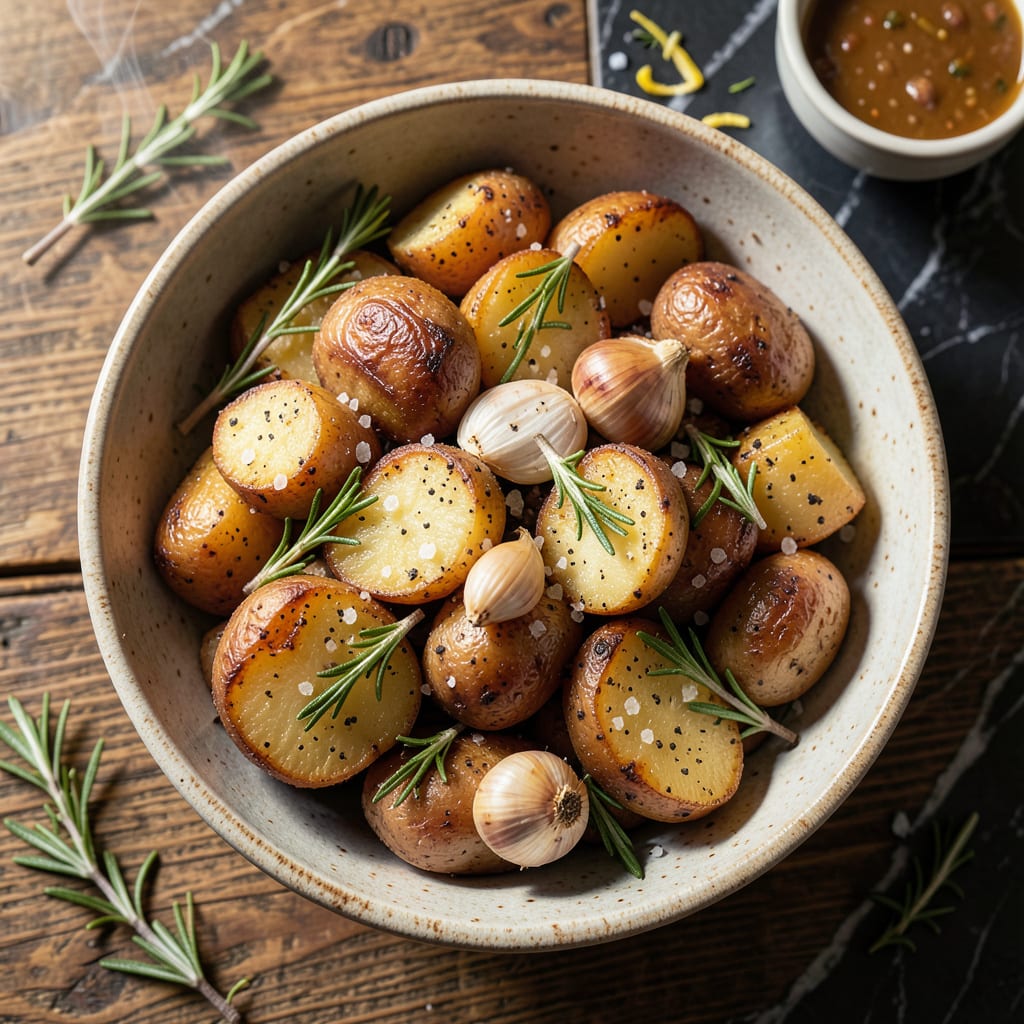
There’s nothing quite like roasting potatoes in duck fat for achieving that crispy, golden perfection. This method transforms simple potatoes into a dish with unmatched flavor and texture.
The secret lies in the high smoke point of duck fat, which allows the potatoes to develop a deep, golden crust while staying fluffy inside. It’s a proven technique for restaurant-quality results at home.
Ingredients for Duck Fat Roast Potatoes
Transform humble potatoes with rendered duck fat and aromatic herbs for unmatched crispy perfection.
| Ingredient | Amount | Notes |
|---|---|---|
| Russet Potatoes 🥔 | 2 lb | Peeled and cut into chunks |
| Duck Fat 🦆 | ½ cup | Rendered and strained |
| Kosher Salt 🧂 | 1 ½ tsp | Diamond Crystal preferred |
| Freshly Ground Black Pepper 🌶️ | 1 tsp | Coarse grind for texture |
| Garlic Cloves 🧄 | 6 cloves | Minced for even distribution |
| Fresh Rosemary 🌿 | 2 tbsp | Finely chopped, stems removed |
| Fresh Thyme 🍃 | 2 tsp | Leaves only, no stems |
| Smoked Paprika 🌶️ | ½ tsp | For depth of flavor |
| Onion Powder 🧅 | ½ tsp | Adds savory base note |
| Baking Powder 🧂 | ½ tsp | For extra crispiness |
| Cornstarch 🌾 | 1 tbsp | Tossed with potatoes before roasting |
The duck fat is non-negotiable for authentic flavor and that restaurant-quality crust. Render your own from duck legs or purchase pre-rendered from D’Artagnan or Fatworks—both offer exceptional quality. Russet potatoes are ideal for their high starch content, which yields the fluffiest interiors. For the herbs, fresh is mandatory; dried simply won’t deliver the same aromatic intensity. Look for vibrant, fragrant sprigs at your market.
No duck fat on hand? Goose fat is the closest substitute, though slightly richer. For a more accessible option, avocado oil or refined coconut oil can work in a pinch (avoid olive oil—its smoke point is too low). Swap fresh herbs for dried at one-third the quantity, but expect a more muted flavor. If you’re missing smoked paprika, a pinch of cayenne plus regular paprika approximates the smokiness.
Store rendered duck fat in the fridge for up to 6 months in an airtight container. The roasted potatoes are best served immediately but can be reheated in a 400°F oven for 10 minutes to revive crispiness. Leftovers keep in the fridge for 3-4 days, though they’ll lose some texture.
Why You’ll Love This Recipe
- Minimal Effort: I just toss the potatoes with duck fat, salt, and pepper—no fancy steps, just roast and forget.
- Crispy Perfection: That duck fat gives them a golden crust and rich flavor that’s honestly hard to beat.
- Sunday Roast Star: It’s my go-to for holiday dinners or a cozy weekend meal with the family.
- Leftovers Win: They reheat beautifully—crisp them up in the oven the next day for a quick side.
Step-by-Step Instructions for Duck Fat Roast Potatoes
Master these techniques for potatoes with a shatteringly crisp exterior and fluffy, flavorful center.
Step 1: Parboil and Dry the Russet Potatoes
Place the 2 lb Russet Potatoes in a large pot and cover with cold water by 1 inch. Add 1 tablespoon of the 1.5 tsp Kosher Salt to the water. Bring to a boil over high heat, then reduce to a simmer for 8-10 minutes until the potatoes are just fork-tender but not fully cooked.
Drain immediately and return the potatoes to the dry pot. Shake the pot vigorously for 30 seconds to rough up the edges—this creates more surface area for maximum crispiness. Let them steam-dry in the pot for 5 minutes until completely dry to the touch.
Step 2: Season and Coat with Duck Fat
In a large bowl, combine the parboiled potatoes with the remaining 0.5 tsp Kosher Salt, 1 tsp Freshly Ground Black Pepper, 0.5 tsp Smoked Paprika, 0.5 tsp Onion Powder, 0.5 tsp Baking Powder, and 1 tbsp Cornstarch. Toss gently but thoroughly until every piece is evenly coated with the seasoning mixture.
Heat the 0.5 cup Duck Fat in a large roasting pan in a 425°F oven for 5 minutes until shimmering and hot. Carefully add the seasoned potatoes to the pan, turning to coat each piece completely in the rendered fat. The fat should sizzle audibly when the potatoes hit the pan.
Step 3: Roast Until Deeply Golden and Crisp
Roast the potatoes in the 425°F oven for 25 minutes, then flip each piece with a metal spatula. The undersides should already be deep golden brown and beginning to crisp. Scatter the 6 cloves Garlic Cloves, 2 tbsp Fresh Rosemary, and 2 tsp Fresh Thyme over the potatoes at this point.
Return to the oven for another 20-25 minutes, flipping once more halfway through, until all sides are uniformly crisp and golden with some darker, caramelized edges. The garlic should be softened and fragrant, and the herbs will have infused their aroma into the duck fat.
Step 4: Rest and Serve Immediately
Transfer the potatoes to a serving dish and let them rest for 5 minutes. This brief rest allows the crust to set while the interiors remain tender. The garlic cloves should be soft enough to spread on the potatoes like butter.
Serve while hot, with the crispest pieces on top. The exterior should crackle when bitten into, revealing a fluffy interior that’s been perfumed by the duck fat and herbs. Any remaining fat in the pan can be drizzled over the top for extra richness and shine.
Pro Tips For Making Duck Fat Roast Potatoes
- Parboil First: Boil the potatoes for 8-10 minutes before roasting—this softens the centers and roughs up the edges for maximum crispiness in the duck fat.
- Heat the Fat: Melt the duck fat in the pan first until it’s shimmering hot, then add the potatoes so they sizzle immediately and don’t soak up the fat.
- Skip the Crowding: I learned this the hard way—give each potato space in the pan or they’ll steam instead of roast, and you’ll lose that golden, crackling crust.
- Crush the Garlic: Press the garlic cloves lightly with the side of your knife before adding them—they’ll infuse the fat without burning, and you’ll get that mellow, sweet flavor.
Storing and Reheating duck fat roast potatoes
Refrigerator Storage
Let your potatoes cool to room temperature before storing. Transfer to an airtight container with a paper towel to absorb excess fat. They’ll keep in the fridge for 3-4 days, though texture is best fresh. ❄️
Freezer Storage
For longer storage, spread cooled potatoes on a baking sheet, freeze until solid (1-2 hours), then transfer to a freezer bag. They’ll keep for 2-3 months. Remove as much air as possible to prevent freezer burn.
Oven Reheating
Preheat your oven to 400°F and spread potatoes in a single layer on a baking sheet. Reheat for 10-15 minutes, flipping halfway. This restores crispiness beautifully. I always add a drizzle of fresh duck fat for extra richness.
Air Fryer Revival
For a quick option, reheat in an air fryer at 375°F for 5-7 minutes, shaking once. The hot air circulation revives the crunch almost like fresh. Just watch closely to avoid burning. 🔥
Microwave Option
If you’re in a rush, microwave covered with a damp paper towel for 1-2 minutes. They won’t be as crispy but will be warm and tender. Add a quick broil for 2 minutes to crisp up the edges.
Nutrition Facts
Frequently Asked Questions
What potatoes work best for roasting?
Russets are ideal for their high starch content and fluffy texture. Yukon Golds also work well if you prefer a slightly waxier potato. Avoid low-starch varieties like red potatoes.
Can I use a different fat?
Goose fat is the closest substitute. For a more accessible option, avocado oil or refined coconut oil can work, but avoid olive oil due to its lower smoke point.
How do I make them extra crispy?
Parboil and rough up the edges before roasting. Adding 1 tbsp cornstarch and 0.5 tsp baking powder to the seasoning helps create an ultra-crispy exterior.
Can I prepare them ahead of time?
Parboil and season the potatoes up to 24 hours ahead, then refrigerate. Bring to room temperature and pat dry before roasting for best results.

- 3 Dozen Deviled Eggs Recipe: Classic Bites With Creamy Yolk Magic - September 25, 2026
- 3-Ingredient Baked Chicken Wings Recipe: Crispy, Juicy, and Ready in 25 Minutes - September 25, 2026
- 1950s Deviled Eggs Recipe: Nostalgic Creamy Yolk Magic - September 25, 2026