
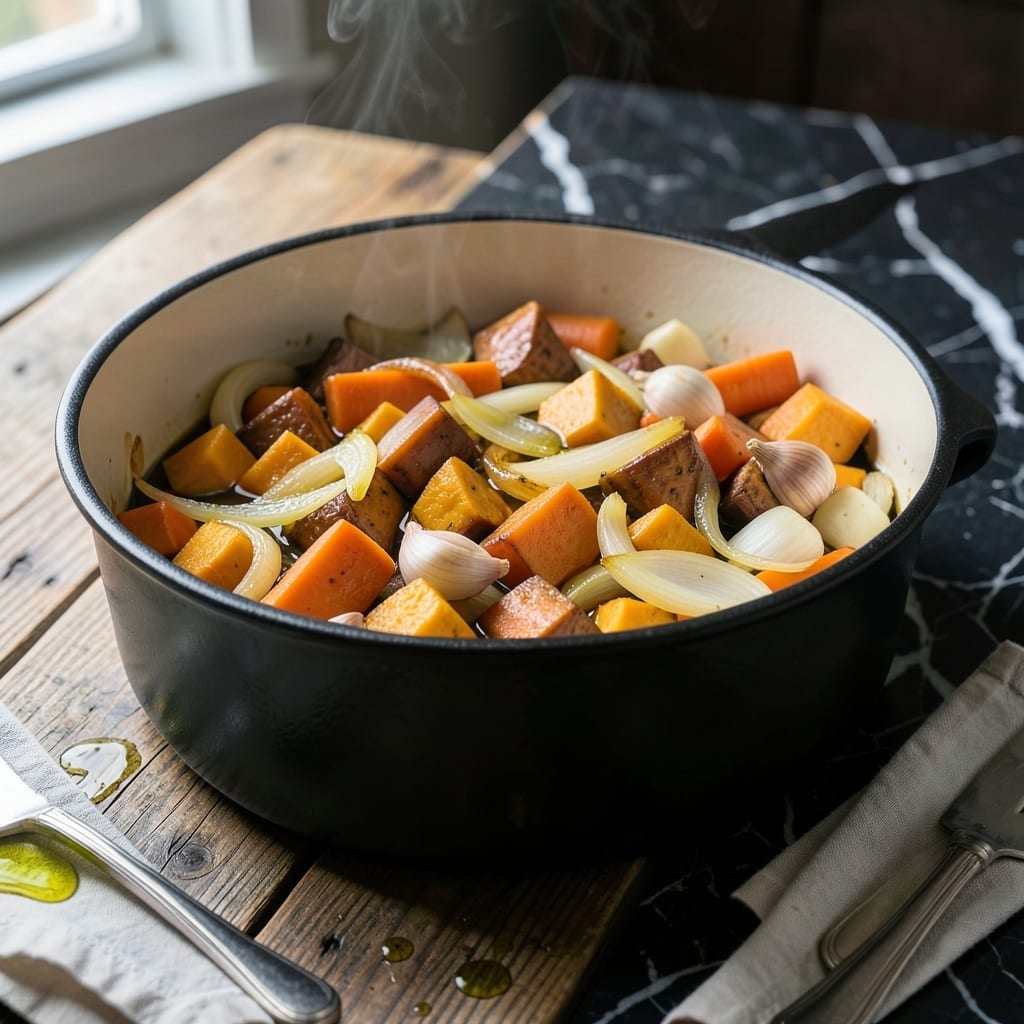
There’s nothing like the warmth of a simmering pot filling your kitchen with autumn’s best aromas. This one-pot wonder combines seasonal produce with simple techniques for restaurant-quality results at home.
The beauty lies in its simplicity: layer root vegetables, squash, and herbs, then let them meld together over low heat. The slow simmer coaxes out deep, complex flavors without any fuss.
By the time it’s done, you’ll have a rich, fragrant dish that captures the essence of fall. The vegetables soften into tender perfection while the broth develops a savory depth that’s impossible to resist.
Perfect for chilly evenings or gathering around the table with loved ones. Here’s how to make it.
Ingredients for Fall Simmer Pot
Root vegetables, squash, and fragrant herbs build this autumnal one-pot masterpiece with ease.
| Ingredient | Amount | Notes |
|---|---|---|
| Butternut Squash 🎃 | 3 cups | Peeled, cubed, uniform size |
| Sweet Potatoes 🍠 | 2 cups | Peeled, diced into 1-inch pieces |
| Carrots 🥕 | 1 ½ cups | Peeled, sliced into rounds |
| Parsnips 🥕 | 1 cup | Peeled, chopped into chunks |
| Yellow Onion 🧅 | 1 whole | Medium, diced finely |
| Garlic Cloves 🧄 | 4 cloves | Minced for depth of flavor |
| Fresh Thyme Sprigs 🌿 | 4 pieces | Leaves stripped from stems |
| Fresh Rosemary Sprigs 🌿 | 2 pieces | Leaves chopped finely |
| Dried Bay Leaves 🍃 | 2 pieces | Whole, removed before serving |
| Vegetable Stock 💧 | 4 cups | Low-sodium preferred for control |
| White Wine 🍷 | ½ cup | Dry variety like Sauvignon Blanc |
| Extra-Virgin Olive Oil 🫒 | 2 tbsp | Divided for sautéing and finishing |
| Kosher Salt 🧂 | 1 ½ tsp | Diamond Crystal brand preferred |
| Freshly Ground Black Pepper 🌶️ | 1 tsp | Coarse grind for texture |
| Fresh Sage Leaves 🌿 | 6 pieces | Chopped, added whole for garnish |
The squash and sweet potatoes are the heart of this dish. Look for firm, heavy butternut squash with a smooth rind and no soft spots. Sweet potatoes should be deep orange (not the pale kind)—they caramelize better. For the herbs, fresh is non-negotiable. I grab mine from Whole Foods or the farmers market, but even the grocery store selections work if they’re vibrant and fragrant.
No white wine? Substitute apple cider or additional vegetable stock with a splash of lemon juice for brightness. Out of fresh thyme or rosemary? Dried herbs at one-third the amount work in a pinch (just add them earlier). Parsnips can be skipped if you’re not a fan—extra carrots or turnips fill in nicely. The vegetable stock can be homemade, but Better Than Bouillon is a solid store-bought option.
This tastes even better the next day once the flavors meld. Keeps in the fridge for 4-5 days and freezes beautifully for up to 3 months. I like to make a double batch—half for dinner, half for lazy lunches later in the week.
Why You’ll Love This Recipe
- One Pot Magic: I just dump everything in—no fancy prep, no multiple pans, just vegetables and broth simmering together.
- Cozy in a Bowl: The butternut squash and sweet potatoes turn creamy, while the carrots and parsnips add this earthy sweetness that’s pure fall.
- Meal Prep Hero: I make a big batch on Sunday and it’s lunch for days—still tastes amazing reheated.
- Budget Stretcher: A few inexpensive veggies and broth feed my family for two meals, easy. Honestly, it’s my wallet’s favorite recipe.
Step-by-Step Instructions for Fall Simmer Pot
Here’s the method. Straightforward, tested, works every time.
Step 1: Sauté Aromatics to Build Flavor Foundation
Heat 1 tbsp Extra-Virgin Olive Oil in a large pot over medium heat. Add the diced Yellow Onion and cook for 5-6 minutes until translucent and just beginning to caramelize at the edges.
Add the minced Garlic Cloves and cook for 30 seconds, stirring constantly. You want the garlic to release its fragrance without burning. This aromatic base will infuse the entire dish with depth.
Stir in the chopped leaves from the Fresh Rosemary Sprigs and Fresh Thyme Sprigs. The herbs should sizzle slightly and become fragrant, signaling they’re ready for the next step.
Step 2: Toast Vegetables for Enhanced Sweetness
Add the 3 cups Butternut Squash, 2 cups Sweet Potatoes, 1.5 cups Carrots, and 1 cup Parsnips to the pot. Drizzle with the remaining 1 tbsp Extra-Virgin Olive Oil and stir to coat evenly.
Cook for 8-10 minutes, stirring occasionally, until the vegetables begin to soften slightly and develop golden edges. This toasting step intensifies their natural sweetness and adds complexity to the final dish.
Season with 1.5 tsp Kosher Salt and 1 tsp Freshly Ground Black Pepper. The salt draws out moisture while the pepper adds a subtle warmth that complements the fall flavors perfectly.
Step 3: Deglaze and Simmer to Perfection
Pour in the 0.5 cup White Wine and use a wooden spoon to scrape up any browned bits from the bottom of the pot. These fond bits are packed with flavor and will dissolve into the liquid.
Add the 4 cups Vegetable Stock and 2 pieces Dried Bay Leaves. Bring to a boil, then reduce heat to maintain a gentle simmer. Cover and cook for 25-30 minutes until all vegetables are fork-tender and the flavors have melded together.
The liquid should reduce slightly, creating a light broth that coats the vegetables. If it reduces too much, add a splash of water to maintain the desired consistency.
Step 4: Finish with Fresh Herb Garnish
Remove the pot from heat and discard the Dried Bay Leaves. Stir in the 6 pieces Fresh Sage Leaves, reserving a few for garnish if desired. The sage adds a final layer of earthy aroma that ties all the flavors together.
Let the simmer pot rest for 5 minutes before serving. This allows the flavors to settle and the vegetables to absorb some of the liquid. Taste and adjust seasoning if needed, though the careful layering of flavors should have it perfectly balanced.
Pro Tips For Making Fall Simmer Pot
- Cut Evenly: Chop all your veggies—squash, potatoes, carrots, parsnips—into uniform 1-inch chunks so they cook at the same rate. I learned this the hard way after pulling out mushy carrots and rock-hard parsnips from the same pot.
- Sauté the Onion: Cook the yellow onion in the pot first until soft and golden, about 5-7 minutes. Sounds like a small step, but it builds a sweet, deep base that makes the whole dish taste richer.
- Skip the Overcrowding: Don’t dump everything in at once—fill the pot no more than three-quarters full. Steer clear of this and your veggies will simmer properly instead of steaming into a watery mess.
- Use Stock, Not Water: Swap water for vegetable or chicken stock—about 4 cups for this mix. It’s an easy upgrade that adds layers of flavor without extra effort.
Essential Equipment for This Dish
Your Pot Matters
I always reach for my 5.5-quart Le Creuset Dutch oven for this recipe—its heavy enamel distributes heat evenly. The wide base gives vegetables room to caramelize properly. A good pot is an investment, but it lasts forever and works for hundreds of recipes. 🔥
Wooden Spoon Essential
A wooden spoon won’t scratch your pot’s surface while scraping up those precious browned bits. I use a 12-inch olive wood spoon from Williams Sonoma—it’s sturdy enough to stir thick stews without breaking. The wooden surface also won’t react with acidic ingredients like wine.
Sharp Knife for Prep
Uniform pieces cook evenly, so a sharp chef’s knife is crucial. I love my 8-inch Wüsthof for chopping all these root vegetables. Keep it honed with a ceramic sharpener between uses. Dull knives slip and make prep dangerous and inefficient.
Tongs for Serving
Once cooked, I use 12-inch locking tongs to fish out the bay leaves. They also help serve the vegetables without piercing them. Look for tongs with silicone tips to protect your cookware. I prefer the OXO Good Grips brand for comfort.
Ladle for Broth
A 2-cup stainless steel ladle makes serving the broth easy. The long handle keeps your hands away from the heat. I also use mine to skim off any foam that might form during simmering. This simple tool makes a big difference in presentation.
Cutting Board Stability
All that chopping needs a stable surface. I use a large bamboo cutting board with non-slip feet. It’s gentle on my knives and big enough to handle all the vegetables at once. The natural wood also looks beautiful on my countertop. ✨
Nutrition Facts
Frequently Asked Questions
Can I make this ahead of time?
Yes! The flavors actually improve after 24 hours in the fridge. Store in an airtight container and reheat gently on the stove with a splash of water.
What if I don’t have white wine?
Substitute with apple cider plus 1 tbsp lemon juice for brightness. Or use extra vegetable stock—it’ll still taste great.
Can I use frozen vegetables?
Fresh is best for texture, but frozen works in a pinch. Thaw first and reduce simmer time by 5-10 minutes to avoid mushiness.
How do I know when it’s done?
Vegetables are fork-tender and the broth slightly reduced. Taste a piece of sweet potato—it should glide off the fork.

- 6 Oz Chocolate Chip Cookie Recipe: Perfectly Balanced Crispy Edges and Chewy Hearts - September 25, 2026
- 6-Inch Coffee Cake Recipe: Vanilla Bean Swirls and Buttery Streusel Topping - September 25, 2026
- 1 Hour Soup Recipe: Velvety Richness Without the Wait - September 25, 2026