
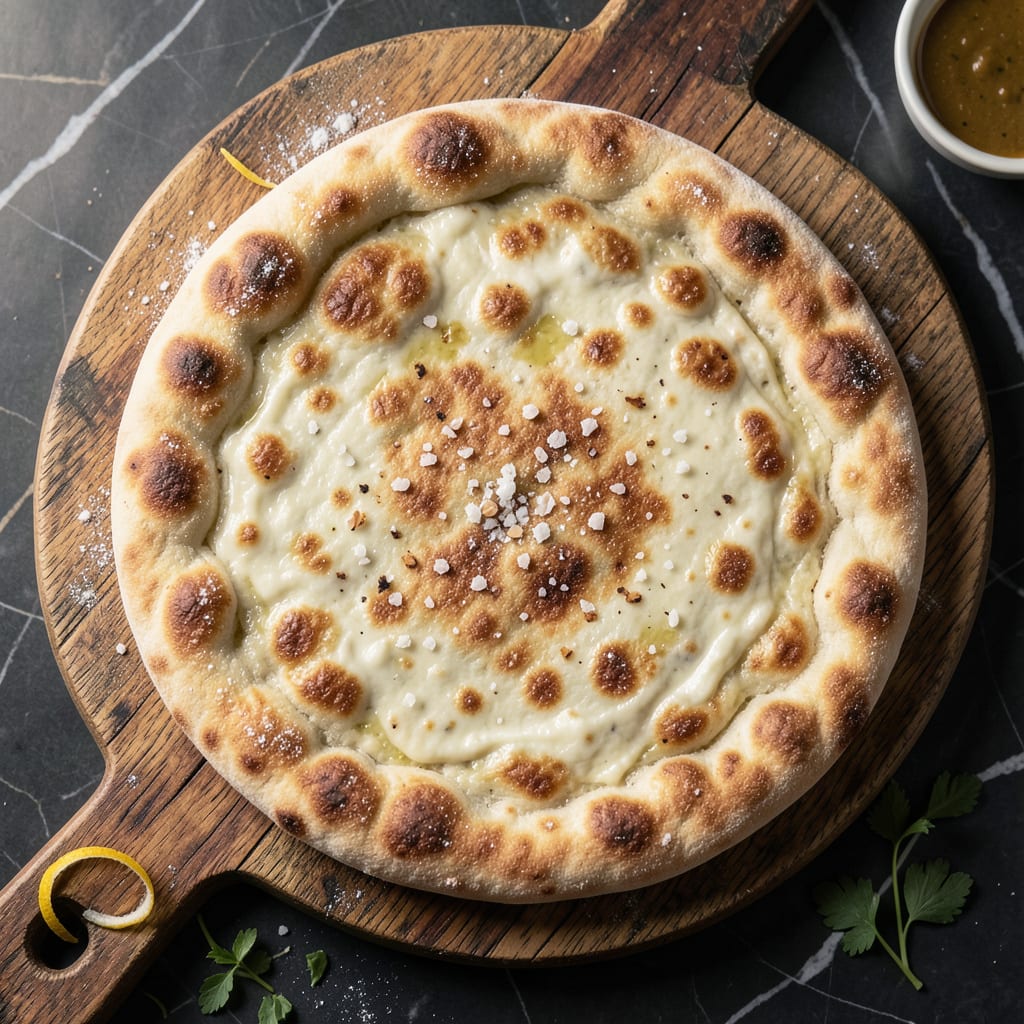
I’ve perfected a no-knead flatbread that’s light, soft, and surprisingly rich in flavor—all without a drop of fat. The secret lies in using fat-free cottage cheese to create a tender, pillowy texture that bakes up golden.
This method requires just 5 ingredients and minimal effort, yet delivers bread so good you’ll forget it’s guilt-free. The cottage cheese keeps it moist while allowing the crust to develop a perfect, slightly crisp exterior.
Ingredients for Fat Free Cottage Cheese Flatbread
Five simple ingredients transform into pillowy, golden flatbread with no added fat.
| Ingredient | Amount | Notes |
|---|---|---|
| Fat-Free Cottage Cheese 🧀 | 2 cups | Full-fat works too but changes texture |
| All-Purpose Flour 🌾 | 2 ½ cups | Plus extra for dusting surface |
| Baking Powder 🧂 | 2 tsp | Ensures proper rise and fluffiness |
| Salt 🧂 | 1 tsp | Fine sea salt preferred |
| Warm Water 💧 | ¼ cup | About 110°F for activation |
[recipeingredientscaler]
The cottage cheese is non-negotiable here—fat-free works perfectly (though full-fat adds richness if you prefer). Nancy’s or Daisy brands are widely available and consistent. The flour should be standard all-purpose; avoid bread flour as it can make the texture too dense. Baking powder is your leavening agent, so check the expiration date for maximum lift.
No cottage cheese? Greek yogurt at the same quantity yields similar results (though slightly tangier). For a dairy-free version, blended silken tofu can work, but the texture differs. The baking powder can be swapped for baking soda plus cream of tartar at a 1:2 ratio, but the flavor may be slightly more metallic.
Store flatbread wrapped in a towel at room temperature for 2-3 days. For longer storage, freeze slices in a sealed bag for up to 1 month. Reheat in a dry skillet to restore that fresh-baked texture.
Why You’ll Love This Recipe
- No-Fuss Mixing: I just blend the cottage cheese, flour, and warm water—no yeast, no waiting. Honestly, it’s the easiest dough I’ve ever made.
- Subtly Rich Taste: The fat-free cottage cheese gives it a mild tang and soft texture that’s way more interesting than plain flour.
- Endless Meal Pairings: I’ve used this for wraps, pizza bases, even quick garlic bread. Between us, it’s my secret for last-minute dinners.
Step-by-Step Instructions for Cottage Cheese Flatbread
This no-knead method delivers soft, pillowy flatbread with minimal effort and maximum flavor.
Step 1: Combine Wet and Dry Ingredients
In a large mixing bowl, combine the 2 cups Fat-Free Cottage Cheese and 0.25 cup Warm Water. I use a silicone spatula to break up the cottage cheese into a smooth, creamy consistency. The warm water helps loosen the mixture, making it easier to incorporate the dry ingredients evenly.
The cottage cheese should be at room temperature for best results. If it’s cold from the fridge, the dough may not come together as smoothly. You’re aiming for a uniform, slightly lumpy batter at this stage—don’t worry about perfect smoothness.
Step 2: Incorporate the Dry Components
Add the 2.5 cups All-Purpose Flour, 2 tsp Baking Powder, and 1 tsp Salt to the cottage cheese mixture. Using a wooden spoon or your hands, stir until a shaggy dough forms. The dough will be sticky and slightly tacky—that’s exactly what you want.
I prefer to use my hands for this step because it allows me to feel when the ingredients are fully incorporated. The baking powder will start reacting with the moisture immediately, so work efficiently but don’t rush. If the dough seems too wet, resist the urge to add more flour; the stickiness is normal and contributes to the soft texture.
Step 3: Rest and Shape the Dough
Lightly flour your work surface with some of the extra all-purpose flour mentioned in the ingredients. Turn out the dough and divide it into 4 equal portions (since this makes 4 servings). Each portion should weigh approximately 6-7 ounces.
Shape each portion into a ball, then flatten into a ½-inch thick round. If the dough sticks to your hands, dip them in a bit of flour, but use a light touch—too much flour will make the flatbread dry. The dough should feel supple and slightly springy when properly shaped.
Step 4: Cook the Flatbreads
Heat a nonstick skillet or cast-iron pan over medium-high heat. There’s no need to add oil—the dough has enough moisture to prevent sticking. Place one flatbread in the pan and cook for 2-3 minutes per side until golden brown spots appear and the bread sounds hollow when tapped.
Press down gently with a spatula if the flatbread puffs up too much. You want even contact with the pan for consistent browning. The first flatbread might take a bit longer as the pan heats up, so adjust the heat slightly if needed. Transfer cooked flatbreads to a clean kitchen towel to keep them warm while you cook the remaining portions.
Step 5: Serve Warm with Desired Toppings
These flatbreads are best served immediately while still warm. The texture should be soft and pillowy with a slight chewiness. If you need to keep them warm for a few minutes, stack them and cover with a clean towel.
For an extra touch, brush the warm flatbreads with a little melted butter or garlic-infused oil. They pair wonderfully with both sweet and savory toppings, from honey and fresh fruit to hummus and grilled vegetables. The subtle tang from the cottage cheese adds depth to both sweet and savory applications.
Pro Tips For Making Fat Free Cottage Cheese Flatbread
- Drain the Cottage Cheese: Use a fine mesh strainer to remove excess liquid from the fat-free cottage cheese for 10 minutes—I learned this the hard way after my first few flatbreads turned out soggy.
- Warm the Water: Heat the water to about 110°F (not boiling) to activate the baking powder properly; cold water leaves the flatbread dense and flat.
- Skip Over-Kneading: Mix just until the dough comes together—overworking it makes the flatbread tough, and with no fat in the recipe, it’s already more prone to dryness.
- Roll It Thin: Aim for ¼-inch thickness when rolling out the dough; any thicker and the center won’t cook through before the edges burn.
Serving Suggestions for This fat free cottage cheese flatbread
Sweet Serving Ideas
These flatbreads are delicious with a drizzle of local honey and a sprinkle of cinnamon. I love topping mine with sliced strawberries and a dollop of Greek yogurt for a light dessert. The subtle tang from the cottage cheese pairs perfectly with sweet flavors. 💛
Savory Pairings
For lunch, use them as a wrap for grilled chicken and fresh veggies. They also make excellent mini pizzas when topped with tomato sauce, mozzarella, and basil. I often serve them alongside hummus and baba ganoush for dipping.
Breakfast Options
Try them as a base for avocado toast with a poached egg on top. The soft texture holds up well to toppings. I also like spreading almond butter and topping with banana slices for a quick, satisfying breakfast.
Party Presentation
Cut into wedges and arrange on a platter with olive tapenade and roasted red pepper dip. They’re perfect for sharing and always disappear quickly at gatherings. Guests love the light, fluffy texture.
Meal Companion
These work beautifully with soups and stews for dipping. I often serve them with lentil soup or chili—they soak up flavors without falling apart. Their neutral taste complements any main dish. ✨
Frequently Asked Questions
Can I use regular cottage cheese instead?
Yes, but the texture will differ slightly. Full-fat cottage cheese makes the flatbread richer and denser, while fat-free keeps it light and airy. The baking time remains the same.
Why does my dough feel too sticky?
This is normal! The stickiness comes from the cottage cheese moisture. Use a light dusting of flour when shaping, but avoid adding too much—it keeps the bread soft.
How do I store leftovers?
Wrap cooled flatbreads in a towel at room temp for 2-3 days. For longer storage, freeze in a sealed bag for up to 1 month. Reheat in a dry skillet.
Can I make this ahead of time?
Prepare the dough up to 24 hours in advance and refrigerate. Let it sit at room temp for 30 minutes before shaping and cooking.

- 8 Bean Soup Recipe Crock Pot: Hearty Vegetable Medley in One Pot - September 25, 2026
- 4C Bread Crumbs Meatballs Recipe: Crispy Crust and Juicy Centers - September 25, 2026
- 6 Oz Chocolate Chip Cookie Recipe: Perfectly Balanced Crispy Edges and Chewy Hearts - September 25, 2026