
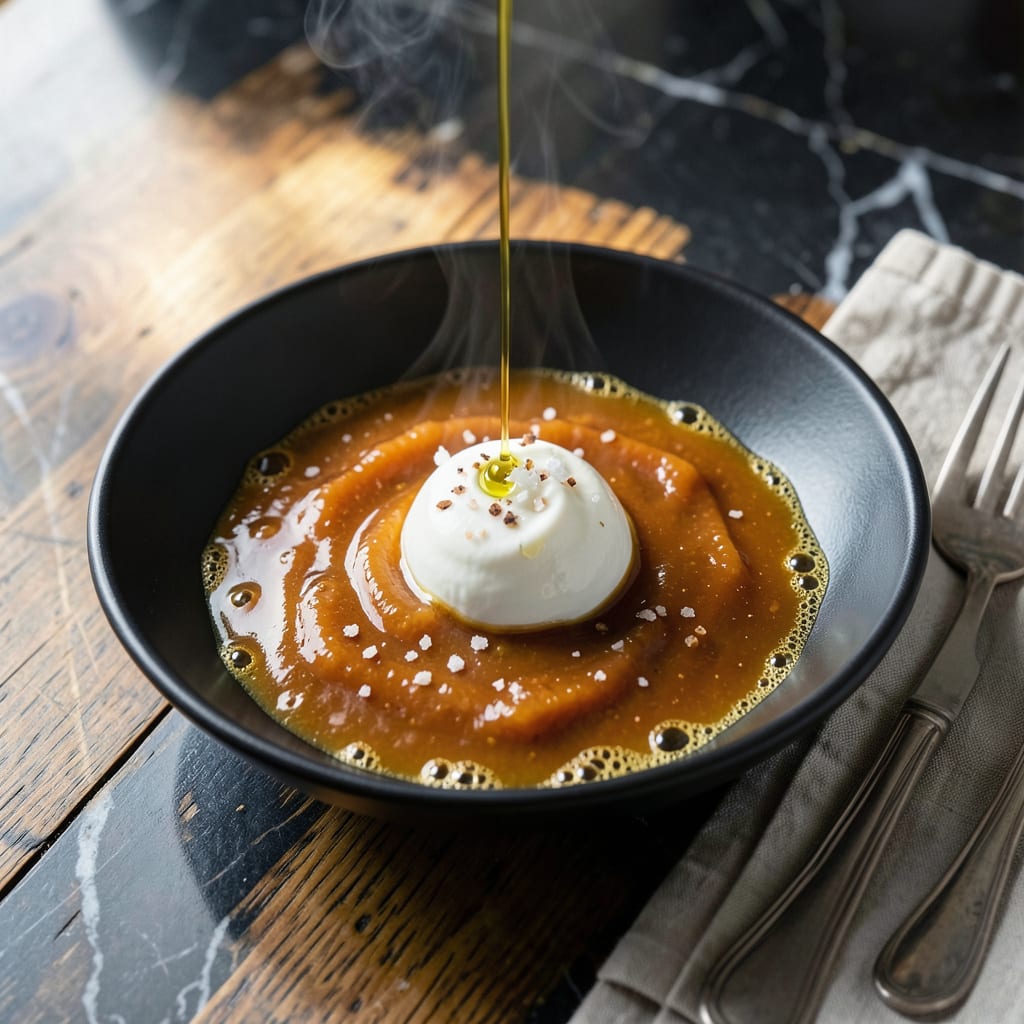
This duck fat caramel elevates any dessert with its velvety smoothness and unexpected depth. The rich, savory duck fat enhances the caramel’s natural sweetness without overpowering it.
With just a few ingredients and careful temperature control, you’ll create a luxurious sauce that drizzles beautifully over ice cream, cakes, or pastries. The process is simple but requires attention to detail.
Ingredients for Duck Fat Caramel
Eight ingredients transform into this luxurious sauce with unexpected depth and velvety texture.
| Ingredient | Amount | Notes |
|---|---|---|
| Granulated Sugar 🍚 | 2 cups | Fine white sugar preferred |
| Duck Fat 🦆 | ½ cup | Rendered, strained, cooled |
| Heavy Cream 🥛 | 1 cup | Full-fat, room temperature |
| Unsalted Butter 🧈 | ½ cup | Cut into cubes for even melting |
| Light Corn Syrup 🧈 | ¼ cup | Prevents crystallization |
| Vanilla Extract 🌿 | 2 tsp | Pure vanilla for best flavor |
| Sea Salt 🧂 | 1 tsp | Fine grain for even dissolution |
| Water 💧 | ¼ cup | For initial sugar dissolution |
The duck fat is non-negotiable here. Render your own from duck legs for the cleanest flavor, or source D’Artagnan or Maple Leaf Farms pre-rendered fat. Look for a pale golden color and mild, clean aroma—any off smells mean it’s gone rancid. Heavy cream should be ultra-pasteurized for longer shelf life and smoother texture. The butter? European-style if you can swing it—higher fat content means less water to boil off.
No duck fat? render chicken fat in a pinch, though the flavor profile shifts. Swap corn syrup for honey or agave at the same volume, but expect a slightly different texture. For a dairy-free version, coconut cream replaces the heavy cream (use the thick part only). The vanilla can be swapped for vanilla bean paste for visible flecks, but extract dissolves more evenly.
Store in an airtight container at room temperature for up to 1 week, or refrigerate for 2 weeks. For longer storage, freeze in ice cube trays—thaw cubes as needed. The caramel will thicken when cold but returns to pouring consistency when gently reheated.
Why You’ll Love This Recipe
- One-Pot Wonder: I melt everything in a single saucepan—sugar, duck fat, cream—no fancy equipment, just a wooden spoon and patience.
- Rich & Unforgettable: That duck fat adds a depth to the caramel that butter alone can’t touch. It’s savory, sweet, and downright luxurious.
- Drizzle on Anything: I’ve poured this over ice cream, stirred it into coffee, even glazed roasted veggies. Honestly, it’s my new secret weapon.
- Keeps for Weeks: A jar in the fridge lasts me a month, and it reheats beautifully. I’ll be real: I’ve caught myself eating it straight from the spoon.
Step-by-Step Instructions for Duck Fat Caramel
Master the technique and achieve a luxurious caramel with unparalleled depth and silky texture.
Step 1: Melt and Dissolve the Sugar Base
In a heavy-bottomed saucepan, combine the 2 cups Granulated Sugar and 0.25 cup Water over medium heat. Stir gently until the sugar fully dissolves—this prevents hot spots that can cause uneven caramelization.
Once dissolved, stop stirring and let the mixture cook undisturbed. You’ll see it begin to bubble vigorously as it reaches 230-240°F. Resist the urge to stir; agitation at this stage can cause crystallization. Instead, gently swirl the pan if needed to even out the color.
The sugar will progress from clear to a pale amber. This is the foundation of your caramel, so patience here ensures a smooth, lump-free result.
Step 2: Incorporate Duck Fat for Depth
Once the sugar reaches a deep amber hue (around 320°F), immediately remove the pan from heat. Carefully whisk in the 0.5 cup Duck Fat—it will bubble intensely, so use caution. The fat should be fully rendered and cooled slightly to prevent splattering.
Whisk vigorously for 1-2 minutes until the duck fat is fully emulsified into the caramel. This step adds a rich, savory complexity that sets this apart from traditional caramels. The mixture will appear glossy and slightly thickened as the fat integrates.
If the caramel seizes or hardens, return the pan to low heat and stir constantly until it melts back into a smooth liquid. This is normal and easily corrected with gentle heat.
Step 3: Temper with Heavy Cream and Butter
Place the pan back over low heat and slowly pour in the 1 cup Heavy Cream, whisking continuously. The mixture will bubble aggressively, so add the cream in a steady stream to prevent overflow. This step tempers the caramel and prevents separation.
Once the cream is fully incorporated, add the 0.5 cup Unsalted Butter, cubed, one piece at a time. Whisk until each cube is fully melted and the mixture is smooth. The butter enriches the caramel, giving it a velvety mouthfeel and glossy finish.
Continue whisking until the caramel reaches 245-250°F on a candy thermometer. This ensures it will set properly when cooled while remaining luscious and pourable.
Step 4: Finish with Corn Syrup, Vanilla, and Salt
Remove the pan from heat and stir in the 0.25 cup Light Corn Syrup. This ingredient prevents crystallization and adds a subtle sweetness that balances the duck fat’s richness. Whisk until fully combined.
Next, add the 2 tsp Vanilla Extract and 1 tsp Sea Salt. The vanilla enhances the caramel’s depth, while the salt elevates the flavors, ensuring a perfect sweet-salty harmony. Stir for 30 seconds to distribute evenly.
Let the caramel cool for 5 minutes before using. It will thicken slightly as it cools but remain pourable for drizzling or dipping.
Step 5: Cool and Store Properly
Transfer the caramel to a heatproof jar or container. Let it cool to room temperature, which takes about 1 hour. The finished caramel should be smooth, glossy, and slightly thick but still pourable.
Store in an airtight container at room temperature for up to 2 weeks. If it thickens too much over time, gently reheat in a double boiler or microwave in 15-second bursts, stirring between each, until it reaches your desired consistency.
Use this caramel to elevate desserts, drizzle over ice cream, or incorporate into baked goods for a sophisticated, gourmet touch.
Pro Tips For Making Duck Fat Caramel
- Use Rendered Duck Fat: I learned this the hard way—raw duck fat can separate or burn, so clarify it first by slowly melting it and straining out any solids before adding to the caramel.
- Watch the Temperature: Pull the sugar off the heat at 350°F, not a degree higher. After burning three batches, I finally figured out that duck fat caramel goes from golden to bitter in seconds.
- Warm the Cream: Skip the cold cream—warm it gently before adding to the sugar mixture to prevent seizing or splitting, which duck fat makes even more likely.
- Add Butter Last: Stir in the unsalted butter at the very end, off the heat, to keep the caramel smooth and glossy. Sounds weird, but it works: butter too early can make the whole batch greasy.
Common Mistakes When Making Great duck fat caramel
Overstirring the Sugar
Once the sugar dissolves, resist stirring. Agitation causes crystallization, turning your smooth caramel into a grainy mess. I learned this the hard way when my first batch turned into candy sand. 💡
Adding Cold Ingredients
Always use room temperature heavy cream and butter. Cold additions cause the caramel to seize and harden. I pull my cream out 1 hour before starting to prevent this disaster.
Skipping the Thermometer
Guessing temperatures leads to burnt or undercooked caramel. Invest in a candy thermometer—I use Taylor Precision—and aim for 320°F before adding duck fat, then 245-250°F at the end.
Rushing the Duck Fat
Adding duck fat too quickly causes violent bubbling and splattering. Pour slowly while whisking constantly. I add it in 3-4 stages to maintain control and ensure full emulsification.
Ignoring Color Changes
Watch for the deep amber hue before adding duck fat. Pale caramel lacks depth, while dark caramel tastes bitter. I find 3-4 minutes at 320°F achieves the perfect color.
Improper Cooling
Let the caramel cool for 5 minutes before using. Pouring it hot can melt ice cream or soak into cakes. I transfer it to a heatproof jar and let it sit undisturbed. 🔥
Nutrition Facts
Frequently Asked Questions
Can I substitute another fat for duck fat?
Yes, but the flavor changes. Use rendered chicken fat for a similar richness, or butter for a more traditional taste. Each brings a different depth to the caramel.
Why does the caramel bubble so much when adding cream?
The hot sugar reacts with the cooler liquid, creating steam. Always add cream slowly while whisking to prevent overflow and ensure a smooth final texture.
How long can I store the finished caramel?
At room temperature in an airtight container, it keeps for 2 weeks. For longer storage, refrigerate for up to 1 month or freeze for 3 months.

- 8 Bean Soup Recipe Crock Pot: Hearty Vegetable Medley in One Pot - September 25, 2026
- 4C Bread Crumbs Meatballs Recipe: Crispy Crust and Juicy Centers - September 25, 2026
- 6 Oz Chocolate Chip Cookie Recipe: Perfectly Balanced Crispy Edges and Chewy Hearts - September 25, 2026