
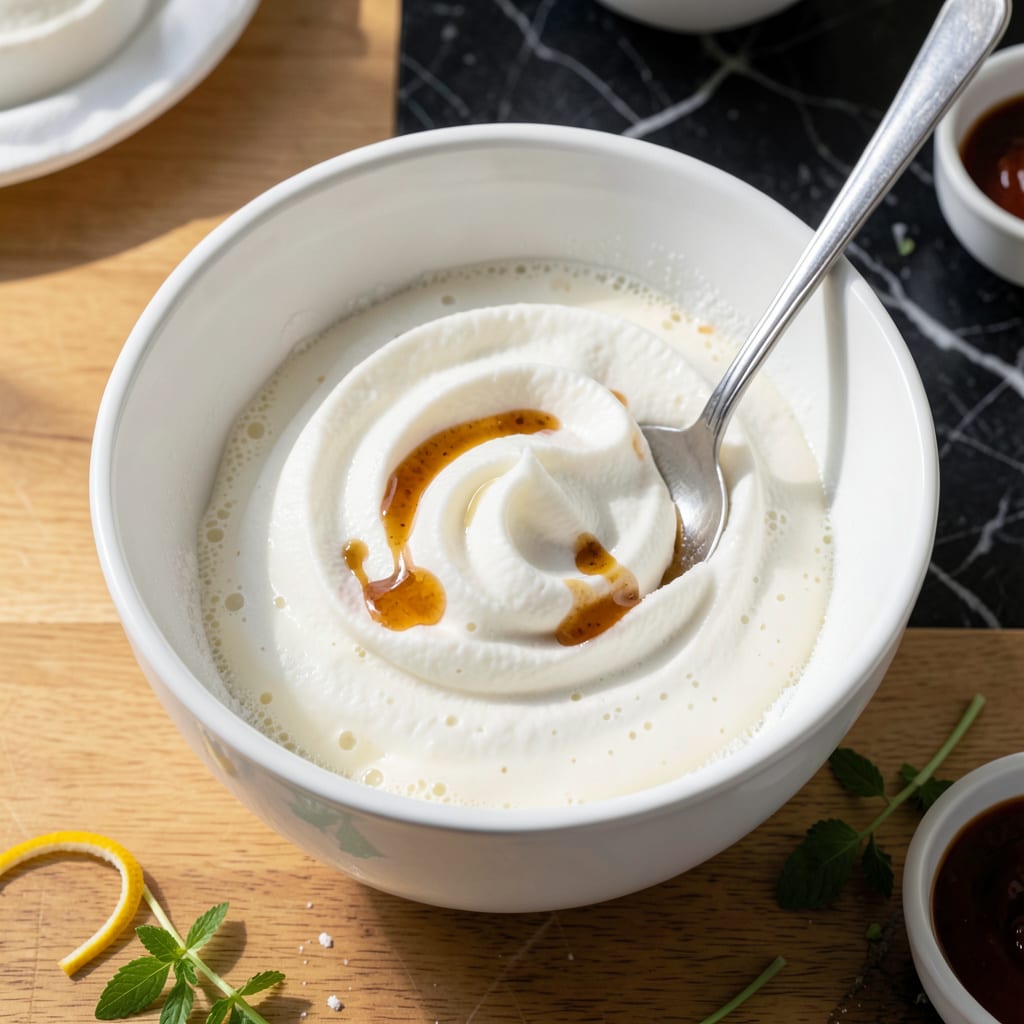
This fat-free frosting delivers the same light and fluffy texture as traditional versions without the guilt. It’s a game-changer for those watching their intake.
Using simple ingredients and a precise mixing method, this recipe creates a smooth, spreadable frosting that holds its shape. Perfect for cakes, cupcakes, or cookies.
Ingredients for Fat Free Frosting
Light, fluffy, and completely guilt-free. These simple plant-based ingredients create magic.
| Ingredient | Amount | Notes |
|---|---|---|
| Powdered Sugar 🍚 | 3 ½ cups | Sifted for smooth texture |
| Unsweetened Almond Milk 🥛 | ⅓ cup | Room temperature preferred |
| Cornstarch 🌾 | 2 tbsp | Thickening agent for stability |
| Pure Vanilla Extract 🌿 | 2 tsp | Real vanilla, not imitation |
| Cream of Tartar 🧂 | ½ tsp | Stabilizes meringue base |
| Aquafaba 💧 | ½ cup | Liquid from canned chickpeas |
| Lemon Juice 🍋 | 1 tsp | Freshly squeezed for acidity |
| Salt 🧂 | ¼ tsp | Fine grain for even distribution |
The aquafaba is non-negotiable here—drain it from canned chickpeas (unsalted for best results) or buy it pre-packaged from Whole Foods. Powdered sugar quality matters; organic brands like Wholesome Sweeteners dissolve more smoothly. For the almond milk, Silk or Califia Farms unsweetened versions work best. Cream of tartar might seem old-school, but it’s essential for that stable, peak-holding texture.
No aquafaba? Flax egg replacement (1 tbsp ground flax + 3 tbsp water per egg) can work in a pinch, though the texture won’t be as light. Swap almond milk for soy or oat milk—just ensure it’s unsweetened. Cornstarch can be replaced with arrowroot powder at equal amounts. Vanilla extract is vanilla extract—don’t skimp on the real stuff.
Store in an airtight container in the fridge for up to 5 days. For longer storage, freeze in small batches for 1 month—thaw and re-whip before using. The frosting may weep slightly after thawing, but a quick mix restores its fluff.
Why You’ll Love This Recipe
- 5-Minute Whip: I just dump powdered sugar, almond milk, and vanilla in a bowl and beat—no butter, no waiting for it to soften.
- Vanilla Cloud: The pure vanilla plus that tiny kick of cream of tartar gives it a bright, sweet flavor that tastes way richer than it is.
- Cupcake Savior: Slather it on birthday cakes, cookies, or even toast—I’ve used it for all three in one weekend.
- Pantry Staples: Between us, I always have these ingredients on hand, so I can make frosting without a last-minute grocery run.
Step-by-Step Instructions for Fat Free Frosting
Follow this method precisely to achieve a stable, cloud-like texture that holds its shape beautifully.
Step 1: Whip the Aquafaba Base
In a clean, grease-free mixing bowl, combine 0.5 cup aquafaba with 0.5 tsp cream of tartar and 0.25 tsp salt. Using an electric mixer on high speed, whip for 3-4 minutes until soft peaks form. The cream of tartar stabilizes the foam structure, while salt enhances flavor.
Watch for the mixture to turn from foamy to glossy with distinct peaks that droop slightly at the tips. Stop once you reach soft peaks—over-whipping at this stage can lead to a grainy texture. Ensure your bowl and beaters are spotlessly clean, as any trace of fat will prevent proper aeration.
Step 2: Incorporate Sugar and Thickening Agents
Gradually add 3.5 cups powdered sugar and 2 tbsp cornstarch to the whipped aquafaba, about ½ cup at a time, while continuing to beat on medium-high speed. This slow incorporation prevents deflation and ensures even distribution of the dry ingredients.
The cornstarch acts as both a thickener and stabilizer, giving the frosting body without added fat. Beat for 2-3 minutes after each addition until the mixture is smooth and holds stiff peaks. You should see the volume increase significantly as air is incorporated.
Step 3: Finish with Flavor Enhancers
With the mixer running on low, drizzle in 0.33 cup unsweetened almond milk, 2 tsp pure vanilla extract, and 1 tsp lemon juice. Increase speed to medium and beat for an additional 3-4 minutes until the frosting is glossy and holds its shape firmly.
The almond milk adds creaminess without fat, while the lemon juice provides a subtle brightness that balances the sweetness. The vanilla should be fully integrated—stop to scrape the bowl once to ensure even flavor distribution. The final product should be smooth, white, and able to hold a peak without collapsing.
Step 4: Test for Optimal Consistency
To verify the frosting is ready, stop the mixer and use a spatula to create a peak. It should hold its shape without drooping or looking shiny. If it appears too runny, beat for another 1-2 minutes—the sugar and cornstarch will continue to absorb moisture.
If the texture seems slightly grainy, it may need more whipping to dissolve the sugar completely. This frosting is best used immediately but can be stored in an airtight container at room temperature for up to 2 days. Before use, re-whip briefly to restore volume if needed.
Pro Tips For Making Fat Free Frosting
- Whisk Vigorously: Beat the powdered sugar and almond milk for at least 3-4 minutes—this incorporates air and gives the frosting a lighter texture without fat.
- Sift the Sugar: Always sift your powdered sugar first to prevent lumps, especially since this recipe lacks fat to smooth out imperfections.
- Skip Cold Milk: Use room temperature almond milk, or the frosting will seize up and look grainy—I learned this the hard way.
- Add Cornstarch Last: Mix the cornstarch with a teaspoon of the liquid first, then add to the bowl, or you’ll end up with clumps no amount of whisking will fix.
Regional Styles of This fat free frosting
Southern Sweetness
In the South, I’ve seen this frosting lightened with 1 tbsp apple cider vinegar for a tangy twist. The acidity cuts through sweetness beautifully while keeping it fat-free. It’s perfect for red velvet cakes, a regional favorite. 💛
West Coast Whip
California bakers often add 1 tsp matcha powder to the powdered sugar for a vibrant green tea flavor. The earthy notes pair wonderfully with citrus desserts. I first tried this in San Francisco and was hooked.
Midwest Classic
In the Midwest, this frosting is often flavored with 1 tsp almond extract instead of vanilla. It’s a nod to traditional German baking influences in the region. I recommend using McCormick’s pure almond extract for best results.
Texas Bold
Texans love big flavors, so I’ve seen this recipe with 1 tbsp cocoa powder added for a chocolate version. The result is rich and decadent without any fat. It holds up well in the Texas heat too.
New England Light
In New England, they often use maple syrup instead of powdered sugar, reducing the liquid elsewhere. This creates a lighter, less sweet frosting that’s popular for maple-flavored desserts. I suggest using grade A dark amber syrup. ✨
Pacific Northwest
Seattle bakers sometimes incorporate 1 tsp espresso powder for a mocha-inspired frosting. The coffee enhances the chocolate notes if you’ve added cocoa. It’s a sophisticated touch I appreciate for adult palates.
Nutrition Facts
Frequently Asked Questions
Can I use regular milk instead of almond milk?
Yes, but skim milk works best to keep it fat-free. Whole milk adds fat, defeating the purpose. Stick to unsweetened plant-based or skim for the best results.
Why does my frosting look grainy?
This usually means the sugar wasn’t fully dissolved. Beat for an additional 2-3 minutes on high speed. Ensure your powdered sugar is sifted before adding.
How do I make chocolate frosting with this?
Add 2 tbsp cocoa powder with the powdered sugar. For richer flavor, use Dutch-process cocoa. The cornstarch will still stabilize it beautifully.
Can I make this ahead of time?
Store in an airtight container in the fridge for up to 5 days. Re-whip briefly before using to restore its fluff.

- 8 Bean Soup Recipe Crock Pot: Hearty Vegetable Medley in One Pot - September 25, 2026
- 4C Bread Crumbs Meatballs Recipe: Crispy Crust and Juicy Centers - September 25, 2026
- 6 Oz Chocolate Chip Cookie Recipe: Perfectly Balanced Crispy Edges and Chewy Hearts - September 25, 2026