
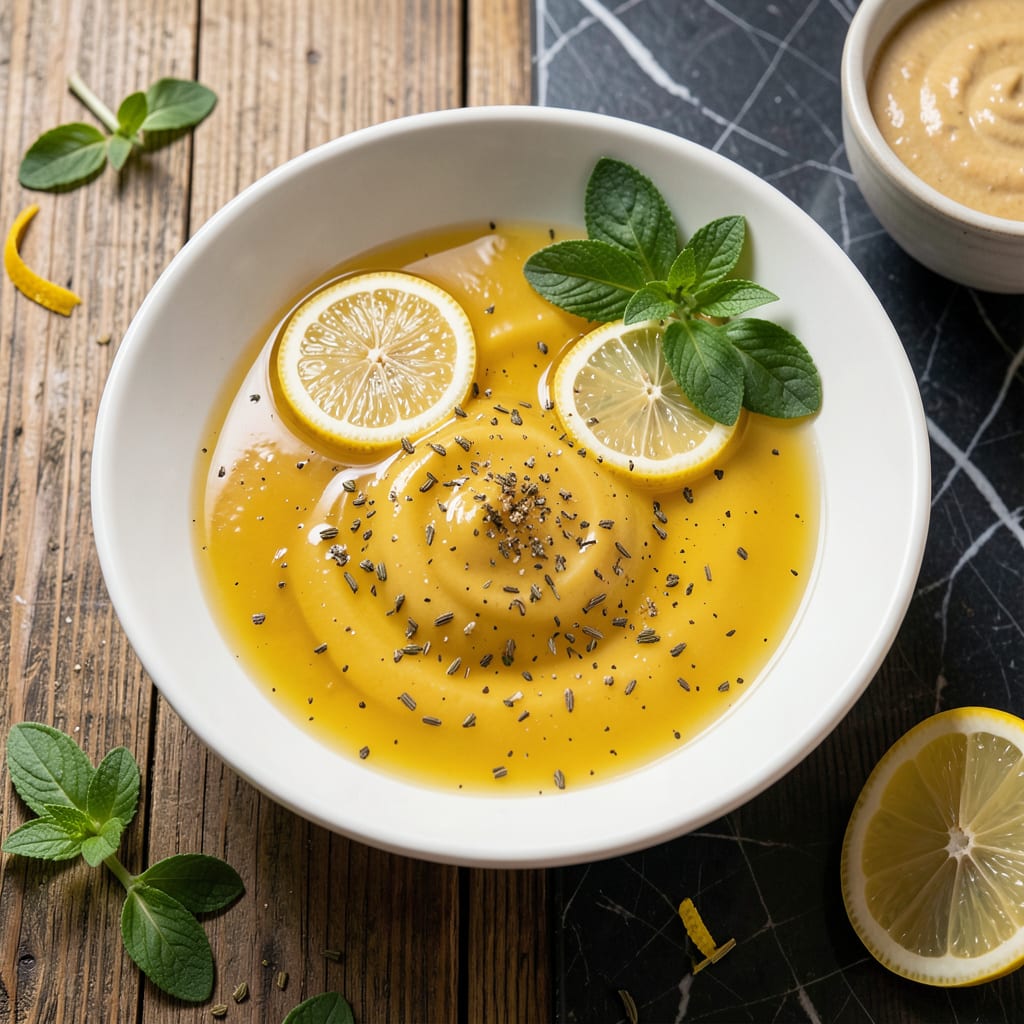
This dressing delivers all the bright, tangy flavor of traditional Greek dressing without a drop of oil. The secret lies in a perfect balance of vinegar, lemon juice, and Mediterranean herbs.
You’ll get a zesty, herb-packed condiment that’s light yet full of character, ready to elevate salads, marinades, or vegetable dips. Simple to make and even easier to love.
Ingredients for Fat Free Greek Dressing
Bright vinegar, fresh herbs, and a touch of mustard create this oil-free Mediterranean delight.
| Ingredient | Amount | Notes |
|---|---|---|
| Red Wine Vinegar 💧 | ½ cup | Sharp and tangy base |
| Lemon Juice 🍋 | ¼ cup | Freshly squeezed preferred |
| Water 💧 | ¼ cup | To lighten consistency |
| Dried Oregano 🌿 | 2 tsp | Mediterranean variety ideal |
| Dried Basil 🍃 | 1 tsp | Crushed for better flavor |
| Garlic Powder 🧄 | 1 tsp | Not garlic salt |
| Onion Powder 🧅 | 1 tsp | Adds depth to flavor |
| Dijon Mustard 🟡 | 1 tbsp | For emulsifying and tang |
| Salt 🧂 | 1 tsp | Fine sea salt preferred |
| Black Pepper 🌶️ | ½ tsp | Freshly ground preferred |
The vinegar is doing all the heavy lifting here, so use something bold. Pompeian red wine vinegar is my go-to—consistent quality, easy to find at any Kroger or Walmart. For the herbs, Penzeys has the freshest dried oregano and basil if you want to splurge, but the grocery store brands work fine as long as they’re not dusty old jars from the back of your cabinet. The mustard? Grey Poupon Dijon is what I always have on hand.
No red wine vinegar? Apple cider vinegar works at a 1:1 ratio, though the flavor will be slightly different. Fresh out of herbs? Fresh dill or parsley at double the amount can stand in for the dried stuff. If you don’t have Dijon, regular yellow mustard in a pinch—just use half the amount since it’s milder. The water can be swapped for vegetable broth if you want a little extra depth.
This keeps for 2 weeks in the fridge in a sealed jar. The flavors actually get better after a day or two as everything marries. Shake well before each use since there’s no oil to hold it together. Don’t leave it at room temp for long—no preservatives here.
Why You’ll Love This Recipe
- 5-Minute Whisk: I just dump everything in a jar, shake it, and it’s ready—no blender, no fuss.
- Bright & Zesty: The red wine vinegar and lemon juice hit that tangy-sweet spot I crave on salads and grilled veggies.
- Meal Prep MVP: Honestly, I make a double batch on Sunday and it keeps all week for salads, marinades, or even drizzled over roasted potatoes.
- Pantry Staples Only: Dried oregano and basil mean I can make this any time without a grocery run, and it costs practically nothing.
Step-by-Step Instructions for Fat Free Greek Dressing
This oil-free emulsion comes together quickly with proper whisking technique and patience.
Step 1: Combine the Acidic Base Liquids
In a medium mixing bowl, pour in the 0.5 cup red wine vinegar, 0.25 cup lemon juice, and 0.25 cup water. These three liquids form the foundation of your dressing, providing the bright, tangy character essential to Greek flavors.
I always use room temperature liquids here—they emulsify more readily than cold ingredients. The vinegar and lemon juice should have a sharp, clean aroma, indicating freshness. This is the moment that matters: if your base liquids taste flat, your final dressing will too.
Step 2: Whisk in the Emulsifier and Seasonings
Add the 1 tbsp Dijon mustard, 1 tsp salt, 0.5 tsp black pepper, 2 tsp dried oregano, 1 tsp dried basil, 1 tsp garlic powder, and 1 tsp onion powder to the bowl. The mustard is your emulsifier—it helps bind the water-based liquids into a cohesive dressing without oil.
Begin whisking vigorously in a circular motion. You’ll notice the mixture start to thicken slightly as the mustard activates. The herbs and spices should be evenly distributed before you move to the next step. Don’t skip this (I learned the hard way)—proper incorporation at this stage prevents clumping later.
Step 3: Achieve the Perfect Emulsion
Continue whisking for 2-3 minutes until the dressing becomes slightly opaque and you can see it begin to thicken. The motion should create small bubbles on the surface, and the mixture should cling momentarily to the whisk when lifted.
Here’s the thing—this dressing won’t be as thick as traditional oil-based versions, but you should achieve a silky, pourable consistency. If it seems too thin, whisk for another 30 seconds. The mustard needs this time to fully emulsify the water and acids.
Step 4: Rest and Develop Flavors
Let the dressing rest at room temperature for 10-15 minutes. This allows the dried herbs to rehydrate and release their essential oils, while the flavors meld together into that classic Greek profile you’re after.
You’ll see the dressing settle slightly during this time—that’s normal. Give it a quick whisk before using. I’ve found that resting improves the flavor significantly, making the oregano and basil taste more vibrant and the garlic and onion powders more pronounced.
Transfer to an airtight container and refrigerate for up to 1 week. The flavors will continue to develop over the first 24 hours, so if possible, make this dressing a day ahead for the best taste.
Pro Tips For Making Fat Free Greek Dressing
- Bloom the Herbs: Heat the water to just under boiling, then pour it over the dried oregano and basil to wake up their flavors—this makes a real difference compared to just mixing them in cold.
- Balance the Acid: I learned this the hard way—taste as you go and add the lemon juice gradually; too much can overpower the vinegar and leave your dressing harsh.
- Skip the Metal: Resist the urge to use a metal bowl for mixing, as the acid in the vinegar and lemon can react and leave a metallic taste.
- Rest Before Serving: Let the dressing sit for at least 15 minutes before using so the herbs fully hydrate and distribute their flavor evenly.
Essential Equipment for This Recipe
Mixing Bowls
Use a medium glass or stainless steel mixing bowl—about 2-3 quarts in size. I prefer Pyrex for its durability and non-reactive surface. The size gives you enough room to whisk vigorously without splashing your countertop. 💡
Whisks
A balloon whisk with a 10-inch handle is ideal for creating the emulsion. I recommend the OXO Good Grips version—it’s comfortable for the 2-3 minutes of whisking required. Stainless steel holds up better than plastic.
Measuring Tools
Have a set of measuring spoons and measuring cups ready. For precision, I use stainless steel spoons from Cuisinox. The ¼ cup and ½ cup measurements are critical for balancing the vinegar and lemon juice ratios.
Storage Containers
An airtight glass jar with a lid works perfectly for storing your dressing. I love Ball mason jars—the 16-ounce size fits this recipe perfectly. The glass won’t absorb odors, and you can shake it to re-emulsify before each use.
Optional Blender
If you prefer a smoother texture, use a small immersion blender. The Bamix model is my go-to for quick emulsification. Just pulse for 10-15 seconds until smooth—don’t over-blend or you’ll incorporate too much air.
Fine Mesh Strainer
If your dried herbs are particularly coarse, strain the dressing through a fine mesh sieve after whisking. This ensures a silky texture. I keep a 5-inch sieve from Cuisinox in my drawer for this exact purpose.
Nutrition Facts
Frequently Asked Questions
Can I use fresh herbs instead of dried?
Yes, use 2 tbsp fresh oregano and 1 tbsp fresh basil for the dried amounts. Fresh herbs add a brighter flavor but may shorten shelf life.
Why does my dressing separate after refrigeration?
This is normal without oil. Just shake or whisk before using. The mustard helps stabilize it, but some separation is expected in water-based dressings.
How can I make it sweeter?
Add 1 tsp honey or 1-2 tsp sugar to balance the tang. Start small and adjust to taste—too much sweetness masks the herbs.
Is this dressing suitable for marinating?
The acidity works well for tenderizing. Marinate proteins for 30 minutes to 2 hours—longer can make them mushy.

- 8 Bean Soup Recipe Crock Pot: Hearty Vegetable Medley in One Pot - September 25, 2026
- 4C Bread Crumbs Meatballs Recipe: Crispy Crust and Juicy Centers - September 25, 2026
- 6 Oz Chocolate Chip Cookie Recipe: Perfectly Balanced Crispy Edges and Chewy Hearts - September 25, 2026