
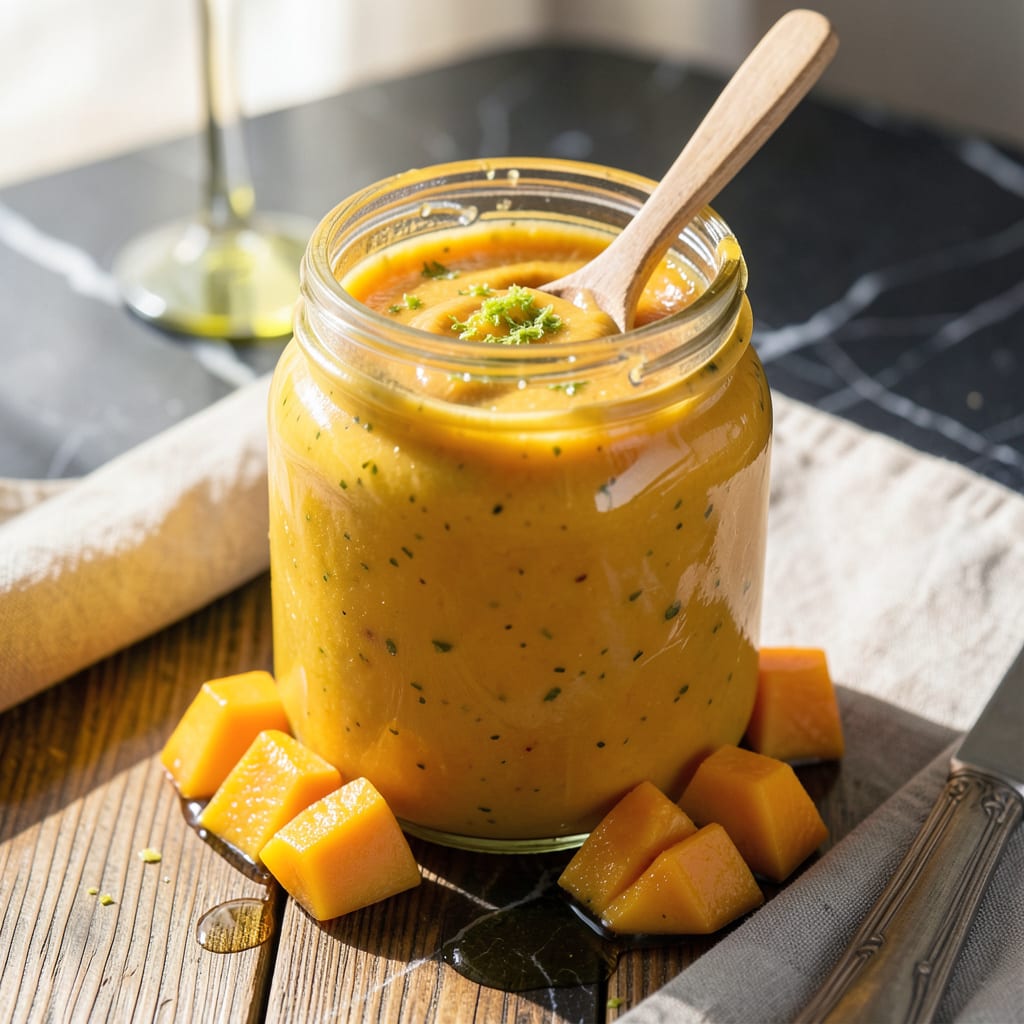
This oil-free mango dressing brings vibrant tropical flavor to any salad without the extra calories. I’ve perfected a simple blend that’s creamy, sweet, and tangy—all while keeping it light.
A quick whisk is all it takes to combine fresh mango, lime juice, and a touch of honey for a dressing that’s as versatile as it is fat-free. Store it in the fridge for up to a week.
Ingredients for Fat Free Mango Dressing
Nine simple ingredients blend into a bright, oil-free tropical dressing.
| Ingredient | Amount | Notes |
|---|---|---|
| Ripe Mango 🥭 | 2 cups | Peeled, cubed, very ripe |
| Lime Juice 🍋 | ¼ cup | Freshly squeezed preferred |
| Maple Syrup 🍁 | 2 tbsp | Vegan honey substitute |
| Rice Vinegar 💧 | 2 tbsp | Mild white or apple cider |
| Dijon Mustard 🟡 | 1 tsp | For tangy depth |
| Garlic Clove 🧄 | 1 clove | Minced or pressed |
| Fresh Ginger 🌿 | 1 tsp | Peeled and grated |
| Salt 🧂 | ¼ tsp | Fine sea salt preferred |
| Black Pepper 🌶️ | 0.125 tsp | Freshly ground |
The mango is everything here. Use Ataulfo or Keitt—they’re sweeter and less fibrous than Tommy Atkins. Most grocery stores carry them fresh in summer, frozen works too (thaw and drain first). I grab mine from Whole Foods when they’re on sale. Look for fruit that gives slightly to gentle pressure (like a ripe avocado). The lime juice needs to be fresh—bottled tastes flat.
No maple syrup? Agave nectar or date syrup work the same. Swap rice vinegar for white vinegar in a pinch. Dijon giving you trouble? Regular yellow mustard at double the amount gets you close. The ginger can be powdered at one-quarter the amount. If your dressing seems thin, blend in a spoonful of silken tofu (it’ll thicken without adding fat).
This keeps beautifully in a sealed jar for 5-7 days in the fridge. The flavors actually get better overnight. Don’t freeze it—the texture turns grainy. Give it a good shake before using, as the ingredients settle.
Why You’ll Love This Recipe
- Blender Ready: Honestly, just toss everything in and blend—no chopping, no fuss, just ripe mango and a few pantry staples.
- Sweet-Tangy Kick: The lime juice and Dijon mustard give it that zing, while the mango keeps it naturally sweet and creamy.
- Drizzle Anywhere: I use it on salads, grilled chicken, even as a dip for spring rolls. So versatile.
- Keeps for Days: Makes a big batch, and it stays fresh in the fridge for up to a week. No waste, just flavor on demand.
Step-by-Step Instructions for Fat Free Mango Dressing
This blending method delivers smooth, vibrant tropical flavor with zero oil involved.
Step 1: Blend the Mango Base until Smooth
Add all 2 cups of ripe mango to your blender. I use very ripe fruit here because it blends smoother and delivers maximum sweetness without added sugar. The mango should be peeled and cubed as specified in the ingredients list.
Blend on high for 30-45 seconds until completely smooth with no visible chunks. Stop and scrape down the sides with a rubber spatula if needed. You’re aiming for a silky puree that looks like a thick smoothie—this is your flavor foundation.
Step 2: Add Acidic and Sweet Components
Pour in the 0.25 cup lime juice, 2 tbsp maple syrup, and 2 tbsp rice vinegar. I add these all at once to balance the mango’s sweetness immediately. The lime juice should be freshly squeezed for the brightest flavor.
Blend again for 20-30 seconds until fully incorporated. Taste and check the balance—you should detect bright citrus notes cutting through the mango’s sweetness, with a subtle depth from the vinegar. The mixture will be slightly foamy on top, which is normal.
Step 3: Incorporate Aromatics and Seasonings
Add the 1 clove garlic clove (minced or pressed), 1 tsp fresh ginger (peeled and grated), 1 tsp Dijon mustard, 0.25 tsp salt, and 0.125 tsp black pepper. The ginger and garlic should be finely grated or pressed to distribute evenly without texture.
Blend for a final 15-20 seconds until everything is completely smooth. The mustard will slightly thicken the dressing while adding a subtle tang. Stop and check the consistency—it should coat the back of a spoon but still be pourable. If it’s too thick, add 1-2 tbsp water and pulse briefly.
Step 4: Adjust and Chill for Optimal Flavor
Give it a final taste and adjust if needed. Real talk: if it needs more brightness, add a squeeze more lime. If it’s not sweet enough, a touch more maple syrup does the trick. Remember that flavors will meld and intensify as it chills.
Transfer to an airtight container and refrigerate for at least 30 minutes before using. This chilling time allows the flavors to marry and the dressing to thicken slightly. It’ll keep in the fridge for up to 5 days—the acidity helps preserve it naturally.
The finished dressing should have a vibrant orange color and a perfect balance of sweet, tangy, and aromatic notes. Shake well before each use as natural separation may occur.
Pro Tips For Making Fat Free Mango Dressing
- Blend Longer: I learned this the hard way—pulse the mango for at least 30 seconds to break down the fibers completely, or your dressing will be grainy instead of silky smooth.
- Strain the Pulp: After blending, run the mixture through a fine-mesh sieve to remove any stubborn mango strings—it’s the thing that matters most for a velvety texture.
- Skip Cold Mango: Use room-temperature mango for easier blending and better flavor release; cold fruit resists breaking down and can mute the sweetness.
- Balance with Mustard: If the dressing tastes flat, add the Dijon mustard last—just ½ teaspoon at a time—until the tang and sweetness pop.
Pro Cooking Tips for This Recipe
Blender Selection Matters
I always use a high-speed blender like my Vitamix for this dressing. The powerful motor pulverizes fibrous mango completely smooth in 30 seconds. A standard blender works too, but may require extra scraping and blending time. 💡
Perfect Mango Ripeness
Choose mangoes that yield slightly to gentle pressure, like a ripe avocado. Ataulfo or Keitt varieties are my top picks for their sweetness and low fiber. Overripe mangoes work beautifully here—they blend smoother and add natural sweetness without extra sugar.
Flavor Balancing Trick
After blending, taste and adjust carefully. Need more brightness? Add lime juice in 1 tsp increments. Want it sweeter? Stir in maple syrup 1 tsp at a time. The flavors intensify after chilling, so slightly underseason now.
Texture Control
If your dressing seems thin, blend in 1 tbsp silken tofu for creaminess without fat. Too thick? Thin with water 1 tbsp at a time. Aim for a consistency that coats the back of a spoon but still drizzles easily. 🌟
Prevent Separation
Store in a glass jar with tight lid to minimize oxidation. Always give it a vigorous shake before using, as natural separation occurs. I find mason jars work perfectly—they’re airtight and let me see the vibrant color.
Make It Last
This keeps for 5-7 days refrigerated. The acidity from lime and vinegar acts as a natural preservative. Don’t freeze it—the texture becomes grainy when thawed.
Frequently Asked Questions
What can I use instead of maple syrup?
Agave nectar, date syrup, or honey work perfectly as 1:1 substitutes. For a sugar-free option, try 1-2 pitted dates blended in.
Why does my dressing separate in the fridge?
Natural separation occurs with oil-free dressings. Simply give it a vigorous shake before using. Store in a glass jar with tight lid to minimize this.
Can I make this ahead for meal prep?
It keeps for 5-7 days refrigerated. The flavors actually improve overnight as they meld together.
How do I fix a dressing that’s too thick?
Thin it with water 1 tbsp at a time until it reaches your desired consistency. Aim for a sauce that coats the back of a spoon but still drizzles.

- 8 Bean Soup Recipe Crock Pot: Hearty Vegetable Medley in One Pot - September 25, 2026
- 4C Bread Crumbs Meatballs Recipe: Crispy Crust and Juicy Centers - September 25, 2026
- 6 Oz Chocolate Chip Cookie Recipe: Perfectly Balanced Crispy Edges and Chewy Hearts - September 25, 2026