
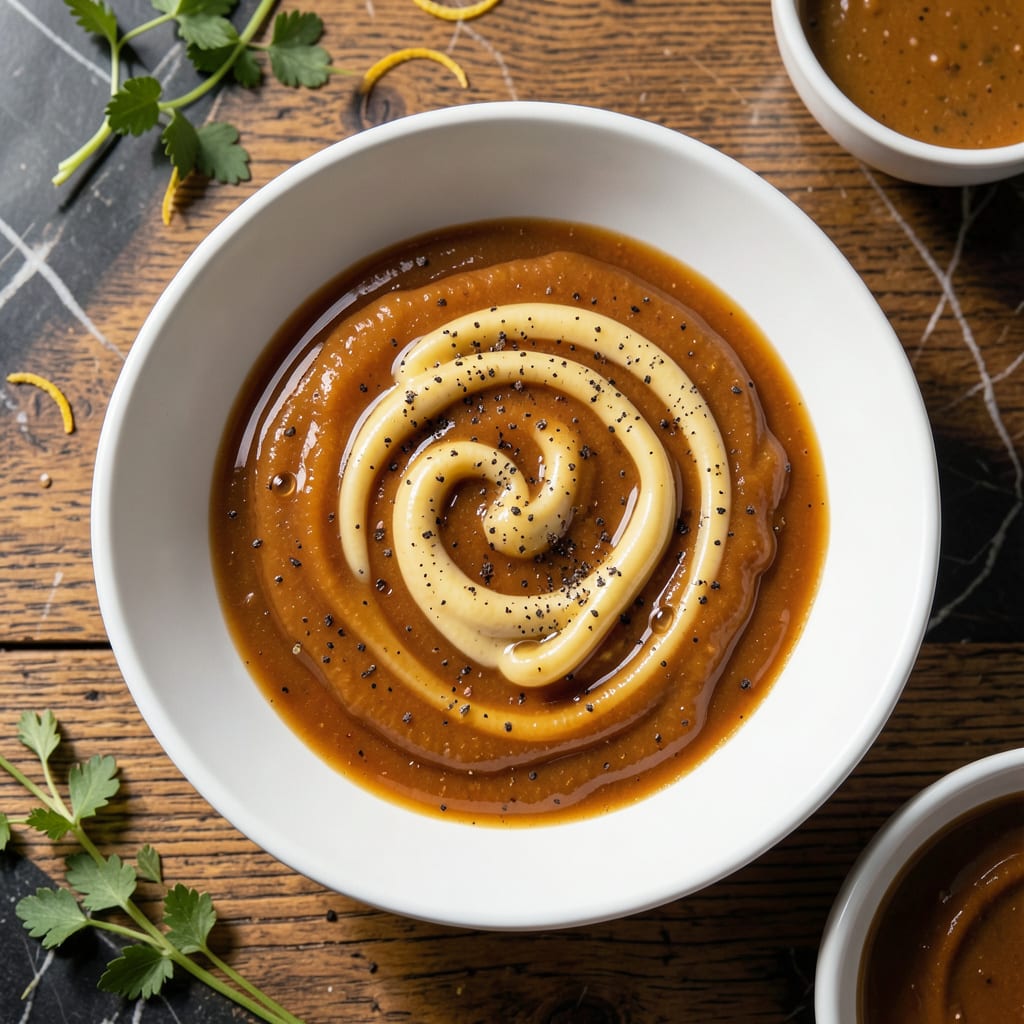
This oil-free honey mustard delivers bold, tangy-sweet flavor without any added fat. The secret is balancing smooth Dijon with raw honey for a sauce that clings perfectly to sandwiches or salads.
Whisk together just 4 ingredients in minutes for a versatile condiment that stays fresh in your fridge for up to 2 weeks. Perfect for dressing, dipping, or marinating.
Ingredients for Fat Free Honey Mustard
Four simple ingredients create this bold, tangy-sweet condiment with zero added fat.
| Ingredient | Amount | Notes |
|---|---|---|
| Dijon Mustard 🟡 | ½ cup | Smooth, high-quality preferred |
| Raw Honey 🍯 | ½ cup | Unfiltered for best flavor |
| Apple Cider Vinegar 🍏 | 2 tbsp | Balances sweetness with tang |
| Water 💧 | 2 tbsp | Adjust for desired consistency |
[recipeingredientscaler]
The mustard is the foundation—Maille or Grey Poupon offer the smooth consistency and sharp flavor needed. Raw honey adds natural sweetness and thickness; look for local varieties at farmers markets or Whole Foods for optimal quality. Avoid pasteurized honey, as it lacks the depth of raw. Apple cider vinegar provides the necessary acidity to balance the sweetness perfectly.
No raw honey? Agave nectar or maple syrup work as substitutes, though the flavor profile will shift slightly. If you only have yellow mustard, use it but reduce the amount by 25%—it’s milder. Out of apple cider vinegar? White wine vinegar or lemon juice can stand in, but add a pinch of sugar to mimic the fruitiness.
Store in an airtight container in the fridge for up to 2 weeks. The flavors meld and deepen over time. If it thickens too much, stir in warm water 1 tsp at a time to restore the perfect consistency.
Why You’ll Love This Recipe
- Five-Minute Mix: I stir these four ingredients together faster than I can preheat my oven.
- Sweet-Tangy Punch: The sharp Dijon cuts through the honey’s richness, while the apple cider vinegar adds just the right bite.
- Drizzle or Dunk: I slather it on sandwiches, toss it with roasted veggies, or use it as a dip for chicken tenders.
- Pantry Staples Only: No special shopping trip—just mustard, honey, vinegar, and water from my counter.
Step-by-Step Instructions for Fat Free Honey Mustard
This straightforward method ensures a perfectly balanced, emulsified sauce every time.
Step 1: Combine the Mustard and Honey Base
In a medium bowl, add the 0.5 cup Dijon Mustard and 0.5 cup Raw Honey. I prefer using a whisk here to break up any thicker honey that might be resistant to mixing. The mustard’s sharpness will initially contrast with the honey’s sweetness, but they’ll harmonize as you work.
Whisk vigorously for 30-45 seconds until the mixture becomes uniform and smooth. You’ll notice the color deepen slightly as the ingredients fully incorporate. This creates the foundation for your sauce, so take your time—proper emulsification at this stage prevents separation later.
Step 2: Incorporate the Acidic Component
Add the 2 tbsp Apple Cider Vinegar to the bowl. The vinegar serves as the flavor bridge between the sweet and savory elements. Pour it slowly while whisking continuously to maintain the emulsion you’ve started.
You’ll immediately smell the tangy brightness as it cuts through the richness of the honey. Continue whisking for another 20-30 seconds until the vinegar is fully dispersed and the mixture thickens slightly. The sauce should now have a glossy appearance and a more complex aroma.
Step 3: Adjust Consistency with Water
Add the 2 tbsp Water gradually, 1 tablespoon at a time, while whisking. This is your opportunity to fine-tune the texture to your preference. Start with 1 tablespoon, then assess the consistency before adding the second.
The water will loosen the thick mixture, making it more pourable while maintaining its body. After each addition, whisk for 10-15 seconds to fully incorporate. The final sauce should coat the back of a spoon but still drip off slowly when tilted. If you prefer a thinner consistency, you may add additional water, but remember the original 2 tbsp creates the ideal balance for most uses.
Step 4: Final Emulsification and Resting
Once all ingredients are combined, whisk the mixture for an additional 45-60 seconds to ensure complete emulsification. You should see the sauce take on a smooth, creamy texture with no visible separation between the components.
Let the sauce rest for 5-10 minutes at room temperature. This allows the flavors to meld completely and any air bubbles from whisking to dissipate. During this time, the honey’s natural thickness will help stabilize the emulsion. Give it one final stir before using or storing.
Pro Tips For Making Fat Free Honey Mustard
- Whisk Vigorously: I learned this the hard way—raw honey and Dijon don’t blend smoothly without a good 30 seconds of aggressive whisking. Stop when the color evens out and there are no streaks.
- Warm the Honey: Sounds weird, but it works: microwave the honey for 10-15 seconds first so it mixes into the mustard without clumping. I skip this when I’m lazy, but the texture is noticeably smoother when I don’t.
- Balance the Tang: Apple cider vinegar can overpower fast—start with half the amount you think you need, taste, then add more. After burning three batches with too much acid, I finally figured out less is more.
- Thin Slowly: Add water a teaspoon at a time while whisking. This isn’t the prettiest method, but it’s the only way to guarantee you don’t end up with a watery mess.
Regional Styles of These Flavors
Southern Style
In the South, we often add 1 tsp prepared yellow mustard for a milder tang. This version works beautifully on pulled pork sandwiches. I discovered this variation at a Memphis BBQ joint years ago.
Midwest Sweet
The Midwest prefers a sweeter profile—add 1 tbsp maple syrup and reduce honey to ⅓ cup. This pairs perfectly with fried chicken tenders. The extra sweetness balances the crispy coating beautifully.
Texas Bold
Texas-style kicks up the heat with ½ tsp cayenne pepper and 1 tsp smoked paprika. This smoky-spicy version transforms grilled chicken into a flavor explosion. I use it for my game-day wings. 🔥
California Light
On the West Coast, they lighten it further with 1 tbsp lemon juice instead of vinegar. This citrusy twist brightens seafood dishes. I love it on my salmon burgers during summer.
New England Tangy
New Englanders add 1 tbsp white wine vinegar for extra sharpness. This cuts through rich lobster rolls beautifully. The acidity makes the seafood flavors pop. 💛
Pacific Northwest
In the PNW, we incorporate 1 tsp grated fresh ginger for an Asian-inspired twist. This works wonders as a dressing for cabbage slaw. The ginger adds a warm, zesty depth.
Nutrition Facts
Frequently Asked Questions
Can I use a different type of mustard?
Yes! Yellow mustard works but reduce the amount by 25% since it’s milder. Whole grain mustard adds texture but may separate more. For best results, stick with smooth Dijon for the classic flavor.
How long can I store this in the fridge?
It keeps fresh for up to 2 weeks in an airtight container. The flavors actually deepen over time! If it thickens, stir in warm water 1 tsp at a time to restore consistency.
What can I substitute for honey?
Maple syrup or agave nectar work well, though the flavor will differ slightly. Use the same 1:1 ratio. Avoid artificial sweeteners as they can make the sauce watery.
Why did my sauce separate?
This usually happens if whisked too quickly or not enough. Fix it by slowly re-whisking while adding 1 tsp warm water at a time. Proper emulsification is key for a smooth texture!

- 8 Bean Soup Recipe Crock Pot: Hearty Vegetable Medley in One Pot - September 25, 2026
- 4C Bread Crumbs Meatballs Recipe: Crispy Crust and Juicy Centers - September 25, 2026
- 6 Oz Chocolate Chip Cookie Recipe: Perfectly Balanced Crispy Edges and Chewy Hearts - September 25, 2026