
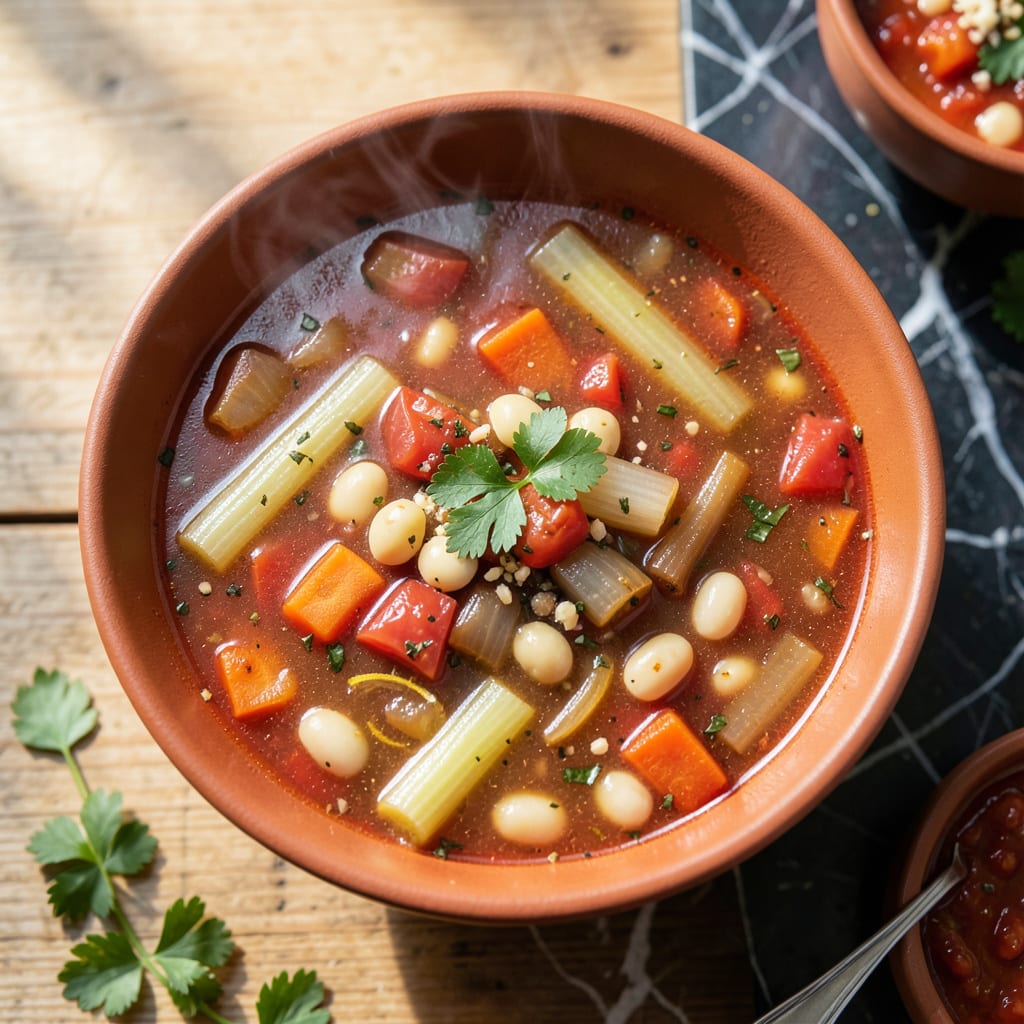
This minestrone delivers all the comfort of the classic without a drop of added fat. Every spoonful bursts with garden-fresh vegetables, tender beans, and al dente pasta in a rich tomato broth.
Built on a foundation of onions, carrots, and celery, this hearty soup gets its depth from garlic, herbs, and a long simmer. The result is a vegan dish that satisfies completely without compromise.
Ingredients for Fat Free Minestrone Soup
Pantry staples and fresh produce combine for a classic minestrone without compromise.
| Ingredient | Amount | Notes |
|---|---|---|
| Yellow Onion 🧅 | 1 whole | Medium, finely diced |
| Carrots 🥕 | 2 whole | Peeled, diced into 1/4-inch cubes |
| Celery Stalks 🥬 | 2 whole | Trimmed, diced into 1/4-inch pieces |
| Garlic Cloves 🧄 | 4 cloves | Minced for maximum flavor |
| Canned Diced Tomatoes 🍅 | 2 cans | 14.5 oz each, no salt added |
| Vegetable Broth 🥣 | 6 cups | Low-sodium preferred for control |
| Great Northern Beans 🫘 | 1 can | 15 oz, drained and rinsed |
| Kidney Beans 🫘 | 1 can | 15 oz, drained and rinsed |
| Ditalini Pasta 🍝 | 1 cup | Uncooked, small shape for soup |
| Zucchini 🥒 | 1 whole | Medium, diced into 1/2-inch cubes |
| Fresh Spinach 🥬 | 4 cups | Packed, roughly chopped |
| Fresh Basil Leaves 🌿 | ½ cup | Loosely packed, torn by hand |
| Dried Oregano 🍃 | 1 tsp | Rubbed between fingers to release oils |
| Dried Thyme 🌿 | 1 tsp | Crushed for better infusion |
| Bay Leaf 🍃 | 1 whole | Dried, removed before serving |
[recipeingredientscaler]
The vegetable base is critical here. San Marzano tomatoes (canned from Whole Foods or Eataly) deliver the richest flavor, but any no-salt-added diced tomatoes work. For broth, Imagine brand or Trader Joe’s organic have clean, deep vegetable flavors. Fresh herbs elevate the dish—look for vibrant green basil with no wilting. The beans should be firm, not mushy, so check the can for intact seals and recent packing dates.
No kidney beans? Substitute cannellini or pinto beans at a 1:1 ratio. Missing zucchini? Green bell pepper adds similar texture. For pasta, any small shape works—orzo or small shells hold up well. If using frozen spinach (thawed and drained), reduce to 2 cups. The dried herbs can be replaced with 1 tbsp fresh, finely chopped—just add them at the end to preserve their delicate flavors.
This soup improves overnight as flavors meld. Stores in the fridge for 4-5 days or freezes for 3 months. Cool completely before freezing in airtight containers. The pasta will absorb liquid over time, so add a splash of water or broth when reheating. Always remove the bay leaf before storing—nobody wants to bite into that.
Why You’ll Love This Recipe
- One Pot Wonder: I dump everything in a single pot—onion, carrots, celery, garlic, tomatoes—and let it bubble away.
- Garlic-Kissed Depth: That slow-simmered garlic with the tomatoes? It’s the kind of flavor that lingers on your tongue.
- Meal Prep Hero: Honestly, this tastes even better on day three, and it freezes like a dream.
- Pennywise Comfort: A can of tomatoes and a handful of veggies stretch into four hearty bowls.
Step-by-Step Instructions for Fat Free Minestrone Soup
Execute this method precisely and you’ll produce a robust, vegetable-forward soup with authentic Italian character.
Step 1: Sauté Aromatic Vegetables for Flavor Foundation
Begin by heating a large pot over medium heat. Add the finely diced yellow onion, carrots, and celery stalks. Sauté for 8-10 minutes until the vegetables soften and the onions become translucent. This slow cooking process develops the base flavors that will permeate the entire soup.
Add the minced garlic cloves and cook for an additional 1 minute until fragrant. Be careful not to let the garlic brown—this can make it bitter. The moment you smell the garlic’s aroma, you’re ready to proceed to the next step.
Step 2: Build the Broth Base with Tomatoes and Seasonings
Pour in the 2 cans canned diced tomatoes with their juices, then add the 6 cups vegetable broth. Stir to combine, scraping up any browned bits from the bottom of the pot. These bits contain concentrated flavor that will enrich your soup.
Add the dried oregano, dried thyme, and bay leaf. I rub the oregano and thyme between my fingers as I add them to release their essential oils. Bring the mixture to a gentle boil, then reduce heat to medium-low to maintain a steady simmer.
Step 3: Incorporate Beans and Pasta
Add the drained and rinsed great northern beans and kidney beans to the pot. These will soften slightly as they absorb the flavors of the broth. Stir in the 1 cup ditalini pasta and cook for 8-10 minutes or until the pasta is al dente.
The pasta will continue to cook slightly after you remove the soup from heat, so it’s important to stop cooking when it’s just shy of fully tender. Stir occasionally to prevent the pasta from sticking to the bottom of the pot.
Step 4: Finish with Fresh Vegetables and Herbs
Stir in the diced zucchini and cook for 5 minutes until tender. The zucchini should be soft but still hold its shape. Add the 4 cups fresh spinach and cook just until wilted, about 2 minutes. The spinach will reduce significantly in volume as it cooks.
Remove the pot from heat and stir in the torn 0.5 cup fresh basil leaves. The residual heat will gently wilt the basil, releasing its aromatic oils into the soup. Remove and discard the bay leaf before serving. Taste and adjust seasoning with salt and pepper if desired, though the low-sodium broth should provide sufficient base seasoning.
Pro Tips For Making Fat Free Minestrone Soup
- Sweat the Veggies: Cook the onion, carrots, and celery in a dry pot over medium heat for 8-10 minutes until soft—this builds flavor without oil, and I learned this the hard way when my first batch tasted flat.
- Use High-Quality Tomatoes: Opt for fire-roasted canned diced tomatoes; they add depth that regular ones can’t, and My grandmother swore by this, and she was right.
- Skip the Overcrowding: Add veggies in stages if your pot is small—steer clear of dumping everything in at once, or they’ll steam instead of brown.
- Boost with Garlic: Sauté the minced garlic for just 30 seconds at the end of sweating the veggies—any longer and it turns bitter, Sounds weird, but it works.
Common Mistakes When Making This Recipe
Overcooking the Vegetables
One common mistake is letting the vegetables turn mushy. The zucchini should cook for only 5 minutes—just until tender. Overcooking destroys texture and turns your soup into a bland purée. I always test a piece with a fork for perfect doneness.
Adding Pasta Too Early
Adding ditalini pasta before the beans can lead to a gummy texture. Wait until the beans have simmered for at least 10 minutes first. The pasta only needs 8-10 minutes to cook al dente. Stir occasionally to prevent sticking.
Skipping the Sauté Step
Rushing the aromatic base is a flavor killer. The onion, carrots, and celery need 8-10 minutes to soften and develop sweetness. I often add a splash of water if the pot looks dry to prevent burning. 🔥
Over-seasoning Early
With low-sodium broth and no-salt-added tomatoes, it’s tempting to add salt early. Wait until the end to taste and adjust. The flavors concentrate as the soup simmers, and you might not need any extra salt at all.
Ignoring the Bay Leaf
Forgetting to remove the bay leaf before serving is more common than you’d think. It’s not edible and can be a choking hazard. I set a timer for when I add it so I
Overcrowding the Pot
Using a pot that’s too small can lead to uneven cooking and mushy vegetables. A 5-6 quart Dutch oven works perfectly for this recipe. If your pot is too full, the soup won’t simmer properly, and the pasta may clump together.
Nutrition Facts
Frequently Asked Questions
Can I use frozen vegetables instead of fresh?
Yes, frozen works fine! Thaw and drain them first to avoid excess water. Add them during the last 10 minutes of cooking to prevent mushiness.
How do I make it gluten-free?
Swap the ditalini pasta for your favorite gluten-free variety. Check that all canned goods are certified gluten-free. Most brands label this clearly.
Why did my soup turn out watery?
This usually happens if the pasta absorbs too much liquid. Use 1/4 cup less broth or cook pasta separately and add just before serving.
Can I make this in a slow cooker?
Sauté aromatics first, then combine everything except pasta and spinach. Cook on low for 6-7 hours, add pasta and spinach during the last 30 minutes.

- 8 Bean Soup Recipe Crock Pot: Hearty Vegetable Medley in One Pot - September 25, 2026
- 4C Bread Crumbs Meatballs Recipe: Crispy Crust and Juicy Centers - September 25, 2026
- 6 Oz Chocolate Chip Cookie Recipe: Perfectly Balanced Crispy Edges and Chewy Hearts - September 25, 2026