
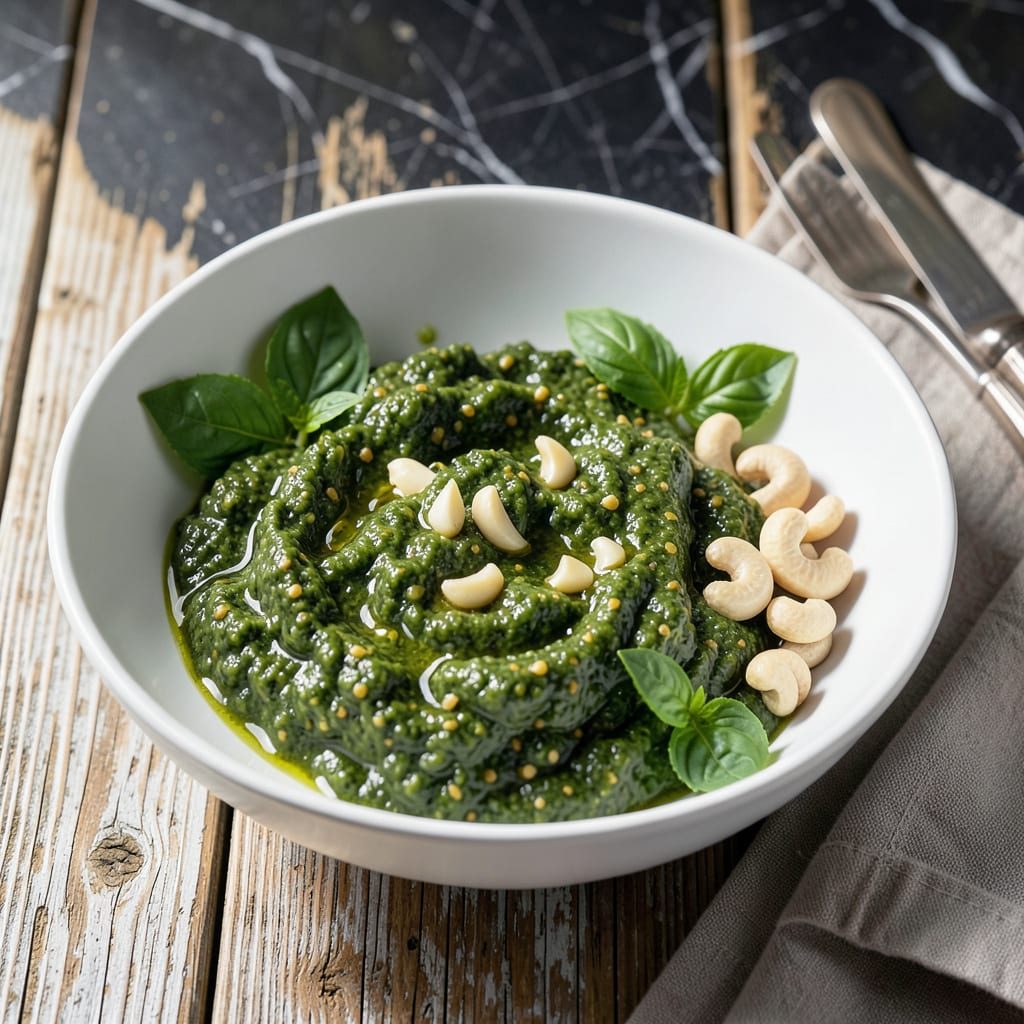
I’ve perfected a fat-free pesto that keeps all the vibrant basil flavor without a drop of oil. The secret lies in using fresh ingredients and a splash of water to achieve the right consistency.
This version stays true to traditional pesto’s bright, herby taste while being completely vegan. It’s versatile enough for pasta, sandwiches, or as a fresh dip.
Ingredients for Fat Free Pesto
Eight simple ingredients deliver bright basil flavor without any oil or dairy.
| Ingredient | Amount | Notes |
|---|---|---|
| Fresh Basil Leaves 🌿 | 2 cups | Packed, stems removed |
| Garlic Cloves 🧄 | 3 cloves | Peeled, rough chopped |
| Raw Cashews 🥜 | ¼ cup | Soaked in hot water 15 minutes |
| Nutritional Yeast 🧀 | 2 tbsp | For cheesy, umami depth |
| Lemon Juice 🍋 | 2 tbsp | Freshly squeezed preferred |
| Water 💧 | ¼ cup | Adjust for desired consistency |
| Sea Salt 🧂 | ½ tsp | Fine grain preferred |
| Black Pepper 🌶️ | ¼ tsp | Freshly ground preferred |
The basil must be fresh—farmers market quality with vibrant green leaves, not the wilted grocery store kind. Raw cashews replace the traditional pine nuts and Parmesan for creaminess, and they’re far cheaper. Soaking them softens their texture for blending. Nutritional yeast (found at Whole Foods or Trader Joe’s) delivers that cheesy note without dairy. Always buy it in bulk bins if possible—fresher and more affordable.
No cashews? Raw sunflower seeds or walnuts work as substitutes, though the flavor will shift slightly. Out of nutritional yeast? A pinch of white miso paste adds umami, but use sparingly. The water is key—add it gradually to avoid a runny pesto. One-third the amount of lemon zest can replace juice if needed, but fresh juice is ideal for that bright finish.
This keeps 5 days in the fridge in a sealed jar. For longer storage, freeze in ice cube trays—pops out perfectly for single servings. A thin layer of water on top prevents browning (no oil needed). Thaw overnight in the fridge before using.
Why You’ll Love This Recipe
- 5-Minute Blend: I just toss everything in the blender—basil, garlic, cashews, nutritional yeast, lemon juice—and it’s done before the pasta finishes boiling.
- Bright & Zesty: The lemon juice cuts through the richness of the cashews, and the nutritional yeast adds this deep, cheesy flavor without any dairy.
- Meal Prep Hero: I make a big batch on Sunday and it keeps for days—toss with pasta, spread on sandwiches, or stir into soups all week long.
Step-by-Step Instructions for Fat Free Pesto
This method ensures maximum flavor extraction while maintaining a perfectly smooth, vibrant sauce.
Step 1: Prepare the Cashews for Blending
Begin by soaking the 0.25 cup Raw Cashews in hot water for 15 minutes. This softens them significantly, allowing for a silky-smooth texture in the final blend. Drain and rinse well before using—this removes any residual bitterness and prepares them for optimal integration.
I always use raw cashews rather than roasted for this application, as their neutral flavor profile doesn’t compete with the delicate basil. The soaking step is non-negotiable; unsoaked cashews create a grainy texture that disrupts the pesto’s velvety consistency.
Step 2: Process the Aromatics and Base Ingredients
In a food processor, combine the soaked 0.25 cup Raw Cashews, peeled and rough chopped 3 cloves Garlic Cloves, 2 tbsp Nutritional Yeast, 0.5 tsp Sea Salt, and 0.25 tsp Black Pepper. Pulse until the mixture resembles coarse sand—about 20-30 seconds of processing.
This initial blending breaks down the harder ingredients first, creating a stable base before introducing the more delicate basil. The nutritional yeast adds the essential umami depth that typically comes from Parmesan in traditional recipes, while the garlic provides its characteristic punch.
Step 3: Incorporate the Basil Leaves
Add the 2 cups Fresh Basil Leaves (packed, stems removed) to the food processor. Pulse in 1-second bursts for 10-15 seconds total, stopping to scrape down the sides as needed. The key is to avoid over-processing, which can turn the basil bitter and darken its vibrant green color.
Watch the texture carefully—you want visible flecks of basil throughout rather than a uniform green paste. This maintains the fresh, bright character that defines an exceptional pesto. The basil should look freshly bruised rather than pulverized.
Step 4: Emulsify with Liquid Ingredients
With the processor running continuously, slowly drizzle in the 2 tbsp Lemon Juice followed by the 0.25 cup Water. Process for 20-30 seconds until completely smooth, stopping to scrape the sides once or twice as needed.
The lemon juice brightens the entire mixture while the water helps create the proper consistency. Start with the full 0.25 cup, then adjust with additional water 1 tablespoon at a time if needed for your preferred thickness. The final texture should coat the back of a spoon but still be pourable.
Taste and adjust seasoning if necessary, though the initial measurements typically yield perfect balance. The pesto should have a lively, herbaceous character with just enough salt to enhance the flavors without overpowering them.
Pro Tips For Making Fat Free Pesto
- Soak the Cashews: Cover raw cashews in hot water for 15 minutes before blending—I learned this the hard way after my first batch came out grainy and under-processed.
- Dry the Basil: Pat basil leaves dry with a paper towel after washing, or your pesto will turn watery instead of thick and vibrant.
- Skip the Overcrowding: Blend ingredients in batches if your food processor is small; stuffing it all in at once leads to uneven texture and frustrated pulsing.
- Add Lemon Last: Stir in lemon juice after blending the rest—sounds weird, but it keeps the pesto from turning bitter if the citrus sits too long with the garlic.
Storing and Reheating Leftovers
Refrigerator Storage
Transfer your pesto to a clean 8-ounce jar with a tight-fitting lid. I use Ball Mason jars for this. Pour a thin layer of water on top to prevent browning—about 1 tablespoon is perfect. This keeps the pesto vibrant green for up to 5 days in the fridge. ❄️
Freezer Storage
For longer storage, spoon pesto into ice cube trays and freeze until solid. Once frozen, transfer cubes to a freezer bag. They’ll keep for 3 months without losing flavor. I label my bags with the date to track freshness.
Thawing Method
Move frozen pesto cubes to the fridge the night before use. They’ll thaw completely in 6-8 hours. For quick thawing, place the jar in a bowl of cold water for 30-45 minutes, changing water every 10 minutes.
Revival Technique
After thawing, your pesto might separate slightly. Simply give it a good stir or pulse briefly in the food processor. If it’s too thick, add water 1 teaspoon at a time until it reaches your desired consistency.
Usage Tips
Use thawed pesto within 3 days for best quality. I love stirring a cube into hot pasta—the heat helps revive the flavors beautifully. Avoid refreezing once thawed, as this can degrade the texture. 💡
Nutrition Facts
Frequently Asked Questions
Can I use spinach instead of basil?
Yes, baby spinach works well and provides a milder flavor. Use the same 2 cups measurement, but expect a slightly different color and earthier taste. Spinach is also more budget-friendly than fresh basil.
Why do the cashews need soaking?
Soaking for 15 minutes softens raw cashews for smooth blending. Unsoaked cashews create a grainy texture. This step ensures a creamy consistency without any oil.
How can I make this nut-free?
Replace cashews with 1/4 cup raw sunflower seeds. Soak them the same way for best results. The flavor will be slightly different but still delicious.
What if my pesto is too thick?
Add water 1 tablespoon at a time until it reaches your desired consistency. The water helps emulsify without adding fat, keeping it light and pourable.

- 8 Bean Soup Recipe Crock Pot: Hearty Vegetable Medley in One Pot - September 25, 2026
- 4C Bread Crumbs Meatballs Recipe: Crispy Crust and Juicy Centers - September 25, 2026
- 6 Oz Chocolate Chip Cookie Recipe: Perfectly Balanced Crispy Edges and Chewy Hearts - September 25, 2026