
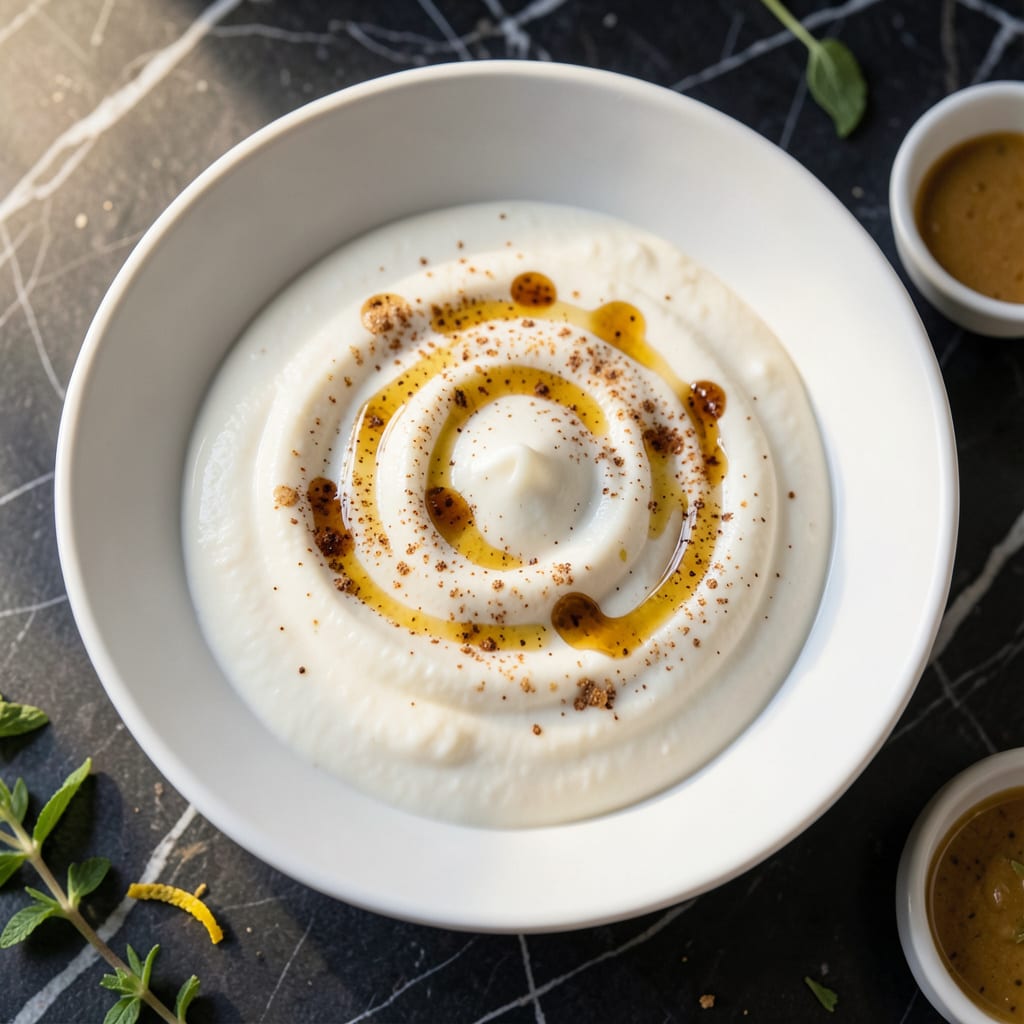
This oil-free creation delivers creamy richness without animal products or added fats. I developed this version to prove that plant-based condiments can be just as satisfying as traditional ones.
The secret lies in aquafaba, which emulsifies beautifully with vinegar and mustard to create that signature mayonnaise texture. It whips up in 5 minutes with simple ingredients, and the result is indistinguishable from classic mayo in both taste and consistency.
Ingredients for Fat Free Vegan Mayonnaise
Eight simple ingredients transform into a creamy, oil-free vegan condiment that rivals traditional mayonnaise.
| Ingredient | Amount | Notes |
|---|---|---|
| Aquafaba 🥫 | ½ cup | Chickpea brine, unsalted |
| Apple Cider Vinegar 🍏 | 1 tbsp | Or white vinegar |
| Dijon Mustard 🟡 | 1 tsp | Smooth, no seeds |
| Garlic Powder 🧄 | ¼ tsp | Optional for depth |
| Onion Powder 🧅 | ¼ tsp | Balances acidity |
| Sea Salt 🧂 | ¼ tsp | Fine grain preferred |
| Maple Syrup 🍁 | ½ tsp | Optional for sweetness |
| Lemon Juice 🍋 | 1 tsp | Freshly squeezed preferred |
Aquafaba is non-negotiable here—canned chickpea brine (unsalted) gives the best emulsion. I’ve tested with other bean liquids, but chickpea works every time. Trader Joe’s or Eden Organic chickpeas have reliable, thick brine. The vinegar matters: apple cider or white wine vinegar brightens without overpowering. Avoid balsamic—it’s too assertive for this.
No aquafaba? Reduce the recipe by half and use blended silken tofu (about 1/4 cup) as a base, though the texture differs slightly. Mustard is key for emulsification—Dijon or yellow both work. Skip the maple syrup if you prefer a tangier profile. For a smoother finish, strain the aquafaba through a fine-mesh sieve first.
This keeps for 5 days in the fridge in an airtight container. The emulsion may separate slightly over time—just whisk it back together. For longer storage, freeze in ice cube trays (up to 3 months), then thaw in the fridge overnight.
Why You’ll Love This Recipe
- Five Minute Whip: I can blend this in my immersion blender while the pasta boils—aquafaba, vinegar, mustard, done.
- Tangy Kick: The apple cider vinegar and Dijon give it that sharp, creamy bite I crave on sandwiches.
- Smears on Everything: Honestly, it’s my go-to for wraps, dips, even a quick veggie burger sauce.
- Pantry Staples: Between us, I already had all the ingredients, so it cost me nothing but 5 minutes.
Step-by-Step Instructions for Oil-Free Vegan Mayonnaise
This method transforms aquafaba into rich, creamy mayonnaise through precise emulsification technique.
Step 1: Prepare the Aquafaba Base
Measure 0.5 cup Aquafaba into a mixing bowl. I recommend using unsalted chickpea brine for the cleanest flavor profile, as any added salt can affect the final seasoning balance. The liquid should be at room temperature—cold aquafaba takes longer to emulsify properly.
Using a hand mixer or immersion blender, whip the aquafaba on high speed for 1-2 minutes until it becomes frothy with visible bubbles. This initial whipping breaks down the proteins in the chickpea brine, creating the structural foundation for your mayonnaise. You’ll notice the liquid transform from watery to slightly viscous.
Step 2: Incorporate Acidic Components
With the mixer still running on medium speed, slowly drizzle in 1 tbsp Apple Cider Vinegar and 1 tsp Lemon Juice. The acid not only provides the characteristic tang of mayonnaise but also helps stabilize the emulsion. I prefer apple cider vinegar for its mild, balanced acidity.
Add 1 tsp Dijon Mustard next. The mustard acts as an emulsifier, binding the liquid components together. Use smooth Dijon without seeds to avoid texture issues in your final product. The mixture should begin to thicken noticeably as these ingredients incorporate.
Step 3: Sweeten and Season the Emulsion
Reduce mixer speed to low and add 0.5 tsp Maple Syrup, 0.25 tsp Garlic Powder, 0.25 tsp Onion Powder, and 0.25 tsp Sea Salt. The maple syrup balances the acidity with subtle sweetness, while the powders add depth without overpowering.
Mix for an additional 30-60 seconds until all ingredients are fully incorporated and the mixture achieves a smooth, creamy consistency. The color should be pure white with a slight sheen, and it should hold peaks when the mixer is lifted. If it appears too thin, continue mixing for another 30 seconds—the proteins need time to fully develop.
Step 4: Verify and Adjust Consistency
Stop the mixer and examine the texture. Properly emulsified mayonnaise should be thick enough to coat the back of a spoon, with a smooth, velvety appearance. If you notice any separation, continue mixing on medium speed for 15-20 seconds until it comes back together.
Taste and adjust seasoning if needed. The balance should be tangy with a hint of sweetness, and the garlic and onion powders should provide subtle depth without being identifiable as individual flavors. Remember that flavors will meld slightly as the mayonnaise rests.
Transfer to an airtight container and refrigerate for at least 1 hour before using. This chilling time allows the emulsion to fully set and the flavors to harmonize completely.
Pro Tips For Making Fat Free Vegan Mayonnaise
- Chill the Aquafaba: I learned this the hard way—room temperature aquafaba whips poorly. Pop the can in the fridge overnight or at least 30 minutes before starting.
- Drizzle Slowly: Add the apple cider vinegar in a thin, steady stream while blending. Too fast and the emulsion breaks—sounds fussy, but it’s the difference between mayo and sad liquid.
- Use Reduced Aquafaba: Simmer the aquafaba for 5-10 minutes first to concentrate the proteins. It whips thicker and holds the mayo together better—yes, even if you’re impatient like me.
- Start with Mustard: Mix the Dijon mustard into the aquafaba before adding vinegar. It stabilizes the emulsion early, so you’re not fighting to save it later.
Serving Suggestions for fat free vegan mayonnaise
Sandwich Spread
This mayo elevates any sandwich—try it on veggie burgers or chickpea salad wraps. I spread a thin layer on both slices of bread to prevent sogginess. The tangy flavor pairs perfectly with crisp lettuce, tomato, and avocado. 🥪
Dip for Veggies
Use as a dip for raw or roasted vegetables. Thin with 1 tsp water for a smoother consistency. I love it with carrot sticks, bell peppers, and cucumber slices for a crunchy, refreshing snack.
Salad Dressing Base
Whisk 2 tbsp of this mayo with 1 tbsp apple cider vinegar and 1 tsp maple syrup for a quick creamy dressing. Drizzle over mixed greens or potato salad for extra richness.
Baking Substitute
Replace eggs in vegan baking by mixing 3 tbsp mayo with 1 tsp baking powder. This works wonders in cakes and muffins, keeping them moist. I’ve used it in chocolate cupcakes with great results.
Deviled Potatoes
Mix with mashed potatoes or use as a filling for deviled potatoes. Add ½ tsp smoked paprika for a smoky twist. The creamy texture holds up well when piped into potato halves. ✨
Pasta Salad Binder
Toss with cold pasta, diced celery, and red onion for a creamy pasta salad. The mayo coats the noodles evenly without weighing them down. I like adding a squeeze of lemon for brightness.
Nutrition Facts
Frequently Asked Questions
Can I use store-bought chickpea brine?
Yes, any unsalted canned chickpea brine works perfectly. I recommend Trader Joe’s or Eden Organic for consistent thickness. Avoid reduced-sodium varieties as they may be too thin for proper emulsification.
Why did my mayo turn out runny?
This usually means the proteins didn’t fully develop. Try mixing for an additional 1-2 minutes on high speed. Also ensure your aquafaba is at room temperature—cold liquid takes longer to emulsify.
How long does this keep in the fridge?
It stays fresh for up to 5 days in an airtight container. If separation occurs, just whisk it back together. For longer storage, freeze in ice cube trays for up to 3 months.

- 8 Bean Soup Recipe Crock Pot: Hearty Vegetable Medley in One Pot - September 25, 2026
- 4C Bread Crumbs Meatballs Recipe: Crispy Crust and Juicy Centers - September 25, 2026
- 6 Oz Chocolate Chip Cookie Recipe: Perfectly Balanced Crispy Edges and Chewy Hearts - September 25, 2026