
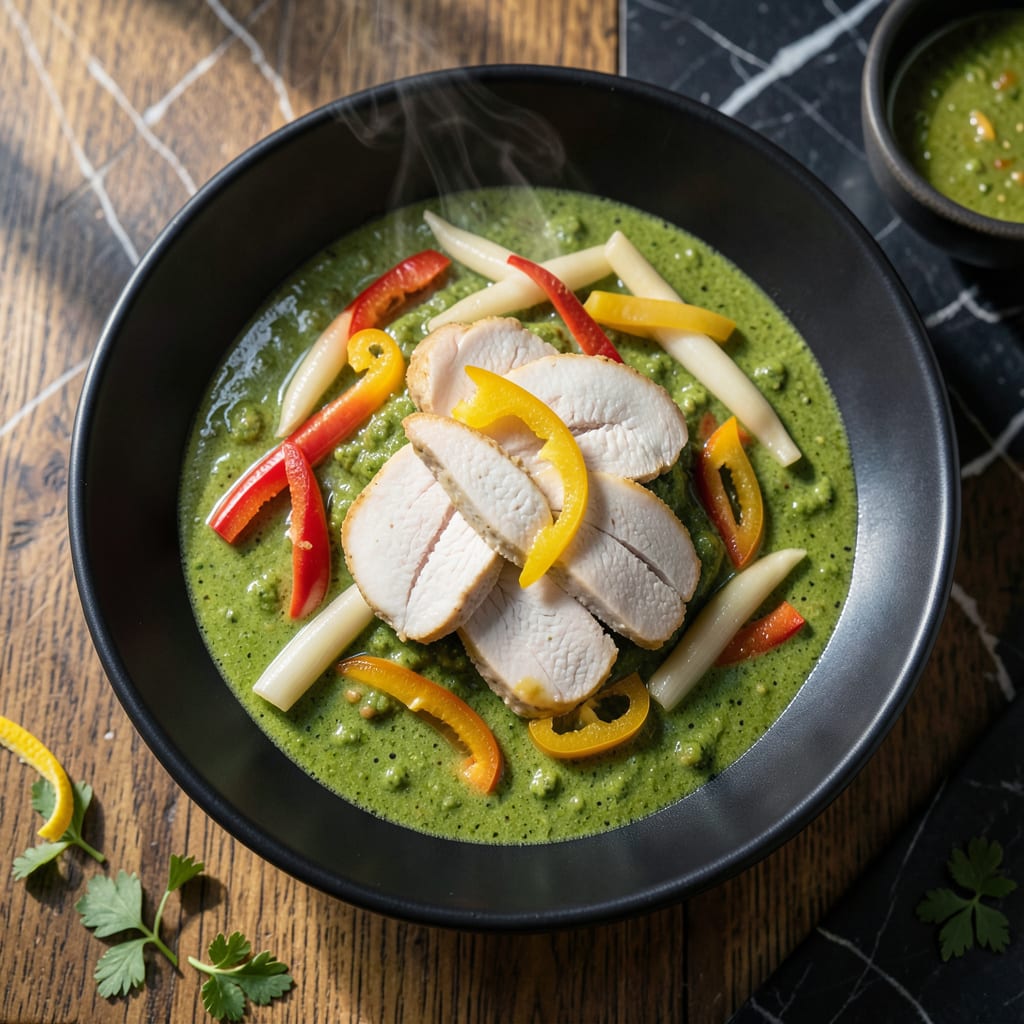
This green curry delivers all the bold Thai flavors you crave without the heavy coconut milk. I’ve perfected a lighter version that keeps the aromatic herbs and spices at the forefront.
By using a smart combination of broth and a touch of light coconut milk, this dish stays rich and creamy while cutting the fat. The result is a satisfying, restaurant-quality curry that won’t weigh you down.
Ingredients for Low Fat Green Curry
A lighter take on Thai green curry with all the bold flavors intact. Simple ingredients, big taste.
| Ingredient | Amount | Notes |
|---|---|---|
| Light Coconut Milk 🥥 | ½ cup | Canned, well-shaken before measuring |
| Chicken Breast 🍗 | 1 ½ lb | Boneless, skinless, sliced thin |
| Green Curry Paste 🌶️ | 3 tbsp | Thai brand preferred for authenticity |
| Low-Sodium Chicken Broth 🍲 | 2 cups | For lighter, flavorful base |
| Bell Pepper 🌶️ | 1 whole | Red or green, thinly sliced |
| Bamboo Shoots 🌱 | ½ cup | Canned, drained and rinsed |
| Thai Eggplant 🍆 | 1 cup | Quartered, optional but traditional |
| Fresh Basil Leaves 🌿 | ½ cup | Thai basil for authentic flavor |
| Fish Sauce 🐟 | 1 tbsp | Red Boat or Thai Kitchen brand |
| Brown Sugar 🍚 | 1 tsp | Light or dark, for balance |
| Garlic Cloves 🧄 | 3 cloves | Minced for aromatic base |
| Fresh Ginger 🌿 | 1 tbsp | Peeled and finely grated |
| Lime 🍋 | 1 whole | Juiced, plus wedges for serving |
| Red Chili Peppers 🌶️ | 2 whole | Thai bird's eye, sliced (adjust to taste) |
| Cornstarch 🌾 | 1 tbsp | Mixed with water for thickening |
The curry paste is non-negotiable here. Maesri or Thai Kitchen are widely available at Whole Foods or Asian markets. Light coconut milk keeps it creamy without the fat—Native Forest makes a great version. Chicken breast stays lean, but thighs work too (just skim the fat). Fresh ginger and garlic are worth the extra minute at the cutting board.
No Thai eggplant? Zucchini or regular eggplant work in a pinch. Missing fish sauce? Soy sauce or coconut aminos at one-to-one ratio substitute fine. For heat control, seed the chilies or swap in jalapeños. The basil can be regular if Thai isn’t available (just use half as much).
Curry tastes even better the next day once flavors meld. Stores 4-5 days in the fridge, freezes for up to 3 months. I like to freeze in portions for quick weeknight meals.
Why You’ll Love This Recipe
- One Pot Wonder: I love that I can simmer the chicken, bell peppers, and curry paste in one pan while the light coconut milk does all the work.
- Flavor Without Guilt: The green curry paste packs a punch, and the light coconut milk keeps it creamy—honestly, I don’t miss the extra fat.
- Meal Prep Hero: Between us, this tastes even better the next day. I make a big batch and it’s ready for lunch all week.
- Budget Friendly: Chicken breast and broth stretch far, and a little curry paste goes a long way. I save money without sacrificing taste.
Step-by-Step Instructions for Green Curry
This method keeps all the bold Thai flavors while cutting unnecessary fat. Simple, healthy, delicious.
Step 1: Sear the Chicken and Build the Curry Base
Heat a large, nonstick skillet over medium-high heat. Add the 1.5 lb chicken breast (sliced thin) and cook for 4-5 minutes, stirring occasionally, until the pieces are just cooked through and starting to turn opaque white.
Remove the chicken from the skillet and set aside. In the same pan, add the 3 tbsp green curry paste, 3 cloves garlic cloves (minced), and 1 tbsp fresh ginger (grated). Sauté for 1-2 minutes until the paste darkens slightly and the aroma becomes deeply fragrant.
This step is crucial—it blooms the spices in the curry paste, releasing their full potential. Don’t let it burn; reduce heat to medium if needed.
Step 2: Simmer Vegetables in Lighter Broth
Add the 1 whole bell pepper (thinly sliced), 0.5 cup bamboo shoots (drained and rinsed), and 1 cup Thai eggplant (quartered) to the skillet. Pour in the 2 cups low-sodium chicken broth and stir to combine.
Bring the mixture to a gentle boil, then reduce heat to medium-low. Simmer for 8-10 minutes until the bell pepper softens and the eggplant absorbs the curry flavor. This lighter broth base keeps the dish rich in taste but low in fat.
Step 3: Add Coconut Milk and Seasonings
Stir in the 0.5 cup light coconut milk (well-shaken) and 1 tbsp fish sauce. Add the 1 tsp brown sugar and 2 whole red chili peppers (sliced), then return the chicken to the skillet.
Simmer for another 3-4 minutes until the chicken is fully cooked and the flavors meld together. Taste and adjust seasoning—you want a balance of savory, spicy, and slightly sweet.
The light coconut milk adds creaminess without the heavy fat content of regular coconut milk.
Step 4: Thicken and Finish with Fresh Herbs
In a small bowl, mix the 1 tbsp cornstarch with 2 tablespoons water to create a slurry. Stir the slurry into the curry and simmer for 1-2 minutes until the sauce thickens slightly and becomes glossy.
Remove from heat and stir in the 0.5 cup fresh basil leaves (Thai basil preferred). The basil should wilt slightly but retain its bright green color. Squeeze in the juice from the 1 whole lime and stir to combine.
Serve immediately over steamed rice or noodles, with lime wedges on the side. The basil and lime add a fresh, vibrant finish that ties all the flavors together beautifully.
Pro Tips For Making Low Fat Green Curry
- Sear the Chicken First: I learned this the hard way—browning the chicken breast in a dry pan for 2-3 minutes before adding liquids locks in flavor and keeps it from turning rubbery in the curry.
- Bloom the Paste: Cook the green curry paste in a tablespoon of light coconut milk for 1-2 minutes until fragrant, or it’ll taste raw and bitter in the finished dish.
- Skip the Boil: Resist the urge to let the curry bubble vigorously—keep it at a gentle simmer to prevent the light coconut milk from separating.
- Slice Peppers Thin: Cut the bell peppers into thin strips so they soften in the 10-12 minutes it takes the chicken to cook through, instead of staying crunchy.
Troubleshooting This Dish
Curry Too Thin
If your curry looks watery, mix 1 tbsp cornstarch with 2 tbsp cold water and stir into the simmering curry. Let it cook for 1-2 minutes until thickened. Avoid adding too much slurry at once—start small and adjust. 💡
Curry Too Thick
Thin it out with ¼ cup low-sodium chicken broth or water, stirring well. Simmer for 2-3 minutes to blend flavors. This keeps the consistency perfect without diluting taste.
Bland Flavors
Boost with 1 tsp fish sauce or a pinch of brown sugar to balance. If it lacks depth, add 1 tsp green curry paste and simmer for 2 minutes. Taste and adjust gradually.
Overly Spicy
Balance heat by stirring in ½ cup light coconut milk or a squeeze of lime juice. The acidity and creaminess neutralize spice without muting flavor. Remove some chili peppers if needed.
Chicken Overcooked
Next time, slice chicken into ¼-inch pieces and cook for only 3-4 minutes initially. Return it to the curry just before serving to finish cooking through the residual heat.
Vegetables Mushy
Add harder veggies like bell pepper and bamboo shoots first, then delicate ones like Thai eggplant later. Simmer for no more than 8-10 minutes total to retain texture. 🌱
Nutrition Facts
Frequently Asked Questions
Can I make this vegetarian?
Swap chicken for 1 lb tofu or 2 cups mixed veggies like zucchini and mushrooms. Press tofu first for better texture.
Why use light coconut milk?
It cuts fat by 60% while keeping the creamy texture. The broth base ensures rich flavor without heaviness.
How do I store leftovers?
Keep in an airtight container for 4-5 days in the fridge. Freeze for up to 3 months for longer storage.
What if I don’t have Thai basil?
Regular basil works in a pinch—use half the amount. Cilantro adds a fresh twist too.

- 8 Bean Soup Recipe Crock Pot: Hearty Vegetable Medley in One Pot - September 25, 2026
- 4C Bread Crumbs Meatballs Recipe: Crispy Crust and Juicy Centers - September 25, 2026
- 6 Oz Chocolate Chip Cookie Recipe: Perfectly Balanced Crispy Edges and Chewy Hearts - September 25, 2026