
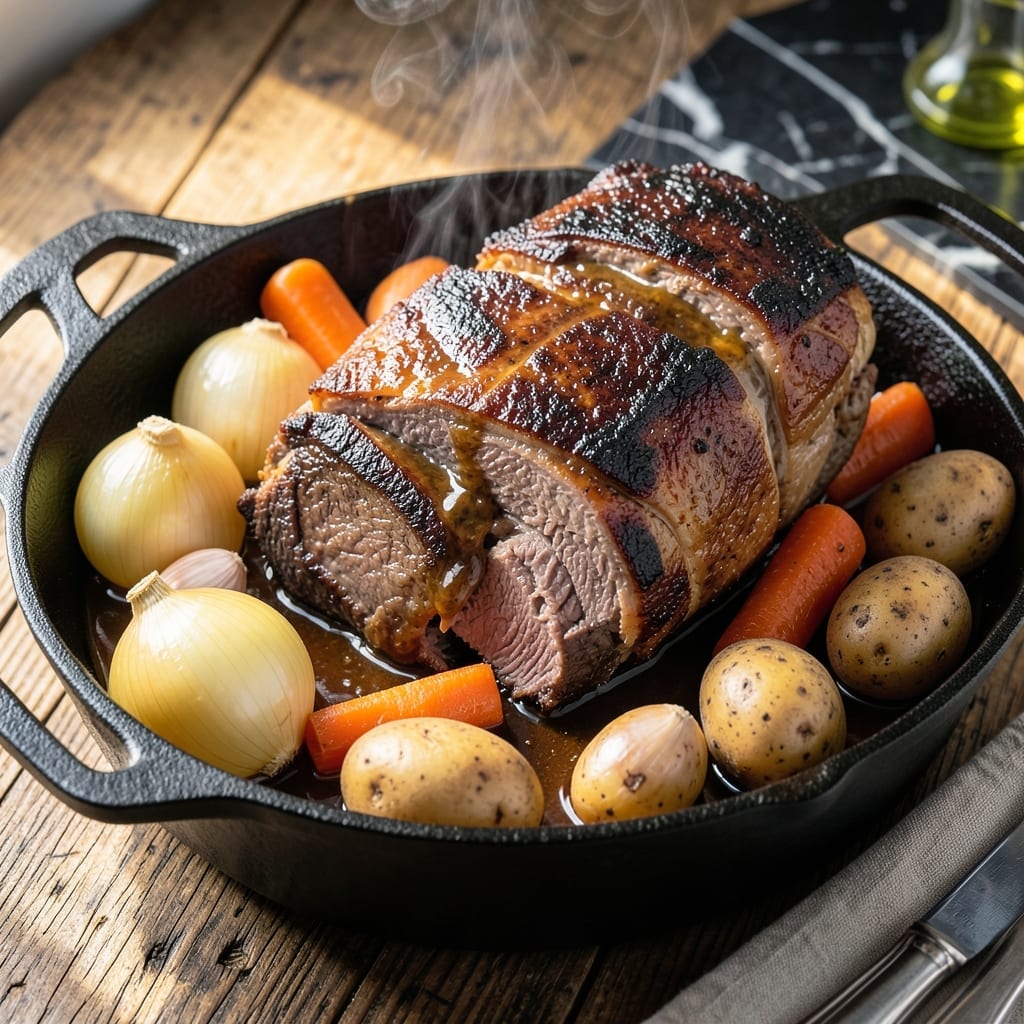
This firehouse-style pot roast delivers the rich, slow-cooked depth that built legends in station kitchens across the country.
The method relies on low heat and long cooking times to transform tough cuts into fall-apart tender meat swimming in a deeply flavored gravy.
Traditional techniques like searing the beef first and deglazing the pan create layers of complexity that define this dish.
What emerges after hours in the oven is a restaurant-quality meal with melt-in-your-mouth beef and vegetables that have absorbed every bit of savory goodness.
Ingredients for Firehouse Pot Roast
Build restaurant-quality depth with these robust, slow-cooked ingredients ready for legendary station house results.
| Ingredient | Amount | Notes |
|---|---|---|
| Beef Chuck Roast 🥩 | 3 lb | Well-marbled, boneless preferred |
| Kosher Salt 🧂 | 2 tsp | Diamond Crystal brand recommended |
| Black Pepper 🌶️ | 1 tsp | Freshly ground coarse |
| Garlic Cloves 🧄 | 6 cloves | Peeled, smashed whole |
| Yellow Onions 🧅 | 2 whole | Medium, quartered through root |
| Carrots 🥕 | 4 whole | Large, cut into 2-inch chunks |
| Russet Potatoes 🥔 | 4 whole | Medium, peeled and quartered |
| Celery Stalks 🌿 | 3 whole | Cut into 2-inch pieces |
| Tomato Paste 🍅 | 3 tbsp | Double-concentrated preferred |
| Beef Stock 🥣 | 4 cups | Low-sodium for control |
| Red Wine 🍷 | 1 ½ cups | Dry Cabernet or Merlot |
| Dried Thyme 🌿 | 2 tsp | Rubbed between fingers |
| Bay Leaves 🍃 | 2 whole | Fresh or dried |
| Olive Oil 🫒 | 2 tbsp | For searing beef |
| All-Purpose Flour 🌾 | 2 tbsp | For thickening gravy |
The beef selection is paramount. Chuck roast with abundant marbling from Whole Foods or Costco delivers the fall-apart tenderness essential to this dish. Avoid lean cuts like sirloin—they lack the connective tissue that breaks down into gelatin during the long braise. Look for pieces where the fat is evenly distributed in thin streaks rather than large chunks.
No red wine? Substitute with additional beef stock plus 1 tbsp balsamic vinegar for acidity. Dried thyme can be replaced with fresh at triple the amount. For a deeper umami layer, add 1 tbsp soy sauce to the braising liquid. The tomato paste can be measured from a tube—Amoretti or Mutti brands maintain quality without preservatives.
This dish improves overnight as flavors meld. Store in an airtight container in the refrigerator for up to 5 days or freeze for 3 months. Reheat gently on the stovetop with a splash of water or stock to restore the gravy’s consistency.
Why You’ll Love This Recipe
- One Pot Wonder: I just season the chuck roast, sear it, add onions and garlic, then let the oven do the rest.
- Feeds the Crew: Honestly, it’s my go-to for Sunday dinner, potlucks, or meal prepping lunches.
- Budget Stretcher: A cheap cut of beef turns into a showstopper, and leftovers taste even better the next day.
Step-by-Step Instructions for Firehouse Pot Roast
Master the technique behind this slow-cooked classic with professional precision and rich, layered flavors.
Step 1: Sear and Season the Beef Chuck Roast
Pat the 3 lb Beef Chuck Roast dry with paper towels to ensure a proper sear. Season generously with the 2 tsp Kosher Salt and 1 tsp Black Pepper, pressing the seasoning into the meat so it adheres well during cooking.
Heat the 2 tbsp Olive Oil in a large Dutch oven over medium-high heat until shimmering. Add the beef and sear on all sides for 4-5 minutes per side until deeply browned. This creates a flavorful crust that enhances the final dish. Remove the roast and set aside.
Step 2: Build the Aromatic Base
In the same pot, add the 2 whole Yellow Onions, 4 whole Carrots, 4 whole Russet Potatoes, and 3 whole Celery Stalks. Sauté for 5-6 minutes until the vegetables begin to soften and develop color.
Add the 6 cloves Garlic Cloves, 3 tbsp Tomato Paste, 2 tsp Dried Thyme, and 2 whole Bay Leaves, stirring to coat the vegetables. Cook for 2 minutes until the tomato paste darkens slightly, which deepens its flavor.
Step 3: Deglaze and Slow Cook
Pour in the 1.5 cups Red Wine to deglaze the pot, scraping up any browned bits from the bottom. Let the wine reduce by half, about 5 minutes, which concentrates its rich, acidic notes.
Return the seared beef to the pot and add the 4 cups Beef Stock. The liquid should just cover the roast and vegetables. Bring to a gentle simmer, then reduce the heat to low. Cover and cook for 3-4 hours, turning the roast halfway through, until the meat is fork-tender and easily pulls apart.
Step 4: Thicken the Gravy
Remove the beef and vegetables to a serving platter. Skim excess fat from the cooking liquid, then place the pot over medium heat. Whisk in the 2 tbsp All-Purpose Flour to create a smooth slurry.
Simmer for 5-7 minutes until the gravy thickens enough to coat the back of a spoon. Taste and adjust seasoning if needed. The gravy should be rich, velvety, and full of the deep, savory flavors from the slow-cooked beef and vegetables.
Serve the pot roast with the vegetables and gravy spooned over the top. The meat should fall apart with minimal pressure, and the gravy should be thick enough to cling beautifully to each bite.
Pro Tips For Making Firehouse Pot Roast
- Sear the Meat: I learned this the hard way—browning the chuck roast in batches on high heat for 3-4 minutes per side creates a crust that deepens the flavor of the final dish.
- Use Enough Salt: Sounds weird, but it works: coat the roast aggressively with kosher salt before searing, about 1 teaspoon per pound, to properly season the meat all the way through.
- Watch the Liquid: After burning three batches, I finally figured out that the braising liquid should only come halfway up the roast—too much and the meat steams instead of braises.
- Add Garlic Late: My grandmother swore by this, and she was right: toss in the garlic cloves during the last hour of cooking so they sweeten without turning bitter.
Essential Equipment for This Dish
Dutch Oven Essentials
A heavy Dutch oven is non-negotiable for this dish—I swear by my Le Creuset 7.25-quart for even heat distribution. The cast iron retains heat beautifully for that long, slow braise, and the enameled surface prevents sticking while developing deep flavors. 🔥
Searing Tools
Use tongs (I prefer OXO 12-inch) to turn the beef during searing. A fish spatula helps lift the roast without piercing it, preserving those precious juices. Never use a fork—it punctures the meat and lets moisture escape.
Temperature Control
An oven thermometer like Taylor Precision ensures your oven runs true to 325°F. Many home ovens run hot or cold, and precision matters for that perfect 3-4 hour cook time. I check mine monthly.
Deglazing Kit
A wooden spoon is ideal for scraping up browned bits when deglazing. The flat edge gets into corners better than silicone. I keep a dedicated spoon just for this purpose—it’s my secret weapon for maximum flavor extraction.
Gravy Tools
A whisk and fat separator are key for that velvety finish. I use a Cuisinox 18/10 stainless steel whisk for smooth gravy and an OXO fat separator to skim effortlessly. These small tools make a big difference.
Serving Setup
Have a slotted spoon and ladle ready for serving. The spoon lifts out vegetables while the ladle distributes that rich gravy. I serve mine in a pre-warmed stoneware bowl to keep everything hot through the meal. 💛
Nutrition Facts
Frequently Asked Questions
What cut of beef works best?
Use a well-marbled chuck roast for the most tender results. Avoid lean cuts like sirloin—they lack the connective tissue that breaks down during the long braise.
Can I make this in a slow cooker?
Yes! Sear the beef first, then transfer everything to a slow cooker. Cook on low for 8-9 hours or high for 5-6 hours until fork-tender.
How do I fix thin gravy?
Mix 1 tbsp cornstarch with 1 tbsp cold water and stir into simmering gravy. Cook for 2-3 minutes until thickened. Never add flour directly—it creates lumps.
Should I add all vegetables at once?
Add hearty root vegetables like carrots and potatoes at the start. Delicate veggies like peas or mushrooms can be stirred in during the last 30 minutes of cooking.

- 4C Bread Crumbs Meatballs Recipe: Crispy Crust and Juicy Centers - September 25, 2026
- 6 Oz Chocolate Chip Cookie Recipe: Perfectly Balanced Crispy Edges and Chewy Hearts - September 25, 2026
- 6-Inch Coffee Cake Recipe: Vanilla Bean Swirls and Buttery Streusel Topping - September 25, 2026