
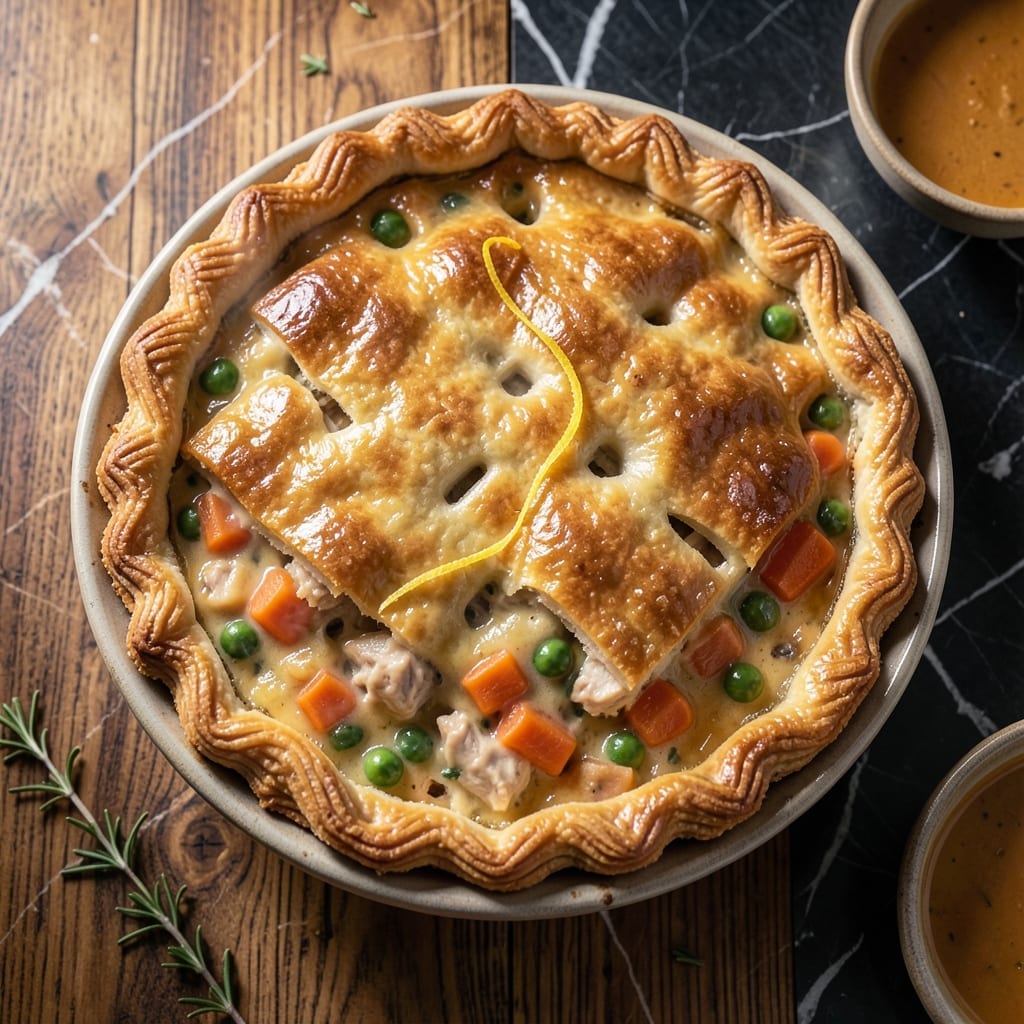
Achieving a flaky crust for chicken pot pie requires precision and the right technique. I’ve tested countless methods to perfect this buttery, layered result that elevates the entire dish.
The key is using cold ingredients and minimal handling. This prevents gluten development, which can make the crust tough instead of tender. A generous amount of butter, cut into the flour until pea-sized crumbs form, creates those coveted layers.
Once baked, the crust will be golden brown with a crisp, shatter-like texture. It holds up beautifully against the rich, creamy filling of the pot pie without becoming soggy.
This method ensures a professional-quality crust every time. The layers separate effortlessly with each bite, delivering the perfect balance of buttery richness and delicate flakiness.
Ingredients for Flaky Chicken Pot Pie Crust
Cold butter, minimal handling, and these pantry staples create that shatter-crisp crust you crave.
| Ingredient | Amount | Notes |
|---|---|---|
| All-Purpose Flour 🌾 | 2 ½ cups | Plus extra for dusting surface |
| Unsalted Butter 🧈 | 1 cup | Ice cold, cubed into 1/2-inch pieces |
| Ice Water 💧 | ½ cup | Plus 1-2 tbsp as needed |
| Salt 🧂 | 1 tsp | Fine sea salt preferred |
| Granulated Sugar 🍚 | 1 tbsp | Optional for browning |
| Large Egg 🥚 | 1 whole | For egg wash finish |
| Distilled White Vinegar 🧪 | 1 tbsp | Keeps crust tender |
| Chicken Breasts 🍗 | 1 ½ lb | Boneless, skinless, diced |
| Carrots 🥕 | 2 whole | Peeled and diced |
| Yellow Onion 🧅 | 1 whole | Finely chopped |
| Celery Stalks 🌿 | 2 whole | Diced for filling |
| Frozen Peas 🌱 | 1 cup | Thawed if desired |
| Chicken Broth 🥣 | 2 cups | Low-sodium preferred |
| Heavy Cream 🥛 | ¾ cup | Full-fat for richness |
| All-Purpose Flour 🌾 | ¼ cup | For thickener in filling |
The butter is non-negotiable here. European-style unsalted butter (like Plugrá or Kerrygold) has higher fat content, which means flakier layers. Cut it into even cubes and keep it ice-cold until you’re ready to work. The flour should be all-purpose—King Arthur or Gold Medal are reliable. If you’re making this often, consider buying flour in bulk and storing it in the freezer to keep it fresh.
No unsalted butter? Salted works in a pinch, but omit the added salt in the dough. The vinegar might seem odd, but it tenderizes the gluten—apple cider vinegar can substitute if that’s what you have. For the egg wash, a beaten egg white with a splash of water gives a lighter finish. The filling veggies can be swapped: try parsnips or mushrooms for variation.
The dough can rest in the fridge for up to 2 days, or freeze it wrapped tightly for 3 months. Baked pie keeps 4 days in the fridge, though the crust is best fresh. Reheat in the oven to revive crispness.
Why You’ll Love This Recipe
- 5-Minute Mix: I just dump flour, cold butter, and ice water in a bowl—no fancy tools, no fuss.
- Buttery Layers: That unsalted butter and ice water combo creates the most insane flaky crust every single time.
- Freezer Hero: I make a double batch and freeze one for next week’s pot pie emergency.
- Pantry Staples: All-purpose flour, butter, salt—stuff I already have, so no last-minute grocery runs.
Step-by-Step Instructions for Flaky Chicken Pot Pie Crust
Here is the method for achieving a buttery, layered crust that consistently delivers that sought-after flaky texture.
Step 1: Combine Dry Ingredients and Cut in Butter
In a large bowl, whisk together the 2.5 cups all-purpose flour, 1 tsp salt, and 1 tbsp granulated sugar. The sugar adds subtle sweetness and promotes browning. Make sure the flour is well aerated before adding the fat.
Add the 1 cup unsalted butter, which should be ice cold and cut into ½-inch cubes. Using a pastry cutter or your fingers, work the butter into the flour until the mixture resembles coarse crumbs with some pea-sized butter pieces remaining. These visible fat chunks create the flaky layers as they melt during baking.
Step 2: Add Liquid Ingredients to Form Dough
Create a well in the center of the flour-butter mixture. Pour in the 0.5 cup ice water and 1 tbsp distilled white vinegar. The vinegar tenderizes the gluten, ensuring a more delicate crust. Stir gently with a fork until the dough just begins to come together.
If the mixture seems too dry, add 1-2 tbsp more ice water, one tablespoon at a time. Avoid overworking the dough—this develops gluten, which makes the crust tough rather than flaky. The dough should hold together when pressed but still appear shaggy.
Step 3: Chill and Roll Out the Dough
Turn the dough out onto a lightly floured surface and gently shape it into a disk. Wrap it in plastic and refrigerate for at least 1 hour. Chilling relaxes the gluten and solidifies the butter, which is essential for achieving those distinct, flaky layers.
After chilling, roll out the dough on a floured surface to about ⅛-inch thickness. If the dough cracks, press the edges together. Use the dough immediately for your pot pie, or wrap and refrigerate for up to 2 days.
Step 4: Assemble and Finish with Egg Wash
Line your pie dish with one portion of the rolled dough, then add your chicken and vegetable filling. Top with a second portion of dough, crimping the edges to seal. Cut a few slits in the top crust to allow steam to escape during baking.
Brush the top crust with a beaten large egg for a golden finish. This egg wash enhances browning and adds a professional sheen. Bake according to your pot pie recipe instructions, typically at 375-400°F until the crust is deep golden brown.
Pro Tips For Making Flaky Chicken Pot Pie Crust
- Chill Your Butter: Cut your unsalted butter into small cubes and refrigerate for 15 minutes before mixing—this keeps it from melting into the flour too fast, which is what gives you those perfect flaky layers.
- Use Ice-Cold Water: Fill a glass with ice and water, then measure from that for the dough. I learned this the hard way after my first few crusts turned out tough from using room-temp water.
- Don’t Overwork It: Mix just until the dough comes together, even if it looks shaggy. After burning three batches, I finally figured out that overmixing develops gluten, and gluten means a chewy crust instead of a flaky one.
- Rest the Dough: Give it a solid 30 minutes in the fridge before rolling out. Sounds weird, but it works: it relaxes the gluten and makes the crust easier to handle and flakier when baked.
Dietary Considerations for flaky chicken pot pie crust
Gluten-Free Adaptation
For a gluten-free version, replace the all-purpose flour with a 1:1 gluten-free baking blend like King Arthur Measure for Measure. Add 1 tsp xanthan gum if your blend doesn’t include it. The dough will be slightly more delicate to handle, so chill it for 2 hours before rolling. 💪
Dairy-Free Option
Swap the unsalted butter with 1 cup cold coconut oil or vegan butter like Miyoko’s. Ensure it’s solid and chilled before cutting into the flour. The texture will be slightly different but still flaky and delicious. Brushing the top with non-dairy milk gives a golden finish.
Lower-Fat Version
To reduce fat, replace ½ cup butter with ½ cup cold vegetable shortening. The crust won’t be as rich but will still hold its shape. Alternatively, use 2% Greek yogurt for ¼ cup of the butter to add moisture while cutting calories. The layers will be less pronounced but still tender.
Nut-Free Assurance
This recipe is naturally nut-free, but always check your flour and butter labels for cross-contamination warnings. If nut allergies are severe, use dedicated nut-free facilities’ products, like Smart Balance butter. Safety first!
Egg-Free Adjustment
For the egg wash, whisk 2 tbsp non-dairy milk with 1 tbsp maple syrup for a vegan-friendly shine. This works just as well for browning and adds a subtle sweetness that complements the savory filling. No one will notice the difference.
Sodium Reduction
Cut the salt in half and use low-sodium chicken broth in the filling. The flaky texture won’t be affected, and you’ll reduce the sodium content by about 40%. Taste the filling before baking and adjust seasoning as needed. 🌟
Nutrition Facts
Frequently Asked Questions
Why does the butter need to stay cold?
Cold butter creates steam when baking, which separates the dough into flaky layers. If it melts too soon, the crust becomes dense instead of light and crisp. Keep everything chilled until it hits the oven.
Can I use a food processor for the dough?
Yes, pulse the flour and cold butter until pea-sized crumbs form. Be careful not to overmix—just a few pulses to avoid developing gluten. Transfer to a bowl to add liquid.
How do I prevent a soggy bottom crust?
Blind-bake the bottom crust for 10 minutes before adding filling, or brush it with beaten egg white to create a barrier. Also, avoid overfilling with wet ingredients.
What if my crust browns too quickly?
Tent the pie with foil if it’s browning too fast. Bake at 375°F instead of higher temps for more even cooking. Check at 30 minutes and adjust.

- 6 Oz Chocolate Chip Cookie Recipe: Perfectly Balanced Crispy Edges and Chewy Hearts - September 25, 2026
- 6-Inch Coffee Cake Recipe: Vanilla Bean Swirls and Buttery Streusel Topping - September 25, 2026
- 1 Hour Soup Recipe: Velvety Richness Without the Wait - September 25, 2026