
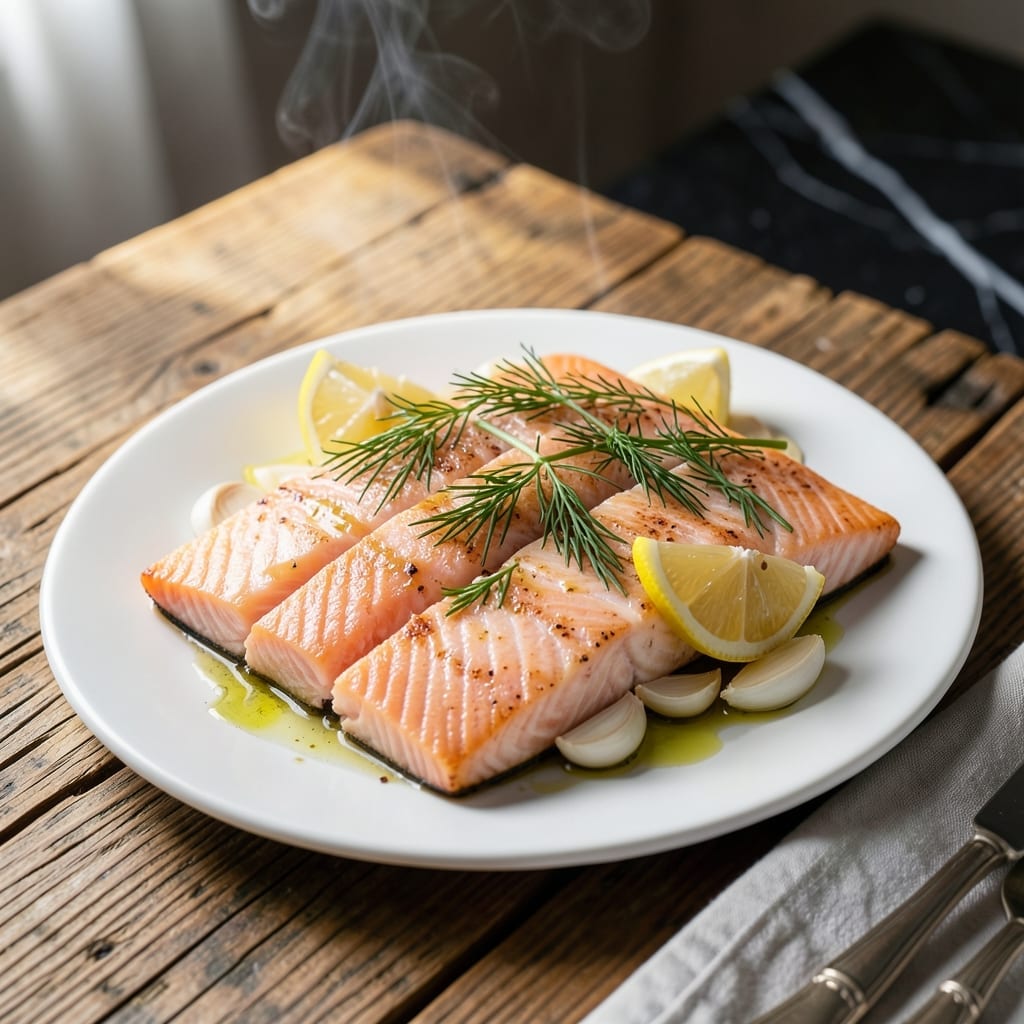
Cooking frozen salmon perfectly in an Instant Pot is easier than you think. This method delivers flaky, moist results every time without thawing first.
The secret is using the steam function with precise timing. I developed this technique after too many dry, overcooked salmon attempts. It works with any cut of frozen fillets.
What you get is tender, perfectly cooked salmon that maintains its natural flavor and texture. The Instant Pot locks in moisture while cooking gently and evenly.
Ready in under 15 minutes from start to finish, this is the quickest way to get restaurant-quality salmon on your dinner table.
Ingredients for Frozen Salmon Instant Pot
Minimal ingredients for maximum flavor. Salmon stays moist and flaky every time.
| Ingredient | Amount | Notes |
|---|---|---|
| Frozen Salmon Fillets 🐟 | 1 ½ lb | Skin-on or skinless, wild-caught preferred |
| Water 💧 | 1 cup | For steam function |
| Lemon 🍋 | 1 whole | Sliced for serving |
| Fresh Dill 🌿 | ¼ cup | Chopped for garnish |
| Olive Oil 🫒 | 1 tbsp | Extra-virgin preferred |
| Garlic Cloves 🧄 | 2 cloves | Minced for flavor |
| Salt 🧂 | ½ tsp | Kosher or sea salt |
| Black Pepper 🌶️ | ¼ tsp | Freshly ground preferred |
| Dijon Mustard 🟡 | 1 tbsp | Optional for glaze |
| Honey 🍯 | 1 tbsp | Optional for glaze |
| Butter 🧈 | 2 tbsp | Optional for finishing |
| Lemon Juice 🍋 | 1 tbsp | Freshly squeezed |
The salmon is the star here. Wild-caught frozen fillets work best—look for ones that are flash-frozen at peak freshness. Trader Joe’s and Costco have great options. If using skin-on, place the fillets skin-side down on the trivet. The Instant Pot’s steam function is key, so make sure your seal is tight and your water measurement is precise.
No fresh dill? Dried dill at half the amount works in a pinch. Out of Dijon? Regular mustard plus a pinch of sugar gets you close. The honey can be swapped for maple syrup if you prefer. If you don’t have lemon, white wine or apple cider vinegar adds the acidity you need. The olive oil can be any neutral oil, but extra-virgin adds a nice depth.
Cooked salmon keeps in the fridge for 2-3 days—store it in an airtight container. It doesn’t freeze well, so enjoy it fresh. The garnishes (lemon, dill) are best added fresh, so prep those just before serving for maximum impact.
Why You’ll Love This Recipe
- No Thaw Needed: I just toss the frozen fillets straight in—no waiting, no mess.
- Bright & Fresh: The lemon and dill make the salmon taste like it came from a seafood shack.
- Meal Prep Hero: Cooks a batch in 15 minutes flat, so I’ve got lunches sorted for days.
- Budget Friendly: Frozen salmon plus pantry staples means a fancy-tasting dinner for pennies.
Step-by-Step Instructions for Frozen Salmon Instant Pot
Here’s the method. Straightforward, tested, works every time.
Step 1: Prepare the Instant Pot and Frozen Salmon
Pour the 1 cup Water into the Instant Pot and place the trivet inside. This creates the steam needed to cook the salmon perfectly. Arrange the 1.5 lb Frozen Salmon Fillets on the trivet, ensuring they don’t overlap—this allows even heat distribution and cooking.
Sprinkle the fillets with 0.5 tsp Salt and 0.25 tsp Black Pepper. I like to season at this stage so the flavors penetrate the fish as it cooks. Close the lid and set the valve to sealing—this traps the steam for optimal results.
Step 2: Pressure Cook the Salmon
Select the High Pressure setting and set the timer for 4 minutes. I know it seems quick, but the pressure cooking method works wonders on frozen fish, locking in moisture and ensuring it cooks through without drying out. The Instant Pot will take about 10-12 minutes to come to pressure before the timer starts.
Once the cooking time is complete, perform a Quick Release by turning the valve to venting. You’ll hear a satisfying hiss as the pressure escapes—this is normal. Open the lid carefully once the pressure has fully released.
Step 3: Add Flavor with Aromatics and Glaze
While the salmon cooks, mince the 2 cloves Garlic Cloves and chop the 0.25 cup Fresh Dill. In a small bowl, whisk together the 1 tbsp Olive Oil, 1 tbsp Dijon Mustard, 1 tbsp Honey, 1 tbsp Lemon Juice, and the minced garlic. This glaze adds brightness and depth to the dish.
Once the salmon is cooked, use a spatula to transfer it to a serving platter. Drizzle the glaze evenly over the fillets. The salmon should flake easily with a fork and appear opaque throughout—this means it’s perfectly cooked.
Step 4: Finish with Butter and Garnish
For an extra touch of richness, add the 2 tbsp Butter to the Instant Pot with the remaining cooking liquid. Stir until the butter melts into the liquid, creating a silky sauce. Spoon this over the salmon for added flavor.
Garnish the dish with the chopped fresh dill and serve with slices of the 1 whole Lemon. The dill adds a fresh, herby note, while the lemon slices provide a zesty finish. Serve immediately and enjoy the flaky, moist texture that this method guarantees.
Pro Tips For Making Frozen Salmon Instant Pot
- Use Natural Release: I learned this the hard way—quick-releasing the pressure makes the salmon dry out. Let it sit for 5 minutes after cooking to keep it tender.
- Pat Fillets Dry: Even frozen salmon needs a quick pat with a paper towel before cooking. It actually changes the outcome by helping the seasoning stick better.
- Skip Overcrowding: Sounds weird, but it works: leave space between fillets so the steam circulates. I used to cram them in and wondered why they came out uneven.
- Add Lemon Last: Toss the lemon slices in after cooking instead of before. This keeps the flavor bright instead of bitter—I was skeptical until I tried it.
Troubleshooting This Recipe
Salmon Sticks to Trivet
If your fillets stick, you likely skipped the trivet or didn’t add enough 1 cup Water. Always place the trivet inside first, then add water. For extra insurance, I lightly grease my trivet with olive oil before adding the salmon. This creates a non-stick barrier. 💡
Undercooked Center
This happens when fillets are too thick or stacked. Use 1.5 lb fillets of even thickness, and never overlap them. If you’re unsure, check the thickest part with a fork—it should flake easily. If still translucent, reseal and cook for 1-2 more minutes.
Dry or Rubbery Texture
The most common mistake is overcooking. Stick to 4 minutes on High Pressure—no more. Also, use Quick Release immediately after cooking. Letting it sit longer continues cooking the salmon, which dries it out. I learned this the hard way with my first few attempts.
Weak or No Flavor
Seasoning frozen salmon requires a heavier hand. Don’t be shy with the 0.5 tsp Salt and 0.25 tsp Black Pepper. The glaze is also crucial—whisk the Dijon Mustard, honey, and lemon juice thoroughly. I always taste the glaze before drizzling to adjust seasoning.
Pressure Won’t Build
Check your seal and valve first. Ensure the silicone ring is properly seated and the valve is set to sealing. Also, verify you’ve added exactly 1 cup Water—too little prevents pressure buildup. My Instant Pot sometimes needs a gentle wiggle of the lid to engage the seal properly.
Strong Fish Odor
This is normal with frozen salmon but can be minimized. Add 1 tbsp Lemon Juice to the water before cooking. After cooking, wipe down the Instant Pot with a mixture of water and white vinegar. I always run an empty water cycle afterward to eliminate any lingering smells. 🌟
Nutrition Facts
Frequently Asked Questions
Do I need to thaw the salmon first?
No, you can cook it straight from frozen. The Instant Pot’s pressure cooking method works perfectly on frozen fillets, saving you time and effort.
Can I use fresh salmon instead?
Yes, but reduce the cooking time to 2-3 minutes on High Pressure to avoid overcooking. Fresh salmon cooks faster than frozen.
What if my fillets are thicker than recommended?
For fillets over 1 inch thick, increase the cooking time to 5-6 minutes. Always check for doneness with a fork to ensure it flakes easily.
Can I cook other fish this way?
This method works well for white fish like cod or halibut. Adjust the time to 3-4 minutes for most white fish varieties.

- 4C Bread Crumbs Meatballs Recipe: Crispy Crust and Juicy Centers - September 25, 2026
- 6 Oz Chocolate Chip Cookie Recipe: Perfectly Balanced Crispy Edges and Chewy Hearts - September 25, 2026
- 6-Inch Coffee Cake Recipe: Vanilla Bean Swirls and Buttery Streusel Topping - September 25, 2026