
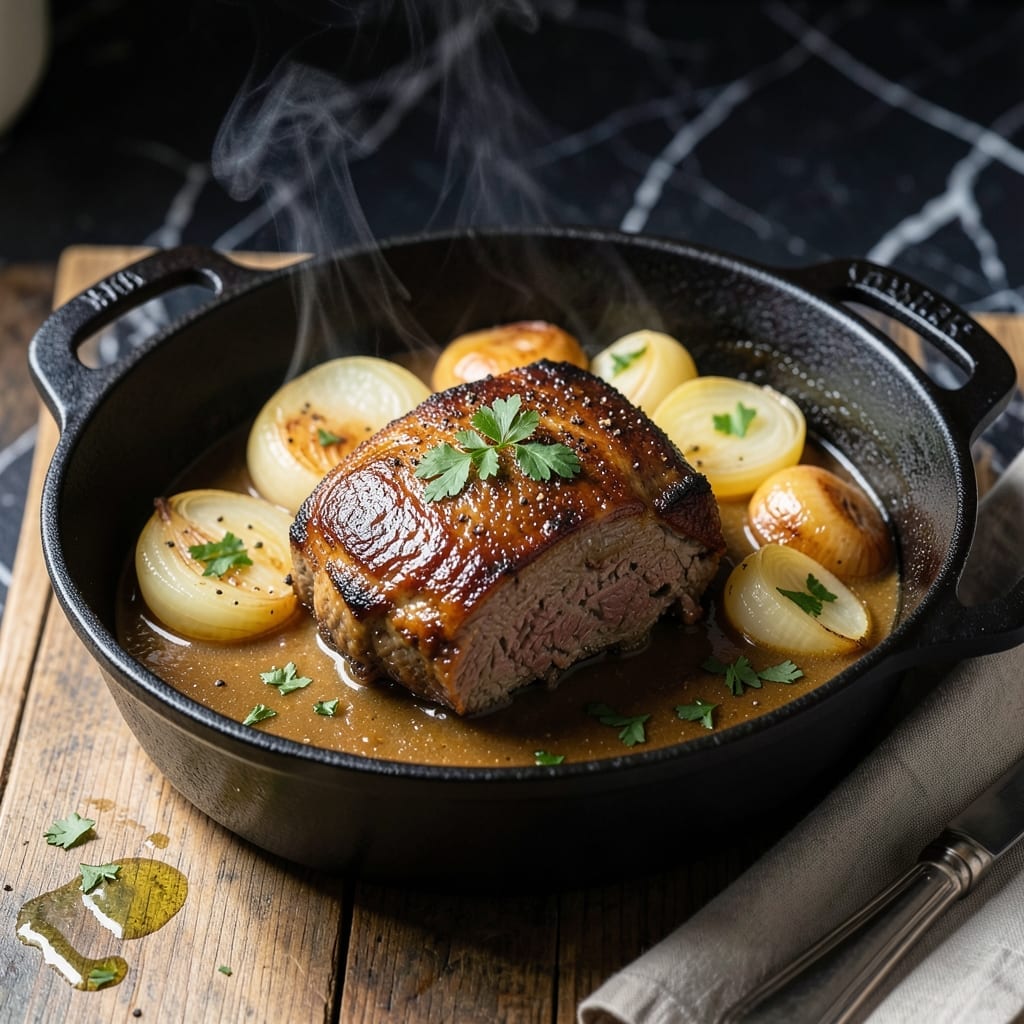
There’s a reason pot roast remains a timeless classic—it transforms humble ingredients into something extraordinary through patient cooking. This method relies on low heat and time to break down tough cuts into fall-off-the-bone tenderness while infusing root vegetables with deep, savory flavor.
I’ve refined this technique over years of Sunday dinners, learning that the key is searing the meat first to build a rich foundation. The slow roast allows the flavors to meld, creating a gravy so rich it practically demands crusty bread for soaking.
What emerges from the oven is a meal that feels like a warm embrace—tender beef, caramelized vegetables, and a sauce that’s both hearty and complex. The aroma alone will have everyone gathering around the table before the timer goes off.
Perfect for feeding a crowd or meal prepping for the week, this dish proves that the best meals are often the simplest. Here’s how to make it right every time.
Ingredients for Slow Roast Pot Roast
Transform humble ingredients into extraordinary comfort with these rich, savory staples.
| Ingredient | Amount | Notes |
|---|---|---|
| Chuck Roast 🥩 | 3 lb | Well-marbled, boneless preferred |
| Kosher Salt 🧂 | 2 tsp | Divided for seasoning |
| Black Pepper 🌶️ | 1 tsp | Freshly ground preferred |
| All-Purpose Flour 🌾 | ¼ cup | For searing the meat |
| Olive Oil 🫒 | 2 tbsp | Divided for searing and vegetables |
| Yellow Onion 🧅 | 2 whole | Large, quartered |
| Carrots 🥕 | 4 whole | Large, cut into chunks |
| Celery Stalks 🌿 | 3 whole | Cut into large pieces |
| Garlic Cloves 🧄 | 6 cloves | Smashed, peeled |
| Beef Broth 💧 | 2 cups | Low-sodium preferred |
| Red Wine 🍷 | 1 cup | Dry variety like Cabernet |
| Tomato Paste 🍅 | 2 tbsp | For depth of flavor |
| Fresh Thyme 🍃 | 4 slices | Sprigs, tied with twine |
| Fresh Rosemary 🌿 | 2 slices | Sprigs, tied with twine |
| Bay Leaves 🍃 | 2 whole | Dried, for aromatics |
The chuck roast is non-negotiable here—look for well-marbled pieces at Whole Foods or Costco. The fat renders down during the long cook, creating that signature tenderness. Most butchers will cube it for you if you ask (worth the extra minute). For the wine, any dry red works, but Cabernet Sauvignon or Merlot add the right depth without overpowering the dish.
No red wine? Extra beef broth with a splash of balsamic vinegar mimics the acidity. Fresh herbs are ideal, but dried at one-third the amount works in a pinch. The tomato paste can come from a can—just use what you need and freeze the rest. Baby carrots? Fine, but cut them in half so they don’t turn to mush before the meat is done.
Leftover pot roast keeps beautifully. Store in an airtight container for up to 4 days in the fridge or freeze for 3 months. The flavors deepen overnight, making it perfect for meal prep. Reheat gently with a splash of water to keep it moist.
Why You’ll Love This Recipe
- One Pan Wonder: I sear the chuck roast in olive oil, then let the oven do the rest—no constant stirring, no fuss.
- Fall-Apart Tender: The slow roast turns the chuck into buttery, melt-in-your-mouth perfection with just salt, pepper, and a dusting of flour.
- Feeds a Crowd: Honestly, I make this for Sunday dinner and have leftovers for sandwiches all week.
- Budget Hero: A modest cut like chuck roast becomes a showstopper with minimal ingredients and maximum flavor.
Step-by-Step Instructions for Slow Roast Pot Roast
Here’s the method. Straightforward, tested, works every time.
Step 1: Season and Sear the Chuck Roast
Pat the 3 lb Chuck Roast dry with paper towels, then season generously with 1 tsp Black Pepper and half the 2 tsp Kosher Salt. Press the seasoning into all surfaces to ensure even flavor distribution.
Dredge the roast in the 0.25 cup All-Purpose Flour, shaking off any excess. Heat 1 tbsp Olive Oil in a Dutch oven over medium-high heat until shimmering. Sear the roast on all sides for 4-5 minutes per side until deeply browned. This creates a flavorful crust that enhances the final dish.
Step 2: Sauté Vegetables and Deglaze
Remove the roast and set aside. In the same pot, add the remaining 1 tbsp Olive Oil. Add the 2 whole Yellow Onion (quartered), 4 whole Carrots (cut into chunks), and 3 whole Celery Stalks (cut into large pieces). Cook for 5 minutes until the vegetables begin to soften and brown slightly.
Add the 6 cloves Garlic Cloves (smashed) and 2 tbsp Tomato Paste. Cook for 1-2 minutes until the tomato paste deepens in color. Pour in the 1 cup Red Wine and scrape the browned bits from the bottom of the pot. This step builds layers of flavor that define the dish.
Step 3: Braise with Aromatics
Return the roast to the pot. Add the 2 cups Beef Broth, 4 slices Fresh Thyme, 2 slices Fresh Rosemary, and 2 whole Bay Leaves. The liquid should come about halfway up the roast. Bring to a simmer, then cover and transfer to a preheated 325°F oven.
Braise for 3-4 hours, turning the roast halfway through, until the meat is fork-tender and falls apart easily. The low and slow cooking method ensures the chuck roast becomes melt-in-your-mouth tender while absorbing the rich flavors of the braising liquid.
Step 4: Rest and Serve
Carefully remove the roast from the pot and transfer it to a cutting board. Tent loosely with foil and let it rest for 15-20 minutes. This allows the juices to redistribute, ensuring every bite is moist and flavorful.
Skimming excess fat from the braising liquid is optional, but I recommend it for a cleaner presentation. Serve the roast with the vegetables and a generous spoonful of the braising liquid. The meat should pull apart effortlessly, revealing the rich, fall-off-the-bone texture that defines this dish.
Pro Tips For Making Slow Roast Pot Roast
- Pat It Dry: Use paper towels to thoroughly dry the chuck roast before seasoning—this guarantees a proper sear instead of steamed meat.
- Sear Hot and Fast: Get your olive oil smoking hot in the pan before adding the floured roast, and resist the urge to move it for at least 3-4 minutes per side.
- Don’t Rush the Rest: After pulling the roast from the oven, let it rest under foil for 15-20 minutes so the juices redistribute—cutting too soon leaves it dry.
- Use Room-Temp Meat: Take the chuck roast out of the fridge 45-60 minutes before cooking so it cooks evenly and doesn’t seize up when it hits the hot pan.
Creative Variations of This Recipe
Beer and Ale Braise
Swap the 1 cup Red Wine for a dark beer like Guinness or a malty amber ale. The caramel notes add depth, while the carbonation helps tenderize the meat. I add 1 tbsp brown sugar to balance the bitterness. 🍺
Mediterranean Twist
Add ½ cup Kalamata olives, 1 tbsp capers, and 1 tsp dried oregano to the braising liquid. The briny, herbal flavors transform this into a Greek-inspired feast. Use fennel bulb instead of celery for extra authenticity.
Spicy Chipotle Version
Stir 1 tbsp chipotle in adobo and 1 tsp cumin into the tomato paste. Replace thyme with cilantro stems tied with twine. The smoky heat pairs perfectly with the beef’s richness. Serve with lime wedges. 🌶️
Asian-Inspired Take
Replace the wine with 1 cup beef broth mixed with 2 tbsp soy sauce and 1 tbsp hoisin. Add 1-inch ginger and 1 star anise to the aromatics. The umami-packed sauce is incredible over rice.
Root Vegetable Swap
Swap carrots for parsnips and turnips, and add 1 rutabaga (cubed). These hold their shape better during the long cook. I love the slightly sweet, earthy flavor they bring to the dish.
Slow Cooker Adaptation
After searing, transfer everything to a slow cooker. Cook on low for 8-10 hours or high for 5-6 hours. The result is just as tender, with hands-off convenience. Perfect for busy weekdays.
Nutrition Facts
Frequently Asked Questions
What cut works best for this method?
Chuck roast is ideal due to its marbling and connective tissue. 3-4 hours at 325°F breaks it down perfectly. Avoid lean cuts like sirloin—they’ll dry out.
Can I skip the searing step?
No—searing creates the flavor base. The 4-5 minutes per side develops a crust that deepens the sauce. Skipping it results in a bland dish.
How do I prevent the vegetables from turning mushy?
Cut them into large, even chunks. Carrots and celery added at the start hold up well. For firmer veggies, add potatoes or parsnips during the last 1-2 hours.
What if my roast isn’t tender after the suggested time?
Continue cooking in 30-minute increments until fork-tender. Check liquid levels—add 1 cup beef broth if needed. Low heat and patience are key.

- 4C Bread Crumbs Meatballs Recipe: Crispy Crust and Juicy Centers - September 25, 2026
- 6 Oz Chocolate Chip Cookie Recipe: Perfectly Balanced Crispy Edges and Chewy Hearts - September 25, 2026
- 6-Inch Coffee Cake Recipe: Vanilla Bean Swirls and Buttery Streusel Topping - September 25, 2026