
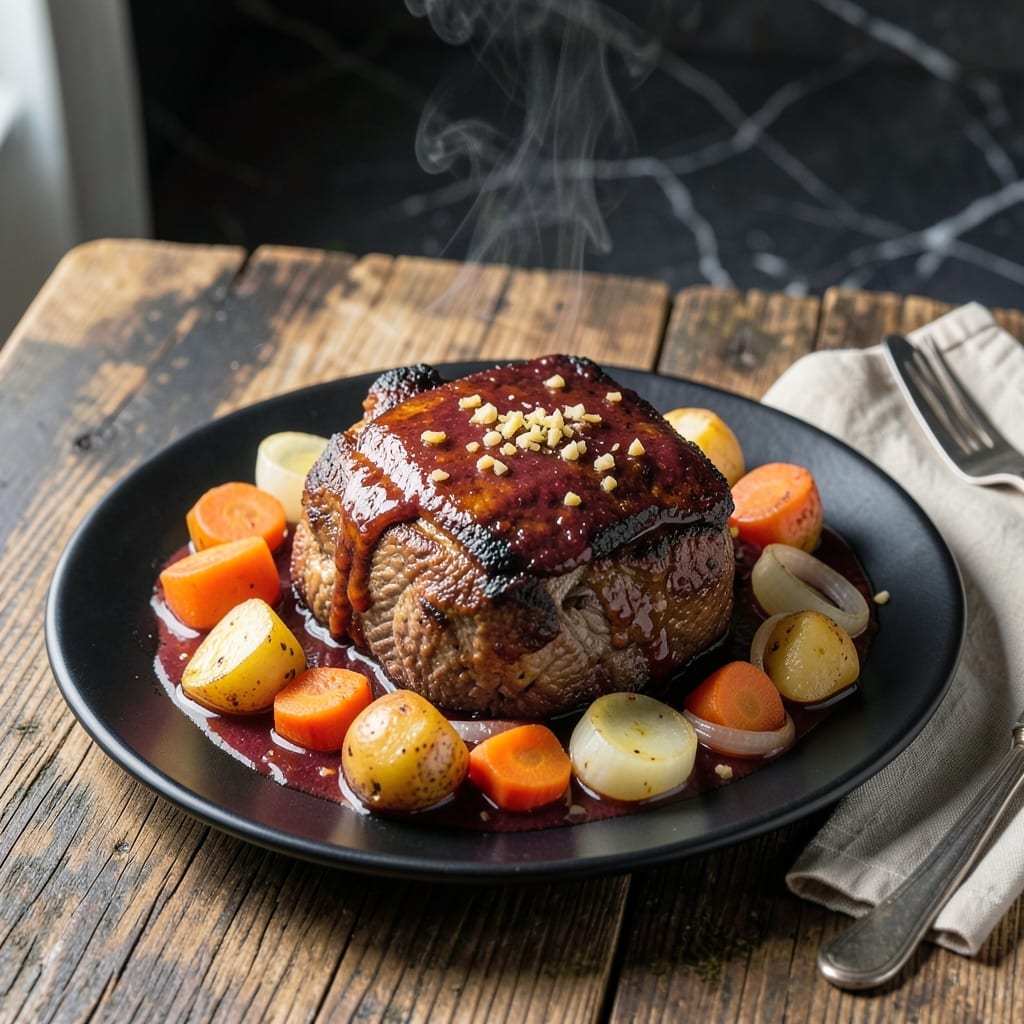
This pot roast redefines comfort food with the bold, fermented heat of gochujang. The Korean chili paste transforms a classic dish into something deeply complex and satisfying.
Slow cooking allows the gochujang to mellow and meld with the beef, creating a tender, fall-apart texture with layers of savory, spicy, and slightly sweet flavor. It’s a hands-off method that delivers restaurant-quality results.
The sauce reduces into a rich, velvety glaze that coats every bite. Serve it over mashed potatoes or rice to soak up every last drop of that deeply flavorful broth.
Perfect for a hearty family dinner or special occasion. This is comfort food elevated.
Ingredients for Gochujang Pot Roast
Well-marbled beef and bold Korean chili paste create this deeply flavorful slow-cooked dish.
| Ingredient | Amount | Notes |
|---|---|---|
| Chuck Roast 🥩 | 3 lb | Well-marbled, trimmed of excess fat |
| Gochujang 🌶️ | ½ cup | Korean fermented chili paste |
| Soy Sauce 🥢 | ⅓ cup | Low-sodium preferred |
| Brown Sugar 🍚 | 3 tbsp | Light or dark variety |
| Garlic Cloves 🧄 | 6 cloves | Minced for depth of flavor |
| Fresh Ginger 🌿 | 1 tbsp | Peeled and finely grated |
| Beef Broth 🍲 | 2 cups | Low-sodium for control |
| Rice Vinegar 🍯 | 2 tbsp | Adds necessary acidity |
| Sesame Oil 🫒 | 1 tbsp | Toasted for aroma |
| Yellow Onion 🧅 | 1 whole | Large, sliced thick |
| Carrots 🥕 | 3 whole | Peeled and cut into chunks |
| Russet Potatoes 🥔 | 2 whole | Peeled and quartered |
| Green Onions 🌱 | 4 whole | Thinly sliced for garnish |
| Toasted Sesame Seeds 🌾 | 1 tbsp | For finishing touch |
| Vegetable Oil 🫒 | 1 tbsp | For searing beef |
The chuck roast is non-negotiable here. Costco or butcher shops offer the best marbling—look for well-flecked fat throughout. Gochujang brands vary: Sempio or CJ are reliable and found at H Mart or Asian grocery sections. The soy sauce should be low-sodium to keep the salt levels balanced as the sauce reduces. Fresh ginger and garlic are essential; pre-minced versions lack the punch needed for this dish.
Need to swap the gochujang? Sriracha plus miso paste (2:1 ratio) gets you close, though the depth won’t be identical. No rice vinegar? Apple cider vinegar works in a pinch. Brown sugar can be replaced with coconut sugar, but avoid granulated white—it lacks the molasses notes. If chuck roast isn’t available, short ribs offer similar richness, though adjust cooking time accordingly.
This pot roast tastes even better the next day. Refrigerate in an airtight container for up to 4 days, or freeze for 3 months. The sauce thickens as it cools—reheat gently with a splash of broth to restore its velvety texture. Leftovers make incredible sandwiches or tacos.
Why You’ll Love This Recipe
- I’ll be real: the flavors meld overnight, so leftovers taste even richer for lunch the next day.
- One Pot Wonder: I toss everything in the Dutch oven and let the oven do the work—no babysitting required.
- Sweet & Spicy Depth: The gochujang and brown sugar create this sticky, caramelized glaze that clings to every bite of the chuck roast.
- Feeds a Crowd: Honestly, this is my go-to when I need to feed a table of hungry people without breaking the bank.
Step-by-Step Instructions for Gochujang Pot Roast
This method transforms tough chuck roast into fall-apart tender meat infused with bold Korean flavors.
Step 1: Sear the Chuck Roast
Pat the 3 lb chuck roast dry with paper towels. This step is non-negotiable—moisture prevents proper browning. Heat 1 tbsp vegetable oil in a heavy pot over medium-high heat until it shimmers.
Sear the roast on all sides for 4-5 minutes per side until deeply browned. You’ll know it’s ready to flip when it releases easily from the pot. This creates a flavorful crust that enhances the final dish. Transfer the meat to a plate and set aside.
Step 2: Build the Flavor Base
In the same pot, add the sliced yellow onion, 6 cloves minced garlic, and 1 tbsp grated fresh ginger. Sauté for 2-3 minutes until the onions soften and the aromatics become fragrant.
Stir in the 0.5 cup gochujang, 0.33 cup soy sauce, 3 tbsp brown sugar, 2 tbsp rice vinegar, and 1 tbsp sesame oil. Cook for 1-2 minutes until the gochujang darkens slightly and the mixture becomes glossy. This step develops the deep, complex flavors that define this dish.
Step 3: Slow Cook with Vegetables
Return the seared chuck roast to the pot along with any accumulated juices. Pour in the 2 cups beef broth, ensuring the liquid comes about halfway up the meat. Add the 3 carrots and 2 russet potatoes, arranging them around the roast.
Bring the mixture to a simmer, then reduce heat to low. Cover and cook for 3-4 hours, turning the roast occasionally, until the meat is fork-tender and the vegetables are soft. You’ll know it’s done when the roast pulls apart easily with a fork.
Step 4: Rest and Garnish
Transfer the chuck roast to a cutting board and tent with foil. Let it rest for 10-15 minutes while you arrange the carrots and potatoes on a serving platter. This resting period allows the juices to redistribute, ensuring moist, tender meat.
Slice the roast against the grain into thick pieces. Arrange the meat with the vegetables on the platter. Drizzle some of the cooking liquid over the top for extra flavor. Garnish with the 4 green onions and 1 tbsp toasted sesame seeds before serving.
Pro Tips For Making Gochujang Pot Roast
- Sear the Chuck First: I learned this the hard way—browning the chuck roast in batches before braising adds a depth of flavor that skipping this step just can’t match. Use a heavy pot and don’t crowd the pan, or it’ll steam instead of sear.
- Bloom the Gochujang: Cook the gochujang with the garlic and a splash of oil for 1-2 minutes before adding liquids. Sounds weird, but it mellows the heat and deepens the fermented flavor—my grandmother swore by this.
- Skip the Lean Cuts: Resist the urge to swap chuck for a leaner cut like sirloin. The marbling in chuck breaks down during the long braise, keeping the meat juicy while soaking up the gochujang soy sauce.
- Use a Dutch Oven: This isn’t the prettiest method, but a heavy Dutch oven distributes heat evenly and goes straight from stovetop to oven. I skip this when I’m lazy, but the dish is noticeably better when I don’t.
Troubleshooting This Recipe
Sauce Too Thin
If your sauce hasn’t reduced enough, transfer the meat and veggies to a plate. Boil the liquid over medium-high heat for 5-10 minutes until thickened. A cornstarch slurry (1 tbsp cornstarch + 2 tbsp water) can speed this up. 💡
Meat Still Tough
Low and slow is key. If the chuck roast isn’t fork-tender after 3 hours, continue cooking for another 30-60 minutes. Check liquid levels—add 1 cup beef broth if it’s too low. The connective tissue needs time to break down completely.
Overly Spicy
Gochujang heat varies by brand. If your dish is too fiery, stir in 1 tbsp honey or 1 tbsp brown sugar to balance the heat. A splash of coconut milk also mellows the spice while adding richness.
Bitter Flavor
Bitterness can develop if the gochujang or garlic burns. To fix, add 1 tsp brown sugar or a pinch of baking soda (⅛ tsp) to neutralize. Stir well and taste before adjusting further.
Vegetables Mushy
Add carrots and potatoes later if they’re overcooking. Par-cook them separately for 10 minutes before adding to the pot. Or, use heartier veggies like daikon radish or sweet potatoes instead. 🥕
Sauce Too Salty
Low-sodium soy sauce helps, but if your sauce is still too salty, add 1 cup water or low-sodium beef broth. Stir in 1 tbsp rice vinegar to brighten the flavors and balance the saltiness.
Nutrition Facts
Frequently Asked Questions
Can I use a different cut of beef?
Chuck roast is ideal, but brisket or short ribs work too. These cuts have enough fat and connective tissue to become tender during the 3-4 hour cook time. Avoid lean cuts like sirloin.
How do I adjust the spice level?
Reduce gochujang to ¼ cup for mild heat, or add 1 tbsp honey to balance. For extra kick, include 1 tsp gochugaru (Korean chili flakes). Always taste before adding more.
Can I make this in a slow cooker?
Yes! Sear the meat first, then cook on low for 8 hours or high for 6 hours. Add vegetables during the last 2 hours to prevent mushiness.
What should I serve with this dish?
Steamed rice or mashed potatoes soak up the rich sauce beautifully. For freshness, add a side of quick-pickled cucumbers or a simple green salad.

- 4C Bread Crumbs Meatballs Recipe: Crispy Crust and Juicy Centers - September 25, 2026
- 6 Oz Chocolate Chip Cookie Recipe: Perfectly Balanced Crispy Edges and Chewy Hearts - September 25, 2026
- 6-Inch Coffee Cake Recipe: Vanilla Bean Swirls and Buttery Streusel Topping - September 25, 2026