
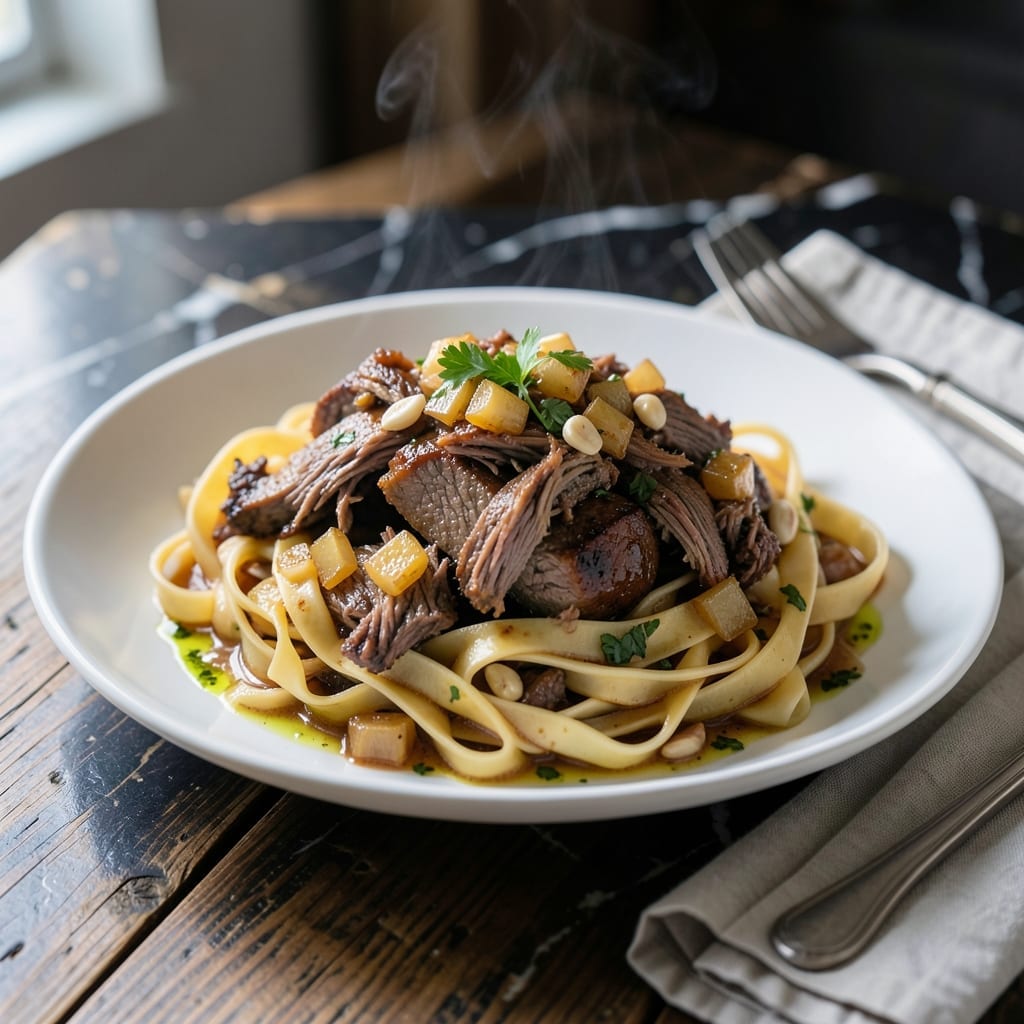
This recipe transforms slow-cooked pot roast into a luxurious pasta dish that feels anything but ordinary. The beef becomes fork-tender while developing deep, rich flavors that elevate every strand of pasta.
I’ve refined this method to extract maximum flavor from humble ingredients, using a low-and-slow approach that melts collagen into silky sauce. The result is a restaurant-quality ragu that clings to al dente noodles.
You’ll love how the meat shreds effortlessly into the sauce, creating a hearty texture that’s both comforting and elegant. The pasta soaks up every bit of the savory, herb-infused liquid.
Serve with a sprinkle of fresh parsley and grated Parmesan for the perfect finish.
Ingredients for Pot Roast Pasta
Transform humble ingredients into restaurant-quality ragu with these carefully selected components.
| Ingredient | Amount | Notes |
|---|---|---|
| Beef Chuck Roast 🥩 | 2 lb | Well-marbled, cut into chunks |
| Kosher Salt 🧂 | 1 ½ tsp | Diamond Crystal preferred |
| Freshly Ground Black Pepper 🌶️ | 1 tsp | Coarsely ground for texture |
| Olive Oil 🫒 | 2 tbsp | Extra-virgin for depth |
| Yellow Onion 🧅 | 1 whole | Large, finely diced |
| Garlic Cloves 🧄 | 6 cloves | Minced for aromatic base |
| Carrots 🥕 | 2 whole | Medium, chopped into pieces |
| Celery Stalks 🌿 | 2 whole | Chopped for mirepoix |
| Tomato Paste 🍅 | 2 tbsp | Double-concentrated preferred |
| Dry Red Wine 🍷 | 1 cup | Bold variety like Cabernet |
| Beef Stock 💧 | 2 cups | Low-sodium for control |
| Dried Thyme 🍃 | 1 tsp | Crushed to release oils |
| Dried Rosemary 🌿 | 1 tsp | Crushed between fingers |
| Bay Leaves 🌿 | 2 whole | Fresh or dried |
| Pasta 🍝 | 12 oz | Pappardelle or wide egg noodles |
| Fresh Parsley 🌿 | ¼ cup | Flat-leaf, chopped for garnish |
| Parmesan Cheese 🧀 | ½ cup | Freshly grated from wedge |
The beef chuck roast is non-negotiable for this dish. Well-marbled chuck from Whole Foods or Costco delivers the collagen that melts into silky sauce during the low-and-slow cook. Avoid lean cuts like sirloin—they’ll stay tough no matter how long they simmer. For the wine, any bold, dry red works—Cabernet, Merlot, or whatever you’d actually drink with the finished dish.
No red wine? Beef broth with a splash of balsamic vinegar mimics the acidity. Substitute fresh thyme and rosemary at triple the dried amount if you’ve got herbs growing. The tomato paste can be swapped for 1/4 cup crushed tomatoes cooked down, though the flavor won’t be as concentrated. For the pasta, pappardelle is ideal for soaking up sauce, but fettuccine or penne work too.
The ragu actually improves overnight as flavors meld. Store in an airtight container for up to 5 days in the fridge or freeze for 3 months. Cook the pasta fresh when ready to serve—it’ll absorb the sauce better than reheated noodles.
Why You’ll Love This Recipe
- One Pot Wonder: I love throwing everything in one Dutch oven and letting the chuck roast and onions work their magic while I do something else.
- Fallback Comfort: That slow-cooked beef just shreds into the pasta with this rich, savory depth from the onion and olive oil that hits the spot every time.
- Feeds the Week: Honestly, I make a double batch on Sunday and we eat it for dinner, then again for lunch the next day with zero complaints.
- Budget Stretch: A cheap cut of beef transforms into something special—my wallet and my family both thank me.
Step-by-Step Instructions for Pot Roast Pasta
This method transforms tough chuck roast into a luxurious ragu with deep, layered flavor.
Step 1: Sear and Season the Beef Chuck Roast
Pat the 2 lb Beef Chuck Roast dry with paper towels to ensure a proper sear. Season all sides generously with the 1.5 tsp Kosher Salt and 1 tsp Freshly Ground Black Pepper, pressing the seasoning into the meat so it adheres well.
Heat the 2 tbsp Olive Oil in a large Dutch oven over medium-high heat until shimmering. Add the beef and sear undisturbed for 4-5 minutes per side until deeply browned. This creates a flavorful fond that will enrich the sauce. Transfer the beef to a plate and set aside.
Step 2: Build the Aromatic Base
In the same Dutch oven, add the diced 1 whole Yellow Onion, minced 6 cloves Garlic Cloves, chopped 2 whole Carrots, and chopped 2 whole Celery Stalks. Cook over medium heat for 6-8 minutes, stirring occasionally, until the vegetables soften and begin to caramelize.
Stir in the 2 tbsp Tomato Paste and cook for 1-2 minutes until it darkens slightly in color. This step intensifies its sweetness and removes any raw flavor. Add the 1 cup Dry Red Wine and scrape up any browned bits from the bottom of the pot, then simmer until the liquid reduces by half.
Step 3: Braise the Beef to Tenderness
Return the seared beef to the Dutch oven along with any accumulated juices. Pour in the 2 cups Beef Stock, then add the 1 tsp Dried Thyme, 1 tsp Dried Rosemary, and 2 whole Bay Leaves. The liquid should come about halfway up the beef—add a little water if needed.
Bring the mixture to a simmer, then reduce the heat to low. Cover the pot and braise for 2.5 to 3 hours, turning the beef occasionally, until it shreds easily with a fork. The beef is done when it offers no resistance to a knife inserted into the center.
Step 4: Shred the Beef and Prepare the Ragu
Remove the beef from the pot and transfer it to a cutting board. Use two forks to shred it into bite-sized pieces. Skim any excess fat from the surface of the braising liquid, then return the shredded beef to the pot. Simmer uncovered for 10-15 minutes to allow the sauce to thicken slightly.
The ragu should coat the back of a spoon but still be loose enough to toss with pasta. Taste and adjust seasoning with additional Kosher Salt or Freshly Ground Black Pepper if needed. Discard the bay leaves before proceeding.
Step 5: Cook the Pasta and Finish the Dish
Bring a large pot of salted water to a boil and cook the 12 oz Pasta according to package instructions until al dente. Reserve ½ cup of pasta water, then drain the pasta.
Add the drained pasta to the pot with the ragu and toss to coat evenly. If the sauce seems too thick, add a splash of the reserved pasta water to loosen it. Serve immediately, garnished with the 0.25 cup Fresh Parsley and topped with the 0.5 cup Parmesan Cheese. Each serving should be generously coated with the rich, meaty sauce.
Pro Tips For Making Pot Roast Pasta
- Sear the Beef Hard: Use medium-high heat and don’t move the chuck roast for at least 3-4 minutes per side—this builds a deep crust that flavors the entire pot roast pasta.
- Salt the Meat First: Pat the beef dry, then season aggressively with kosher salt at least 30 minutes before cooking; it draws out moisture then reabsorbs, making every bite more flavorful.
- Don’t Crowd the Pot: If browning the onion and beef together, do it in batches—overcrowding steams instead of sears, and you’ll lose that rich fond for the pasta sauce.
- Use Pasta Water: Reserve a cup of starchy pasta water before draining; a splash or two loosens the pot roast juices into a silky sauce that clings to the noodles.
Health Benefits of This pot roast pasta
Protein Richness
The beef chuck roast in this creation delivers about 50 grams of protein per serving, supporting muscle repair and satiety. This slow-cooked protein breaks down into tender strands that provide sustained energy throughout your day. I find this keeps me full for hours after eating. 💪
Iron and Zinc Boost
Beef is one of the best sources of heme iron—the most easily absorbed form—which helps prevent fatigue. A serving also provides about 7mg of zinc, crucial for immune function. The long cooking time doesn’t diminish these essential minerals.
B Vitamin Complex
This dish is packed with B vitamins, particularly B12, niacin, and riboflavin from the beef. These nutrients support energy metabolism and nervous system health. The carrots and celery add small amounts of B6 and folate to round out the profile.
Fiber from Veggies
The onion, carrots, and celery contribute about 3-4 grams of fiber per serving, aiding digestion. These vegetables also provide vitamins A and C. The pasta adds another 2-3 grams of fiber, depending on whether you use whole wheat.
Healthy Fats
While often overlooked, the olive oil and marbling in the beef provide heart-healthy monounsaturated fats. These support cell function and help your body absorb the fat-soluble vitamins in the dish. The red wine adds beneficial polyphenols.
Low Sodium Control
By using low-sodium beef stock and controlling the salt, you can keep sodium levels reasonable. I recommend tasting before adding extra salt—the flavors develop beautifully without excessive sodium. The Parmesan adds minimal sodium compared to processed cheeses. 🥗
Nutrition Facts
Frequently Asked Questions
Can I use a slow cooker instead of a Dutch oven?
Sear the beef first, then transfer everything to a slow cooker. Cook on low for 8 hours or high for 5-6 hours until tender. The flavors will develop beautifully.
What if my sauce is too thin?
Simmer uncovered for an extra 10-15 minutes to reduce. For faster results, mix 1 tbsp cornstarch with 1 tbsp water and stir into the sauce. It’ll thicken as it cooks.
Can I make this ahead of time?
Yes! The ragu actually improves after 1-2 days in the fridge. Store it separately from the pasta, then reheat gently and toss with freshly cooked noodles. Freezes well for up to 3 months.
What pasta shape works best?
Pappardelle or wide egg noodles are ideal for holding the rich sauce. Fettuccine or penne also work well. Avoid thin pastas like spaghetti—they won’t cling to the ragu as effectively.

- 4C Bread Crumbs Meatballs Recipe: Crispy Crust and Juicy Centers - September 25, 2026
- 6 Oz Chocolate Chip Cookie Recipe: Perfectly Balanced Crispy Edges and Chewy Hearts - September 25, 2026
- 6-Inch Coffee Cake Recipe: Vanilla Bean Swirls and Buttery Streusel Topping - September 25, 2026