
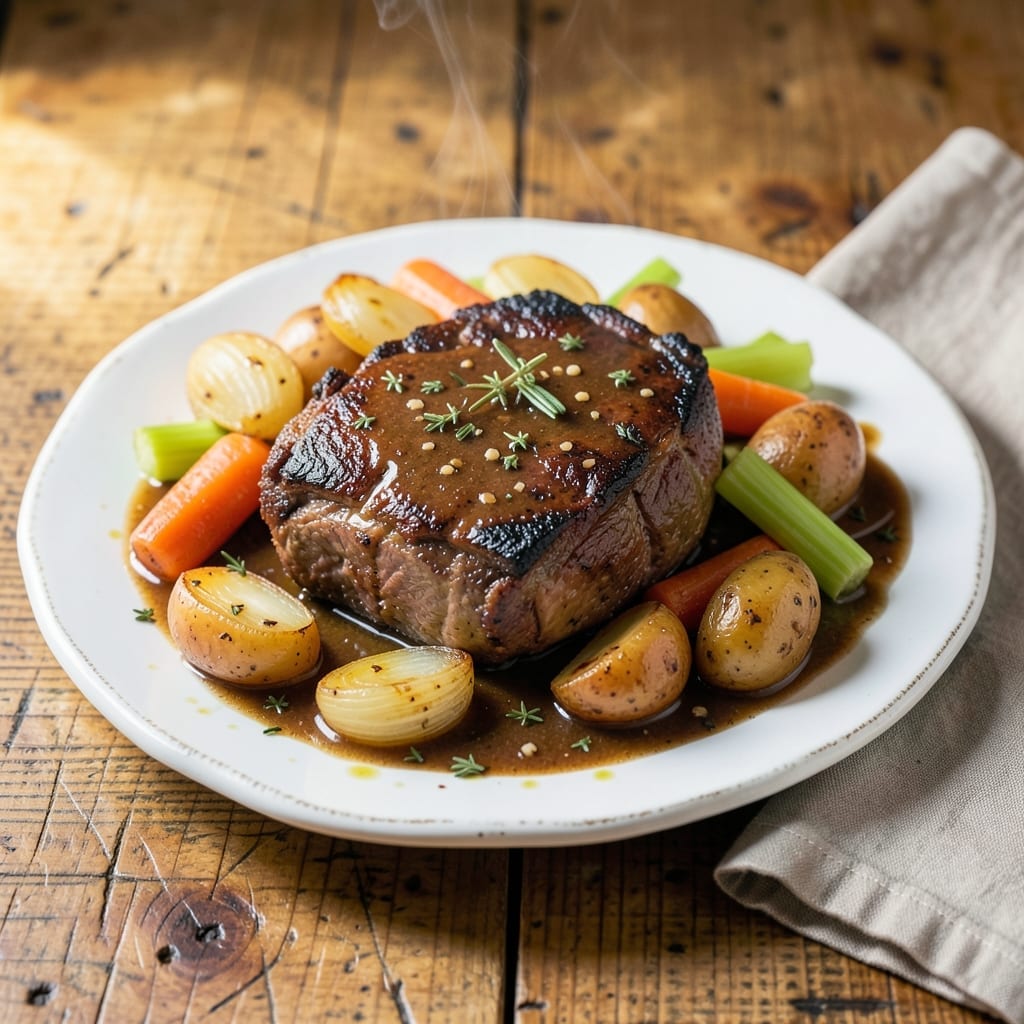
There’s a reason this slow-braised pot roast has become a legend—it transforms tough cuts into fall-apart tender beef with minimal effort. The secret lies in the long, gentle cooking process that allows flavors to deepen and meld.
I’ve refined this method over years of testing, focusing on the perfect balance of beef, vegetables, and braising liquid. The result is a dish that’s rich, comforting, and far superior to anything you’d find at a buffet.
Every bite delivers succulent meat, garden-fresh vegetables, and a gravy so flavorful it deserves its own fan club. The aroma alone will draw a crowd to your kitchen.
This is the kind of meal that turns Sunday dinner into an event worth savoring.
Ingredients for Golden Corral Awesome Pot Roast
Rich beef, garden vegetables, and a few pantry staples make this legendary dish shine.
| Ingredient | Amount | Notes |
|---|---|---|
| Beef Chuck Roast 🥩 | 3 lb | Boneless, well-marbled preferred |
| Carrots 🥕 | 4 whole | Peeled, cut into chunks |
| Yellow Onions 🧅 | 2 whole | Large, quartered |
| Russet Potatoes 🥔 | 4 whole | Peeled, cut into large pieces |
| Celery Stalks 🥬 | 3 whole | Cut into 2-inch pieces |
| Garlic Cloves 🧄 | 6 cloves | Smashed for robust flavor |
| Beef Broth 🍲 | 3 cups | Low-sodium preferred |
| Red Wine 🍷 | 1 cup | Dry variety like Cabernet |
| Tomato Paste 🍅 | 2 tbsp | For depth of flavor |
| Worcestershire Sauce 🫒 | 1 tbsp | Adds umami richness |
| Dried Thyme 🌿 | 1 tsp | Crushed between fingers |
| Dried Rosemary 🌿 | 1 tsp | Crushed between fingers |
| Bay Leaves 🍃 | 2 whole | Remove before serving |
| Olive Oil 🫒 | 2 tbsp | For searing beef |
| Kosher Salt 🧂 | 1 ½ tsp | Adjust to taste |
| Black Pepper 🌶️ | 1 tsp | Freshly ground preferred |
The beef is everything here. Chuck roast with good marbling breaks down beautifully—Costco has great options if you’re feeding a crowd. Most grocery stores carry it pre-cut, but ask the butcher for a whole piece if you want thicker slices. Look for bright red color and visible fat streaks. A 3-pound roast serves 4 generously with leftovers for sandwiches the next day.
No red wine? Beef broth with a splash of balsamic vinegar works in a pinch. Dried herbs can be swapped for fresh at one-third the amount. If you’re missing Worcestershire, a dash of soy sauce adds similar depth. The veggies are flexible—parsnips or turnips can join the carrots and potatoes. For the tomato paste, those squeeze tubes at Trader Joe’s are perfect (no waste).
This tastes even better the next day. Store leftovers in an airtight container for up to 4 days in the fridge or freeze for 3 months. The gravy thickens as it cools, so thin with a little broth when reheating. Always remove those bay leaves before serving—nobody wants to bite into one.
Why You’ll Love This Recipe
- One Pot Wonder: I toss in the chuck roast, carrots, onions, potatoes, and celery, then let the slow cooker do the rest.
- Feeds a Crowd: I make this for Sunday dinner, and it’s always a hit with both kids and adults.
Step-by-Step Instructions for Slow-Braised Beef With Garden Vegetables
This method transforms tough cuts into fall-apart tender beef with rich, flavorful vegetables.
Step 1: Sear the Beef Chuck Roast
Pat the 3 lb Beef Chuck Roast completely dry with paper towels. This is crucial—wet meat steams instead of searing. Season all sides aggressively with the 1.5 tsp Kosher Salt and 1 tsp Black Pepper.
Heat the 2 tbsp Olive Oil in a large Dutch oven over medium-high heat until shimmering. Sear the beef for 4-5 minutes per side until you achieve a deep brown crust. Don’t rush this step; a good sear builds the flavor foundation for your pot roast. Transfer the beef to a plate and set aside.
Step 2: Build the Flavor Base
In the same pot, add the 2 whole Yellow Onions, 4 whole Carrots, 3 whole Celery Stalks, and 6 cloves Garlic Cloves. Cook for 5 minutes until the onions begin to soften and develop light golden color.
Stir in the 2 tbsp Tomato Paste and cook for 1-2 minutes until it darkens slightly. This concentrates its sweetness and removes the raw taste. Add the 1 tbsp Worcestershire Sauce, 1 tsp Dried Thyme, and 1 tsp Dried Rosemary, stirring to coat the vegetables in these aromatic flavors.
Step 3: Deglaze and Add Liquids
Pour in the 1 cup Red Wine and scrape up all the browned bits from the bottom of the pot with a wooden spoon. These fond bits are pure flavor. Let the wine simmer for 3-4 minutes until reduced by half.
Add the 3 cups Beef Broth and 2 whole Bay Leaves. Return the beef to the pot along with any accumulated juices. The liquid should come about halfway up the beef—if it doesn’t, add a little more broth.
Step 4: Slow-Braise to Tenderness
Bring the liquid to a gentle simmer, then reduce heat to low. Cover and cook for 3 hours, turning the beef occasionally. You’ll know it’s ready when the beef shreds easily with a fork.
Add the 4 whole Russet Potatoes during the last 45 minutes of cooking. This timing ensures they’ll be perfectly tender when the beef is done, not mushy. The potatoes will soak up all the rich braising liquid, making them incredibly flavorful.
Step 5: Rest and Serve
Remove the Bay Leaves and discard. Transfer the beef to a cutting board and let it rest for 10 minutes before slicing. This allows the juices to redistribute throughout the meat.
Arrange the beef on a platter surrounded by the vegetables. Spoon some of the rich braising liquid over everything. The beef should be fork-tender, the vegetables soft but not mushy, and the sauce should be deeply flavorful with a beautiful sheen.
Pro Tips For Making Golden Corral Awesome Pot Roast
- Sear the Chuck: I learned this the hard way—browning the beef chuck roast in batches over high heat with about 2 tablespoons of oil creates a deep crust that locks in flavor, and it only takes 3-4 minutes per side.
- Cut Veggies Evenly: Keep your carrots, onions, and potatoes in 1-2 inch chunks so they cook at the same rate as the roast, no mushy bits or undercooked centers.
- Skip the Boiling: Resist the urge to add cold liquid to the pot right after searing, or you’ll lose that fond—deglaze with 1 cup of hot broth instead to scrape up all those browned bits.
- Use a Meat Thermometer: After burning one too many roasts, I finally started pulling the chuck at 195°F internal temp—it shreds perfectly and stays juicy every time.
Common Mistakes When Making This Recipe
Skipping the Sear
I know it’s tempting to skip this step, but searing the beef creates the Maillard reaction that builds deep, complex flavors. Without it, your pot roast will taste bland. Take the extra 10 minutes to properly brown all sides of the 3 lb chuck roast. 🔥
Underseasoning the Meat
Pot roast needs bold seasoning to stand up to the long cooking time. Don’t be shy with the 1.5 tsp kosher salt and 1 tsp black pepper. I also recommend adding an extra pinch of salt when you add the vegetables.
Overcrowding the Pot
If your Dutch oven is too small, the beef won’t brown properly and the vegetables will steam instead of caramelize. Use a pot that’s at least 6 quarts for this recipe. The beef should have room to breathe during searing.
Using the Wrong Cut
Lean cuts like sirloin will dry out during the long braise. Stick with chuck roast—its marbling melts during cooking, creating that fall-apart tenderness. I always look for well-marbled pieces at the store.
Boiling Instead of Simmering
A rolling boil will make the meat tough. After deglazing, reduce heat to maintain a gentle simmer. You should see occasional bubbles breaking the surface, not a vigorous boil. This gentle heat is what makes the beef tender.
Rushing the Rest
Let the beef rest for the full 10 minutes after cooking. Slicing too soon causes all those precious juices to spill onto the cutting board. I use this time to arrange the vegetables on the serving platter. 💡
Nutrition Facts
Frequently Asked Questions
Can I use a slow cooker instead of a Dutch oven?
Yes! Brown the beef first, then transfer everything to your slow cooker. Cook on low for 8-10 hours or high for 5-6 hours. The flavors will still develop beautifully.
What if I don’t have red wine?
Substitute with 1 cup beef broth mixed with 1 tbsp balsamic vinegar. This adds the needed acidity and depth. The dish will still be delicious!
How do I know when it’s done?
The beef is ready when it shreds easily with a fork. For best results, use a meat thermometer—it should read 195-205°F internally.

- 6 Oz Chocolate Chip Cookie Recipe: Perfectly Balanced Crispy Edges and Chewy Hearts - September 25, 2026
- 6-Inch Coffee Cake Recipe: Vanilla Bean Swirls and Buttery Streusel Topping - September 25, 2026
- 1 Hour Soup Recipe: Velvety Richness Without the Wait - September 25, 2026