
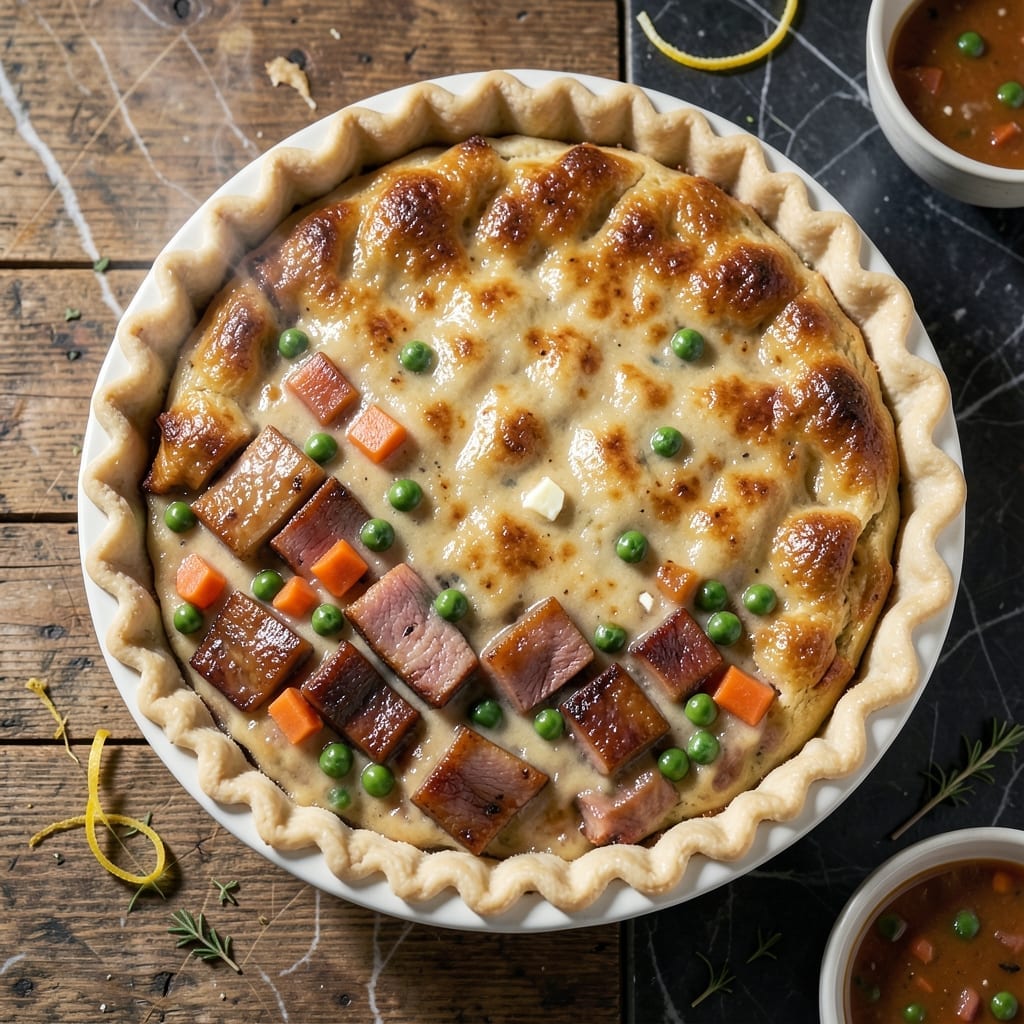
This ham pot pie dough delivers the flaky, buttery layers that make savory pies unforgettable. The technique combines cold butter with precise folding to create that signature texture without requiring advanced pastry skills.
What sets this dough apart is its ability to hold up to rich, hearty fillings while maintaining a tender crumb. The process involves minimal ingredients but demands attention to temperature and handling—keep everything cold for the best results.
You’ll end up with a golden crust that’s crisp on the outside and delicately layered within, the perfect vessel for creamy ham and vegetable fillings. The dough comes together quickly, making it practical for weeknight dinners.
Best of all, this recipe scales easily for individual pies or a large family-style dish. The method ensures consistent quality every time.
Ingredients for Ham Pot Pie Dough
Cold butter and precise folding create those magical flaky layers everyone raves about.
| Ingredient | Amount | Notes |
|---|---|---|
| All-Purpose Flour 🌾 | 3 cups | Plus extra for dusting surface |
| Unsalted Butter 🧈 | 1 ½ cups | Cold, cubed into 1/2-inch pieces |
| Ice Water 💧 | ½ cup | Plus 1-2 tbsp as needed |
| Table Salt 🧂 | 1 tsp | Fine grain for even distribution |
| Granulated Sugar 🍚 | 1 tsp | Balances saltiness in dough |
| Egg 🥚 | 1 whole | Large, for richness and color |
| White Vinegar 🍶 | 1 tbsp | Or apple cider vinegar |
| Baking Powder 🍞 | ½ tsp | Ensures tender layers |
The butter is everything here—use a high-fat European-style if you can swing it (I grab Plugrá or Kerrygold at Whole Foods). Keep it ice-cold, and cube it yourself rather than buying pre-cubed. The flour should be all-purpose, nothing fancy (King Arthur is my go-to). Temperature control is non-negotiable: cold butter, cold water, cold bowl, cold hands (run them under cold water if they get warm).
No unsalted butter? Rinse salted butter under cold water to remove excess salt, then pat dry. Out of vinegar? Lemon juice works in a pinch. For a richer dough, swap the water for ice-cold buttermilk. Skip the egg if you need a vegan version, but know the color won’t be as golden. The baking powder can be omitted, but your layers won’t be quite as tender.
Dough keeps wrapped tightly in plastic for 2 days in the fridge or 3 months frozen. Let it thaw overnight in the fridge before rolling. For make-ahead, shape into disks, wrap, and chill—this also gives the gluten time to relax for easier rolling.
Why You’ll Love This Recipe
- Five Ingredients Only: I love that this dough comes together with just flour, butter, ice water, salt, and a touch of sugar—no fancy pantry items needed.
- Buttery, Flaky Layers: The cold butter creates pockets of crispness that melt in your mouth, while the sugar adds just a hint of sweetness to balance the savory ham filling.
- Freezer Friendly: Honestly, I always make a double batch—this dough freezes beautifully for up to three months, so I can pull it out for a quick pot pie anytime.
- Budget Stretcher: A single batch makes enough for two pies, and since it’s just basic staples, it costs pennies compared to store-bought sheets.
Step-by-Step Instructions for Ham Pot Pie Dough
This method guarantees flaky, golden layers that will elevate your pot pie to new heights.
Step 1: Combine Dry Ingredients for Structure
In a large mixing bowl, whisk together the 3 cups All-Purpose Flour, 1 tsp Table Salt, 1 tsp Granulated Sugar, and 0.5 tsp Baking Powder. The sugar and salt balance each other perfectly, while the baking powder ensures those coveted tender layers.
I always sift my dry ingredients first to break up any lumps and distribute the leavening agents evenly. This step prevents dense spots in your dough and guarantees a uniform texture throughout. The mixture should look like fine, pale sand when properly combined.
Step 2: Cut in Cold Butter for Flaky Layers
Add the 1.5 cups Unsalted Butter (cold and cubed into ½-inch pieces) to the flour mixture. Using a pastry cutter or your fingertips, work the butter into the flour until the mixture resembles coarse crumbs with pea-sized butter pieces visible throughout.
Here’s the thing—you want those butter pieces to stay cold and distinct. When they hit the oven, they’ll create steam that lifts the dough into flaky layers. If the butter melts before baking, you’ll lose that magical texture. Work quickly and keep your hands light to avoid warming the dough.
Step 3: Create the Liquid Binding Mixture
In a small bowl, whisk together the 1 whole Egg, 1 tbsp White Vinegar, and 0.5 cup Ice Water. The vinegar tenderizes the dough while the egg adds richness and a beautiful golden color to the finished crust.
The ice water is non-negotiable—it keeps the butter cold while you’re mixing and prevents the gluten from developing too much, which would make your crust tough. I like to keep a few ice cubes in the water as I work to ensure it stays frigid throughout the process.
Step 4: Bring the Dough Together
Make a well in the center of your flour-butter mixture and pour in the liquid ingredients. Using a fork, gently mix until the dough just starts to come together. It will look shaggy and uneven—that’s exactly what you want at this stage.
Turn the dough out onto a lightly floured surface (use some of the extra All-Purpose Flour) and gently knead it 4-5 times just until it forms a cohesive ball. Overworking the dough develops gluten, which makes for a tough crust. If it’s too dry, add 1-2 tbsp Ice Water as needed, but be conservative.
The finished dough should feel cold and slightly tacky but not sticky. Wrap it tightly in plastic wrap and refrigerate for at least 1 hour before rolling out. This chilling period relaxes the gluten and makes the dough much easier to handle.
Pro Tips For Making Ham Pot Pie Dough
- Chill the Butter: Cut your unsalted butter into 1/2-inch cubes and refrigerate for 15 minutes before mixing—cold butter is non-negotiable for flaky layers in pot pie dough.
- Ice Water Only: Use actual ice water, not just cold tap water, and add it 1 tablespoon at a time—this prevents the butter from melting and keeps the dough tender.
- Don’t Overwork It: Stop mixing as soon as the dough comes together, even if it looks shaggy. Overworking develops gluten, and your crust will end up tough instead of light.
- Rest Before Rolling: Wrap the dough and let it rest in the fridge for at least 30 minutes—this relaxes the gluten and makes rolling out the crust for your ham pot pie much easier.
Regional Styles of This Dish
Midwestern Comfort
In the Midwest, this dough often gets a 1 tbsp cornmeal boost for extra crunch. The cornmeal adds a subtle sweetness that pairs perfectly with ham fillings. I remember my grandma’s version always had that signature golden speckling. 💛
Southern Style
Down South, many cooks swap half the butter for lard—about ¾ cup each—for an ultra-flaky texture. The lard creates a more tender crust that’s especially popular in rural communities. Just ensure it’s leaf lard for the cleanest flavor.
New England Tradition
New England bakers often add 1 tsp dried thyme or rosemary to the dough for an herby note. This variation works wonderfully with ham and leek fillings. The herbs infuse the crust with a subtle aromatic quality.
Texas Twist
For a Texan flair, replace 1 tbsp ice water with 1 tbsp cold beer—a light lager works best. The carbonation adds airiness, while the beer’s malt complements smoky ham fillings. It’s a small change with big impact.
French Influence
In Louisiana, some Creole cooks incorporate 1 tsp Cajun seasoning into the dry ingredients. This adds a gentle spice that enhances the savory ham filling. I’ve found Tony Chachere’s works particularly well.
Pacific Northwest
West Coast bakers often use whole wheat pastry flour for half the all-purpose. This adds a nuttier flavor and slightly heartier texture. The dough still stays tender, but with a bit more substance to stand up to robust fillings.
Nutrition Facts
Frequently Asked Questions
Can I use salted butter instead of unsalted?
Yes, but reduce the added salt to ½ tsp. Rinse the butter under cold water first to remove excess salt if needed. This keeps the flavor balanced without making the crust too salty.
Why does the dough need to chill for 1 hour?
Chilling relaxes the gluten and firms the butter, preventing a tough crust. It also makes the dough easier to roll out. Skipping this step can result in shrinking or dense layers.
Can I make this dough without an egg?
Omit the egg and use ½ cup ice water plus 1 tbsp vinegar. The crust will be slightly lighter in color but still flaky and tender.
How do I fix dough that’s too sticky?
Lightly dust with flour, 1 tbsp at a time, until it reaches the right consistency. Avoid overworking it. If it’s very warm, chill it for 15-20 minutes before handling.

- 4C Bread Crumbs Meatballs Recipe: Crispy Crust and Juicy Centers - September 25, 2026
- 6 Oz Chocolate Chip Cookie Recipe: Perfectly Balanced Crispy Edges and Chewy Hearts - September 25, 2026
- 6-Inch Coffee Cake Recipe: Vanilla Bean Swirls and Buttery Streusel Topping - September 25, 2026