
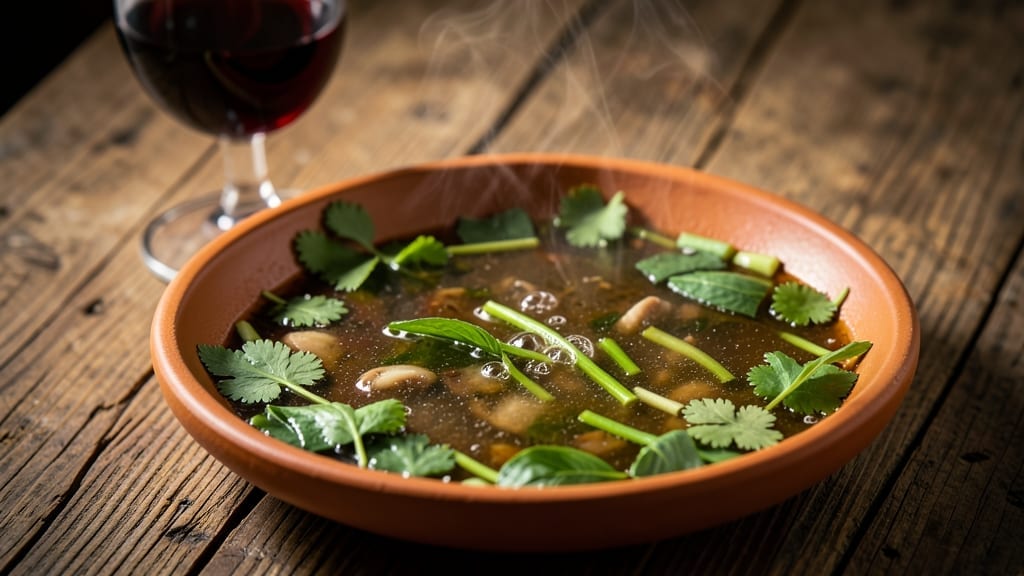
This herbal hot pot broth recipe transforms simple ingredients into a deeply aromatic, umami-rich foundation that elevates every hot pot gathering. The secret lies in layering fresh herbs, star anise, and ginger—each contributing distinct flavors that build complexity as they simmer.
I developed this recipe after years of refining my hot pot technique, ensuring the broth remains clear yet packed with depth, never overpowering the ingredients it cradles.
The process is straightforward but precise: toast whole spices first to unlock their oils, then build the broth in stages—starting with aromatics, adding herbs at the right moment, and finishing with a touch of soy for balance.
This method delivers a clear, fragrant broth that’s rich enough to stand alone but versatile enough to complement tofu, mushrooms, or fresh vegetables. The result? A broth so flavorful it turns even the simplest hot pot into a restaurant-worthy experience.
What sets this apart is the umami depth achieved through a combination of dried shiitake mushrooms and a splash of rice vinegar, which brightens without overpowering.
The broth develops its full character after 45 minutes of simmering, but the effort is worth it—each sip reveals layers of herbal complexity that linger.
Perfect for meal prep, this broth keeps well for up to 5 days in the refrigerator, allowing you to enjoy hot pot night after night.
For an extra touch of sophistication, garnish with fresh cilantro or thinly sliced scallions before serving. Pair with your favorite hot pot ingredients—think bok choy, shiitake mushrooms, or silken tofu—and watch as the broth transforms each bite into a harmonious blend of flavors.
The technique is foolproof, but the results feel like a professional secret.
Ingredients for herbal hot pot broth
Layered aromatics and umami-rich ingredients create this restaurant-worthy herbal hot pot broth foundation.
| Ingredient | Amount | Notes |
|---|---|---|
| Dried Shiitake Mushrooms 🍄 | ¼ cup | Sliced, for umami depth |
| Fresh Ginger Root 🧅 | 2 tbsp | Thinly sliced, organic preferred |
| Star Anise Pods 🌟 | 2 whole | Toasted lightly for aroma |
| Cinnamon Sticks 🌿 | 1 whole | For subtle warmth |
| Fresh Cilantro Stems 🌿 | ½ cup | Packed, for herbal brightness |
| Fresh Thai Basil Leaves 🌿 | ¼ cup | Packed, for aromatic depth |
| Green Onions 🧅 | 4 whole | Thinly sliced for garnish |
| Vegetable Oil 🫒 | 2 tbsp | High smoke point preferred |
| Light Soy Sauce 🥄 | 2 tbsp | For umami balance |
| Rice Vinegar 🍶 | 1 tbsp | For subtle acidity |
| Diamond Crystal Kosher Salt 🧂 | 1 tsp | Adjust to taste |
| Black Peppercorns 🌶️ | ½ tsp | Coarsely cracked |
| Water 💧 | 6 cups | Filtered preferred |
| Sesame Oil 🫒 | 1 tsp | For finishing aroma |
The star anise and cinnamon sticks are essential for building aromatic depth—toast them whole in vegetable oil for 30 seconds before adding to the broth to release their essential oils. For optimal quality, source organic fresh ginger and Thai basil from specialty markets like Whole Foods or Asian grocery stores, where their vibrant color indicates freshness. Dried shiitake mushrooms from Trader Joe’s or Penzeys provide umami without overpowering, while Diamond Crystal kosher salt ensures precise seasoning balance. Fresh cilantro stems and Thai basil leaves should be packed tightly to maximize their herbal contribution without excess moisture.
No fresh Thai basil? Substitute with fresh Italian basil at half the amount, though the flavor profile will differ slightly. Running low on star anise? A pinch of anise seeds works in a pinch, but the texture won’t be identical. For a quicker version, instant miso paste (1 tbsp) can replace the dried shiitake mushrooms, though it will alter the clarity of the broth. Rice vinegar can be swapped for apple cider vinegar at the same ratio, though rice vinegar’s subtle sweetness is ideal. If you prefer a deeper umami profile, add 1 tsp of fish-free vegetarian Worcestershire sauce—just ensure it’s labeled vegetarian to avoid hidden anchovies.
This broth develops its full complexity after 45 minutes of simmering, so patience is key—do not rush the process. Store in glass containers in the refrigerator for up to 5 days, where it continues to deepen in flavor. For longer storage, freeze in ice cube trays for up to 3 months, perfect for quick hot pot sessions. Garnish with thinly sliced green onions and a drizzle of sesame oil just before serving to elevate the dish’s presentation and aroma.
Why You’ll Love This Recipe
- No Chopping Needed: I swear by this—just toss in whole shiitake mushrooms and ginger slices. The broth builds flavor while you handle everything else, and honestly? That’s a win on busy nights when I’d rather not be dicing for 20 minutes.
- Earthy, Warm Depth: Star anise and cinnamon give it this cozy, almost spiced-tea vibe, but the shiitakes ground it with umami richness. It’s the kind of broth that makes you pause mid-sip—like a hug in a bowl.
- Leftovers That Shine: I make a big batch on Sundays, and it only gets better reheated. Freeze what you won’t use, then pull out a pot for lazy nights or when company drops by. No one ever guesses it’s from yesterday.
- Budget-Friendly Pantry Staples: Dried shiitakes and spices cost pennies but deliver restaurant-quality flavor. Between us, this is how I feed my family hearty meals without breaking the bank—especially when fresh herbs are pricey.
Step-by-step instructions for herbal hot pot broth
This method builds aromatic depth through careful layering and precise timing.
Toast Spices and Bloom Aromatics
Heat a heavy-bottomed pot over medium heat and add the 2 tablespoons vegetable oil. Once shimmering, add the 2 whole star anise pods and 1 whole cinnamon stick. Toast for 1 minute until fragrant—you’ll smell their essential oils release. This step unlocks their full aromatic potential.
Immediately add the 0.25 cup dried shiitake mushrooms and 2 tablespoons fresh ginger root. Stir constantly for 2 minutes until the mushrooms darken slightly and the ginger becomes translucent. The mushrooms will absorb oil and begin rehydrating, while the ginger releases its pungent heat. Remove from heat if they begin to brown too quickly—this prevents bitterness.
Simmer the Base with Layered Flavors
Return the pot to medium heat and pour in the 6 cups water. Add the 2 tablespoons light soy sauce and 1 tablespoon rice vinegar, stirring to combine. Bring to a gentle simmer, then reduce heat to maintain a barely perceptible bubble at the surface. This low-and-slow approach prevents surface evaporation while allowing flavors to meld.
Simmer uncovered for 20 minutes. Skim any foam that rises to the surface with a fine-mesh spoon—this removes impurities and keeps the broth clear. The liquid should reduce slightly, intensifying the umami from the mushrooms and soy sauce. The star anise and cinnamon will infuse the water with their warm, slightly sweet notes.
Incorporate Herbal Elements
After 20 minutes, add the 0.5 cup fresh cilantro stems and 0.25 cup fresh Thai basil leaves. Stir gently to distribute the herbs evenly. These additions bring bright, herbal notes that cut through the richness of the shiitakes and soy. Simmer for an additional 10 minutes—this allows the delicate basil and cilantro to infuse without overcooking into bitterness.
Taste the broth at this stage. It should balance umami (shiitakes, soy), warmth (star anise, cinnamon), and freshness (cilantro, basil). If needed, adjust seasoning with the 1 teaspoon Diamond Crystal kosher salt and 0.5 teaspoon black peppercorns (cracked between your palms first for even distribution). The broth should taste vibrant yet harmonious, with no single flavor dominating.
Finish and Prepare for Service
Remove the pot from heat and let the broth steep for 10 minutes off the stove. This resting period allows the flavors to fully integrate and the herbs to release their final essence. Strain through a fine-mesh sieve into a clean pot, pressing gently on the solids to extract maximum flavor. Discard the solids—no need to rinse the strainer.
Return the strained broth to the pot and stir in the 1 teaspoon sesame oil. This final touch adds a nutty aroma and subtle richness that elevates the dish. Keep the broth warm over low heat or transfer to a heatproof pitcher for serving. The broth is now ready to use as the foundation for your hot pot, offering a complex, layered flavor profile that complements any protein or vegetable addition.
Pro Tips For Making Herbal Hot Pot Broth
- SIMMER LOW AND SLOW: After burning my first batch of broth (yes, I did it), I learned to keep the heat at a gentle simmer—not a rolling boil. The shiitakes and spices need time to release their flavors, and high heat just turns the broth bitter. Use the back burner and let it bubble softly, like a lazy Sunday morning.
- SOAK SHIITAKES FIRST: Dry shiitakes are like little flavor sponges—toss them in warm water for 20 minutes before adding to the pot. This rehydrates them faster and prevents them from floating like sad, useless corks. Drain well, but keep the soaking liquid; it’s packed with umami.
- CRUSH STAR ANISE: Whole star anise pods just sit there, doing nothing. Lightly crush them with a mortar or the flat side of a knife to break open those aromatic seeds. This releases their licorice-like depth into the broth—trust me, your broth will taste like it’s been simmering for hours, not minutes.
- ADD CILANTRO LAST: Tossing cilantro stems into the pot early turns the broth bitter and muddy. Wait until the very end—just 5 minutes before serving—and let those fresh, bright notes shine. If you’re impatient, at least add them in the final 10 minutes to avoid overpowering the broth with bitterness.
Best sauces and condiments for this dish
Sesame Oil Finish
The star of this broth’s aromatic finale is 1 teaspoon sesame oil, which should be added only after straining. I recommend Kadoya Toasted Sesame Oil—its nutty, toasty depth enhances the herbal notes without overpowering.
Add it just before serving to preserve its delicate aroma, as heat can make it bitter. For an extra touch, drizzle a few drops directly over the hot pot before guests begin eating. 🌟
Chili Oil Infusion
For a spicy kick, stir in 1 teaspoon chili oil (like Lao Gan Ma) during the final 5 minutes of simmering. This adds a smoky, fiery contrast to the broth’s herbal brightness.
If you prefer mild heat, reduce to ½ teaspoon or swap for gochujang (Korean chili paste) at ½ teaspoon, simmered until dissolved. Adjust to taste—this is where the broth’s personality truly shines. 🌶️
Miso Paste Boost
For an extra umami punch, whisk in 1 tablespoon white miso paste (like Hondo) during the last 10 minutes of simmering. This Japanese fermented soybean paste deepens the savory profile without altering the broth’s clarity.
Avoid red miso—it’s too intense. For a vegetarian option, ensure the miso is labeled 100% vegetarian to skip any fish-based additives. 💫
Lime or Lemon Zest
Brighten the broth with 1 teaspoon lime zest (or lemon) during the final 5 minutes of simmering. The citrus’s acidity cuts through the richness, balancing the umami. I use organic Mexican limes for their vibrant flavor.
For a stronger citrus note, add 1 tablespoon fresh lime juice at the end. This works especially well if you’ve added chili oil for a tangy-spicy contrast. ✨
Ginger-Scallion Oil
For a quick homemade garnish, blend 2 tablespoons chopped scallions with 1 tablespoon minced ginger and 1 tablespoon neutral oil (like avocado oil). Heat until fragrant, then drizzle over the broth just before serving.
This adds a fresh, aromatic layer that complements the herbal base. Store any leftover oil in an airtight container for up to 3 days in the fridge. 🧅
Umami Toppings
Elevate the dish with toasted sesame seeds or crushed dried shiitake pieces as garnishes. For extra depth, sprinkle 1 teaspoon furikake (Japanese seasoning) over the top. These toppings add texture and reinforce the broth’s umami foundation. I love using Miyoko’s Furikake for its balanced nuttiness and seaweed notes. 💡
Nutrition facts
Frequently asked questions
Can I make this broth without fresh herbs?
Swap fresh cilantro stems for 1 tablespoon dried cilantro and Thai basil for 1 teaspoon dried basil. For best results, toast the dried herbs in the oil for 30 seconds before adding to the broth. The flavor will be slightly less vibrant but still aromatic.
How do I prevent the broth from becoming cloudy?
Cloudiness usually comes from overcooking the herbs or not straining properly. Add delicate herbs like Thai basil only in the last 10 minutes of simmering, and strain through a fine-mesh sieve lined with cheesecloth for extra clarity. Skimming foam during simmering also helps maintain a clean appearance.
Can I use this broth for other dishes besides hot pot?
Yes! This aromatic broth works beautifully for ramen bases, stir-fry sauces, or even as a grain cooking liquid (like for quinoa or rice). For stir-fries, reduce the broth by half first to concentrate the flavors. The herbal notes pair especially well with tofu, mushrooms, and bok choy.
Why does my broth taste bitter?
Bitterness typically comes from over-toasting spices or over-simmering ginger. Toast spices for only 1 minute and remove ginger from heat if it starts to brown too much. For extra insurance, add ½ teaspoon sugar or 1 teaspoon rice vinegar at the end to balance harsh flavors. Taste as you go!
How long can I store this broth in the freezer?
This broth freezes beautifully for up to 3 months in airtight containers. For best quality, freeze in ice cube trays and transfer to a bag once solid. Thaw overnight in the fridge before reheating. Avoid refreezing once thawed to maintain freshness.

- Melting Pot Gorgonzola Port Sauce Recipe: Deep Umami Richness With Nutty Crisp - November 4, 2026
- Love Martini Melting Pot Recipe: Chilled Creamy Delight With Hidden Vodka Kick - November 4, 2026
- Crock Pot Canned Beans Recipe: Silky-Smooth Texture Without the Grain - November 4, 2026