
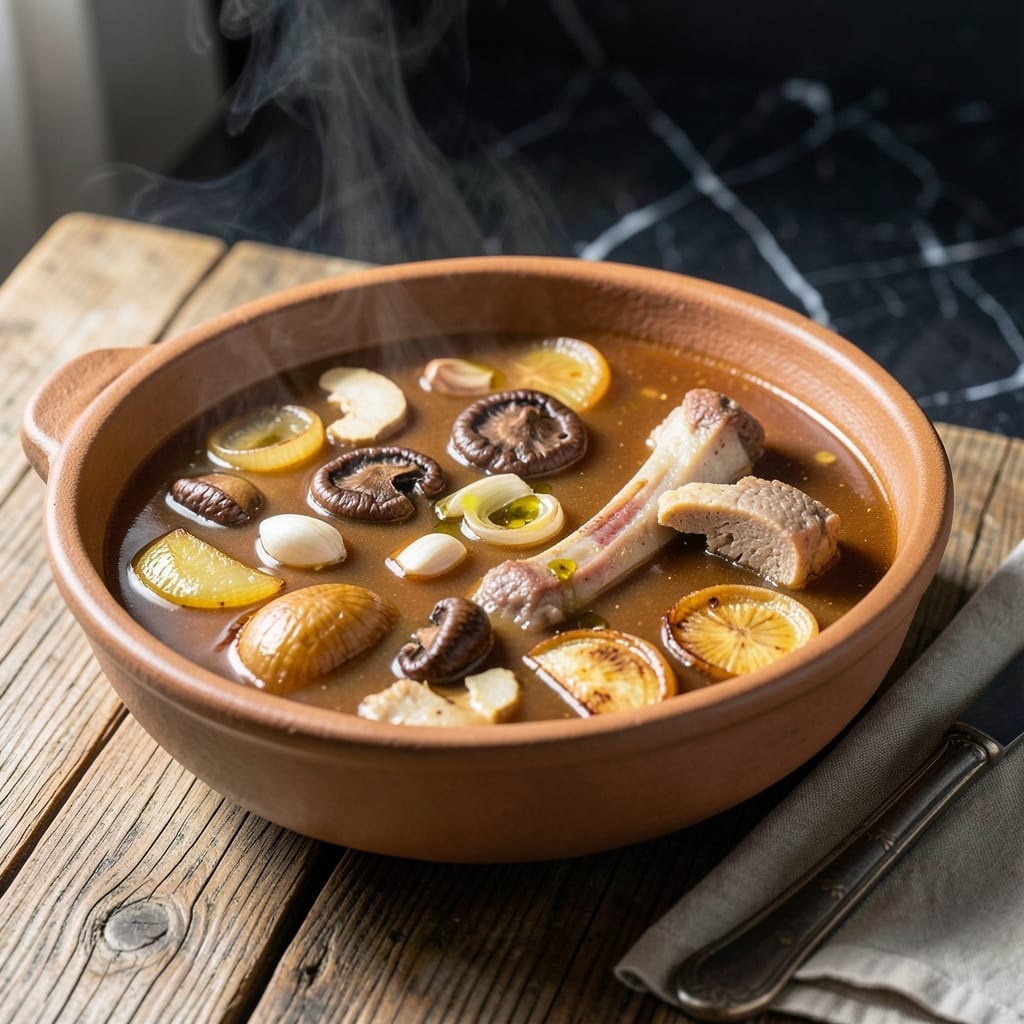
This homemade broth transforms any meal into a communal dining experience. A rich umami base built from scratch creates the perfect foundation for hot pot, where every ingredient shines.
The secret lies in slow-simmering bones, aromatics, and spices to extract maximum depth of flavor. This method ensures a clean, flavorful broth that enhances rather than overpowers your chosen proteins and vegetables.
You’ll achieve a silky, aromatic liquid that invites customization. Whether you prefer traditional Chinese, spicy Sichuan, or Japanese shabu-shabu styles, this recipe adapts beautifully to your taste preferences.
Serve with thinly sliced meats, fresh seafood, tofu, and an array of vegetables for dipping. The possibilities are as endless as they are delicious.
Ingredients for Homemade Hot Pot Broth
Rich bones, aromatic spices, and time create this silky, umami-packed foundation for hot pot.
| Ingredient | Amount | Notes |
|---|---|---|
| Beef Bones 🥩 | 4 lb | Marrow or knuckle preferred |
| Chicken Bones 🍗 | 2 lb | Necks, backs, or wings |
| Dried Shiitake Mushrooms 🍄 | 1 oz | For deep umami flavor |
| Yellow Onions 🧅 | 2 whole | Halved, skin on for color |
| Fresh Ginger 🌿 | 1 whole | Thick slices, unpeeled |
| Garlic Cloves 🧄 | 8 cloves | Smashed, unpeeled |
| Scallions 🧅 | 6 whole | White and green parts separated |
| Star Anise Pods ⭐ | 4 pieces | Whole, not ground |
| Sichuan Peppercorns 🌶️ | 2 tsp | Lightly toasted for aroma |
| Bay Leaves 🍃 | 3 pieces | Dried, for earthy depth |
| Dried Red Dates 🍈 | 4 pieces | Pitted, for natural sweetness |
| Shaoxing Wine 🍶 | ¼ cup | Or substitute dry sherry |
| Soy Sauce 🫒 | ¼ cup | Low-sodium preferred |
| Rock Sugar 🍬 | 2 oz | Or substitute brown sugar |
| Water 💧 | 6 cups | Or enough to cover bones |
The bones are the soul of this broth. Beef marrow and chicken backs give the deepest flavor—ask your butcher for these, or grab them from Whole Foods if they’re not at your regular grocery store. Look for bones with good connective tissue (that’s where the collagen is). The dried shiitakes? Asian markets have the best selection and price. Don’t skip them—they’re your umami powerhouse.
No Shaoxing wine? Dry sherry works in a pinch. Star anise missing? A pinch of five-spice powder gets you close. The rock sugar can be swapped for brown sugar (or even white in a pinch). If you can’t find Sichuan peppercorns, regular black peppercorns plus a tiny bit of cinnamon adds warmth. The dried dates? They’re for sweetness, so a teaspoon of sugar does the job too.
Broth freezes like a dream. Portion into quart-sized containers and stash for up to 3 months. For fridge storage, use within 5 days. The fat will solidify on top—just skim it off before reheating. Pro tip: strain and chill first, then remove the fat layer before freezing for cleaner flavor.
Why You’ll Love This Recipe
- One Pot Wonder: I just toss the beef bones, chicken bones, and shiitake mushrooms in with the onions and ginger, then let it simmer—hardly any active work.
- Rich Umami Bomb: The combo of dried shiitake and slow-simmered bones creates this deep, savory broth I can’t get from store-bought versions.
- Feeds My Crew: Honestly, I make a huge batch and we use it for hot pot nights, ramen, or just sipping straight from a mug on cold days.
- Leftovers Love: Between us, this broth tastes even better the next day, and it freezes like a dream for quick meals later.
Step-by-Step Instructions for Homemade Hot Pot Broth
This method builds layers of flavor that will make your hot pot experience truly unforgettable.
Step 1: Parboil and Rinse the Bones
Place the 4 lb beef bones and 2 lb chicken bones in a large stockpot and cover with cold water. Bring to a boil over high heat, then reduce to a simmer for 5 minutes. You’ll see impurities rise to the surface as scum—this is exactly what you want.
Drain the bones in a colander and rinse them thoroughly under cold water, scrubbing off any remaining residue. This blanch-and-rinse step removes blood and impurities that would otherwise cloud your broth. Clean your stockpot before proceeding to ensure a clear, clean base.
Step 2: Toast the Aromatics and Spices
Return the cleaned bones to the stockpot along with the 1 oz dried shiitake mushrooms, 2 whole yellow onions (halved with skin on), 1 whole fresh ginger (thick unpeeled slices), and 8 cloves garlic cloves (smashed, unpeeled). Add the 6 whole scallions with white and green parts separated.
Dry-toast the 2 tsp Sichuan peppercorns in a small pan over medium heat for 1-2 minutes until fragrant, then add to the pot along with the 4 pieces star anise pods and 3 pieces bay leaves. This light toasting enhances the spices’ essential oils without burning them.
Step 3: Build the Broth Foundation
Pour in the 6 cups water—just enough to cover the bones and aromatics. Bring the mixture to a boil over high heat, then immediately reduce to a gentle simmer. Skim off any foam that rises to the surface during the first 20 minutes of simmering.
Add the 0.25 cup Shaoxing wine, 0.25 cup soy sauce, 2 oz rock sugar, and 4 pieces dried red dates. The wine deglazes the pot while the sugar and dates balance the savory elements with subtle sweetness. Maintain a low simmer—you should see small bubbles breaking the surface gently.
Step 4: Simmer for Depth of Flavor
Partially cover the pot and let it simmer for 4-6 hours. The longer you go, the richer your broth becomes as collagen breaks down into gelatin. Check occasionally to ensure the liquid level stays consistent, adding hot water if needed to keep the bones submerged.
You’ll know it’s ready when the broth takes on a deep amber color and the aroma fills your kitchen with complex, savory notes. The dried shiitake mushrooms will have plumped up considerably, releasing their umami depth into the liquid. Strain the broth through a fine-mesh sieve, pressing gently on the solids to extract every bit of flavor.
Your homemade hot pot broth is now ready to use. The surface should glisten with a light sheen from the gelatin, and the flavor should be deeply savory with balanced sweetness and aromatic complexity. This creates the perfect base for any hot pot dipping experience.
Pro Tips For Making Homemade Hot Pot Broth
- Blanch the Bones: I learned this the hard way—boil beef and chicken bones for 5-10 minutes first, then rinse. Skipping this step leaves your broth cloudy and bitter.
- Toast the Mushrooms: Dry-toast the shiitake mushrooms in a pan until fragrant before adding to the pot. It deepens their umami flavor in the broth.
- Skip the Boil: After the initial blanch, keep the broth at a gentle simmer—never a rolling boil. A hard boil makes the broth greasy and muddy.
- Use Ginger Skin: Sounds weird, but it works: leave the skin on the ginger when adding it whole. It adds a subtle earthiness to the broth.
Common Mistakes When Making This Recipe
Skipping the Blanch
Never skip parboiling and rinsing your beef and chicken bones. This 5-minute step removes impurities that would make your broth cloudy and bitter. I learned this the hard way my first attempt. 💡
Overloading the Pot
Don’t fill your pot to the brim with water. Leave 1-2 inches of space for the broth to expand. Too much water dilutes the flavor, and you’ll end up with a weak, watery base instead of a rich, concentrated one.
Boiling vs Simmering
A rolling boil breaks down the proteins too quickly, making the broth cloudy. Maintain a gentle simmer—look for small, lazy bubbles breaking the surface. This slow process extracts flavor without emulsifying fat into your broth.
Ignoring the Scum
During the first 20 minutes, foam will rise to the top. Skim it off with a fine-mesh strainer. Leaving it in creates a greasy, impure broth that lacks the clean, delicate flavor you’re aiming for.
Under-Simmering Time
Less than 4 hours won’t extract enough collagen from the bones. The magic happens between 4-6 hours, when the gelatin gives your broth that luxurious, silky mouthfeel. Patience is key here. ⏰
Forgetting to Strain
Always strain through a fine-mesh sieve. Press gently on the solids to extract all the flavor, but don’t squeeze—this can make your broth bitter. The result should be crystal clear with a beautiful amber hue.
Nutrition Facts
Frequently Asked Questions
Can I use a slow cooker instead of a stockpot?
Set it to low heat for 6-8 hours. The gentle, consistent temperature works perfectly for extracting deep flavor from bones and aromatics. Just ensure the liquid stays below the max fill line.
What’s the best way to store leftover broth?
Cool completely, then refrigerate in airtight containers for up to 5 days. For longer storage, freeze for 3 months. Pro tip: portion into 1-cup servings for easy reheating.
Why is my broth cloudy instead of clear?
Cloudiness usually comes from boiling too vigorously or not skimming the initial foam. Next time, maintain a gentle simmer and skim carefully during the first 20 minutes.

- 6 Oz Chocolate Chip Cookie Recipe: Perfectly Balanced Crispy Edges and Chewy Hearts - September 25, 2026
- 6-Inch Coffee Cake Recipe: Vanilla Bean Swirls and Buttery Streusel Topping - September 25, 2026
- 1 Hour Soup Recipe: Velvety Richness Without the Wait - September 25, 2026