
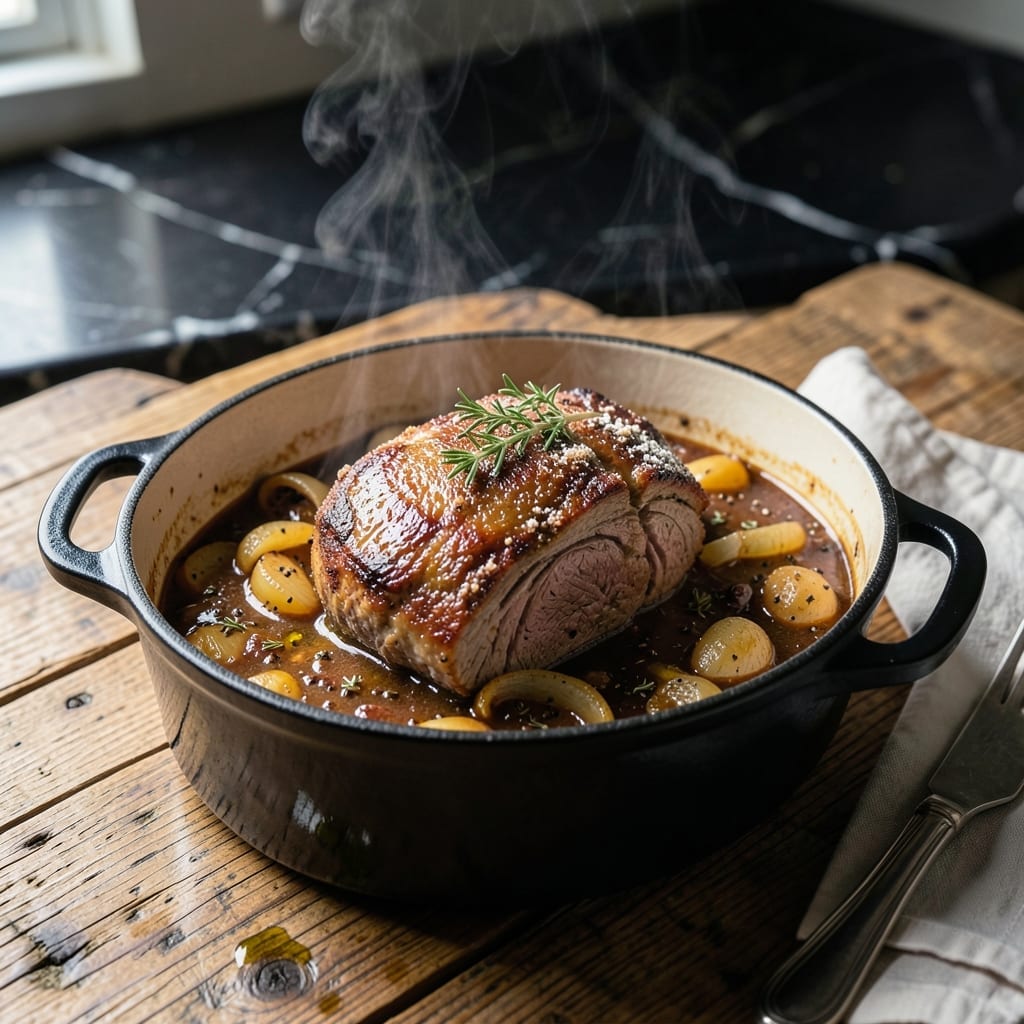
There’s a reason tavern-style pot roast has stood the test of time—it delivers rustic comfort with every bite. This method transforms tough cuts into tender, fall-apart meat with a rich, herb-infused gravy that soaks into every morsel.
I’ve refined this recipe to focus on traditional techniques: slow braising, a bold herb crust, and a sauce that builds depth as it simmers. The result is a dish that tastes like it came straight from a countryside inn.
The key is patience. Low heat and a tight seal on the pot work together to break down the meat while locking in moisture and flavor. The herb crust forms a savory bark that melts into the sauce.
Perfect for Sunday suppers or cozy weeknight dinners, this pot roast brings hearty satisfaction to the table. Let’s begin.
Ingredients for Tavern Style Pot Roast
Rustic ingredients build a pot roast that tastes like a countryside inn classic.
| Ingredient | Amount | Notes |
|---|---|---|
| Chuck Roast 🥩 | 3 lb | Well-marbled, boneless preferred |
| Kosher Salt 🧂 | 2 tsp | Divided for seasoning and crust |
| Black Pepper 🌶️ | 1 tsp | Freshly ground preferred |
| All-Purpose Flour 🌾 | ¼ cup | For dredging meat |
| Olive Oil 🫒 | 2 tbsp | For searing roast |
| Yellow Onion 🧅 | 2 whole | Large, roughly chopped |
| Carrots 🥕 | 4 whole | Peeled, cut into chunks |
| Celery Stalks 🌿 | 3 pieces | Cut into 2-inch pieces |
| Garlic Cloves 🧄 | 6 cloves | Minced for herb crust |
| Fresh Rosemary 🌿 | 2 tbsp | Chopped, stems removed |
| Fresh Thyme 🍃 | 2 tbsp | Leaves stripped from stems |
| Beef Stock 🍲 | 3 cups | Low-sodium preferred |
| Red Wine 🍷 | 1 cup | Dry variety for deglazing |
| Tomato Paste 🍅 | 2 tbsp | For depth of flavor |
| Bay Leaves 🌿 | 2 whole | Dried, for aromatics |
The chuck roast is non-negotiable here—look for heavy marbling at your butcher or the meat counter at Whole Foods. Fat equals flavor and tenderness. I’ve seen fatty chuck at Costco that works beautifully, but avoid anything labeled ‘lean.’ The herb crust needs fresh rosemary and thyme (the dried stuff won’t give you that bold, savory bark), so grab those from the produce section while you’re at it.
No red wine? Beef broth with a splash of balsamic vinegar works in a pinch. Fresh out of thyme? Dried thyme at half the amount is okay, but the flavor won’t be as bright. If you’re missing tomato paste, a tablespoon of ketchup (yes, really) can stand in—Heinz is fine. The carrots and celery can be swapped for parsnips or turnips if you’re feeling adventurous.
This tastes even better the next day—4-5 days in the fridge, or freeze for 3 months. Store leftovers in the gravy to keep the meat moist. Reheat gently on the stove to keep everything from drying out.
Why You’ll Love This Recipe
- Set It and Forget: I just season the chuck roast, sear it, and let the oven do the rest—no babysitting required.
- Crispy Outside, Tender Inside: That flour crust in the olive oil gives it a golden sear while keeping every bite fall-apart tender.
- Feeds My Crowd: One pot, one roast, and suddenly I’ve got a hearty meal for Sunday dinner or meal-prep lunches.
- Stretches My Dollar: Honestly, a cheap chuck roast turns into something fancy with just salt, pepper, and a little flour.
Step-by-Step Instructions for Tavern Style Pot Roast
Here’s the method. Straightforward, tested, works every time.
Step 1: Season and Sear the Chuck Roast
Pat the 3 lb chuck roast dry with paper towels, then season generously with 1 tsp black pepper and 1 tsp kosher salt. The dry surface ensures a perfect sear. Dredge the roast in 0.25 cup all-purpose flour, pressing gently to create an even coating that will thicken the sauce later.
Heat 2 tbsp olive oil in a Dutch oven over medium-high heat until shimmering. Sear the roast on all sides for 3-4 minutes per side until deeply browned. You’ll see a rich crust forming—that’s the flavor foundation. Remove the roast and set aside temporarily.
Step 2: Sauté the Aromatic Vegetables
In the same Dutch oven, add the roughly chopped 2 whole yellow onion, 4 whole carrots, and 3 pieces celery stalks. Cook for 5-6 minutes over medium heat until the onions begin to soften and brown slightly at the edges.
Stir in the 6 cloves garlic cloves, 2 tbsp fresh rosemary, and 2 tbsp fresh thyme. Cook for 1 minute until fragrant. This builds layers of rustic herb flavor that define the tavern-style character. Add 2 tbsp tomato paste and cook for another 2 minutes to caramelize slightly.
Step 3: Deglaze and Build the Braising Liquid
Pour in 1 cup red wine to deglaze the pan, scraping up all the browned bits with a wooden spoon. These fond bits dissolve into the liquid, creating incredible depth of flavor. Let the wine reduce by half, about 3-4 minutes.
Add 3 cups beef stock and 2 whole bay leaves. Return the seared roast to the Dutch oven along with any accumulated juices. The liquid should come about halfway up the roast—this ensures even cooking without submerging the meat completely.
Step 4: Braise to Tender Perfection
Cover the Dutch oven and transfer to a preheated 325°F oven. Braise for 3-3.5 hours, turning the roast halfway through. You’ll know it’s ready when the meat pulls apart easily with a fork and reaches an internal temperature of 195-200°F.
The long, slow cooking transforms the tough chuck roast into melt-in-your-mouth tenderness. The vegetables absorb the rich flavors, creating a hearty, rustic dish that embodies comfort food at its finest. The house will smell incredible as it cooks.
Step 5: Rest and Serve
Carefully remove the roast from the Dutch oven and transfer to a cutting board. Skim excess fat from the surface of the braising liquid if desired. The vegetables and sauce should be thick and flavorful—if it’s too thin, simmer uncovered for 5-10 minutes to reduce.
Let the roast rest for 15 minutes before slicing or pulling apart. This allows the juices to redistribute, ensuring each serving is moist and flavorful. Serve the roast with the vegetables and sauce ladled over the top for a complete, satisfying meal.
Pro Tips For Making Tavern Style Pot Roast
- Sear It Hard: Crank the heat to medium-high and don’t move the chuck roast for at least 3-4 minutes per side—I learned this the hard way after pulling it too soon and losing that deep, crusty fond.
- Dry the Meat First: Pat the chuck roast completely dry with paper towels before dusting with flour, or the coating will clump and steam instead of crisp.
- Don’t Crowd the Pan: If your pot isn’t big enough for the whole roast in one layer, sear it in batches—steam from overcrowding turns your crust soggy.
- Use Starchy Flour: All-purpose flour is non-negotiable here; bread flour or almond flour won’t give you that thick, gravy-like sauce tavern-style pot roast is known for.
Troubleshooting tavern style pot roast
Tough Meat Issues
If your roast still feels tough after braising, it likely needs more time. Return it to the oven at 300°F for another 30-45 minutes. Check the internal temperature—it should reach at least 195°F for proper breakdown. 🌡️
Weak Herb Flavor
If the herb crust isn’t bold enough, use fresh herbs only—dried won’t cut it. Double the rosemary and thyme next time, or add 1 tbsp fresh sage to the mix. Press the herbs firmly into the flour coating before searing.
Thin Gravy Fix
For thin gravy, simmer uncovered on the stovetop for 10-15 minutes to reduce. If that’s not enough, mix 1 tbsp cornstarch with 1 tbsp cold water and stir into the gravy. Simmer for 2-3 minutes until thickened.
Overly Salty Sauce
If the sauce is too salty, add 1 cup low-sodium beef broth and simmer to blend flavors. Alternatively, stir in 1 tsp brown sugar or a splash of red wine vinegar to balance the saltiness.
Vegetable Disintegration
To keep vegetables intact, add them during the last 1.5 hours of braising instead of at the start. Use larger chunks (2-3 inch pieces) and check for doneness before serving. They’ll soften without turning to mush.
Burnt Bottom
If the bottom burns, you likely had the heat too high. Next time, ensure your oven is at a steady 325°F and use a heavy Dutch oven. If it happens, carefully transfer the roast and liquid to a clean pot. 💡
Nutrition Facts
Frequently Asked Questions
What cut works best if chuck isn’t available?
Brisket or short ribs make excellent substitutes. Both have similar marbling and connective tissue that break down beautifully during braising. Avoid lean cuts like round or sirloin.
Why sear the meat first?
Searing creates a flavorful crust through the Maillard reaction and locks in juices. It also builds fond in the pot that dissolves into the sauce for deeper flavor.
Can I make this in a slow cooker?
Yes! Brown the meat first, then transfer everything to the slow cooker. Cook on low for 8-10 hours or high for 5-6 hours. The texture will be slightly softer.
How do I store leftovers?
Store in the cooking liquid in an airtight container for up to 5 days in the fridge. Freeze for up to 3 months. Reheat gently to preserve moisture.

- 6 Oz Chocolate Chip Cookie Recipe: Perfectly Balanced Crispy Edges and Chewy Hearts - September 25, 2026
- 6-Inch Coffee Cake Recipe: Vanilla Bean Swirls and Buttery Streusel Topping - September 25, 2026
- 1 Hour Soup Recipe: Velvety Richness Without the Wait - September 25, 2026