
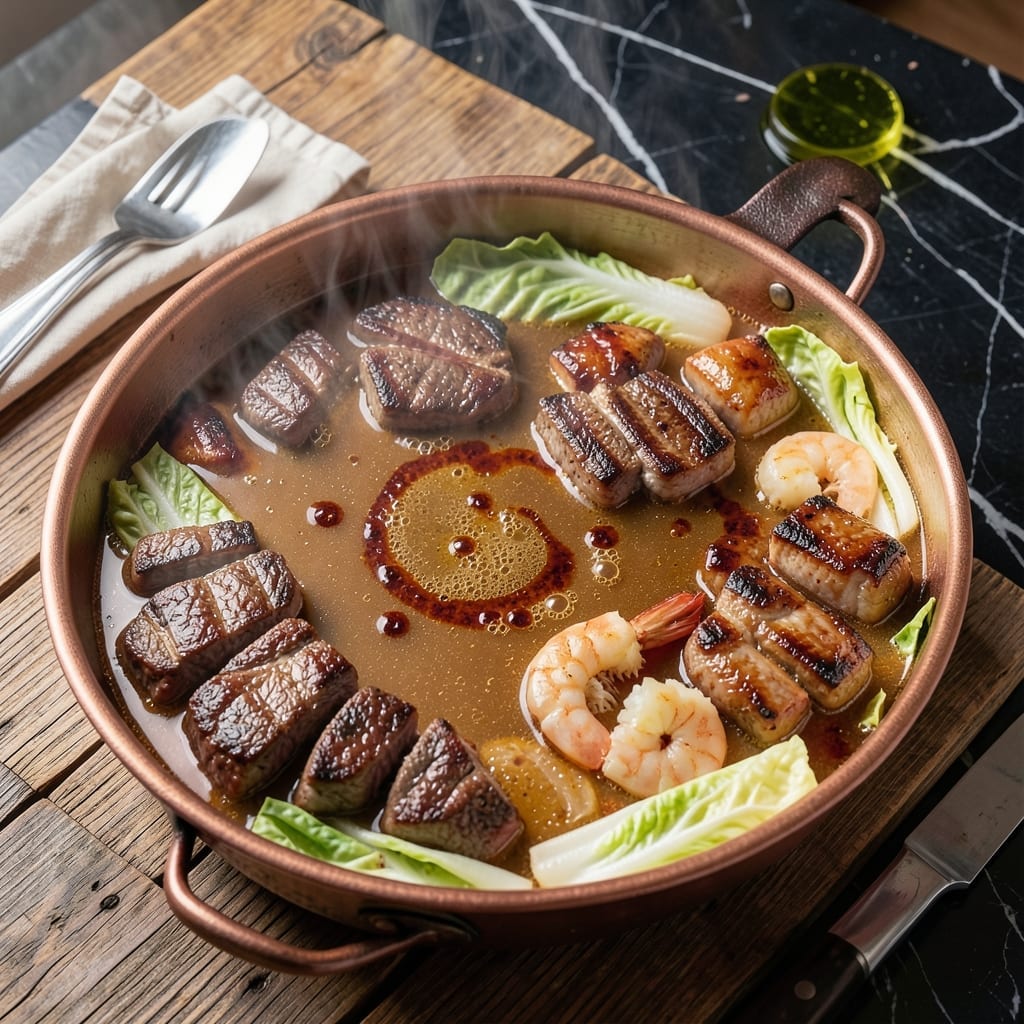
This dual cooking method combines the best of both worlds—savory broth for dipping and an open flame for grilling. I developed this approach to recreate the social experience of traditional hot pot with the added excitement of tabletop barbecue.
The beauty lies in the simplicity: a flavorful broth simmers on one side while a grill plate heats on the other. Thinly sliced meats, fresh vegetables, and seafood cook quickly, absorbing the broth’s essence or developing smoky char from the grill.
You control the cooking—dip ingredients in the broth or sear them on the grill for different textures and flavors. The shared experience makes this more than a meal; it’s an interactive dining adventure.
Perfect for gatherings, this setup encourages conversation and customization. Each person can cook their food exactly to their preference, creating a truly personalized meal.
Ingredients for Hot Pot Bbq
A selection of proteins, fresh vegetables, and aromatic broth ingredients for an interactive dining experience.
| Ingredient | Amount | Notes |
|---|---|---|
| Beef Broth 🥣 | 8 cups | Low-sodium preferred for control |
| Soy Sauce 🫙 | ½ cup | Use reduced-sodium if available |
| Ribeye Steak 🥩 | 1 ½ lb | Thinly sliced, about 1/8-inch thick |
| Pork Shoulder 🥩 | 1 lb | Thinly sliced for quick cooking |
| Large Shrimp 🦐 | 12 pieces | Peeled and deveined, tails on |
| Napa Cabbage 🥬 | 1 whole | Cut into 2-inch pieces |
| Shiitake Mushrooms 🍄 | 8 oz | Fresh, stems removed |
| Baby Spinach 🍃 | 4 oz | Rinsed and drained |
| Firm Tofu 🧈 | 14 oz | Pressed and cubed |
| Garlic Cloves 🧄 | 6 cloves | Smashed and peeled |
| Fresh Ginger 🌿 | 2 tbsp | Peeled and sliced thin |
| Green Onions 🧅 | 4 whole | Cut into 2-inch pieces |
| Sesame Oil 🫒 | 2 tbsp | Toasted for depth of flavor |
| Rice Vinegar 🍚 | 2 tbsp | For balancing the broth |
| Gochujang 🌶️ | 2 tbsp | Korean chili paste for heat |
The broth base demands quality. Whole Foods or Asian markets carry excellent low-sodium beef broth, but making your own from scratch elevates the flavor profile. For the meats, Costco offers well-marbled ribeye and pork shoulder at competitive prices. Always slice against the grain for tenderness. The shrimp should be fresh or thawed from frozen (look for wild-caught if possible).
Vegetarian or no pork? Chicken thighs or lamb slices work equally well, or double the tofu and shrimp. For the broth, vegetable stock with mushrooms provides depth if avoiding meat. Shiitake mushrooms can be swapped with enoki or oyster mushrooms. No gochujang? Sriracha plus a touch of miso mimics the complexity, though the flavor won’t be identical.
Prep all ingredients before heating the broth—this dish cooks fast at the table. The broth keeps well for 3 days in the fridge, and uncooked meats and seafood can be stored separately for 1-2 days. For best results, bring all proteins to room temperature before cooking (about 20 minutes out of the fridge).
Why You’ll Love This Recipe
- One Pot Wonder: I just dump the beef broth and soy sauce in, then let the ribeye and shrimp cook right at the table—no extra pans to wash.
- Umami Bomb: That first bite of pork shoulder soaked in the rich broth? Ridiculously good, with a depth that lingers.
- Crowd Pleaser: I’ve served this for casual Fridays and birthday dinners—everyone from picky kids to my foodie cousin goes back for seconds.
- Leftovers Dream: Honestly, the flavors only get better overnight, and I stretch it into a second meal with fresh noodles.
Step-by-Step Instructions for Hot Pot BBQ
Master the dual cooking method with precision and finesse for an interactive dining experience.
Step 1: Prepare the Flavorful Broth Base
In a large pot, combine the 8 cups Beef Broth, 0.5 cup Soy Sauce, 2 tbsp Sesame Oil, 2 tbsp Rice Vinegar, and 2 tbsp Gochujang. Bring to a gentle simmer over medium heat, stirring occasionally to dissolve the gochujang completely.
Add the 6 cloves Garlic Cloves and 2 tbsp Fresh Ginger, then reduce heat to low. Let the broth infuse for 15-20 minutes until fragrant. Skim off any foam that rises to the surface for a clean, clear broth.
Step 2: Set Up the Dual Cooking Stations
Divide your cooking area into two zones: a broth station and a grill station. Place the broth pot on a portable burner set to maintain a gentle simmer. Position a grill pan or electric griddle nearby for the BBQ component.
Arrange the 1.5 lb Ribeye Steak, 1 lb Pork Shoulder, 12 pieces Large Shrimp, 14 oz Firm Tofu, 1 whole Napa Cabbage, 8 oz Shiitake Mushrooms, 4 oz Baby Spinach, and 4 whole Green Onions on a large platter. Keep proteins and vegetables separate for easy access during cooking.
Step 3: Begin the Hot Pot Experience
Invite diners to start with the hot pot station. Provide individual wire skimmers or small strainers for cooking. The Napa Cabbage and Shiitake Mushrooms take 2-3 minutes to cook in the simmering broth until tender-crisp.
The Firm Tofu and Baby Spinach require only 1-2 minutes to heat through and absorb the broth’s flavors. Encourage guests to cook small portions at a time to prevent overcrowding the pot, which would lower the broth temperature.
Step 4: Transition to the BBQ Grill
For the grill station, heat the surface to high heat. The thinly sliced Ribeye Steak and Pork Shoulder cook quickly—1-2 minutes per side for medium-rare doneness. Look for a deep brown crust and juices pooling on the surface as indicators of readiness.
The Large Shrimp cook in 2-3 minutes per side until they turn opaque pink and the tails curl slightly. Arrange the cooked proteins on a serving platter and allow diners to select their preferred pieces.
Step 5: Serve and Enjoy the Dual Feast
Provide individual bowls for the hot pot components and plates for the grilled items. The beauty of this experience lies in the contrast of textures and temperatures—warm, tender vegetables from the broth alongside charred, savory meats from the grill.
Encourage guests to dip grilled items into the hot pot broth for an extra layer of flavor. Serve with additional Gochujang mixed with a bit of broth as a dipping sauce for those who prefer more heat. This communal meal fosters interaction and shared enjoyment.
Pro Tips For Making Hot Pot Bbq
- Slice Against the Grain: Cut the ribeye and pork shoulder thinly against the grain—about ⅛-inch thick. I learned this the hard way after chewing through tough slices that ruined the texture.
- Preheat the Broth: Bring the beef broth to a rolling boil before adding any meat. After burning three batches of shrimp by impatiently tossing them into lukewarm liquid, I finally figured out it’s the only way to guarantee even cooking.
- Skip the Overcrowding: Resist the urge to dump all the shrimp in at once—add in batches so they cook evenly instead of steaming in a pile. Sounds weird, but it works.
- Marinate Shrimp Briefly: Toss the shrimp in a splash of soy sauce for 5-10 minutes before cooking. My grandmother swore by this, and she was right: it adds flavor without overpowering the taste.
Wine and Beer Pairings for This Recipe
Asian Beer Pairings
Light, crisp Asian lagers like Sapporo or Asahi cut through the richness of grilled meats while complementing the broth’s umami. Their clean finish refreshes your palate between bites. I always keep a few cold ones nearby for this exact reason. 🍺
White Wine Options
A Riesling with slight sweetness balances the gochujang heat beautifully. Look for German or Alsatian styles with bright acidity. Gewürztraminer also works well, offering floral notes that pair nicely with the aromatic broth.
Red Wine Choices
For red lovers, a Pinot Noir with its lighter body and red fruit notes won’t overpower the meal. I recommend Oregon Pinot Noir for its earthy complexity. Avoid heavy, tannic reds that would clash with the broth.
Craft Beer Alternatives
A Belgian witbier brings citrus and spice notes that harmonize with the ginger and garlic in the broth. The slight effervescence cleanses your palate. For darker beers, a Kölsch offers malt sweetness without bitterness.
Non-Alcoholic Pairings
Sparkling lychee juice or green tea (hot or iced) provides refreshing contrast to the savory flavors. I love how the floral notes of lychee complement the meal. For a unique twist, try calamansi soda for a citrusy kick. 💫
Serving Temperature Tips
Serve white wines and beers at 45-50°F for optimal refreshment. Red wines should be slightly chilled to 60°F. Keep non-alcoholic options well-chilled, especially the sparkling juices.
Nutrition Facts
Frequently Asked Questions
Can I use a regular stove instead of a portable burner?
Yes, but you’ll need to divide your stovetop. Use one burner for the broth on low-medium heat and another for a grill pan on high heat.
What’s the best way to slice meat for this?
Freeze the meat for 30 minutes to firm it up, then slice against the grain into 1/8-inch thick pieces. This ensures quick, even cooking on the grill.
How do I keep the broth hot throughout the meal?
Use a slow cooker set to keep warm or a portable electric burner. Avoid microwave reheating, as it can make the broth taste uneven.
Can I make this vegetarian?
Swap the broth for mushroom or vegetable stock and use tofu, tempeh, and extra veggies. The grilling method works great for plant-based proteins.

- 4C Bread Crumbs Meatballs Recipe: Crispy Crust and Juicy Centers - September 25, 2026
- 6 Oz Chocolate Chip Cookie Recipe: Perfectly Balanced Crispy Edges and Chewy Hearts - September 25, 2026
- 6-Inch Coffee Cake Recipe: Vanilla Bean Swirls and Buttery Streusel Topping - September 25, 2026