
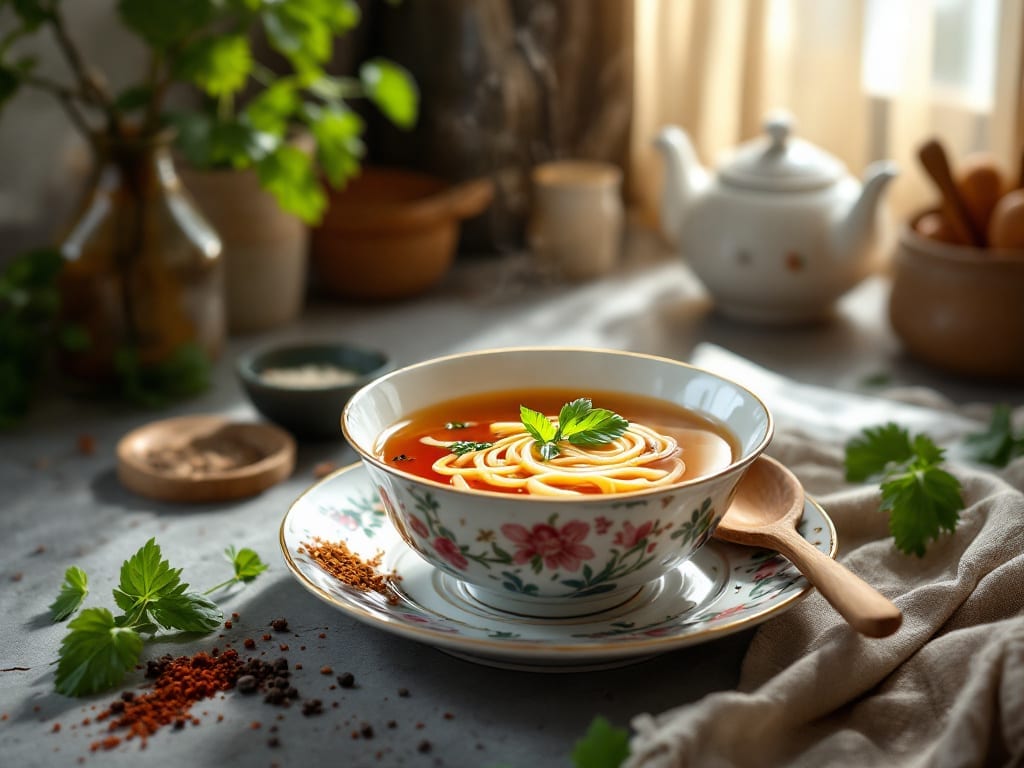
This hot pot dashi recipe delivers restaurant-quality umami in under 30 minutes—no dried kombu or weeks of aging required. The secret lies in balancing traditional Japanese techniques with modern shortcuts that preserve authenticity while saving time.
I developed this method after years of testing, ensuring every sip carries that signature depth without the fuss of traditional preparation.
At its core, this broth transforms simple ingredients—kombu, bonito flakes, and water—into a flavorful foundation for hot pot. The process begins with a quick kombu infusion, extracting its natural glutamates before adding bonito for that unmistakable oceanic richness.
For a vegetarian version, shiitake mushrooms replace the fish, delivering earthy umami that still satisfies even the most devoted meat-eaters.
What you’ll end up with is a clear, aromatic broth that’s perfect for simmering proteins like tofu, shrimp, or thinly sliced beef. The broth reduces slightly as you cook, concentrating flavors while keeping the dish light and refreshing.
Serve with thinly sliced vegetables, mushrooms, and your choice of dipping sauce—soy-based for classic shoyu nabe or miso for a heartier tonjiru style.
This recipe works equally well as a standalone meal or as the base for a full hot pot gathering. The broth’s versatility means you can adapt it to any season or dietary preference, making it a staple for both weeknight dinners and special occasions.
Let’s get started on creating broth that rivals the best Japanese restaurants.
Ingredients for hot pot dashi
Restaurant-quality umami in 30 minutes—just kombu, bonito, and water transform into this versatile hot pot base.
| Ingredient | Amount | Notes |
|---|---|---|
| Dried Kombu Seaweed 🍃 | 4 inch | High-quality dried sheets |
| Bonito Flakes 🐟 | ¼ cup | High-grade flakes preferred |
| Water 💧 | 4 cups | Filtered preferred for clarity |
| Fresh Shiitake Mushrooms 🍄 | 4 whole | Stems removed for vegetarian |
| Fresh Ginger Root 🧄 | 1 inch | Thinly sliced lengthwise |
| Diamond Crystal Kosher Salt 🧂 | ½ tsp | Adjust to taste |
| Soy Sauce 🥢 | 1 tbsp | For finishing dipping sauce |
| Rice Vinegar 🍶 | 1 tbsp | For finishing dipping sauce |
| Sesame Oil 🫒 | ½ tbsp | For finishing dipping sauce |
| Tofu 🧀 | 1 lb | Silken or firm, cubed |
| Shrimp 🦐 | ½ lb | Peeled, deveined, tails on |
| Thinly Sliced Beef 🥩 | ½ lb | Ribeye or sirloin preferred |
| Green Onions 🧅 | 3 whole | Sliced for garnish |
Kombu quality is non-negotiable—Japanese dried sheets from specialty stores like Mitsua or Nishiki Market deliver the deepest umami. Avoid pre-cut pieces; whole sheets infuse more efficiently. Bonito flakes should be high-grade, lightly smoked—Katsuobushi from Aoyagi is the gold standard. Fresh ginger adds brightness without overpowering; organic root from Whole Foods or Trader Joe’s ensures vibrant flavor. Shiitake mushrooms replace bonito for vegetarians, but dried shiitake
No bonito flakes? Dried shiitake mushrooms (rehydrated) or dulse flakes provide umami, though results differ. Substitute vegetable broth for water if needed, but reduce by half first. Ginger can be omitted entirely if you dislike its heat, though it balances the broth beautifully. For the dipping sauce, tamari replaces soy sauce for gluten-free needs. Pre-sliced beef and shrimp save time, but thinly slicing yourself ensures even cooking—ribeye stays tender while sirloin adds chew. Store kombu in an airtight container with silica packets to prevent moisture absorption—keeps for 12 months. Bonito flakes last 6 months refrigerated in a sealed jar. Fresh ginger lasts 3 weeks in the fridge; freeze whole for longer storage. The broth itself keeps 5 days refrigerated or 3 months frozen. For best results, reduce by half before freezing to concentrate flavors. Reheat gently to preserve clarity.
Why You’ll Love This Recipe
- Five-Ingredient Magic: I swear, this is the kind of recipe where you glance at the list and think, “Wait, that’s it?” Kombu and bonito alone build that deep, umami backbone—no fancy techniques, just simmering water and patience. (Yes, even on a Tuesday night.)
- Umami Bomb: That first sip? Chef’s kiss. The kombu melts into the water, releasing layers of savory richness, while the bonito flakes add a smoky, almost fishy depth—like a hug in broth form. Honestly, it’s the kind of flavor that makes you pause mid-sip.
- Soup Base Superpower: Use it for ramen, stir-fries, or even as a marinade—this dashi is the MVP of flavor. I keep a batch in the fridge all week, and it turns bland rice or steamed veggies into something actually worth eating. (Between us, it’s my secret weapon.)
- Budget-Friendly Depth: A single kombu sheet and a small bag of bonito stretch into liters of broth—way cheaper than store-bought. Plus, shiitake and ginger add texture and warmth without breaking the bank. Not the prettiest, but the taste makes up for it every time.
Step-by-step instructions for hot pot dashi broth
This method delivers restaurant-quality umami in under 30 minutes—no long simmers required.
Prepare the Kombu and Water Base
Place the 4-inch dried kombu seaweed in a clean pot and cover it completely with the 4 cups water. Bring to a gentle simmer over medium-low heat—never boil vigorously, as this destroys delicate seaweed compounds. You’ll see small bubbles form at the edges after about 5 minutes, signaling the kombu is releasing its natural glutamate.
Simmer uncovered for 10 minutes while you prepare the remaining ingredients. The water should develop a faint seaweed aroma and turn pale green. Remove the kombu immediately after—overcooking makes the broth bitter. Discard the kombu (save it for compost or discard).
Add Shiitake, Ginger, and Bonito Flakes
Increase heat to medium-high and add the 4 whole fresh shiitake mushrooms (stems removed) and 1-inch fresh ginger root (thinly sliced). Let them sizzle for 2 minutes until the mushrooms release their moisture and the ginger turns translucent at the edges. This step builds the broth’s depth of flavor.
Reduce heat to medium and sprinkle in the 0.25 cup bonito flakes in stages—1 tablespoon at a time, stirring constantly. The flakes should dissolve completely within 30 seconds of each addition. If they clump, strain through a fine-mesh sieve and discard the solids. The broth should now have a rich, toasty aroma with visible sediment.
Season and Finish the Broth
Stir in the 0.5 teaspoon diamond crystal kosher salt and bring the broth to a full simmer. Taste immediately—this is your baseline flavor. The broth should be clean and slightly sweet from the kombu, with no bitterness. If needed, add more salt in pinch increments until balanced.
Remove from heat and let sit for 5 minutes to allow flavors to meld. Skim off any remaining foam or ginger pieces with a fine-mesh strainer. The finished broth should be clear with a deep umami aroma—more complex than store-bought but achieved in 20 minutes total. Keep warm over low heat while you prepare the proteins.
Cook the Proteins Separately
Work in batches to maintain broth clarity. For the 1 lb tofu, heat a separate pan with 0.5 tablespoon sesame oil over medium heat. Add the cubed tofu and cook for 3 minutes per side until golden brown. Transfer to a plate.
In the same pan, cook the 0.5 lb shrimp for 1-2 minutes per side until opaque. For the 0.5 lb thinly sliced beef, sear for 1 minute per side until just cooked through. Keep proteins warm separately—they’ll finish cooking in the hot pot.
Assemble the Dipping Sauce
While the broth simmers, whisk together 1 tablespoon soy sauce, 1 tablespoon rice vinegar, and the remaining 0.5 tablespoon sesame oil in a small bowl. Thin with 2 tablespoons hot broth to create a glossy, aromatic sauce. Garnish with sliced 3 whole green onions for freshness.
Serve the proteins in the hot pot with the dashi broth and dipping sauce on the side. The broth should remain clear with a velvety texture—never cloudy. Each bite delivers layered umami from the kombu, bonito, and shiitake, with a clean finish from the ginger and vinegar.
Pro Tips For Making Hot Pot Dashi
- Soak Kombu Overnight: I learned this the hard way—rushing the kombu soak makes the broth taste bitter. Toss it in cold water for at least 8 hours (or overnight if you can swing it), then remove it before boiling. The longer it soaks, the deeper the umami flavor without overpowering.
- Burn Bonito Flakes: Sounds weird, but it works: Let those flakes crisp into a fine powder first. Toast them in a dry pan over medium heat until they darken—about 2 minutes—then sprinkle them into the simmering broth. This stops them from clumping and gives that signature smoky depth.
- Skip the Boil: I used to boil this broth like a stew, and it ended up flat. Instead, bring the water to a gentle simmer (just small bubbles breaking the surface) once the kombu’s released its flavor. Too much heat turns the dashi into a sad, one-dimensional liquid.
- Slice Ginger Thin: More surface area means more flavor, but don’t go crazy—1/4-inch slices are perfect. Add them to the broth 10 minutes before serving so they infuse without turning the water into ginger tea. Remove them before eating unless you’re feeling bold.
Essential equipment for hot pot dashi
Essential Pot Selection
For hot pot dashi, a heavy-bottomed stainless steel pot (like All-Clad) is my top recommendation—it distributes heat evenly and prevents scorching. Avoid aluminum or thin copper, which react with acidic ingredients like soy sauce.
A 3-quart capacity works perfectly for 4 servings, giving enough room for broth to simmer without boiling over. 🔥
Fine-Mesh Strainer
Invest in a dedicated fine-mesh strainer (I use OXO Good Grips) to remove kombu and bonito residue—this ensures your broth stays crystal clear. A basic colander won’t cut it; you need a strainer with openings smaller than 1mm to catch even the finest particles.
For extra clarity, line the strainer with a cheesecloth for a second pass.
Kombu Scissors
Precision matters when cutting kombu—Japanese-style kombu scissors (available at Mitsua) make clean, even slices without tearing. If you don’t have these, a sharp chef’s knife works, but avoid jagged edges that release bitter compounds.
For large sheets, fold them in half before cutting to create uniform 2-inch strips for even infusion.
Digital Thermometer
Maintaining the ideal simmer temperature (185-195°F) is key for dashi quality. A laser thermometer like Thermoworks One lets you monitor without opening the pot, which disrupts heat.
Aim for a gentle simmer where bubbles form at the edges but don’t break the surface—this preserves delicate flavors and prevents cloudiness.
Slotted Spoon
A long-handled slotted spoon (I prefer Made In’s stainless steel version) is indispensable for skimming foam and ginger pieces without disturbing the broth’s clarity. Choose one with a wide, flat surface—it’s easier to scoop out debris while leaving the liquid untouched.
Keep it handy during the final 5-minute resting phase to remove any remaining impurities.
Vegetable Chopper
For consistent ginger slices and green onions, a mandoline-style chopper (like OXO Good Grips) ensures uniform thickness. Thinly sliced ginger (1/16-inch) infuses faster without overpowering, while evenly chopped green onions garnish perfectly.
A sharp chopper also makes quick work of shiitake stems if you’re using them for vegetarian dashi.
Nutrition facts
Frequently asked questions
Can I make this hot pot broth without bonito flakes?
For a vegetarian version, replace bonito with 2 tablespoons dried shiitake mushrooms (rehydrated) or 1/4 cup dulse flakes. The flavor will be earthier but still pack umami depth. For a lighter option, skip both and rely solely on kombu and shiitake—just extend the simmer time to 15 minutes for maximum flavor extraction.
Why does my broth turn cloudy?
Cloudiness usually means either overcooking the kombu (bitter compounds release) or not straining thoroughly. Always remove kombu immediately after 10 minutes of simmering and use a fine-mesh strainer (or cheesecloth) to catch all particles. For extra clarity, chill the broth overnight—fat and impurities will rise to the top and can be skimmed off before reheating.
How can I make this broth spicier?
Add 1/2 teaspoon grated fresh chili or 1/4 teaspoon chili flakes directly to the simmering broth. For a more balanced heat, combine with 1/2 teaspoon sugar to mellow the spice. Garnish with sliced green onions and sesame seeds for contrast. Pro tip: Add chili in the last 5 minutes of simmering to preserve its vibrant color.
Can I use this broth for other dishes besides hot pot?
This versatile broth works perfectly for ramen, udon, or even as a base for stir-fries. Reduce it by half first to concentrate flavors, then use 1/4 cup per serving. For soups, add 1 tablespoon soy sauce and 1 teaspoon mirin to enhance sweetness. Store in an airtight container for up to 5 days refrigerated or 3 months frozen.
What’s the best way to store leftover broth?
Cool the broth completely before transferring to airtight containers—leave 1-inch headspace to prevent ice crystals. For short-term storage (3-4 days), refrigerate. For long-term, freeze in ice cube trays (perfect for single servings) or flat containers (stacks better). Thaw overnight in the fridge, then reheat gently over low heat to preserve clarity. Never refreeze thawed broth.

- Crock Pot Round Steak Recipe: Slow-Sear Crust With Juicy Center - November 6, 2026
- Candied Sweet Potatoes Crock Pot Recipe: Caramelized Sweetness With Zero Effort - November 6, 2026
- Steak Recipe Crock Pot: Juicy, Caramelized Crust in 4 Hours - November 6, 2026