
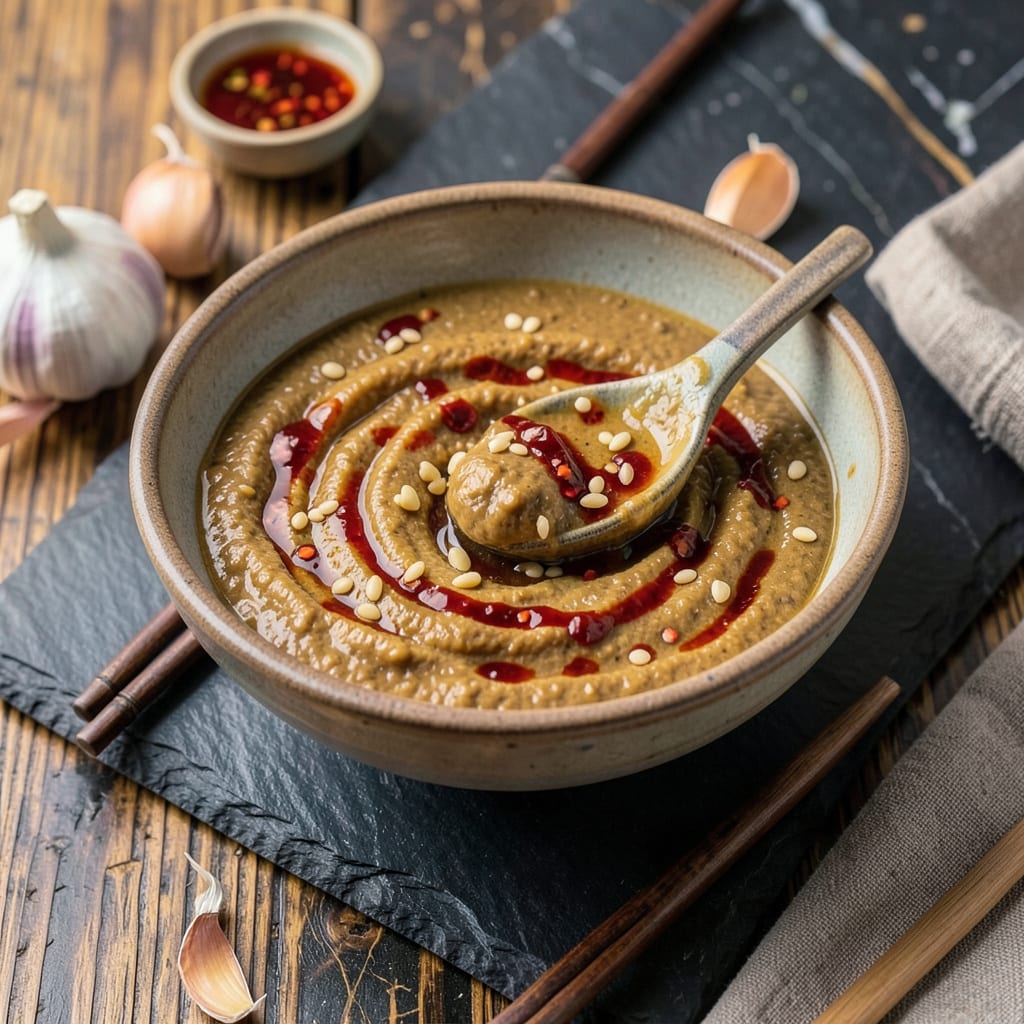
This sesame sauce transforms hot pot from good to unforgettable. The nutty depth of toasted sesame paste combines with aromatic garlic, fiery chili oil, and umami-rich fermented bean paste to create a dipping sauce that’s complex yet balanced. No cooking required—just whisk together simple pantry ingredients for restaurant-quality results at home.
What makes this sauce special is its versatility. Use it immediately for hot pot dipping, or store it in the fridge for up to two weeks—it only gets better as flavors meld. The rich, velvety texture clings perfectly to meats, vegetables, and noodles, elevating every bite with its bold, layered flavors.
Ingredients for Hot Pot Sesame Sauce
Eight pantry ingredients create this restaurant-quality sesame sauce with nutty, umami-rich complexity for hot pot perfection.
| Ingredient | Amount | Notes |
|---|---|---|
| Toasted Sesame Paste 🌰 | ½ cup | Chinese-style for authentic flavor |
| Chili Oil 🌶️ | 3 tbsp | With visible chili flakes |
| Fermented Bean Paste (Doubanjiang) 🍳 | 2 tbsp | Spicy or regular variety |
| Garlic Cloves 🧄 | 6 cloves | Minced to fine paste |
| Soy Sauce 🫙 | 3 tbsp | Low-sodium preferred |
| Rice Vinegar 🍚 | 2 tbsp | Unseasoned variety |
| Sesame Oil 🫒 | 2 tbsp | Toasted for depth |
| Sugar 🍬 | 1 tsp | Balances umami flavors |
| Water 💧 | ¼ cup | Adjusts sauce consistency |
The toasted sesame paste is critical—seek Chinese-style brands like Lee Kum Kee or Koon Chun at Asian markets. Fermented bean paste (doubanjiang) adds signature umami; Pixian brand offers superior depth. Always use freshly minced garlic (pre-minced lacks aromatic potency). For chili oil, Lao Gan Ma provides ideal heat and texture balance (worth the hunt).
No fermented bean paste? Substitute 1 tbsp miso + 1 tsp gochujang for similar complexity. Tahini can replace sesame paste in a pinch (thinner texture, less toasty). For gluten-free versions, tamari replaces soy sauce 1:1. Chili oil alternatives: sriracha (1:1 ratio) or crushed red pepper in hot oil. The sugar balances saltiness—maple syrup works for refined sugar-free.
Sauce keeps 2 weeks refrigerated in airtight glass jars. Flavors intensify after 24 hours—optimal for make-ahead. Freezing isn’t recommended (texture separation). For best results, whisk before each use as ingredients settle. The sesame paste may thicken; thin with warm water as needed.
Why You’ll Love This Recipe
- Five-Minute Magic: I’m not kidding—this comes together faster than boiling water for your hot pot. Just smash some garlic, stir everything in one bowl, and you’ve got a sauce that tastes like it simmered all day.
- Umami Bomb Alert: That first bite where the nutty sesame paste hits the spicy doubanjiang? Honestly, it’s the reason I make extra. The garlic mellows in the soy sauce while the chili oil lingers—no fancy techniques, just bold, balanced flavor.
- Hot Pot’s Best Sidekick: Between us, this sauce turns leftover broth into a second meal. Toss it with noodles, drizzle over dumplings, or use it as a marinade for tofu. It’s my secret for making one base stretch into three dinners.
- Pantry-Staple Hero: No last-minute grocery runs here. All five ingredients live in my fridge or cabinet year-round, and a batch costs less than takeout. I’ll be real: it’s saved me on more than one “what’s for dinner?” panic.
Step-by-Step Instructions for Hot Pot Sesame Sauce
This straightforward method delivers a perfectly balanced sauce with rich, nutty depth and just the right amount of heat.
Step 1: Prepare the Garlic Base
Begin by mincing the 6 cloves garlic cloves into a fine paste. I recommend using a microplane or garlic press for the smoothest texture, as this ensures the garlic integrates completely into the sauce without any grainy bits. The finer the garlic, the more evenly its flavor will distribute throughout the sauce.
Transfer the minced garlic to a medium mixing bowl. This will serve as the aromatic foundation for your sauce, providing a sharp, pungent contrast to the rich sesame and fermented flavors that follow. Set the bowl aside while you gather the remaining ingredients.
Step 2: Combine the Core Ingredients
To the bowl with the garlic, add the 0.5 cup toasted sesame paste, 2 tbsp fermented bean paste (doubanjiang), 3 tbsp soy sauce, 2 tbsp rice vinegar, 1 tsp sugar, and 3 tbsp chili oil. Each component plays a distinct role: the sesame paste provides nutty richness, the doubanjiang contributes umami depth, the soy sauce adds saltiness, and the vinegar brightens the mixture.
Use a silicone spatula to thoroughly combine the ingredients, pressing against the sides of the bowl to break up any clumps of sesame paste. The mixture will be thick and slightly grainy at this stage—that’s expected. The goal is complete integration where no single ingredient dominates the texture.
Step 3: Adjust Consistency and Balance Flavors
Gradually whisk in the 0.25 cup water, starting with just 1 tbsp at a time, until the sauce reaches your desired consistency. For a traditional hot pot dipping sauce, aim for a texture similar to heavy cream—thick enough to cling to foods but fluid enough to drizzle easily. The water also helps mellow the intensity of the fermented and chili components.
Once the water is incorporated, add the 2 tbsp sesame oil and whisk vigorously for 30-45 seconds. This final addition enhances the nutty aroma and creates a glossy sheen. Taste the sauce and adjust the balance if needed: a pinch more sugar for sweetness, a dash more vinegar for acidity, or a few drops of water for thinner consistency.
Step 4: Rest and Develop Flavors
Transfer the completed sauce to a serving bowl and let it rest at room temperature for 10-15 minutes before using. This brief resting period allows the flavors to meld and the sesame paste to fully hydrate, resulting in a smoother texture and more cohesive taste. You’ll notice the sauce thickens slightly as it sits.
During this time, the garlic flavor will mellow and the chili oil will infuse throughout the mixture. For the best experience, prepare this sauce just before serving your hot pot meal so it’s fresh and at its peak flavor. The sauce will keep in the refrigerator for up to 5 days, though the garlic flavor will intensify over time.
Make-Ahead Tips for This Dish
Prep Ahead Strategy
You can prepare this sauce up to 3 days in advance—the flavors actually improve as they meld together. I recommend making it the night before your hot pot gathering so the garlic mellows and the sesame paste fully hydrates. Store it in an airtight glass container to preserve freshness. The sauce will thicken slightly in the fridge, so plan to adjust the consistency with warm water when ready to serve. 💡
Garlic Prep Shortcut
Save time by mincing the 6 garlic cloves ahead and storing them in a small sealed container with 1 tsp sesame oil to prevent oxidation. This keeps the garlic fresh and aromatic for up to 24 hours in the fridge. When ready to assemble, simply scrape the pre-minced garlic into your mixing bowl—no last-minute chopping required.
Sauce Base Freezing
While I don’t recommend freezing the completed sauce (it separates), you can freeze the toasted sesame paste + fermented bean paste mixture in ice cube trays. Each cube equals about 1 tbsp—perfect for quick single servings. Thaw overnight in the fridge, then proceed with the remaining ingredients fresh. This works beautifully for impromptu hot pot nights.
Flavor Boosting Trick
For even deeper flavor, let the assembled sauce sit at room temperature for 1 hour before refrigerating. This extra time allows the chili oil to infuse more thoroughly and the garlic to mellow. I notice a significant difference in flavor complexity when I use this method—especially with the Lao Gan Ma chili oil, which releases more of its aromatic compounds.
Portion Control
Divide the sauce into small 4-oz jars before refrigerating if you’re meal prepping for multiple hot pot sessions. This prevents contamination from repeated dipping and makes it easy to grab just what you need. The sauce stays fresh for the full 2 weeks when portioned this way, and you can customize each jar with extra chili oil or sesame seeds for variety. ✨
Reviving Thickened Sauce
If your refrigerated sauce becomes too thick, don’t add cold water—it can make the sauce grainy. Instead, warm 1-2 tbsp water to just below boiling and whisk it in 1 tsp at a time. The heat helps the sesame paste re-emulsify smoothly. I keep a small thermos of warm water handy when serving leftovers for this exact purpose.
Nutrition Facts
Frequently Asked Questions
What’s the best way to store leftover sesame sauce?
Transfer to an airtight glass container and refrigerate for up to 2 weeks. The flavors actually deepen over time! Just whisk before using, as the sesame paste may settle. Avoid freezing—it causes texture separation.
Can I make this without fermented bean paste?
Yes! Substitute 1 tbsp miso + 1 tsp gochujang for similar umami depth. In a pinch, hoisin sauce works too, though it’s sweeter. The fermented paste adds signature complexity, but these swaps keep the sauce delicious.
Why does my sauce taste bitter?
Bitterness usually comes from over-toasted sesame paste or stale ingredients. Use fresh, high-quality sesame paste (like Lee Kum Kee) and check your chili oil’s freshness. A pinch of sugar or extra sesame oil can help balance unexpected bitterness.
How can I adjust the spice level?
For milder heat, reduce chili oil to 1 tbsp or use plain sesame oil instead. Want it spicier? Add 1 tsp Sichuan peppercorn oil or extra chili flakes. The fermented bean paste also contributes heat—opt for mild doubanjiang if sensitive.
What’s the ideal consistency for dipping?
Aim for a texture like heavy cream—thick enough to cling but fluid enough to drizzle. Adjust with warm water, 1 tsp at a time. Too thin? Let it rest 10 minutes; the sesame paste will thicken naturally as it hydrates.

- 8 Bean Soup Recipe Crock Pot: Hearty Vegetable Medley in One Pot - September 25, 2026
- 4C Bread Crumbs Meatballs Recipe: Crispy Crust and Juicy Centers - September 25, 2026
- 6 Oz Chocolate Chip Cookie Recipe: Perfectly Balanced Crispy Edges and Chewy Hearts - September 25, 2026