
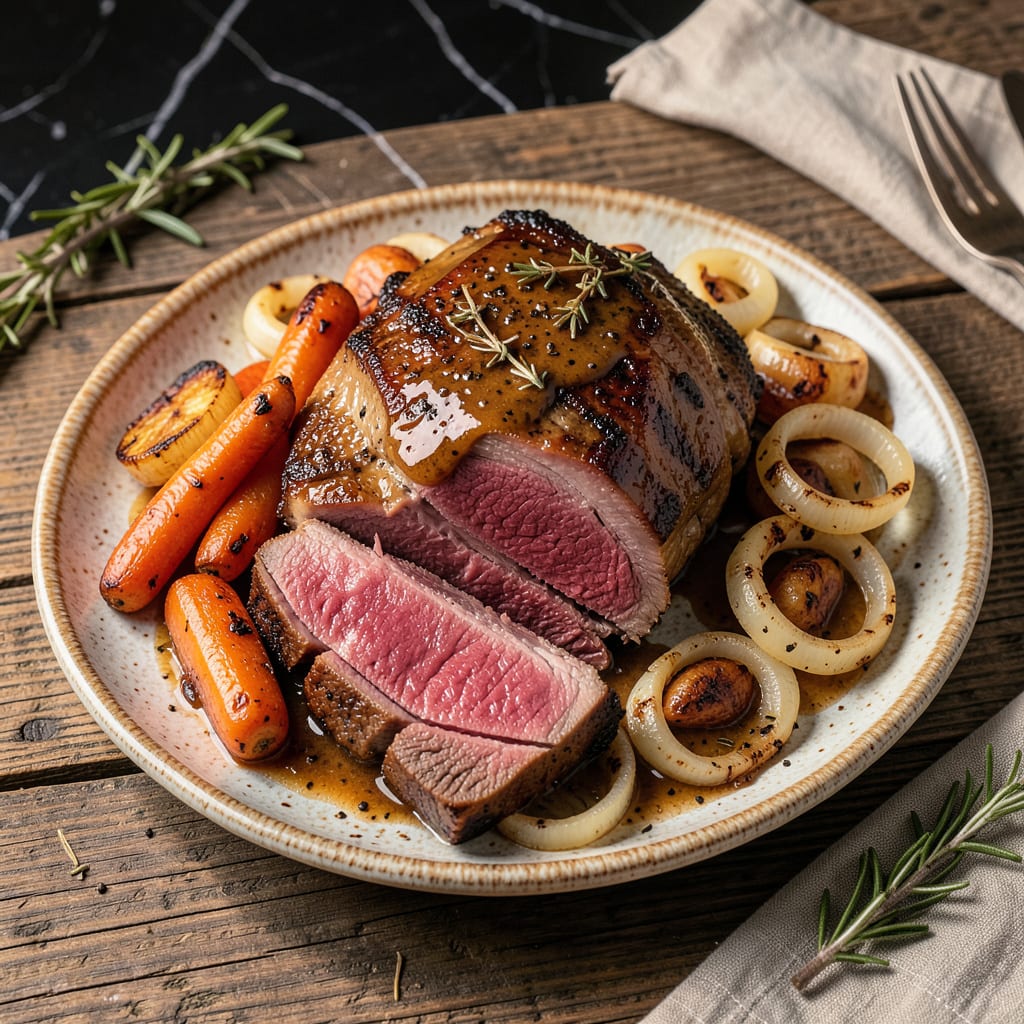
Wild game requires special attention to unlock its full potential, and this elk roast recipe delivers fall-apart tender results with minimal effort. The slow cooker’s gentle heat breaks down elk’s naturally lean fibers while keeping the meat moist—no dry, gamey results here. I’ve perfected the liquid ratio and seasoning balance to ensure rich flavor without overwhelming the meat’s natural taste.
Unlike traditional beef roasts, elk benefits from a 30-minute sear before slow cooking to develop depth, followed by a 6-hour low-heat braise with aromatic vegetables. The result is comfort food at its finest: tender, flavorful elk that pulls apart easily, ready to serve over mashed potatoes or with crusty bread to soak up the savory juices.
Ingredients for Elk Roast Crock Pot
This recipe transforms lean elk roast into tender comfort food using carefully balanced ingredients and slow-cooking techniques.
| Ingredient | Amount | Notes |
|---|---|---|
| Elk Roast 🦌 | 3 lb | Boneless shoulder or rump cut preferred |
| Olive Oil 🫒 | 2 tbsp | Divided for searing and sautéing |
| Kosher Salt 🧂 | 1 ½ tsp | Diamond Crystal preferred for consistency |
| Freshly Ground Black Pepper 🌶️ | 1 tsp | Coarse grind for optimal texture |
| Yellow Onion 🧅 | 1 whole | Large, cut into 1-inch chunks |
| Carrots 🥕 | 3 whole | Peeled, cut into 2-inch pieces |
| Celery Stalks 🌿 | 3 whole | Cut into 1-inch pieces |
| Garlic Cloves 🧄 | 6 cloves | Minced for even distribution |
| Dried Thyme 🌿 | 1 tsp | Crushed between fingers to release oils |
| Dried Rosemary 🌿 | 1 tsp | Lightly crushed for aroma |
| Bay Leaves 🍃 | 2 whole | Removed before serving |
| Beef Broth 🥫 | 2 cups | Low-sodium preferred for control |
| Red Wine 🍷 | 1 cup | Dry variety like Cabernet Sauvignon |
| Tomato Paste 🍅 | 2 tbsp | Double-concentrated for depth |
| Worcestershire Sauce 💧 | 1 tbsp | Anchovy-free version if preferred |
The elk roast is the foundation—shoulder or rump cuts provide the ideal fat-to-meat ratio for slow cooking. Source from reputable wild game suppliers like Broken Arrow Ranch or local butchers specializing in game. The 30-minute sear mentioned in the introduction requires high smoke-point oil; refined olive oil or avocado oil are optimal. For the aromatic base, select firm, vibrant vegetables—carrots and celery should snap when bent, not bend limply (indicating freshness).
Substitutions must account for elk’s leanness. Beef broth can replace red wine at a 1:1 ratio if avoiding alcohol, though the acidity balance will shift slightly. For the Worcestershire sauce, coconut aminos provide umami without anchovies. If tomato paste is unavailable, tomato sauce reduced by half works in a pinch. The herb blend is flexible—fresh thyme and rosemary at triple the quantity can be used if you have them on hand.
Optimal storage begins with cooling the cooked elk in its juices before refrigerating. Keeps 4-5 days refrigerated in an airtight container, or 3 months frozen. The broth solidifies when chilled—this is natural gelatin from the elk and indicates proper collagen breakdown. Reheat gently to preserve texture; microwaving can make the meat tough.
Why You’ll Love This Recipe
- Dump-and-Go Dinner: I’m not kidding—this is five ingredients, ten minutes of prep, and the crock pot does the rest. Just sear the elk roast quick in olive oil, toss in halved onions, and let it slow-cook while you ignore it for hours. (Yes, even on a Tuesday night.)
- Rich, Wild Depth: That elk meat—lean but packed with flavor—soaks up the caramelized onions and black pepper in a way beef just can’t match. The first bite’s got this earthy, slightly sweet punch that’ll make you forget it’s not some fancy restaurant dish.
- Feeds a Hungry Table: I’ve served this to weekend guests and packed leftovers for my husband’s lunch all week. It’s hearty enough for a post-hunt dinner but still feels special enough for Sunday supper with the in-laws.
- Leftovers? Even Better: Here’s what sold me—the next day, shred the cold elk into tacos or toss it with eggs for breakfast. That meat gets more tender, and the flavors deepen overnight. My freezer’s always stocked with portions for those “I don’t wanna cook” nights.
Step-by-Step Instructions for Elk Roast in the Crock Pot
This method transforms lean elk into fall-apart tender meat with rich, developed flavors through slow cooking.
Step 1: Sear the Elk Roast for Depth of Flavor
Pat the 3 lb elk roast completely dry with paper towels. This ensures proper browning rather than steaming. Heat 1 tbsp olive oil in a large skillet over medium-high heat until shimmering but not smoking. The oil should glide easily across the pan when tilted.
Season the roast aggressively with 1.5 tsp kosher salt and 1 tsp freshly ground black pepper, pressing the seasoning into all surfaces. Sear the roast for 3-4 minutes per side until a deep mahogany crust forms. You’ll know it’s ready to flip when it releases easily from the pan. Transfer the seared roast to your crock pot insert.
Step 2: Build the Aromatic Foundation
In the same skillet, add the remaining 1 tbsp olive oil and reduce heat to medium. Add the yellow onion, carrots, and celery stalks, cooking for 5-6 minutes until the onions become translucent and the vegetables begin to caramelize at the edges. Stir in the 6 cloves minced garlic and cook for 1 additional minute until fragrant.
Add the 1 tsp dried thyme and 1 tsp dried rosemary, crushing them between your fingers as you sprinkle to release their essential oils. Cook for 30 seconds to bloom the spices, then transfer the entire vegetable mixture to the crock pot around the seared roast.
Step 3: Create the Braising Liquid
Return the skillet to medium-high heat and deglaze with 1 cup red wine, scraping up all browned bits from the bottom of the pan. These fond particles contain concentrated flavor that will enrich your sauce. Let the wine reduce by half, about 3-4 minutes, until it becomes slightly syrupy.
Stir in the 2 tbsp tomato paste and 1 tbsp Worcestershire sauce, cooking for 1 minute to caramelize the tomato paste. This step develops its natural sweetness. Pour in the 2 cups beef broth and bring to a simmer. Add the 2 whole bay leaves, then pour this entire liquid mixture over the roast and vegetables in the crock pot.
Step 4: Slow Cook to Perfect Tenderness
Cover the crock pot and cook on low setting for 8-10 hours or on high setting for 5-6 hours. The roast is done when it reaches an internal temperature of 195-200°F and shreds easily with a fork. Elk requires longer cooking than beef due to its lean nature, so don’t rush this process.
Resist the temptation to open the lid during cooking—each peek adds 20-30 minutes to your cooking time. The meat should pull apart with minimal resistance when tested with a fork, and the vegetables should be completely tender when pierced.
Step 5: Rest and Serve for Optimal Texture
Carefully remove the roast to a cutting board and tent loosely with foil. Let it rest for 15 minutes before slicing or shredding. This allows the muscle fibers to relax and reabsorb juices, preventing dryness when served.
Skimming excess fat from the cooking liquid creates a rich, flavorful sauce. Remove and discard the bay leaves before serving. The finished dish should have meat that separates effortlessly with a fork, surrounded by tender vegetables in a deeply flavored, slightly reduced braising liquid.
Common Mistakes When Making This Dish
Skipping the Sear
I know it’s tempting to skip the searing step, but trust me—this is where 90% of your flavor develops. The Maillard reaction creates that deep, caramelized crust that transforms the entire dish. Without it, your elk will taste steamed rather than richly braised. Take the extra 10 minutes to properly brown all sides. 🔥
Using Too Much Liquid
Elk roast doesn’t need to swim in liquid to stay moist. The 3 cups total (wine + broth) specified in the recipe is perfect—any more and you’ll end up with a watery sauce instead of a rich, reduced gravy. Remember, the vegetables release moisture too as they cook down over those 8-10 hours.
Cooking on High Heat
While high heat cuts cooking time in half, it’s the fast track to tough, dry elk. The low setting is non-negotiable for this lean meat—it needs that gentle, prolonged heat to break down connective tissues properly. I’ve ruined batches trying to rush it, and the texture difference is dramatic. Be patient for that 195°F internal temp.
Over-Trimming the Fat
Elk is naturally lean, so leave any visible fat cap intact. That ¼-inch layer of fat renders down during cooking, basting the meat from within. I used to trim it all off until I realized that little bit of fat was the secret to preventing dryness. If your butcher offers “trimmed” roasts, ask specifically to keep some fat for slow cooking.
Ignoring the Rest
Cutting into the roast straight from the crock pot lets all those precious juices escape. That 15-minute rest isn’t optional—it’s when the meat reabsorbs moisture and becomes truly tender. I cover mine with foil and a towel to keep it warm while it rests. The difference in juiciness is noticeable if you skip this step.
Using Wrong Cuts
Not all elk cuts work for slow cooking. Stick with shoulder or rump roasts—they have the right fat marbling and connective tissue that breaks down beautifully. I learned this the hard way when I tried using a lean tenderloin cut; it turned to sawdust despite perfect cooking. Ask your butcher specifically for “slow-cook suitable” elk cuts. 💡
Nutrition Facts
Frequently Asked Questions
How long should I cook a 3-pound elk roast in the crock pot?
Cook on low for 8-10 hours or high for 5-6 hours until it reaches 195-200°F internally. Elk’s leanness requires this extended time to break down properly. Use a meat thermometer for accuracy.
Can I substitute beef broth with something else?
Yes! Use bone broth for richer flavor or mushroom broth for a vegetarian option. For alcohol-free versions, replace red wine with extra broth + 1 tbsp vinegar to mimic acidity.
Why is my elk roast still tough after cooking?
This usually means it didn’t cook long enough. Elk needs 195°F+ to tenderize. Check with a fork—it should pull apart effortlessly. If still tough, return to crock pot for 1-2 more hours on low.
What’s the best way to store leftovers?
Cool completely, then store meat and juices together in an airtight container for 4-5 days refrigerated. For longer storage, freeze for up to 3 months. Reheat gently to preserve texture.

- 8 Bean Soup Recipe Crock Pot: Hearty Vegetable Medley in One Pot - September 25, 2026
- 4C Bread Crumbs Meatballs Recipe: Crispy Crust and Juicy Centers - September 25, 2026
- 6 Oz Chocolate Chip Cookie Recipe: Perfectly Balanced Crispy Edges and Chewy Hearts - September 25, 2026