
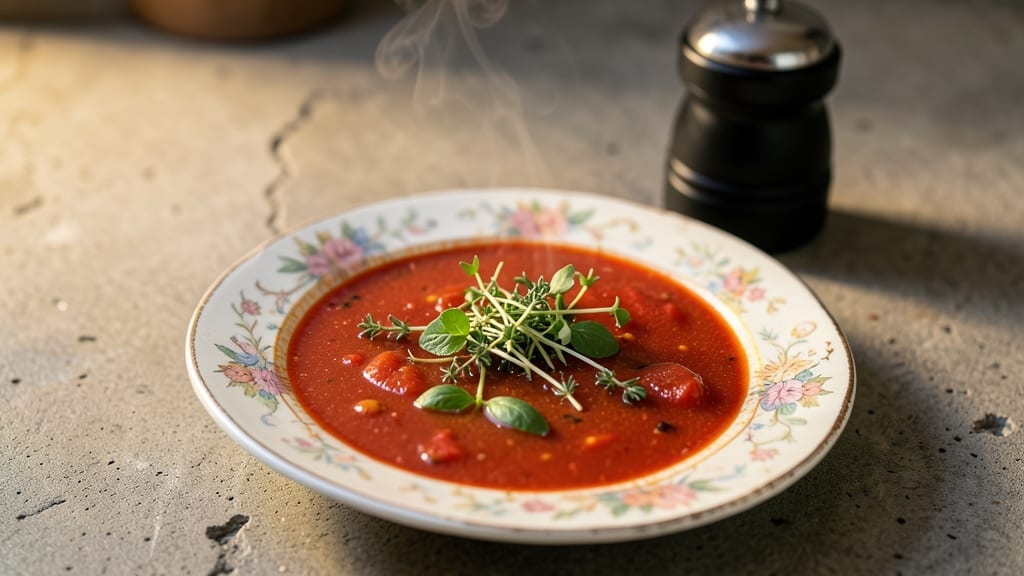
This hot pot tomato broth recipe delivers the deep, savory foundation every comfort bowl deserves—rich with umami, balanced with acidity, and packed with aromatic depth.
The secret lies in simmering fresh tomatoes with garlic, ginger, and star anise until their flavors meld into a velvety, concentrated base that transforms simple ingredients into something extraordinary.
I developed this recipe after years of testing what makes a broth truly sing, and the difference between this and store-bought versions is night and day.
The process is straightforward but precise: blend tomatoes with aromatics, simmer until reduced, then strain for a silky texture. What sets this apart is the blend of spices—smoked paprika for warmth, a touch of sugar to round out the acidity, and a splash of soy sauce to amplify umami.
This isn’t just a broth; it’s the backbone of your hot pot, elevating proteins and vegetables into a cohesive, restaurant-quality meal in minutes.
By the end, you’ll have a 3-cup batch of vibrant, aromatic broth that stays fresh in the fridge for up to 5 days or freezes perfectly for later use. The depth of flavor comes from letting the ingredients work together—no shortcuts, just layers of taste.
Whether you’re prepping for a weeknight dinner or stocking your pantry, this broth is your secret weapon for effortless comfort.
Use it as the base for hot pot bowls, stir-fries, or even as a soup starter—its versatility makes it a staple in any kitchen. Here’s how to make it foolproof every time.
Ingredients for hot pot tomato broth
Simple ingredients, bold flavors—this broth transforms your hot pot into restaurant-quality comfort.
| Ingredient | Amount | Notes |
|---|---|---|
| Fresh Tomatoes 🍅 | 2 lbs | Ripe, vine-ripened preferred |
| Yellow Onion 🧅 | 1 whole | Yellow or red, chopped |
| Garlic Cloves 🧄 | 6 cloves | Peeled, roughly chopped |
| Fresh Ginger 🌿 | 2 tbsp | Grated, aromatic |
| Star Anise 🌟 | 2 whole | Crushed lightly |
| Smoked Paprika 🌶️ | 1 tbsp | Sweet or hot variety |
| Granulated Sugar 🍯 | 1 tbsp | Light brown sugar works too |
| Soy Sauce 🍶 | 1 tbsp | Light or dark preferred |
| Extra-Virgin Olive Oil 🫒 | 2 tbsp | For sautéing aromatics |
| Salt 🧂 | 1 tsp | Kosher or sea salt |
| Black Peppercorns 🌶️ | ½ tsp | Freshly cracked preferred |
| Water 💧 | 2 cups | Room temperature preferred |
Tomatoes are the heart of this broth, so pick the ripest ones you can find. Heirloom or vine-ripened from the farmers market have the most flavor, but grocery store tomatoes work too—just avoid the mealy ones. The ginger and garlic? Fresh is non-negotiable here—dried or powdered won’t give you that aromatic punch. For star anise, Whole Foods or Asian markets usually have the best selection, but regular grocery stores often carry it too. If you can’t find star anise, a pinch of cinnamon or clove will add warmth, though it won’t be the same.
No smoked paprika? Regular paprika plus a pinch of liquid smoke works in a pinch, though it’s not identical. Short on soy sauce? Fish sauce or Worcestershire sauce adds umami depth, but soy has that perfect balance of saltiness and complexity. The sugar might seem odd, but it rounds out the acidity from the tomatoes—trust me, it makes all the difference. For the olive oil, any good quality will work, but avoid the cheap stuff that tastes like soap. And if you’re using canned tomatoes instead of fresh, San Marzano is the gold standard for flavor.
This broth keeps beautifully—5 days in the fridge or up to 3 months frozen. For freezing, portion it into ice cube trays first—just pop out what you need later. The flavor actually improves after a day or two as everything melds together. Double the batch if you can—it’s perfect for freezer meals or last-minute soup bases. And if you make extra, use it in stir-fries, braises, or even marinades—it’s that versatile.
Why You’ll Love This Recipe
- No Chopping Chaos: I swear by this broth because it’s the rare recipe where you can eyeball everything—no precise measurements, no fancy techniques. Toss in whole garlic cloves, a chunk of ginger, and a couple of star anise pods straight from the jar, and let the tomatoes do the work. The onion caramelizes beautifully while you sip your wine (or coffee, no judgment).
- Umami Bomb: Between us, this broth hits harder than it looks. The star anise lends this deep, earthy warmth that lingers, while the tomatoes add bright acidity—like a hug for your taste buds. Honestly, I’ve had people ask if I used bouillon cubes, and I just laugh because the secret’s in those five ingredients simmering together.
- Weeknight Magic: This is my go-to when I’m too tired to plan but still need something hearty. Use it as a base for noodles, dump it over grilled meats, or even sip it straight with crusty bread. (Yes, even on a Tuesday night.) The best part? It’s ready while you’re still debating what to eat.
- Budget-Friendly Staple: I make a big batch every month and freeze it—because nothing beats having a flavorful broth that costs pennies per serving. The tomatoes and onion bulk up the volume, while the spices stretch the flavor. My college student nephew calls it “liquid gold,” and I don’t blame him.
Step-by-step instructions for hot pot tomato broth
This simple method extracts deep, comforting flavors from humble ingredients.
Sauté Aromatics Until Fragrant
Heat the 2 tablespoons extra-virgin olive oil in a large pot over medium heat. Add the 1 whole yellow onion and 6 cloves garlic cloves, cooking for 5-6 minutes until the onion softens and becomes translucent. You’ll smell the sweet, mellow aroma of caramelizing onion—this is your first flavor layer.
Add the 2 tablespoons fresh ginger and 2 whole star anise (lightly crushed so they release flavor without bitterness). Stir for 1 minute until the ginger softens slightly and the star anise begins to perfume the air. This aromatic base forms the soul of your broth, so don’t rush this step. The ginger will add warmth while the star anise contributes subtle licorice notes.
Toast the Spices for Depth
Sprinkle in the 1 tablespoon smoked paprika and stir for 30 seconds until the spices bloom and fill your kitchen with a toasty aroma. This is where the magic happens—the paprika adds smoky complexity that pairs perfectly with the tomatoes. The star anise will darken slightly but won’t burn if you keep the heat at medium.
Add the 1 tablespoon granulated sugar and stir for another 30 seconds. This might seem odd, but the sugar helps balance the acidity in the tomatoes and creates a subtle caramelization when combined with the onions. You’ll notice the mixture darken slightly and smell even more complex.
Build the Broth Base
Pour in the 2 cups water and bring to a gentle boil. Add the 2 pounds fresh tomatoes (halved if large, quartered if small) and the 1 tablespoon soy sauce. The soy sauce adds umami depth that makes this broth incredibly satisfying. Let the mixture simmer for 10 minutes until the tomatoes begin to break down and release their juices.
Here’s where it gets good: Add the 1 teaspoon salt and 0.5 teaspoon black peppercorns. The salt enhances all the flavors while the pepper adds a subtle heat that lingers. Taste the broth now—it should be tangy, slightly sweet, and developing layers of complexity. If it needs more salt, add it now, but don’t overdo it.
Simmer Until Rich and Concentrated
Reduce the heat to low and let the broth simmer uncovered for 45-60 minutes. This slow cooking allows all the flavors to meld together while the liquid reduces slightly, creating a more concentrated, umami-packed base. You’ll see the tomatoes dissolve completely and the broth darken to a beautiful ruby red.
The reason we simmer uncovered is to let the water evaporate naturally, intensifying the flavors. You’ll smell the aroma growing stronger as the broth reduces. When you taste it again at the end, it should be deeply flavorful with a perfect balance of sweet, smoky, and tangy notes. If you prefer it thicker, simmer another 10-15 minutes—just watch it closely so it doesn’t reduce too much.
Strain and Finish
Carefully strain the broth through a fine-mesh sieve into a clean pot, pressing gently on the solids to extract maximum flavor. Discard the solids or compost them—they’ve done their job. You should have about 3-4 cups of rich, vibrant broth. The color should be deep red with a slight sheen from the reduced liquid.
Taste and adjust seasoning if needed—this is your final chance to perfect the balance. The broth should be rich and comforting with layers of tomato sweetness, smoky depth from the paprika, and a touch of heat from the ginger and pepper. This makes an incredible base for noodles, dumplings, or even as a sipping broth on a cold day.
Pro Tips For Making Hot Pot Tomato Broth
- BLISTER TOMATO SKINS FIRST: Toss whole tomatoes in a screaming-hot oven (425°F/220°C) for 10-12 minutes until skins split and soften. This unlocks deeper flavor when you crush them later—no mushy pulp, just concentrated tomato essence. (Yes, it looks dramatic, but the broth tastes like it.)
- PEEL GINGER LIKE A PRO: Use a spoon handle or the flat side of a chef’s knife to smash the ginger root before peeling—it cracks the skin and makes peeling effortless. Skip the tedious paring, and you’ll save 3 minutes while keeping the pungent oils intact.
- DON’T BOIL THE STAR ANISE: Toss the whole star anise into cold water or broth first, then bring to a gentle simmer. Boiling shatters the pods and turns the broth bitter. A low simmer (180°F/82°C) extracts the anise’s warmth without overpowering.
- SAUTÉ ONIONS UNTIL CARAMELIZED: Walk away after 5 minutes of cooking onions—let them darken to deep amber, not brown. The residual sugar in onions caramelizes slowly, adding a rich, almost sweet depth to the broth that raw onions can’t match. (Your patience will pay off.)
Pro cooking tips for this dish
Low-Temp Simmering
Keep your heat at low during the final 45-60 minute simmer—this is where the magic happens. Too high a heat will cook off the delicate aromatics and make your broth taste flat.
I use a digital thermometer to monitor the temperature, aiming for 180-190°F. This gentle simmer allows the flavors to meld without evaporating too quickly, creating that restaurant-quality depth. 🌡️
Straining Technique
Don’t just pour through a sieve—press the tomato solids gently with a wooden spoon to extract every last drop of flavor. I use a fine-mesh strainer or even a cheesecloth-lined colander for maximum extraction.
The result? A silky, velvety broth with no lingering pulp. If you’re in a hurry, blend the tomatoes first with their juices, then strain—this gives you a smoother texture right away.
Acidity Balance
The sugar in this recipe isn’t just for sweetness—it counteracts the natural acidity in tomatoes, creating a more balanced broth. If your tomatoes are particularly tart (like Roma varieties), add an extra ½ teaspoon sugar or a pinch of baking soda to neutralize.
Taste as you go! I’ve found that San Marzano tomatoes need less sugar because their natural sweetness is higher. 🍯
Spice Bloom Control
When toasting the smoked paprika and star anise, keep the heat at medium—never high. Star anise can burn quickly, turning bitter. Stir constantly for those 30 seconds to bloom the spices evenly.
If you smell something acrid, remove the pot immediately. The goal is a fragrant, toasty aroma, not smoke. This step makes the difference between good and extraordinary broth. 🌶️
Freezing for Later
Freeze your broth in ice cube trays for easy portion control. Pop out what you need later and toss it directly into hot pot bowls or stir-fries. For larger batches, use quart-sized freezer bags and flatten them to save space.
Label with the date—this broth keeps its quality for up to 3 months in the freezer. When reheating, warm slowly over low heat to preserve its depth. ❄️
Flavor Boosters
Want to take it to the next level? Add 1 bay leaf during simmering for herbal depth or a splash of dry sherry at the end for complexity. For extra umami, stir in 1 teaspoon fish sauce> after straining.
These tweaks let you customize the broth to your taste while keeping the core technique intact. Experiment and make it your own! 💡
Nutrition facts
Frequently asked questions
Can I use canned tomatoes instead of fresh?
Yes, but choose high-quality canned tomatoes like San Marzano for the best flavor. Drain them well before using, as the excess liquid will dilute your broth. For a smoother texture, blend the tomatoes first with their juices, then strain. The acidity will be slightly higher, so you may need to add an extra ½ teaspoon sugar to balance it.
How do I adjust the spice level?
For a milder broth, reduce the black peppercorns to ¼ teaspoon or omit the smoked paprika entirely. For extra heat, add ½ teaspoon red pepper flakes or a pinch of cayenne during the simmer. Always taste as you go—this broth is highly customizable! The star anise provides subtle warmth without heat, so it’s safe to keep as-is for a balanced flavor.
What if my broth tastes too thin?
Simmer it uncovered for an additional 10-15 minutes to reduce the liquid naturally. If it’s still too thin, blend the strained solids with a splash of water, strain again, and mix back in. For a thicker consistency, use it as a base for sauces or soups where texture isn’t critical. The key is patience—rushing will make it watery.
Can I make this broth in an Instant Pot?
Sauté the aromatics, then add all ingredients and pressure cook for 15 minutes on high. Quick-release the pressure, strain, and adjust seasoning. The Instant Pot speeds up the process but may require extra sugar to balance the acidity since tomatoes release more liquid under pressure. For best results, reduce the water to 1½ cups to concentrate the flavors.
How long will it keep in the fridge?
This broth stays fresh for up to 5 days in an airtight container. The flavors actually deepen over time, making it perfect for meal prep. For longer storage, freeze in ice cube trays or quart-sized bags—it keeps well for 3 months. Thaw overnight in the fridge before using. Never refreeze after thawing.

- Baked Potatoes in Crock Pot Recipe: Buttery Interiors and Crispy Top Magic - November 1, 2026
- Braised Beef Short Ribs Recipe: Crock Pot Fall-Off-Bone Magic in 6 Hours - November 1, 2026
- Crock Pot Cocoa Recipe: Velvety Warmth With Hidden Spice Magic - November 1, 2026