
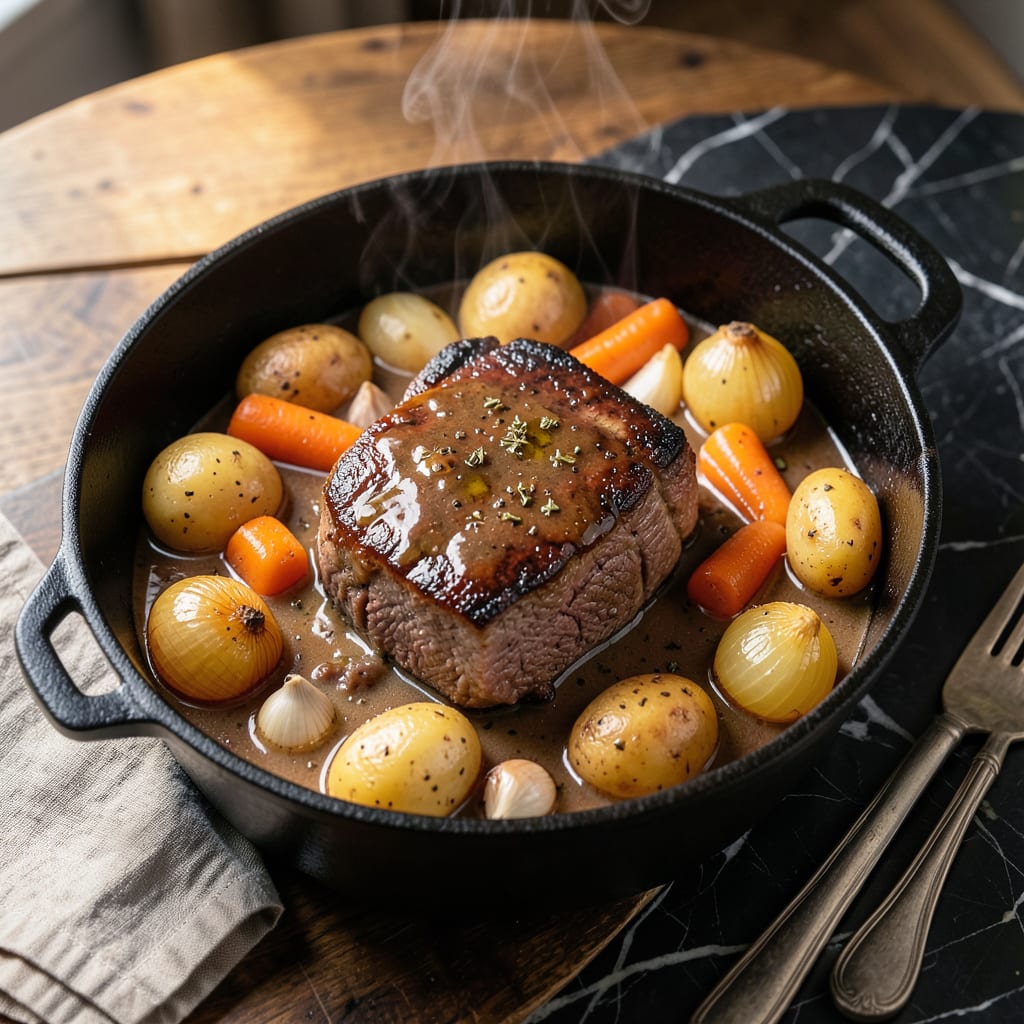
This one-pot pot roast brings Sunday supper simplicity to your table with minimal cleanup and maximum flavor.
Tender beef, root vegetables, and rich gravy come together in a classic dish that’s as hearty as it is hassle-free.
Ingredients for Ihop Pot Roast
One pot, classic ingredients, and Sunday supper magic ready to go.
| Ingredient | Amount | Notes |
|---|---|---|
| Chuck Roast 🥩 | 3 lb | Well-marbled, trimmed of excess fat |
| Carrots 🥕 | 4 whole | Peeled and cut into chunks |
| Russet Potatoes 🥔 | 4 whole | Peeled and quartered |
| Yellow Onions 🧅 | 2 whole | Peeled and sliced thickly |
| Garlic Cloves 🧄 | 6 cloves | Peeled and smashed |
| Beef Broth 🍲 | 3 cups | Low-sodium preferred |
| Red Wine 🍷 | 1 cup | Dry variety like Cabernet |
| Tomato Paste 🍅 | 2 tbsp | For depth of flavor |
| Worcestershire Sauce 🫒 | 1 tbsp | Adds umami richness |
| Dried Thyme 🌿 | 1 tsp | Crushed between fingers |
| Dried Rosemary 🌿 | 1 tsp | Crushed for better release |
| Bay Leaves 🍃 | 2 pieces | For aromatic depth |
| Olive Oil 🫒 | 2 tbsp | For searing the roast |
| All-Purpose Flour 🌾 | 2 tbsp | To thicken the gravy |
| Kosher Salt 🧂 | 1 ½ tsp | Plus more to taste |
| Black Pepper 🌶️ | 1 tsp | Freshly cracked preferred |
[recipeingredientscaler]
The chuck roast is the star here. Costco or Sam’s Club have great marbled cuts at good prices, but your local butcher can hook you up with something even better. Look for bright red meat with white fat marbling throughout. Don’t skimp on the size—the meat shrinks as it cooks. For the wine, Cabernet or Merlot both work beautifully (whatever’s open is fine).
No red wine? Extra beef broth with a splash of balsamic vinegar does the trick. Swap the potatoes for sweet potatoes if you prefer. Out of fresh garlic? Garlic powder at one-quarter the amount works in a pinch. The Worcestershire adds depth, but soy sauce can sub in (use half the amount). Need to skip the alcohol? Just use all broth.
This tastes even better the next day—3-4 days in the fridge is perfect. Freeze portions for up to 3 months. Make extra gravy; it’s the best part for soaking up with crusty bread (or mashed potatoes if you’re feeling fancy).
Why You’ll Love This Recipe
- Set It and Forget It: I toss the chuck roast, carrots, potatoes, and onions in the slow cooker before work, and dinner’s ready when I walk in the door.
- Melt-in-Your-Mouth Good: The garlic cloves and long cook time turn that tough cut into something so tender it falls apart with a fork.
- Sunday Supper, Tuesday Lunch: I make a big batch and we eat it fresh, then I shred the leftovers for sandwiches or tacos later in the week.
- Feeds Four for Five Bucks: A three-pound chuck roast and a bag of potatoes cost less than a takeout meal, and we get two nights out of it.
Step-by-Step Instructions for IHOP-Style Pot Roast
This one-pot method delivers tender meat and rich gravy with minimal cleanup.
Step 1: Sear the Chuck Roast
Pat the 3 lb Chuck Roast dry with paper towels—this ensures a proper sear. Season both sides with the 1.5 tsp Kosher Salt and 1 tsp Black Pepper. Heat the 2 tbsp Olive Oil in a large Dutch oven over medium-high heat until shimmering.
Add the chuck roast and sear for 4-5 minutes per side until deeply browned. Don’t move it around—you want that dark crust to form. Remove the roast and set aside. This step builds the flavor foundation for your gravy.
Step 2: Sauté the Vegetables and Deglaze
In the same pot, add the 2 whole Yellow Onions, 4 whole Carrots, and 4 whole Russet Potatoes. Cook for 5 minutes until the onions start to soften. Stir in the 6 cloves Garlic Cloves, 2 tbsp Tomato Paste, 1 tsp Dried Thyme, 1 tsp Dried Rosemary, and 2 pieces Bay Leaves. Cook for 1 minute until fragrant.
Pour in the 1 cup Red Wine and 1 tbsp Worcestershire Sauce, scraping up any browned bits from the bottom of the pot. This deglazing step captures all that concentrated flavor. Let it simmer for 2-3 minutes until the liquid reduces slightly.
Step 3: Braise the Roast with Broth
Return the chuck roast to the pot and pour in the 3 cups Beef Broth. The liquid should come about halfway up the roast. Bring to a boil, then reduce heat to low. Cover and let it braise for 2.5-3 hours until the meat is fork-tender.
Check occasionally and add a splash of water if the liquid gets too low. You’ll know it’s ready when the roast pulls apart easily with a fork. This slow cooking process transforms the tough cut into melt-in-your-mouth perfection.
Step 4: Thicken the Gravy and Finish
Remove the roast and vegetables to a serving platter. Skim any excess fat from the surface of the braising liquid. In a small bowl, mix the 2 tbsp All-Purpose Flour with 2 tbsp of the braising liquid to create a slurry. Stir this into the pot and simmer for 3-5 minutes until the gravy thickens.
Taste and adjust seasoning with additional salt and pepper if needed. Pour the gravy over the roast and vegetables before serving. The gravy should coat the back of a spoon with a rich, velvety texture. Serve hot and enjoy your Sunday classic!
Pro Tips For Making Ihop Pot Roast
- Sear the Chuck: Brown the chuck roast in batches on all sides—about 3-4 minutes per side in a screaming hot Dutch oven. I learned this the hard way: skipping this step means a pale, flavorless pot roast.
- Cut Evenly: Chop your carrots, potatoes, and onions into uniform 1.5-inch chunks so they cook at the same rate. Sounds obvious, but I used to end up with mushy potatoes and crunchy carrots.
- Don’t Drown the Meat: Use just enough beef broth to come halfway up the roast—about 2 cups for a standard Dutch oven. Too much liquid and you’ll boil the meat instead of braising it.
- Add Garlic Late: Toss in the whole garlic cloves during the last hour of cooking. If you add them at the start, they’ll turn bitter and overpower the dish—yes, even if you love garlic.
Regional Styles of These Flavors
New England Style
In this version, I add 1 tbsp apple cider vinegar and 2 tbsp maple syrup to the braising liquid for a subtle sweet-tangy twist. The vinegar tenderizes the meat while the syrup caramelizes slightly, creating a glossy finish. Serve with buttery mashed potatoes instead of whole potatoes. 🍁
Texas Bold
For a Lone Star approach, I incorporate 1 chopped chipotle pepper in adobo and 1 tsp smoked paprika with the spices. Use beef stock instead of broth for deeper flavor. The smoky heat pairs perfectly with cornbread on the side.
Midwest Comfort
This heartland version adds 1 cup frozen peas and ½ cup pearl onions during the last 30 minutes of cooking. I also mash 2 cooked parsnips into the gravy for extra body. It’s the ultimate cold-weather comfort food.
Southern Soul
I swap the red wine for 1 cup strong black coffee and add 1 tsp brown sugar to balance the bitterness. Include 4 sliced okra pods with the vegetables for a subtle Southern touch. Serve over fluffy white rice. 💛
Pacific Northwest
This version highlights local flavors with 1 cup porcini mushrooms and 2 sprigs fresh rosemary. I use rainbow carrots and Yukon Gold potatoes for color. Finish with a sprinkle of fresh parsley for brightness.
Nutrition Facts
Frequently Asked Questions
What’s the best cut for this dish?
Chuck roast is ideal for its rich marbling and tenderness after slow cooking. Top round or brisket work too but may need 30-60 minutes extra braising time. Always choose well-marbled cuts for the juiciest results.
Can I make this in a slow cooker?
Sear the meat first, then transfer to your slow cooker with all ingredients. Cook on low for 8-10 hours or high for 5-6 hours. The flavor will be just as rich with even less effort.
How do I prevent tough pot roast?
Avoid boiling – maintain a gentle simmer. Also, don’t skip searing or use too little liquid. The meat should be fork-tender at 195-205°F internal temperature when done.
What can I use instead of red wine?
Substitute with 1 cup beef broth plus 1 tbsp balsamic vinegar for acidity. Apple cider or grape juice with a splash of vinegar also works in a pinch.

- 4C Bread Crumbs Meatballs Recipe: Crispy Crust and Juicy Centers - September 25, 2026
- 6 Oz Chocolate Chip Cookie Recipe: Perfectly Balanced Crispy Edges and Chewy Hearts - September 25, 2026
- 6-Inch Coffee Cake Recipe: Vanilla Bean Swirls and Buttery Streusel Topping - September 25, 2026