
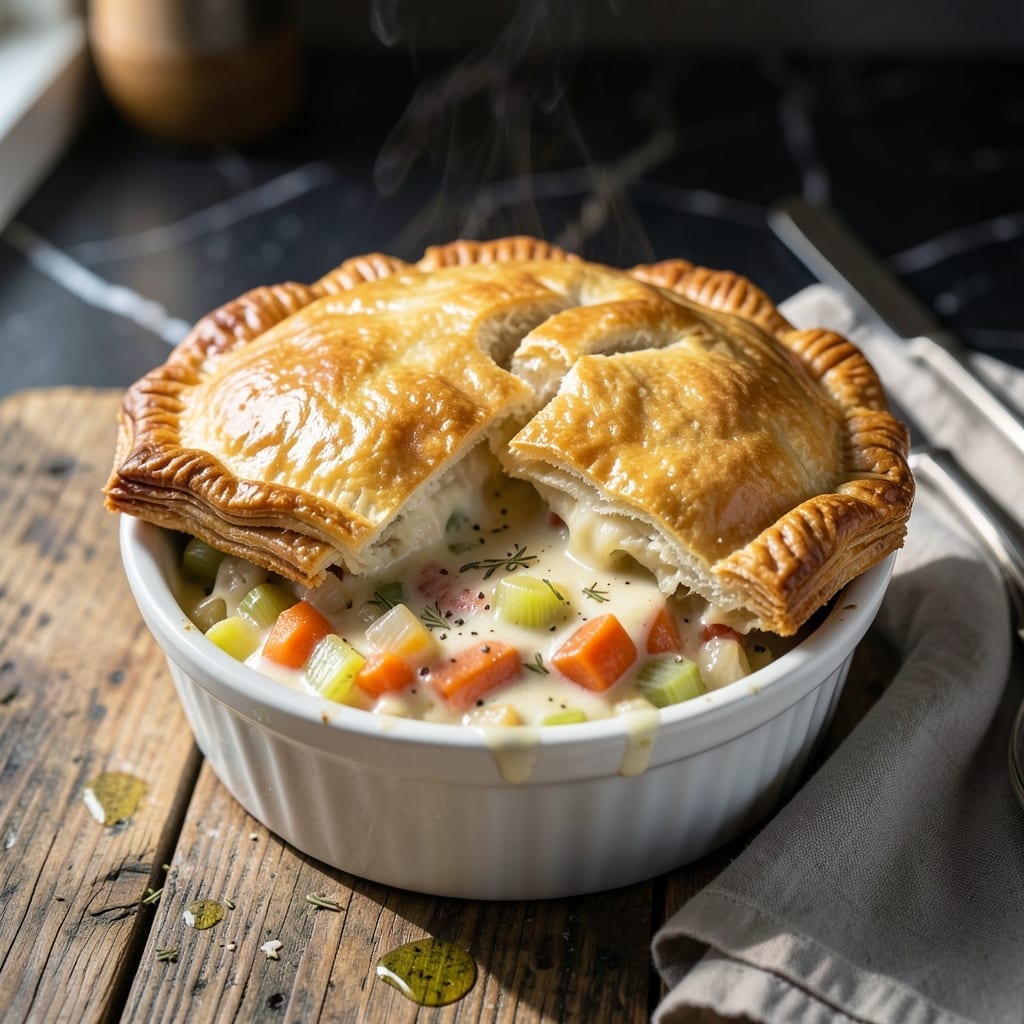
There’s something deeply satisfying about breaking into a golden puff pastry to reveal a steaming, vegetable-packed filling. This dish transforms humble ingredients into a meal that feels celebratory. The secret lies in a well-seasoned creamy sauce that binds the vegetables together without becoming heavy.
I developed this method to ensure the pastry stays flaky while the filling remains perfectly tender. The individual portions make it ideal for serving at gatherings or enjoying a restaurant-quality meal at home. Each bite delivers layers of texture and flavor.
What emerges from the oven is a beautiful contrast: crisp, buttery pastry encasing a rich, savory vegetable filling. The aroma alone makes the effort worthwhile. The recipe scales easily for larger groups or meal prep.
Serve immediately while the pastry is at its crispest. The filling’s warmth and the pastry’s crunch create the perfect balance in every forkful.
Ingredients for Individual Vegetarian Pot Pie
Golden puff pastry sheets enclose a creamy, garden-fresh vegetable filling with just the right seasoning.
| Ingredient | Amount | Notes |
|---|---|---|
| Puff Pastry Sheets 🥮 | 2 sheets | Thawed but still cold |
| Unsalted Butter 🧈 | 4 tbsp | Divided for sauce and pastry |
| All-Purpose Flour 🌾 | ¼ cup | For thickening sauce |
| Whole Milk 🥛 | 1 ½ cups | Whole for creamiest texture |
| Vegetable Stock 🥕 | 1 ½ cups | Low-sodium preferred |
| Yellow Onion 🧅 | 1 whole | Medium, finely diced |
| Carrots 🥕 | 2 whole | Peeled and diced |
| Celery Stalks 🌿 | 2 whole | Finely diced |
| Mushrooms 🍄 | 8 oz | Cremini or white, sliced |
| Frozen Peas 🌱 | 1 cup | No need to thaw |
| Garlic Cloves 🧄 | 3 cloves | Minced for depth |
| Fresh Thyme 🌿 | 2 tsp | Chopped, or 1 tsp dried |
| Dijon Mustard 🟡 | 1 tbsp | For sauce complexity |
| Salt 🧂 | 1 tsp | Diamond Crystal kosher |
| Black Pepper 🌶️ | ½ tsp | Freshly ground |
The puff pastry is non-negotiable here—Dufour or Pepperidge Farm are superior for that flaky, buttery texture. Use whole milk for the sauce; lower-fat versions won’t deliver the same richness. For the vegetables, fresh is ideal, but frozen works in a pinch (except mushrooms, which get soggy). The thyme should be fresh if possible, as dried can’t replicate that aromatic brightness.
No puff pastry? Phyllo dough with melted butter layered between sheets gets you close. Swap the peas for diced potatoes or corn if preferred. Vegetable stock can be homemade or high-quality store-bought. For a deeper umami flavor, add 1 tsp soy sauce to the sauce. The Dijon mustard is key—don’t substitute yellow mustard, as it lacks the complexity.
Assemble the pies just before baking to prevent the pastry from getting soggy. Leftovers keep 3-4 days in the fridge, but the pastry is best fresh. Reheat in the oven at 350°F for 10-15 minutes to revive crispness. Freeze unbaked pies for up to 1 month.
Why You’ll Love This Recipe
- One Pan Magic: The puff pastry does half the work—just unfold, fill, and bake while I prep the creamy milk-and-stock filling.
- That Golden Crunch: Buttery layers flake apart over a velvety vegetable filling that’s rich without being heavy. Honestly, the contrast gets me every time.
- Portable Comfort: I pack these for picnics or freeze a batch for last-minute dinners. Between us, they reheat like they’re fresh from the oven.
- Budget Stretcher: A single sheet of pastry makes four generous pies, and the flour-butter roux thickens the filling for pennies. I’ll be real: it’s my sneaky way to eat well for less.
Step-by-Step Instructions for Individual Vegetarian Pot Pie
Here’s the method that guarantees flaky pastry and a rich vegetable filling every time.
Step 1: Prepare the Vegetable Filling Base
Melt 2 tbsp unsalted butter in a large skillet over medium heat. Add the finely diced yellow onion, carrots, and celery stalks. Cook for 5-7 minutes until the vegetables soften and the onion becomes translucent. Stir occasionally to prevent browning.
Add the sliced mushrooms and minced garlic cloves, cooking for another 3-4 minutes until the mushrooms release their moisture and begin to brown. The mixture should be fragrant with no raw garlic smell. Sprinkle in the fresh thyme, salt, and black pepper, stirring to distribute evenly.
Step 2: Create the Creamy Sauce
Sprinkle the 0.25 cup all-purpose flour over the vegetable mixture and stir to coat. Cook for 1-2 minutes to remove the raw flour taste. This creates a roux that will thicken the sauce beautifully.
Slowly pour in the 1.5 cups whole milk and 1.5 cups vegetable stock, whisking constantly to prevent lumps. Add the 1 tbsp Dijon mustard and remaining 2 tbsp unsalted butter. Bring to a gentle simmer and cook for 5-7 minutes until the sauce thickens enough to coat the back of a spoon.
Step 3: Finish the Filling and Chill
Remove the skillet from heat and stir in the 1 cup frozen peas. They’ll thaw quickly in the hot sauce. Taste and adjust seasoning if needed, though the combination of stock, mustard, and thyme should provide a well-balanced flavor profile. The sauce should be thick but still pourable.
Transfer the mixture to a bowl and let it cool completely at room temperature, about 30 minutes. This prevents the puff pastry from becoming soggy when assembled. The filling should be rich and creamy with visible vegetable chunks throughout.
Step 4: Assemble and Bake the Pot Pies
Preheat your oven to 400°F. Divide the cooled filling among four oven-safe ramekins, filling each about ¾ full. Roll out the 2 sheets puff pastry sheets and cut into rounds slightly larger than your ramekins.
Place a pastry round over each ramekin, pressing gently to seal the edges. Cut a small slit in the top of each to allow steam to escape. Bake on a rimmed baking sheet for 20-25 minutes until the pastry is golden brown and puffed. The filling should be bubbling through the steam vents when done.
Step 5: Rest and Serve
Let the pot pies rest for 5-10 minutes after removing from the oven. This allows the filling to set slightly, making them easier to serve. The pastry should remain crisp while the filling thickens to the perfect consistency.
Serve immediately while hot. Each pot pie should have a beautifully browned, flaky crust with a creamy vegetable filling that holds its shape when spooned. The contrast between the crisp pastry and velvety sauce creates the signature pot pie experience.
Pro Tips For Making Individual Vegetarian Pot Pie
- Chill the Pastry: Keep your puff pastry cold until ready to use—I learned this the hard way after my first few pot pies turned into sad, flat blobs. Pop it in the fridge between cutting and assembling.
- Thicken the Filling: Cook your flour-butter roux for at least 2-3 minutes before adding liquid to remove the raw flour taste. It makes a real difference in the final texture.
- Vent the Tops: Cut a small slit in each pastry lid before baking, or steam will build up and turn your pretty pies into exploded messes. I skip this when I’m lazy, but the dish is noticeably better when I don’t.
- Use Cold Stock: Add your vegetable stock to the roux straight from the fridge—cold liquid helps prevent lumps and gives you more control over the thickening process. Sounds weird, but it works.
Pro Cooking Tips for Great individual vegetarian pot pie
Pastry Perfection
Always use ice-cold puff pastry straight from the fridge—warm pastry loses its flakiness. I roll it between parchment paper to prevent sticking. For extra crispness, brush the tops with 1 beaten egg before baking. This creates that beautiful golden sheen. 🌟
Sauce Consistency
The sauce should coat the back of a spoon but still be pourable. If it’s too thick, whisk in 1-2 tbsp milk. Too thin? Simmer for 2-3 more minutes. The flour needs to cook out completely to avoid a raw taste.
Venting Steam
Cut 2-3 small slits in each pastry top to prevent bursting. I use a sharp paring knife for clean cuts. Without proper venting, the filling can overflow and create a soggy bottom crust.
Ramekin Size Matters
Use 6-8 oz ramekins for perfect portion control. Fill them only ¾ full to allow room for the pastry to puff. Overfilling causes spills and uneven baking.
Oven Placement
Bake on the middle rack for even browning. If your oven has hot spots, rotate the tray halfway through. I line my baking sheet with parchment to catch any overflow.
Resting Time
Let the pies rest for 10 minutes after baking. This lets the filling set so it doesn’t run out when served. The pastry stays crisp longer if you serve on a wire rack rather than a solid surface. 💡
Nutrition Facts
Frequently Asked Questions
Can I use store-bought pie crust instead?
Yes, but puff pastry gives the best flaky texture. Pie crust works in a pinch but won’t be as light and airy. For best results, use all-butter puff pastry brands.
How do I prevent a soggy bottom crust?
Ensure the filling is completely cooled before assembling. Also, bake on a preheated tray and don’t overfill the ramekins. The steam vents help too!
Can I make these ahead of time?
Assemble unbaked pies and refrigerate for up to 12 hours. Or freeze for 1 month. Bake from cold, adding 5-7 minutes to baking time.
What vegetables work best?
Stick with hearty veggies like carrots, celery, and mushrooms. Avoid watery ones like zucchini. Frozen peas work well as they hold shape during baking.

- 6 Oz Chocolate Chip Cookie Recipe: Perfectly Balanced Crispy Edges and Chewy Hearts - September 25, 2026
- 6-Inch Coffee Cake Recipe: Vanilla Bean Swirls and Buttery Streusel Topping - September 25, 2026
- 1 Hour Soup Recipe: Velvety Richness Without the Wait - September 25, 2026