
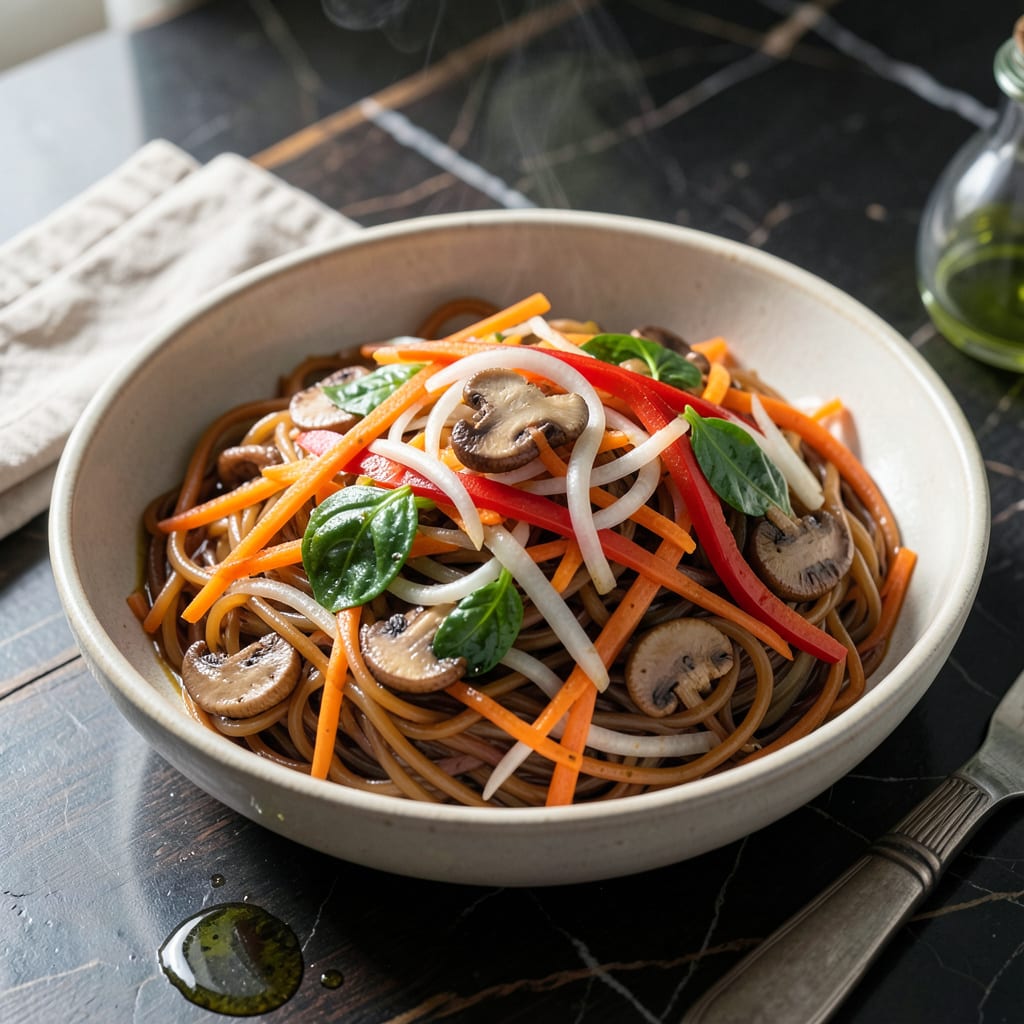
This streamlined method brings traditional Korean japchae into your Instant Pot without sacrificing authenticity. The pressure cooker perfectly softens sweet potato noodles while enhancing their chewy texture.
Toasted vegetables and a savory-sweet sauce come together in one pot for an efficient dish that still delivers complex flavors. The result is a vibrant, restaurant-quality meal with minimal active prep time.
Ingredients for Instant Pot Japchae
Traditional ingredients meet modern convenience for authentic Korean flavors in one pot.
| Ingredient | Amount | Notes |
|---|---|---|
| Sweet Potato Starch Noodles 🍜 | 8 oz | Dangmyeon or glass noodles |
| Spinach 🌿 | 4 cups | Fresh, loosely packed |
| Carrots 🥕 | 2 whole | Julienned into matchsticks |
| Red Bell Pepper 🌶️ | 1 whole | Thinly sliced into strips |
| White Onion 🧅 | 1 whole | Thinly sliced lengthwise |
| Shiitake Mushrooms 🍄 | 4 whole | Fresh, stems removed, sliced |
| Soy Sauce 🫒 | ⅓ cup | Low-sodium preferred |
| Sesame Oil 🫒 | 2 tbsp | Toasted for depth |
| Brown Sugar 🍚 | 2 tbsp | Packed, for sweetness |
| Garlic Cloves 🧄 | 4 cloves | Minced finely |
| Toasted Sesame Seeds 🌰 | 2 tbsp | For garnish and crunch |
| Vegetable Oil 🫒 | 1 tbsp | Neutral for sautéing |
| Green Onions 🌿 | 3 whole | Thinly sliced for garnish |
| Salt 🧂 | ½ tsp | Kosher or sea salt |
| Black Pepper 🌶️ | ¼ tsp | Freshly ground |
The sweet potato starch noodles are essential for authentic texture—H Mart or Korean grocery stores carry the best brands. Look for Dangmyeon noodles specifically, as they hold up well to pressure cooking. The shiitake mushrooms should be fresh and firm; avoid any with slimy caps. Spinach adds vibrant color, so choose bunches with crisp, deep green leaves (the good stuff, not the pre-washed bags).
No sweet potato starch noodles? Regular rice noodles work in a pinch but lack the signature chew. Substitute honey for the brown sugar at one-to-one ratio, or use white sugar with a touch of molasses for depth. Out of shiitakes? Cremini mushrooms provide a similar earthy flavor. The soy sauce can be tamari for gluten-free, but taste before adding salt.
Noodles absorb flavors best when served fresh. Store leftovers in an airtight container for up to 3 days in the fridge. Reheat gently with a splash of water to restore moisture. The sesame seeds stay fresh for 3 months in the pantry if kept sealed.
Why You’ll Love This Recipe
- One Pot Magic: I love that everything—noodles, spinach, even the carrots—cooks together in the Instant Pot, no extra pans to wash.
- Sweet & Savory: The sweet potato starch noodles soak up the sauce, and the bell peppers add just the right crunch.
- Meal Prep Hero: This keeps beautifully for days, so I make a big batch for lunches all week.
- Budget Winner: Honestly, a bag of noodles and a few veggies stretch further than I expected.
Step-by-Step Instructions for Instant Pot Japchae
This streamlined method delivers perfectly chewy noodles and vibrant vegetables with minimal hands-on time.
Step 1: Prepare the Noodles and Vegetables
Soak the 8 oz Sweet Potato Starch Noodles in warm water for 15-20 minutes until pliable but still firm. Drain and rinse under cold water to remove excess starch. Meanwhile, julienne the 2 whole Carrots, slice the 1 whole Red Bell Pepper into thin strips, and thinly slice the 1 whole White Onion lengthwise.
Slice the 4 whole Shiitake Mushrooms after removing stems, and thinly slice the 3 whole Green Onions. Keep the 4 cups Spinach whole for now. This preparation ensures even cooking in the Instant Pot and maintains the dish’s signature texture.
Step 2: Sauté Aromatics and Vegetables
Set the Instant Pot to Sauté mode and add the 1 tbsp Vegetable Oil. When hot, add the minced 4 cloves Garlic Cloves and sauté for 30 seconds until fragrant. Immediately add the carrots, red bell pepper, onion, and shiitake mushrooms with 0.5 tsp Salt and 0.25 tsp Black Pepper.
Sauté for 4-5 minutes until the vegetables begin to soften but retain their vibrant color. The goal is to develop flavor without overcooking, as the vegetables will finish in the pressure cooker. Push the mixture to one side of the pot.
Step 3: Cook Noodles and Spinach Under Pressure
Add the drained sweet potato starch noodles to the Instant Pot, pouring 1.5 cups water over them. Distribute the 4 cups Spinach on top, pressing down gently to submerge in the liquid. Secure the lid and set the valve to Sealing.
Cook on High Pressure for 2 minutes, then allow a natural pressure release for 5 minutes before quick-releasing any remaining pressure. The noodles should be chewy and translucent, while the spinach will wilt perfectly from the residual heat.
Step 4: Season and Finish with Signature Flavors
Drain any excess liquid from the Instant Pot. In a small bowl, whisk together the 0.33 cup Soy Sauce, 2 tbsp Brown Sugar, and 2 tbsp Sesame Oil until the sugar dissolves. Pour this mixture over the noodle-vegetable mixture.
Toss everything gently but thoroughly to ensure even coating. The noodles should glisten with the sauce, and the vegetables should maintain their distinct textures. Taste and adjust seasoning if needed, though the soy sauce typically provides sufficient saltiness.
Step 5: Garnish and Serve
Transfer the japchae to a serving platter or individual bowls. Sprinkle with the 2 tbsp Toasted Sesame Seeds and the sliced green onions. The sesame seeds add a nutty crunch, while the green onions provide a fresh, oniony bite.
Serve warm or at room temperature, as the flavors meld beautifully as it cools. Each serving should showcase the chewy noodles, crisp-tender vegetables, and the glossy, savory-sweet sauce that defines this classic Korean dish.
Pro Tips For Making Instant Pot Japchae
- Pre-cook the noodles: Boil the sweet potato starch noodles for 6-7 minutes before pressure cooking—they’ll stay chewy instead of turning to mush under high pressure. I learned this the hard way after my first batch dissolved into a starchy paste.
- Blanch the spinach: Toss the spinach in boiling water for exactly 30 seconds, then shock it in ice water to lock in that bright green color. Sounds tedious, but it keeps the texture perfect when mixed with the noodles later.
- Julienne uniformly: Cut the carrots, bell pepper, and onion into matchstick-sized pieces—about 2 inches long and ⅛ inch thick. This ensures even cooking in the Instant Pot and a consistent bite in every forkful.
- Deglaze the pot: After sautéing the veggies, pour in ¼ cup of the noodle cooking water and scrape the bottom to release all those browned bits. Skipping this risks a burn notice, and you’ll lose all that flavor in the sauce.
Pro Cooking Tips for Perfect Results
Noodle Prep Perfection
Soak the noodles for exactly 15-20 minutes in warm water—they should be pliable but still firm to the bite. Over-soaking makes them mushy during pressure cooking. I use a large glass bowl to prevent sticking.
Sauté Sequence Matters
Always sauté garlic first for 30 seconds until fragrant, then immediately add vegetables. This builds a flavor base without burning. Use medium-high heat on your Instant Pot for best results.
Pressure Cooking Timing
Cook on high pressure for 2 minutes followed by a 5-minute natural release. This short cook time preserves the noodles’ signature chew while perfectly wilting the spinach. Quick release any remaining pressure after.
Sauce Integration
Whisk the sauce until the brown sugar fully dissolves—this ensures even distribution. Toss the noodles gently but thoroughly in the pot to coat every strand. I find a wooden spoon works best for this.
Rest Before Serving
Let the dish sit for 5-10 minutes after garnishing. This allows the flavors to meld and the noodles to absorb the sauce fully. The sesame seeds will toast slightly from the residual heat. 💡
Texture Check
Perfect japchae has noodles that are chewy, not mushy. If yours are too soft, reduce the pressure cooking time to 1 minute next time. The vegetables should retain a slight crispness for contrast.
Nutrition Facts
Frequently Asked Questions
Can I use other noodles if I don’t have sweet potato starch?
Regular rice noodles work in a pinch but lack the signature chew. For best results, stick with dangmyeon noodles from a Korean market. They hold up best to pressure cooking.
How do I prevent the noodles from sticking?
Rinse them thoroughly after soaking to remove excess starch. Use a wooden spoon to toss everything gently in the pot. Adding a splash of oil to the water also helps.
Can I make this ahead of time?
Yes, but it’s best served fresh. Store leftovers in an airtight container for up to 3 days. Reheat with a splash of water to restore moisture.

- 4C Bread Crumbs Meatballs Recipe: Crispy Crust and Juicy Centers - September 25, 2026
- 6 Oz Chocolate Chip Cookie Recipe: Perfectly Balanced Crispy Edges and Chewy Hearts - September 25, 2026
- 6-Inch Coffee Cake Recipe: Vanilla Bean Swirls and Buttery Streusel Topping - September 25, 2026