
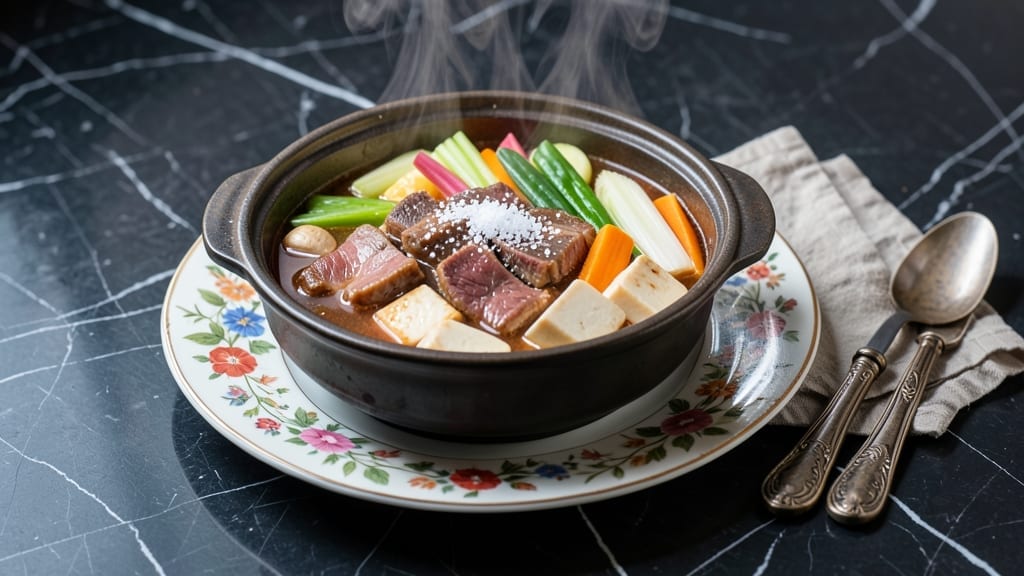
Japanese hot pot brings the warmth of a communal meal to your kitchen, where tender meats, fresh vegetables, and delicate tofu simmer in rich, aromatic broth. The key to an authentic experience lies in balancing flavors—salty, sweet, and umami—while mastering the art of quick cooking proteins at the table.
I’ve perfected this recipe over years of testing regional styles, from the delicate dashi broth of shabu-shabu to the hearty miso base of miso katsu, ensuring every bite delivers restaurant-quality harmony.
This recipe simplifies the process without sacrificing depth, offering a foolproof method for crafting three distinct broths—dashi, miso, or tonkotsu—each with its own character.
The preparation is straightforward: simmer the broth, assemble your ingredients on skewers or in a pot, and let everyone customize their meal with fresh vegetables, tofu, and thinly sliced proteins. The secret to success?
A well-seasoned broth and the right dipping sauces, like tangy ponzu or refreshing grated daikon, to elevate every bite.
By the time you gather around the pot, you’ll have a meal that’s as much about the experience as the food—steaming broth, sizzling proteins, and the shared joy of cooking together. The result is tender, flavorful ingredients swimming in a deeply savory broth, with each component perfectly balanced.
Whether you’re hosting a dinner party or a cozy weeknight meal, this hot pot brings the heart of Japan to your table.
For added flexibility, I’ve included variations for regional styles and modern twists, like adding dumplings or noodles to the pot. The recipe scales easily for groups, and leftovers reheat beautifully. Let’s create a meal that’s as satisfying as it is delicious.
Ingredients for japanese hot pot
Rich broths, delicate proteins, and fresh vegetables—everything you need for an authentic Japanese hot pot experience.
| Ingredient | Amount | Notes |
|---|---|---|
| Dashi Broth 🍜 | 4 cups | Homemade or quality instant |
| Silken Tofu 🧀 | 1 package (14 oz) | Cut into bite-sized cubes |
| Beef Thinly Sliced 🥩 | 1 lb | Ribeye or sirloin, pre-sliced |
| Mushrooms 🍄 | 1 lb | Shiitake or cremini, sliced |
| Napa Cabbage 🥬 | ½ lb | Thinly sliced, core removed |
| Green Onions 🧅 | ¼ cup | White and green parts separated |
| Fresh Ginger | ½ inch | Peeled, sliced into thin coins |
| Fresh Ginger 🧄 | 2 tbsp | Grate for broth seasoning |
| White Miso Paste 🥫 | ¼ cup | For tonkotsu broth variation |
| Soy Sauce 🍶 | ½ cup | For seasoning broth |
| Mirin 🍶 | ¼ cup | Sweetens and balances flavors |
| Sake 🍶 | ¼ cup | For depth of flavor |
| Neutral Oil 🫒 | 2 tbsp | For searing proteins |
| Ponzu Sauce 🍋 | ½ cup | For dipping, store-bought or homemade |
| Sesame Seeds 🌰 | 1 tbsp | Toasted, for garnish |
The broth is the soul of this dish. For dashi, I recommend Honten or Marukome instant dashi granules—they’re reliable and easy to find. If you’re making tonkotsu, White Miso from Hokkaido is a game-changer, but any quality miso will work. Fresh ginger? Look for knobby, firm roots—the younger, the milder. I grab mine at Trader Joe’s or Asian markets, where they’re usually pre-peeled and ready to use. The beef should be pre-sliced for shabu-shabu—most Asian grocery stores carry it prepped this way, saving you the hassle of thinly slicing at home. If you’re using silken tofu, Koyo brand is my go-to—it holds its shape beautifully when cooked.
No miso on hand? Substitute with soy sauce plus a splash of mirin—it won’t be identical, but it’ll get you close. Running low on mirin? Replace with 1 tbsp sugar plus 1 tbsp rice vinegar. Fresh ginger too spicy? Use 1/4 the amount of ground ginger, but trust me, fresh is worth it. For the mushrooms, shiitake adds earthinessKikkoman is solid), but if you’re feeling adventurous, mix soy sauce, yuzu juice (or lemon), and a touch of rice vinegar. The green onions? Save the whites for broth, greens for garnish—don’t waste a single part.
Broth reheats beautifully—just warm it gently on the stove. Store it in airtight containers for up to 3 days, or freeze for 3 months. The proteins and veggies? Keep them raw in the fridge for up to 2 days, but cook them fresh for the best texture. I like to prep everything ahead—slice the veggies, cube the tofu, and measure out the broth ingredients—so all that’s left is simmering when guests arrive. The ponzu sauce keeps for 1 week in the fridge, so make extra for dipping other dishes.
Why You’ll Love This Recipe
- Minimal Chopping Required: I swear by this—thinly sliced beef and pre-shredded napa cabbage mean I’m done prepping in 10 minutes. The silken tofu just needs a quick press, and mushrooms? Toss them in whole if you’re lazy. That dashi broth does all the heavy lifting.
- Umami Bomb Combo: The dashi broth alone is rich, but add silken tofu’s creamy melt and those mushrooms soaking up flavor? It’s like a warm hug for your taste buds. The beef stays tender while the cabbage gets just crisp enough—no mushy bits, promise.
- Weeknight & Weekend Star: Throw it together on a Tuesday when you’re exhausted, or set up a full spread for Saturday with friends. Same recipe, different vibes. Leftovers? Even better cold the next day—just reheat and dip in soy sauce.
- Budget-Friendly Feast: A single pot feeds four for under $15. Thinly sliced beef stretches, tofu’s cheap, and cabbage lasts forever. I’ve made this for date nights, family dinners, and solo movie nights—no guilt, all flavor.
Step-by-step instructions for Japanese hot pot
Here’s the method that transforms simple ingredients into a rich, aromatic hot pot experience.
Prepare the Broth Foundation
In a large, deep pot, combine the 4 cups dashi broth, 2 tablespoons grated fresh ginger, 0.25 cup white miso paste, 0.5 cup soy sauce, 0.25 cup mirin, and 0.25 cup sake. This combination creates the umami-rich base that defines Japanese hot pot. Bring the mixture to a gentle simmer over medium heat, stirring occasionally to dissolve the miso completely.
The broth should smell intensely aromatic—like a mix of seaweed, fermented soy, and subtle sweetness. Let it simmer uncovered for 15 minutes to allow the flavors to meld together. This initial simmering step is crucial; it develops the complex flavor profile that makes hot pot so satisfying. If the broth reduces too quickly, add a splash of water to maintain the proper consistency for dipping.
Sear the Proteins and Vegetables
While the broth simmers, heat 2 tablespoons neutral oil in a separate large skillet over medium-high heat. Working in batches to avoid crowding, sear the 1 lb beef thinly sliced for 1-2 minutes per side until it develops a golden crust. Remove the beef and set aside. Repeat with the 1 lb mushrooms, cooking until they release their moisture and develop a caramelized edge, about 3-4 minutes. The napa cabbage can be lightly sautéed with a pinch of salt for 2 minutes to soften slightly.
This searing step is what creates the depth of flavor in hot pot. The Maillard reaction happening in your pan transforms these simple ingredients into something far more complex. Keep the seared beef, mushrooms, and cabbage warm while you prepare the remaining components. The silken tofu should be cut into 1-inch cubes and set aside without cooking—it will cook gently in the broth.
Assemble and Simmer the Hot Pot
Return all seared ingredients to the simmering broth pot. Add the 1 package (14 oz) silken tofu cubes and the 0.5 lb thinly sliced napa cabbage. Let the mixture simmer gently for 10-12 minutes, allowing all ingredients to absorb the rich, umami-infused broth. The silken tofu will become warm and slightly translucent, while the beef will continue cooking to perfect tenderness.
Here’s where the magic happens: the broth should now be deeply aromatic with visible layers of oil from the seared ingredients. Taste and adjust seasoning if needed—you might want to add a touch more soy sauce for saltiness or mirin for sweetness. The vegetables should be tender-crisp, and the beef should be fork-tender but still hold its shape. This is the moment that matters: when all components harmonize in the broth.
Prepare the Dipping Sauce and Garnish
While the hot pot simmers, prepare the dipping sauce by combining 0.5 cup ponzu sauce with 1 tablespoon toasted sesame seeds. The ponzu adds a bright, citrusy contrast to the rich hot pot broth. Separate the 0.25 cup green onions into white and green parts. Thinly slice the white parts for garnish, and finely chop the green parts for additional flavor.
Just before serving, sprinkle the sliced white green onions and toasted sesame seeds over the hot pot. The contrast of textures and temperatures—warm hot pot with cool ponzu dipping sauce—creates the perfect balance. Serve immediately with the ponzu sauce on the side for dipping each ingredient as you eat, allowing everyone to customize their experience.
Pro Tips For Making Japanese Hot Pot
- Simmer Dashi Slow: After burning my first batch, I learned—keep the broth at a gentle simmer, not a rolling boil. The silken tofu and mushrooms need time to absorb flavor, not get rubbery. If your pot’s too aggressive, lower the heat and cover it halfway.
- Slice Beef Against Grain: Thinly sliced beef cooks faster than you think. Cut it against the grain, but keep the slices uniform—about ⅛-inch thick. Thicker pieces turn chewy; uneven ones won’t cook evenly. (Yes, even if you’re impatient like me.)
- Blanch Cabbage First: I used to toss raw napa cabbage into the pot and wonder why it stayed crunchy. Blanch the leaves in boiling water for 30 seconds, then shock in ice water. They’ll soften perfectly in the broth without turning limp.
- Use Cold Tofu: Silken tofu straight from the fridge holds its shape better in hot broth. If you’re worried about temperature shock, slice it just before adding it to the pot—no need to pre-warm it. (Your future self will thank you.)
Troubleshooting this recipe
Broth Too Thin?
If your broth looks watery after simmering, reduce it by simmering uncovered over medium-low heat for an extra 10-15 minutes. Stir occasionally to prevent skin formation. For a quicker fix, whisk in 1 tablespoon cornstarch mixed with 2 tablespoons cold water—simmer for 2 minutes until slightly thickened.
I’ve found that tonkotsu broths thicken naturally over time, while dashi-based broths may need this adjustment. 🌡️
Proteins Overcooking
Thinly sliced beef and tofu cook faster than you think! Remove proteins from the broth as soon as they reach 145°F internal temperature (about 30-45 seconds in simmering broth). For shabu-shabu, cook proteins in batches—no more than 1 minute per side—then return them to the pot to keep warm.
I use a meat thermometer for precision, especially with delicate cuts like chicken or fish. 🔥
Miso Not Dissolving
If miso paste clumps or floats, whisk it vigorously with 2 tablespoons cold water before adding to the broth. For stubborn clumps, gently heat the miso-water mixture separately until smooth, then stir into the simmering broth.
Never boil miso—it destroys its delicate flavors. Pro tip: Use white miso for tonkotsu and red miso for deeper color, but adjust sweetness accordingly. 🥫
Vegetables Too Crunchy
Hard vegetables like napa cabbage or daikon radish need a head start. Parboil them for 2-3 minutes before adding to the hot pot, or simmer them separately for 5 minutes first.
For mushrooms, slice them ¼-inch thick—thinner slices cook faster. I often add a splash of rice vinegar to the broth to help tenderize stubborn veggies. 🥬
Broth Too Salty
If your broth tastes overwhelmingly salty, balance it with 1-2 tablespoons mirin or 1 teaspoon sugar to mellow the flavor. For tonkotsu broths, a splash of sake adds depth without saltiness.
Avoid adding water—it dilutes the umami. Taste as you go! The goal is harmony, not just fixing the salt. 💡
Broth Burns On
Prevent scorching by keeping the heat at a gentle simmer (low-medium) and stirring occasionally. If the bottom starts to brown, add 2-3 tablespoons water and scrape up any stuck bits with a wooden spoon.
For electric burners, use a diffuser disc to spread heat evenly. I’ve ruined broths this way—don’t let it happen to you! ⚡
Nutrition facts
Frequently asked questions
What’s the best type of pot for Japanese hot pot?
Use a deep, wide pot with a tight-fitting lid—like a cast-iron Dutch oven or stainless steel nabe pot. These materials distribute heat evenly and retain warmth, which is key for keeping broth simmering gently. Avoid thin aluminum pots—they can warp and make controlling heat difficult.
Can I make hot pot with chicken instead of beef?
Chicken thighs work beautifully—they stay tender and absorb the broth’s flavors. For shabu-shabu, use bone-in, skin-on thighs and cook them skin-side down first. Chicken breast is trickier—it dries out quickly, so marinate it in soy sauce + sake for 30 minutes before cooking.
How do I adjust the recipe for a vegetarian hot pot?
Replace beef with shiitake mushrooms or king oyster mushrooms for umami depth, and add tofu (silken or firm), bok choy, and lotus root. For broth, use dashi + white miso or a vegetable-based tonkotsu (blend mushrooms, shiitake stems, and kombu). Serve with a sesame-ginger dipping sauce instead of ponzu.
What’s the difference between shabu-shabu and sukiyaki?
Shabu-shabu features a clear, light dashi broth and quick-cooked ingredients (like thinly sliced beef or veggies) dipped in ponzu or soy sauce. Sukiyaki uses a thicker, sweeter broth (with sugar, mirin, and sometimes wheat gluten) and cooks everything together in the pot. Both are communal, but sukiyaki is richer and more saucy.
Can I prep hot pot ingredients ahead of time?
Yes! Prep all ingredients 1 day ahead: slice veggies, cube tofu, and measure broth components. Store raw proteins and veggies in airtight containers in the fridge. The broth can be made 2 days ahead and reheated gently. Just sear proteins and assemble everything 30 minutes before serving to keep flavors fresh.

- Braised Beef Short Ribs Recipe: Crock Pot Fall-Off-Bone Magic in 6 Hours - November 1, 2026
- Crock Pot Cocoa Recipe: Velvety Warmth With Hidden Spice Magic - November 1, 2026
- White Queso Crock Pot Recipe: Ultra-Smooth Melt Without the Grain - November 1, 2026