
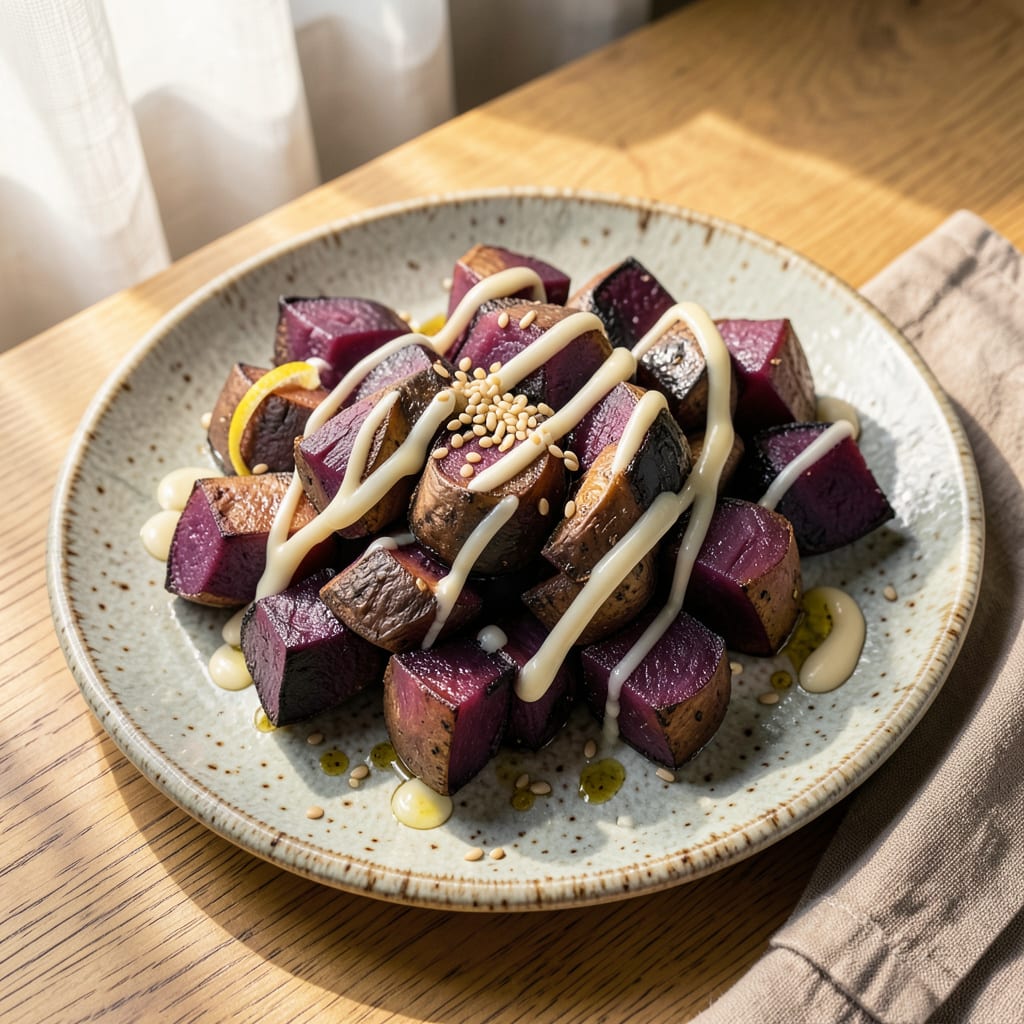
Japanese purple potatoes offer a striking visual contrast and unique flavor profile that elevates any meal. Their naturally vibrant hue and subtle sweetness with earthy undertones make them a standout side dish. This recipe highlights their distinctive qualities through simple preparation methods that preserve both color and texture.
The key to success lies in gentle cooking to maintain the potatoes’ vivid purple color while enhancing their natural sweetness. Whether roasted to intensify their earthy notes or steamed to preserve delicate texture, these potatoes pair beautifully with miso glaze, toasted sesame seeds, or coconut milk for a modern twist on traditional flavors.
Ingredients for Japanese Purple Potato
These twelve ingredients transform Japanese purple potatoes into a visually stunning, flavor-rich dish with minimal preparation.
| Ingredient | Amount | Notes |
|---|---|---|
| Japanese purple potatoes 🥔 | 2 lb | Scrubbed clean, unpeeled |
| Extra-virgin olive oil 🫒 | 2 tbsp | Cold-pressed for optimal flavor |
| White miso paste 🍲 | 1 ½ tbsp | Fermented for umami depth |
| Pure maple syrup 🍁 | 1 tbsp | Grade A dark for richness |
| Rice vinegar 🍶 | 1 tbsp | Unseasoned for acid balance |
| Toasted sesame oil 🌿 | 1 tsp | Dark variety for nutty aroma |
| Fresh ginger root 🌱 | 1 whole | Peeled, finely grated |
| Garlic cloves 🧄 | 2 cloves | Minced for aromatic base |
| Coconut milk 🥥 | ½ cup | Full-fat for creaminess |
| Black sesame seeds 🌰 | 1 tbsp | Toasted for crunch |
| Scallions 🧅 | 3 whole | Thinly sliced for garnish |
| Diamond Crystal kosher salt 🧂 | 1 tsp | For precise seasoning |
| Freshly ground black pepper 🌶️ | ½ tsp | Medium-coarse grind |
[recipeingredientscaler]
Optimal quality requires sourcing Japanese purple potatoes from Asian specialty markets or high-end grocers like Whole Foods. Select firm tubers with unblemished, deeply pigmented skins—this indicates maximum anthocyanin content. The white miso paste should be refrigerated and free from additives; Miso Master or Hikari brands are recommended. For coconut milk, full-fat Thai Kitchen or Goya provides the necessary richness without stabilizers that may separate during cooking.
Substitutions must preserve the dish’s color and flavor balance. Replace maple syrup with agave nectar at equal volume if needed, though the caramel notes will differ. For sesame oil, perilla oil offers a similar nutty profile. Should black sesame seeds be unavailable, toasted white sesame seeds may substitute, though the visual contrast diminishes. The coconut milk can be replaced with cashew cream (blend 1:1 soaked cashews to water) for a lighter option, though the mouthfeel will vary.
Storage considerations are critical for maintaining vibrancy. Cooked potatoes retain optimal color for 24 hours refrigerated in an airtight container. The miso glaze can be prepared 3 days ahead and stored separately. Uncooked potatoes should be kept in a cool, dark place (not refrigerated) and used within 1 week of purchase. Toasted sesame seeds lose aroma quickly; prepare fresh when possible or store in a freezer-safe container for up to 1 month.
Why You’ll Love This Recipe
- Roast & Forget: So easy. Toss the purple potatoes with olive oil, roast until tender, then whisk the miso-maple glaze while they’re still hot. One sheet pan, one bowl, and zero stress—exactly what I need after a long day.
- Sweet-Savory Magic: Here’s what sold me—the way the white miso and maple syrup caramelize into this sticky, umami-rich glaze that clings to the crispy-edged potatoes. The rice vinegar cuts through just enough to keep it from being cloying. Ridiculously good.
- Meal Prep MVP: I make a double batch on Sundays: half for dinner (great with grilled fish or tofu), half for lunches. The flavors actually deepen overnight, and the potatoes hold their texture. My secret weapon for avoiding sad desk salads.
- Budget-Friendly Showstopper: Japanese purple potatoes look fancy but cost the same as regular spuds at my Asian market. A little miso and maple go a long way—this dish feels special enough for guests but won’t break the bank. (Yes, even on a Tuesday night.)
Step-by-Step Instructions for Japanese Purple Potatoes
This method transforms simple ingredients into a dish that balances earthy depth with vibrant sweetness.
Step 1: Prepare and Roast the Potatoes
Preheat your oven to 400°F and position a rack in the center. Cut the 2 lb Japanese purple potatoes into 1-inch cubes, keeping the skin on for texture and color. The vibrant purple flesh will intensify during cooking, so choose pieces with the deepest hue.
Toss the potatoes with 2 tbsp extra-virgin olive oil, 1 tsp Diamond Crystal kosher salt, and 0.5 tsp freshly ground black pepper until evenly coated. Arrange them in a single layer on a parchment-lined baking sheet, ensuring space between pieces for proper caramelization. Roast for 25 minutes, then stir and return to the oven.
Step 2: Create the Miso Glaze
While the potatoes roast, prepare the glaze. In a small saucepan, combine 1.5 tbsp white miso paste, 1 tbsp pure maple syrup, 1 tbsp rice vinegar, and 1 tsp toasted sesame oil. Whisk over medium-low heat for 2-3 minutes until the mixture becomes smooth and slightly thickened.
Remove from heat and stir in 0.5 cup coconut milk until fully incorporated. The glaze should have a velvety consistency that clings to the back of a spoon. Keep warm over very low heat, stirring occasionally to prevent separation.
Step 3: Infuse with Aromatics
Peel and finely grate 1 whole fresh ginger root and mince 2 cloves garlic cloves. Add both to the warm glaze and let steep for 5 minutes off heat. This infusion develops the complex aromatic base that will complement the potatoes’ natural sweetness.
After the potatoes have roasted for 25 minutes, remove them from the oven and pour the aromatic glaze evenly over the potatoes. Use a silicone spatula to gently fold everything together, ensuring each piece is well-coated. Return to the oven for an additional 10-12 minutes until the potatoes are fork-tender and the glaze has caramelized slightly.
Step 4: Finish and Garnish
Transfer the glazed potatoes to a serving platter. Immediately sprinkle with 1 tbsp black sesame seeds, pressing some gently into the warm glaze so they adhere. The contrast between the deep purple potatoes and the stark black seeds creates visual appeal.
Thinly slice 3 whole scallions on a sharp diagonal and scatter them over the dish. The bright green provides freshness and cuts through the richness. Serve immediately while the glaze is still glossy and the potatoes retain their heat. The flavors will continue to develop as it rests briefly.
Dietary Considerations for This Dish
Vegan and Gluten-Free
This dish is naturally vegan, relying on plant-based ingredients like Japanese purple potatoes and coconut milk for richness. The white miso paste adds umami depth without any animal products. Just ensure your miso is certified vegan—brands like Miso Master are reliable choices. 🌱
For gluten-free diets, double-check that your miso paste is made without wheat. Most traditional white miso is gluten-free, but some blends may contain barley. I always verify labels to be safe.
Nut-Free Adaptations
While the recipe itself contains no nuts, the toasted sesame seeds could be problematic for those with severe seed allergies. In that case, swap them for toasted pumpkin seeds or omit entirely. The dish remains flavorful without the garnish.
The sesame oil can also be replaced with avocado oil if needed. It won’t provide the same nutty aroma, but the dish will still taste delicious with the miso and ginger flavors.
Low-Sodium Option
To reduce sodium, cut the Diamond Crystal kosher salt in half and use low-sodium white miso paste. Brands like Eden Foods offer reduced-sodium options that still deliver umami. The rice vinegar and ginger will help balance the flavors naturally.
I’ve made this version for friends watching their sodium intake, and they loved how the natural sweetness of the potatoes shines through without overpowering saltiness.
Allergy-Friendly Notes
This recipe is free from dairy, eggs, and soy (if using 100% soy-free miso). However, always check labels for cross-contamination warnings, especially with miso and coconut products. For a completely allergen-safe version, use certified allergen-free brands like San-J for miso.
If coconut is a concern, substitute the coconut milk with oat milk or cashew cream for a similar creamy texture. The flavor profile will shift slightly but remain delicious. 💡
Diabetic Considerations
Japanese purple potatoes have a lower glycemic index than regular potatoes, making them a better choice for blood sugar management. To further reduce sugar, replace the pure maple syrup with 1 tsp monk fruit sweetener. The glaze will still caramelize beautifully.
Pairing this dish with protein-rich sides like grilled tofu or edamame can help balance the meal’s overall glycemic impact. I often serve it with steamed greens for extra fiber.
Kid-Friendly Adjustments
For picky eaters, reduce the ginger to ½ tsp and skip the black sesame seeds if texture is an issue. The natural sweetness of the potatoes and the mild miso glaze are usually a hit with kids. You can even serve the glaze on the side for dipping.
I’ve found that calling them “purple dinosaur potatoes” makes them instantly more appealing to little ones. A sprinkle of toasted white sesame seeds instead of black can also make the dish look more familiar. ✨
Nutrition Facts
Frequently Asked Questions
Why do my purple potatoes turn blue when cooked?
The color change happens when the potatoes’ natural anthocyanins (pigments) react with alkaline conditions. To preserve the vibrant purple, add 1 tsp lemon juice or rice vinegar to the cooking water or glaze. Avoid baking soda or hard water, which can turn them blue-gray.
Can I boil them instead of roasting?
Boiling works but may dilute the flavor and color. If boiling, keep skins on and cook in salted water for 12-15 minutes until fork-tender. Drain immediately and toss with glaze while warm to help absorption. Roasting caramelizes natural sugars for deeper flavor.
What’s the best way to store leftovers?
Store cooled potatoes in an airtight container for up to 3 days. Reheat gently in a 300°F oven for 10 minutes to revive texture. The glaze may thicken when chilled—loosen with 1 tsp warm water before reheating. Avoid microwaving to prevent mushiness.
Can I substitute regular sweet potatoes?
Regular sweet potatoes lack the earthy depth and vibrant color, but orange-fleshed varieties work in a pinch. Reduce maple syrup by half since they’re sweeter. For closest results, use Okinawan sweet potatoes (deep purple flesh) if available at Asian markets.
How do I prevent the glaze from separating?
Emulsify the glaze properly by whisking constantly while heating. If separation occurs, remove from heat and whisk in 1 tsp cold water vigorously. Always keep glaze warm (not boiling) and stir before using. The coconut milk’s fat content helps stabilize it.

- 8 Bean Soup Recipe Crock Pot: Hearty Vegetable Medley in One Pot - September 25, 2026
- 4C Bread Crumbs Meatballs Recipe: Crispy Crust and Juicy Centers - September 25, 2026
- 6 Oz Chocolate Chip Cookie Recipe: Perfectly Balanced Crispy Edges and Chewy Hearts - September 25, 2026