
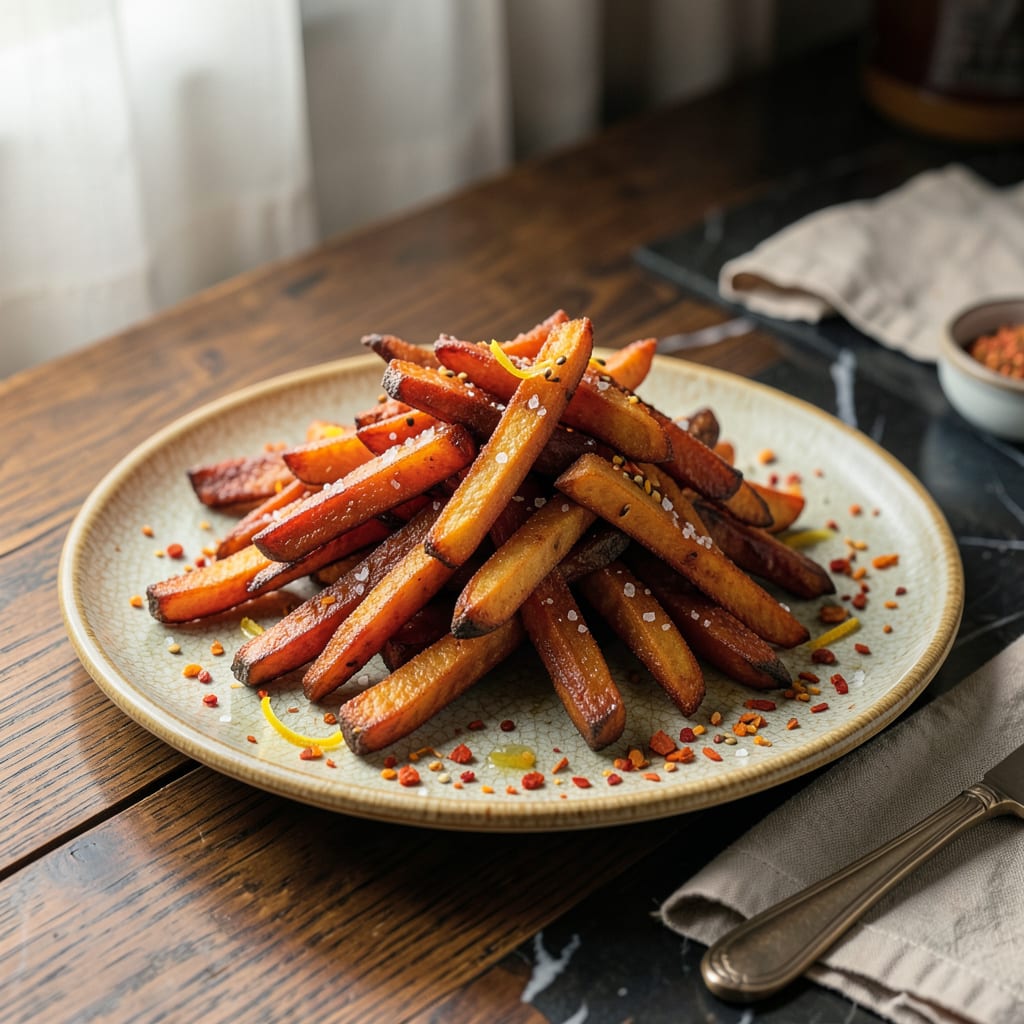
Japanese sweet potatoes transform into something extraordinary when cut into fries and cooked to crispy perfection. Their natural sweetness intensifies during cooking, creating caramelized edges that contrast beautifully with the creamy interior. This method delivers crispy results without deep frying, using precise temperature control for ideal texture.
The key lies in proper preparation: uniform cutting ensures even cooking, while a brief starch-removal soak guarantees maximum crispness. Seasoned simply with salt or elevated with Japanese-inspired spices, these fries offer addictive flavor and satisfying crunch. Serve immediately for the best textural experience, paired with complementary dipping sauces.
Ingredients for Japanese Sweet Potato Fries
Purple-skinned Japanese sweet potatoes and precise seasonings create these extraordinarily crispy, caramelized fries with minimal ingredients.
| Ingredient | Amount | Notes |
|---|---|---|
| Japanese sweet potatoes 🍠 | 2 lb | Purple-skinned, orange-fleshed variety preferred |
| Cold water 💧 | 4 cups | For starch-removal soak |
| Cornstarch 🌾 | 2 tbsp | For crispy exterior coating |
| Avocado oil 🫒 | 2 tbsp | High smoke point for roasting |
| Flaky sea salt 🧂 | 1 tsp | For finishing (Maldon recommended) |
| Shichimi togarashi 🌶️ | ½ tsp | Japanese seven-spice blend (optional) |
| Garlic powder 🧄 | ½ tsp | For savory depth |
| Onion powder 🧅 | ½ tsp | Balances sweetness |
| Black sesame seeds 🌿 | 1 tsp | Toasted, for garnish |
| Vegan mayonnaise 🥄 | ½ cup | For spicy mayo dipping sauce |
| Sriracha sauce 🔥 | 1 tbsp | Adjust for heat preference |
| Rice vinegar 🍶 | 1 tsp | For dipping sauce balance |
| Scallions 🌱 | 2 whole | Thinly sliced, for garnish |
The Japanese sweet potatoes are non-negotiable for authentic flavor and texture. Look for the purple-skinned, orange-fleshed variety at Asian markets or well-stocked grocery stores like Whole Foods or H-Mart. Their higher sugar content caramelizes beautifully during roasting. Cornstarch is essential for achieving that signature crispy exterior—Bob’s Red Mill offers a reliable, gluten-free option. Avocado oil’s high smoke point (520°F) prevents burning while promoting even browning.
For the shichimi togarashi, Kikkoman’s blend provides balanced heat and citrus notes. If unavailable, combine equal parts chili flakes, sesame seeds, and orange zest. The vegan mayonnaise should be neutral-flavored—Hellmann’s Vegan or Follow Your Heart work well. Sriracha can be replaced with gochujang (1:1 ratio) for deeper umami. Black sesame seeds add visual contrast; white sesame seeds may substitute in a pinch. Rice vinegar maintains the dipping sauce’s acidity without overpowering.
Store uncut sweet potatoes in a cool, dark place for up to 2 weeks. Once cut, soak immediately to prevent oxidation. Prepared fries are best consumed within 1 hour for optimal crispness, though they can be reheated in a 400°F oven for 5-7 minutes. The dipping sauce keeps refrigerated for 5 days—stir before serving as separation may occur.
Why You’ll Love This Recipe
- I’ll be real: the idea of skipping peeling sold me. Just scrub those purple-skinned beauties, slice, and the cornstarch bath does the rest—no fuss, all flavor.
- No-Peel Magic: I’ll be real: the idea of skipping peeling sold me. Just scrub those purple-skinned beauties, slice, and the cornstarch bath does the rest—no fuss, all flavor.
- Crispy Meets Creamy: That first bite where the edges shatter and the center melts? Dangerously addictive. The avocado oil gets them golden at 425°F while the flaky salt makes every bite sing.
- My Snack-Time Hero: Honestly, these work for everything—packed in lunchboxes (still crisp hours later!), piled next to burgers, or solo with a drizzle of mayo. Even my picky nephew devours them.
Step-by-Step Instructions for Japanese Sweet Potato Fries
Achieving the perfect balance of crispy exterior and caramelized sweetness requires precise technique and timing.
Step 1: Prepare and Soak the Sweet Potatoes
Begin by scrubbing the Japanese sweet potatoes thoroughly under cold running water to remove any dirt. I prefer to leave the skin on for added texture and nutrients. Cut them into ½-inch thick sticks, ensuring uniform size for even cooking. The key is consistency—irregular pieces will cook at different rates.
Immediately transfer the cut sweet potatoes to a large bowl and cover with the 4 cups cold water. This soak removes excess starch, which is crucial for achieving maximum crispiness. Let them soak for 30 minutes, then drain and pat completely dry with a clean kitchen towel. Any remaining moisture will create steam during roasting, preventing that coveted crispy texture.
Step 2: Season and Coat for Optimal Crispiness
In a large mixing bowl, combine the dried sweet potato sticks with the 2 tbsp cornstarch, 0.5 tsp garlic powder, and 0.5 tsp onion powder. Toss thoroughly until every piece is evenly coated. The cornstarch creates a thin, crispy crust when exposed to high heat, while the powders enhance the natural sweetness with savory depth.
Drizzle the 2 tbsp avocado oil over the seasoned sweet potatoes and toss again until uniformly coated. I prefer avocado oil for its high smoke point and neutral flavor, which allows the natural sweetness of the potatoes to shine. Spread the fries in a single layer on a parchment-lined baking sheet, ensuring they don’t touch—this promotes even browning and prevents steaming.
Step 3: Roast at High Temperature for Perfect Texture
Preheat your oven to 425°F and position the rack in the upper third of the oven. This high heat and elevated position maximize browning while cooking the interior evenly. Roast the sweet potatoes for 20-25 minutes, flipping halfway through, until the edges are deep golden brown and crispy.
Watch carefully during the final minutes—the natural sugars in Japanese sweet potatoes caramelize quickly. You’re looking for that perfect balance where the edges are crispy and slightly charred while the centers remain tender. The fries should release easily from the parchment when properly crisped. Remove from oven and immediately sprinkle with the 1 tsp flaky sea salt while still hot.
Step 4: Prepare the Spicy Mayo Dipping Sauce
While the fries roast, combine the 0.5 cup vegan mayonnaise, 1 tbsp sriracha sauce, and 1 tsp rice vinegar in a small bowl. Whisk until completely smooth and uniform in color. The vinegar cuts through the richness of the mayonnaise while the sriracha adds a subtle heat that complements the sweetness of the fries.
Taste and adjust the heat level by adding more sriracha if desired. For a smoother texture, you can strain the sauce through a fine-mesh sieve, though I prefer the slight texture from the sriracha. Transfer to a small serving bowl and garnish with a sprinkle of the 0.5 tsp shichimi togarashi for an extra layer of complexity.
Step 5: Garnish and Serve Immediately
Transfer the crispy fries to a serving platter while still hot. Sprinkle evenly with the 1 tsp black sesame seeds and thinly sliced scallions. The sesame seeds add a nutty crunch and visual contrast, while the scallions provide a fresh, oniony brightness that cuts through the richness.
Serve immediately with the spicy mayo on the side for dipping. These fries are best enjoyed fresh from the oven when the contrast between the crispy exterior and creamy interior is most pronounced. The combination of sweet, spicy, and umami flavors creates a perfectly balanced bite every time.
Flavor Customization for This japanese sweet potato fries
Sweet and Spicy Fusion
For those who love heat with their sweetness, toss the freshly roasted fries with an additional ½ tsp gochujang powder or ¼ tsp cayenne pepper before serving. The Korean chili powder adds smoky depth, while cayenne delivers pure heat. I discovered this combo during a trip to Seoul—it’s become my go-to for parties. 🌶️
Umami Bomb Seasoning
Swap the basic seasoning for 1 tbsp nutritional yeast and ½ tsp white miso powder before roasting. This creates a savory, almost cheesy flavor that’s completely plant-based. The miso powder caramelizes beautifully, adding another layer of complexity to the caramelized edges.
Citrus Zest Brightness
Add 1 tsp yuzu zest or orange zest to the cornstarch mixture before roasting. The citrus oils infuse the fries with bright, floral notes that cut through the richness. I prefer yuzu for its unique Japanese profile, but regular orange zest works wonderfully too.
Herb-Infused Variation
Toss the hot fries with 1 tbsp chopped fresh shiso leaves or cilantro right before serving. The fresh herbs add a vibrant, almost minty quality that contrasts beautifully with the sweet potatoes. Shiso is traditional in Japanese cuisine, while cilantro offers a more familiar option.
Smoky Maple Glaze
After roasting, drizzle the fries with 1 tbsp maple syrup mixed with ¼ tsp smoked paprika. Return to the oven for 2-3 minutes to caramelize. This creates a sticky, smoky-sweet glaze that’s irresistible. I learned this trick from a Canadian friend who loves poutine.
Sesame Crunch Topping
Before serving, sprinkle with 1 tbsp toasted sesame seeds and 1 tsp furikake. The combination adds nutty crunch and oceanic umami. I keep a jar of homemade furikake (sesame seeds, nori flakes, salt) in my pantry for moments like this. ✨
Nutrition Facts
Frequently Asked Questions
Why soak the sweet potatoes before cooking?
Soaking removes excess starch, which is key for achieving maximum crispiness. The 30-minute cold water soak prevents the fries from turning mushy during roasting. Skipping this step often results in soggy, steamed texture instead of crispy edges.
Can I use regular sweet potatoes instead?
Japanese sweet potatoes have higher sugar content, creating better caramelization. Regular sweet potatoes will work but won’t deliver the same deep purple skin or intensely sweet, nutty flavor. The texture may also be less creamy inside.
How do I prevent them from burning?
Watch closely during the final 5 minutes of roasting at 425°F. Flip halfway through and check for deep golden brown (not black) edges. Use the upper oven rack for even browning without scorching.
What’s the best way to reheat leftovers?
Reheat in a 400°F oven for 5-7 minutes to restore crispiness. Avoid microwaving—it makes them soggy. Spread in a single layer on a baking sheet for best results.

- 8 Bean Soup Recipe Crock Pot: Hearty Vegetable Medley in One Pot - September 25, 2026
- 4C Bread Crumbs Meatballs Recipe: Crispy Crust and Juicy Centers - September 25, 2026
- 6 Oz Chocolate Chip Cookie Recipe: Perfectly Balanced Crispy Edges and Chewy Hearts - September 25, 2026