
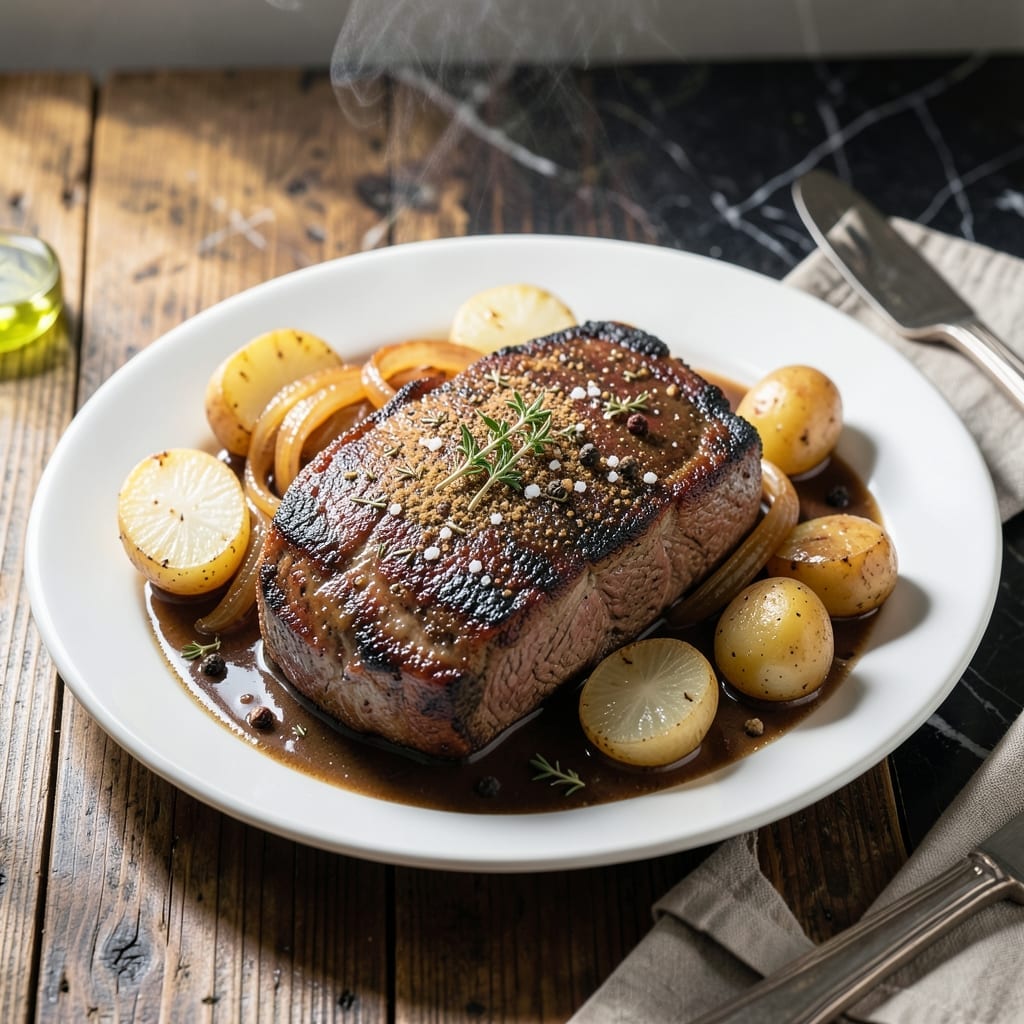
Sunday suppers demand a dish that brings everyone to the table, and this one-pot creation delivers rich, comforting flavors every time.
The slow cooking process transforms tough cuts into fall-apart tender meat, while vegetables soak up the savory juices. I’ve perfected the timing and seasoning to ensure consistent results without fuss.
What emerges is a meal that feels special yet requires minimal effort—ideal for gathering family. The aroma alone makes it worth the wait.
Serve with crusty bread or mashed potatoes to soak up every last drop of the deeply flavored sauce.
Ingredients for Kardea Brown Pot Roast
Simple ingredients transform into a rich, comforting one-pot meal everyone loves.
| Ingredient | Amount | Notes |
|---|---|---|
| Beef Chuck Roast 🥩 | 3 lb | Bone-in for extra flavor |
| Kosher Salt 🧂 | 2 tsp | Diamond Crystal preferred |
| Black Pepper 🌶️ | 1 tsp | Freshly ground coarse |
| Garlic Powder 🧄 | 1 tbsp | Not garlic salt |
| Onion Powder 🧅 | 1 tbsp | Granulated for even distribution |
| Dried Thyme 🌿 | 1 tbsp | Rubbed between fingers to release oils |
| Dried Rosemary 🍃 | 1 tbsp | Crushed lightly before using |
| Olive Oil 🫒 | 2 tbsp | Extra-virgin for searing |
| Yellow Onions 🧅 | 2 whole | Large, quartered with skin on |
| Carrots 🥕 | 4 whole | Peeled, cut into 3-inch pieces |
| Celery Stalks 🌿 | 4 whole | Cut into 3-inch pieces |
| Russet Potatoes 🥔 | 4 whole | Peeled, quartered |
| Beef Broth 🥣 | 2 cups | Low-sodium preferred |
| Red Wine 🍷 | 1 cup | Dry variety like Cabernet |
| Tomato Paste 🍅 | 2 tbsp | Double-concentrated for richness |
The beef chuck roast is non-negotiable for that fall-apart texture. Costco and Whole Foods carry excellent options with good marbling—look for pieces with visible fat streaks. The bone-in version adds depth, but boneless works if that’s what’s available. For the herbs, Penzeys offers top-tier dried thyme and rosemary, though most grocery store brands are perfectly adequate (just check the expiration date).
No red wine? Beef broth with a tablespoon of balsamic vinegar mimics the acidity. Substitute fresh thyme or rosemary at half the dried amount. If you’re out of tomato paste, one-quarter cup tomato sauce reduced by half works in a pinch. The potatoes can be Yukon Golds for a creamier texture, but Russets hold their shape better during long cooking.
Leftovers improve overnight as flavors meld. Store in an airtight container for up to 4 days in the fridge or freeze for 3 months. Reheat gently on the stove with a splash of water or broth to restore the sauce’s consistency.
Why You’ll Love This Recipe
- Set It and Forget It: I toss the chuck roast in the slow cooker with just salt, pepper, and those powders—garlic and onion do all the work while I do mine.
- Rich Beefy Depth: The garlic and onion powders melt into the meat, turning every bite into that fall-apart tender, savory goodness I crave.
- Feeds My Crew Twice: One roast, two meals—dinner tonight and sandwiches tomorrow. Honestly, it’s my budget’s best friend.
- Weeknight Hero: Between us, I’ve made this on a Tuesday with zero stress. The oven or slow cooker handles the heavy lifting.
Step-by-Step Instructions for Pot Roast
This method ensures tender beef and vegetables imbued with deep, savory flavor every time.
Step 1: Season and Sear the Beef Chuck Roast
Pat the 3 lb Beef Chuck Roast dry with paper towels. This removes surface moisture that would otherwise steam the meat instead of searing it. Season all sides generously with the 2 tsp Kosher Salt, 1 tsp Black Pepper, 1 tbsp Garlic Powder, 1 tbsp Onion Powder, 1 tbsp Dried Thyme, and 1 tbsp Dried Rosemary.
Heat the 2 tbsp Olive Oil in a heavy Dutch oven over medium-high heat until shimmering. Sear the beef for 4-5 minutes per side until deeply browned on all surfaces. The crust should be rich mahogany brown—this creates the flavor foundation through the Maillard reaction.
Step 2: Build the Flavor Base with Aromatics
Remove the seared roast and set it aside. In the same pot, add the 2 whole Yellow Onions, 4 whole Carrots, and 4 whole Celery Stalks. Cook for 5 minutes, stirring occasionally, until the vegetables begin to caramelize and develop golden edges.
This step deglazes the browned bits from the beef (the fond) while softening the vegetables. The residual oil and rendered beef fat will coat them perfectly. Add the 2 tbsp Tomato Paste and cook for 1 minute, stirring constantly, until it darkens slightly and smells intensely savory.
Step 3: Deglaze and Begin the Braise
Pour in the 1 cup Red Wine and scrape the bottom of the pot to release all the browned bits. Let it simmer for 3-4 minutes until the liquid reduces by half. The alcohol will cook off, leaving behind concentrated flavor.
Return the beef to the pot. Add the 4 whole Russet Potatoes, 2 cups Beef Broth, and any accumulated juices from the resting beef. The liquid should come about halfway up the roast. If needed, add a splash of water to reach this level.
Step 4: Slow Cook to Perfection
Bring the mixture to a gentle simmer, then reduce heat to low. Cover and cook for 3 to 3½ hours, turning the roast every 45 minutes to ensure even cooking. You’ll know it’s done when the beef shreds easily with a fork and the potatoes are fork-tender.
Maintain a slow, steady simmer—vigorous boiling will toughen the meat. The house will fill with an incredible aroma as the braising liquid transforms into a rich, velvety sauce.
Step 5: Rest and Serve
Transfer the Beef Chuck Roast to a cutting board and tent with foil. Let it rest for 15 minutes while you skim excess fat from the sauce if desired. The meat will reabsorb its juices, making every bite moist and flavorful.
Serve the pot roast sliced or shredded, surrounded by the braised vegetables and spooned with the aromatic sauce. The beef should be fall-apart tender, the potatoes buttery, and the carrots sweet with concentrated flavor from the long, slow cook.
Pro Tips For Making Kardea Brown Pot Roast
- Sear the Roast: I learned this the hard way—skipping the sear leaves the pot roast bland. Use high heat and a little oil to brown the chuck roast on all sides before adding liquids; it locks in that deep, caramelized flavor Kardea’s recipe is known for.
- Season Generously: Sounds obvious, but most people undersalt the beef. Coat the chuck roast liberally with kosher salt, black pepper, garlic powder, and onion powder—more than you think, especially since the long cook time mellows the seasoning.
- Don’t Rush the Braise: After burning a few batches, I figured out that low and slow is non-negotiable. Keep the heat at a gentle simmer—around 300°F in the oven—so the chuck roast turns fork-tender without drying out.
- Use Enough Liquid: This isn’t the prettiest method, but it works: add enough braising liquid (broth, wine, or water) to come halfway up the roast. I skip this when I’m lazy, but the meat is noticeably tougher when I do.
Common Mistakes When Making Perfect Results
Skipping the Sear
Never skip searing the 3 lb Beef Chuck Roast—this step develops the Maillard reaction, creating deep, complex flavors that define the dish. A proper sear takes 4-5 minutes per side over medium-high heat. I’ve learned the hard way that skipping this results in bland, gray meat.
Overcrowding the Pot
Using a pot that’s too small means uneven cooking and steamed, not seared, meat. A heavy Dutch oven with room for all ingredients is essential. The vegetables need space to caramelize properly, not just boil in liquid.
Not Enough Liquid
The braising liquid should come about halfway up the roast. With 2 cups Beef Broth and 1 cup Red Wine, you’ll have enough to create that rich sauce. If it looks low, add a splash of water—just don’t drown the meat.
Peeling the Onions
Leave the skin on the 2 whole Yellow Onions when quartering them. The skin adds beautiful color and subtle bitterness that balances the richness. It also helps the onions hold their shape during the long cook. 💡
Rushing the Cook
This dish needs 3 to 3½ hours of slow, steady simmering. Turning the heat too high will toughen the beef instead of making it fall-apart tender. Patience is key—I check for doneness by inserting a fork and twisting gently.
Skipping the Rest
Always let the roast rest for 15 minutes after cooking. This allows the juices to redistribute, ensuring every bite is moist and flavorful. Slicing too soon results in a dry, disappointing meal.
Nutrition Facts
Frequently Asked Questions
What’s the best cut for this dish?
Chuck roast is ideal for its marbling and connective tissue, which break down during the long cook. A 3 lb bone-in piece adds extra depth, but boneless works too.
Can I make this in a slow cooker?
Yes! Sear the meat first, then transfer everything to a slow cooker. Cook on low for 8 hours or high for 5-6 hours. The result will be just as tender.
How do I thicken the sauce?
Remove the meat and vegetables, then simmer the liquid on medium-high heat for 5-10 minutes. For a richer texture, mix 1 tbsp cornstarch with water and stir in.
Can I use a different wine?
A dry red like Cabernet works best, but any dry red will do. Avoid sweet wines—they’ll make the sauce cloying. In a pinch, use extra broth with 1 tbsp balsamic vinegar.

- 4C Bread Crumbs Meatballs Recipe: Crispy Crust and Juicy Centers - September 25, 2026
- 6 Oz Chocolate Chip Cookie Recipe: Perfectly Balanced Crispy Edges and Chewy Hearts - September 25, 2026
- 6-Inch Coffee Cake Recipe: Vanilla Bean Swirls and Buttery Streusel Topping - September 25, 2026