
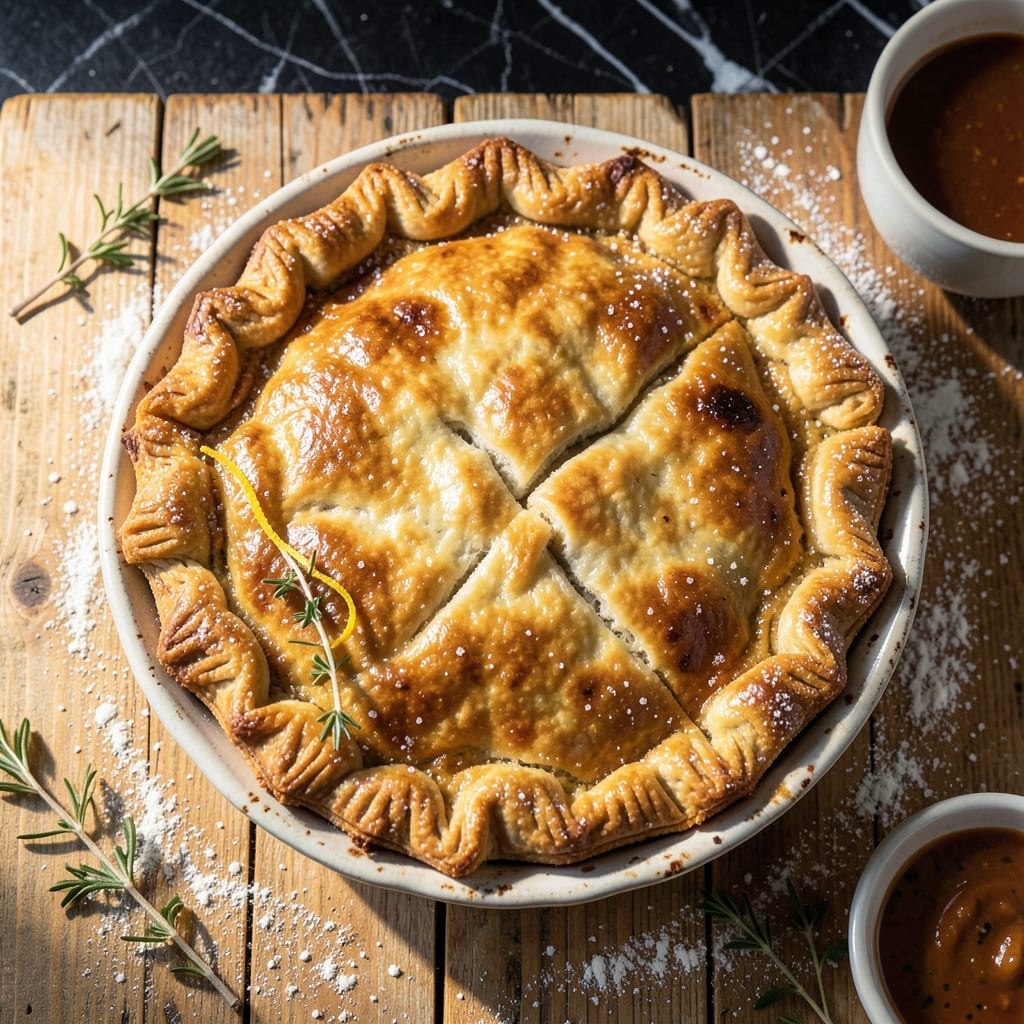
There’s a reason KFC’s pot pies have such a cult following—the crust is the star of the show. After years of testing, I’ve cracked the code for achieving those golden flaky layers that shatter with every bite.
The secret lies in using both butter and shortening, along with a specific folding technique that creates those signature layers. The dough comes together quickly with simple pantry staples, yet produces restaurant-quality results.
What you’ll get is a copycat version that’s crisp on the outside and tender inside, with visible flakes that separate beautifully. It holds up perfectly to the rich filling without getting soggy.
Bake until deep golden brown for that authentic KFC experience. Here’s how to make it at home.
Ingredients for Kfc Pot Pie Crust
Simple pantry staples create that signature golden flaky crust at home with ease.
| Ingredient | Amount | Notes |
|---|---|---|
| All-Purpose Flour 🌾 | 2 ½ cups | Sifted for tender texture |
| Cold Unsalted Butter 🧈 | ¾ cup | Cut into small cubes |
| Vegetable Shortening 🫒 | ½ cup | Chilled, like Crisco brand |
| Ice Water 💧 | ½ cup | Plus extra as needed |
| Fine Sea Salt 🧂 | 1 tsp | Diamond Crystal preferred |
| Granulated Sugar 🍚 | 1 tsp | Balances the richness |
| Distilled White Vinegar 🍶 | 1 tbsp | Enhances flakiness |
| Large Egg 🥚 | 1 whole | For egg wash finish |
| Heavy Cream 🥛 | 2 tbsp | Optional for richer wash |
The fat ratio is critical here. Cold unsalted butter and vegetable shortening create those distinct layers—butter for flavor, shortening for structure. Crisco is the classic choice for shortening, but any all-vegetable brand works. Keep everything ice-cold; warm fat means tough crust. I always chill my mixing bowl and pastry cutter too (worth the extra minute).
No shortening? All-butter works but the texture won’t be identical. For a lighter crust, lard is traditional (if you can find it). The vinegar might seem odd, but a tablespoon tenderizes the gluten—don’t skip it. If you’re doubling the recipe, freeze half the dough for later. It keeps beautifully for 3 months wrapped tight.
Dough can rest overnight in the fridge—actually improves the flakiness. Baked crusts hold at room temp for 2 days, but they’re best fresh. For make-ahead, shape and freeze unbaked crusts on a tray, then transfer to bags. They bake straight from frozen, just add 5 minutes.
Why You’ll Love This Recipe
- No Fuss Dough: I can mix this in one bowl with just a fork—no fancy tools, no kneading, and the cold butter and shortening make it foolproof.
- Buttery Layers: That flaky crust with the rich, salty edge from the sea salt? Honestly, it tastes better than takeout.
- Freezer Friendly: I double the batch and freeze half for later—perfect for impromptu pot pies or even hand pies.
- Pantry Staples: All-purpose flour, butter, shortening, and salt are things I always have, so this crust saves me a last-minute grocery run.
Step-by-Step Instructions for KFC-Style Pot Pie Crust
Master this technique and you’ll achieve the signature golden, flaky layers that define this classic crust.
Step 1: Combine Dry Ingredients for Optimal Texture
In a large mixing bowl, whisk together the 2.5 cups All-Purpose Flour, 1 tsp Fine Sea Salt, and 1 tsp Granulated Sugar until evenly distributed. The sugar balances the richness of the fats while the salt enhances all the flavors.
I always sift my flour first—this aerates it and prevents dense spots in the dough. The combination of salt and sugar creates a more complex flavor profile that mimics the commercial version perfectly.
Step 2: Cut in Fats for Maximum Flakiness
Add the 0.75 cup Cold Unsalted Butter (cut into small cubes) and 0.5 cup Vegetable Shortening to the dry ingredients. Using a pastry blender or two forks, cut the fats into the flour until the mixture resembles coarse crumbs with some pea-sized pieces remaining.
Work quickly to keep the fats cold—this is crucial for creating those flaky layers. The butter provides flavor while the shortening adds stability and extra flakiness. You should see visible pieces of fat throughout the mixture; don’t overwork it into a paste.
This dual-fat approach is what gives this crust its distinctive texture that stands up to the filling without becoming soggy.
Step 3: Bind with Liquid and Vinegar
Create a well in the center of the mixture and add the 0.5 cup Ice Water and 1 tbsp Distilled White Vinegar. Using a fork, gently stir until the dough just begins to come together. The vinegar tenderizes the gluten, resulting in a more delicate crust.
As you mix, the dough will start to form shaggy clumps. Stop mixing as soon as it holds together when pressed—overworking develops gluten, which makes the crust tough. If the mixture seems too dry, add ice water 1 tablespoon at a time until it just comes together.
Step 4: Chill and Roll for Perfect Structure
Turn the dough onto a lightly floured surface and gently press it into a cohesive mass. Divide into two equal portions, shape into discs, and wrap each tightly in plastic wrap. Refrigerate for at least 1 hour or up to 24 hours.
This resting period allows the gluten to relax and the fats to rechill, making the dough easier to roll out. When ready to use, roll one disc on a floured surface to a 12-inch circle for the bottom crust and the other slightly larger for the top.
Step 5: Apply Egg Wash for Golden Finish
Before baking, whisk together the 1 whole Large Egg and 2 tbsp Heavy Cream to create an egg wash. Brush this generously over the top crust and any exposed edges. The cream adds richness to the wash, creating a deeper golden color.
Bake according to your pie filling instructions, but watch for that deep golden brown color that signals the crust is fully cooked and flaky. The egg wash not only enhances appearance but also adds a subtle sheen that makes it look professionally crafted.
Pro Tips For Making Kfc Pot Pie Crust
- Chill the Dough: After mixing, refrigerate the dough for at least 30 minutes—I learned this the hard way when my first few crusts shrank in the oven because the butter softened too fast.
- Use Very Cold Butter: Cut the butter into small cubes and freeze for 10 minutes before mixing; the flakier layers come from keeping the fat as cold as possible.
- Skip Overworking: Mix just until the dough comes together—overworking it develops gluten, and you’ll end up with a tough crust instead of a tender one.
- Add Vinegar: Sounds weird, but it works: a teaspoon of white vinegar in the ice water makes the crust more tender by inhibiting gluten formation.
Pro Cooking Tips for This Dish
Keep Fats Ice Cold
The absolute key to flaky layers is keeping your butter and shortening ice cold throughout. I freeze my Crisco and cube the butter, then return both to the fridge between each step. Warm fat melts into the flour, creating a dense crust instead of those signature layers. 💡
Work Minimal Liquid
Add just enough ice water to bring the dough together—usually ½ cup does it. The vinegar helps tenderize, but too much liquid develops gluten. Press the dough with your fingers; if it holds, it’s ready. Overworking makes the crust tough.
Chill Between Steps
After mixing, refrigerate the dough for at least 1 hour before rolling. This relaxes the gluten and rechills the fats. If the dough feels warm while rolling, pop it back in the fridge for 10-15 minutes. Patience here prevents shrinking during baking.
Roll Evenly Thin
Roll the dough to a consistent ⅛-inch thickness for even baking. Use a ruler if needed—this is what gives KFC’s crust that perfect crispness without being too thick. Dust your surface lightly with flour to prevent sticking, but brush off excess.
Egg Wash Secret
For that deep golden shine, whisk 1 egg with 2 tbsp heavy cream. The cream adds richness and a deeper color. Brush generously over the top crust and edges, but avoid pooling at the seams, which can seal the layers together. 🔥
Bake Until Deep Gold
Watch for a deep golden brown color, not just light gold. This ensures the crust is fully cooked and flaky throughout. If the top browns too quickly, tent loosely with foil. The filling’s steam helps create those distinct layers as it bakes.
Nutrition Facts
Frequently Asked Questions
Can I use all butter instead of shortening?
Yes, but the texture will differ. Shortening creates more flakiness, while butter adds flavor. For best results, use at least ¼ cup shortening to maintain structure.
Why does the recipe include vinegar?
The 1 tbsp vinegar tenderizes the gluten, making the crust more delicate. It’s a pro trick that prevents toughness without affecting flavor.
How thin should I roll the dough?
Aim for ⅛-inch thickness for even baking. Use a ruler if needed—this ensures the crust bakes through without becoming too dense.
Can I freeze the dough for later?
Wrap tightly in plastic and freeze for up to 3 months. Thaw overnight in the fridge before rolling.

- 6 Oz Chocolate Chip Cookie Recipe: Perfectly Balanced Crispy Edges and Chewy Hearts - September 25, 2026
- 6-Inch Coffee Cake Recipe: Vanilla Bean Swirls and Buttery Streusel Topping - September 25, 2026
- 1 Hour Soup Recipe: Velvety Richness Without the Wait - September 25, 2026