
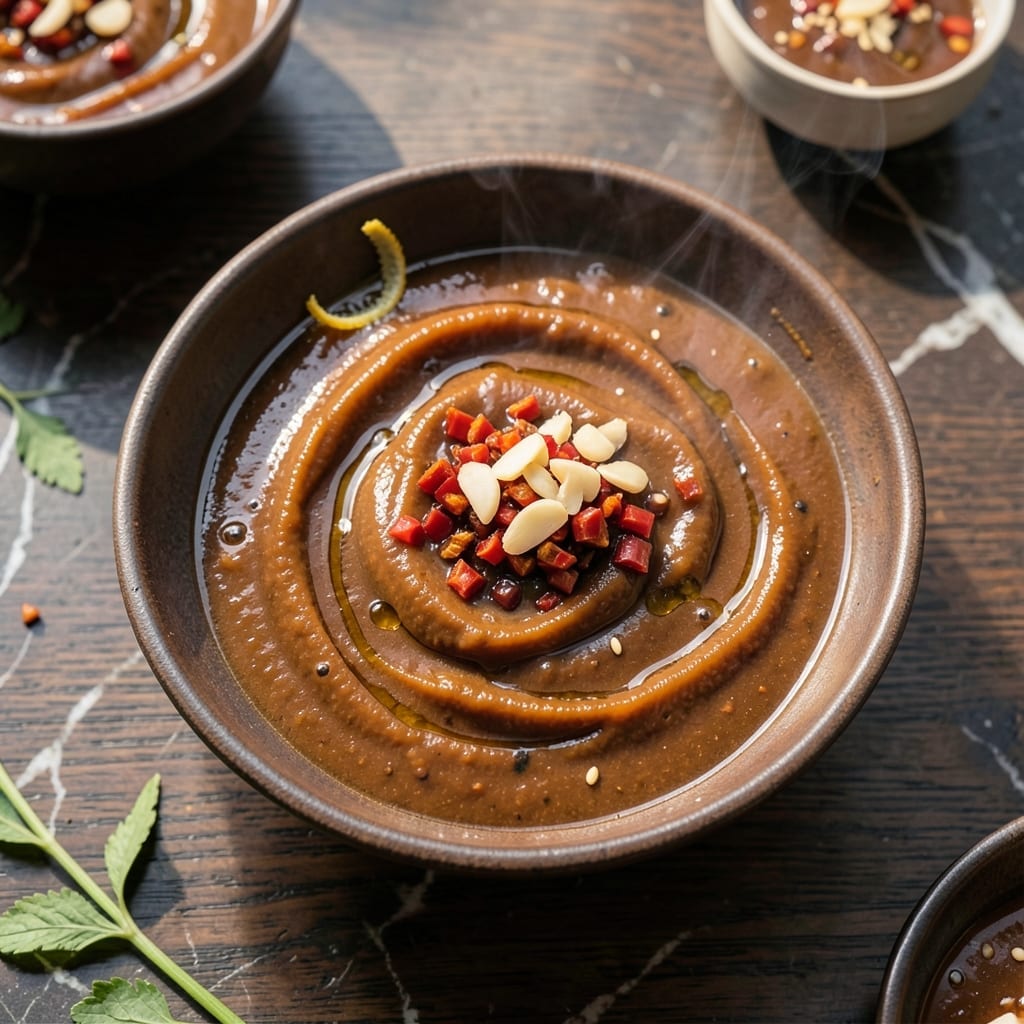
This Korean hot pot sauce delivers the perfect balance of spicy heat and umami depth that transforms any dipping experience.
I developed this recipe to capture the complex flavors of traditional Korean ssamjang while keeping it simple enough for home cooks. The combination of gochujang, doenjang, and aromatics creates a sauce that’s both bold and balanced.
What makes this sauce special is its versatility—use it for hot pot, grilled meats, or as a dipping sauce for vegetables. The flavors deepen after sitting for a few hours, making it even better the next day.
Store in an airtight container in the refrigerator for up to a week, though it rarely lasts that long.
Ingredients for Korean Hot Pot Sauce
Nine essential ingredients bring authentic Korean hot pot flavor to your table with ease.
| Ingredient | Amount | Notes |
|---|---|---|
| Gochujang 🌶️ | ½ cup | Korean red chili paste |
| Doenjang 🫘 | ¼ cup | Korean fermented soybean paste |
| Sesame Oil 🫒 | 2 tbsp | Toasted for depth |
| Rice Vinegar 💧 | 2 tbsp | For acidity balance |
| Garlic Cloves 🧄 | 4 cloves | Minced finely |
| Fresh Ginger 🌿 | 1 tbsp | Grated or minced |
| Green Onions 🧅 | 4 whole | Thinly sliced, green parts only |
| Sesame Seeds 🌰 | 1 tbsp | Toasted for garnish |
| Sugar 🍯 | 1 tbsp | Or honey for sweetness |
The gochujang and doenjang are non-negotiable for that authentic flavor—look for them in the Asian aisle at Whole Foods or H Mart. I prefer Sempio or Chung Jung One brands for consistent quality. The sesame oil should be toasted (it’s darker and more aromatic), and Kadoya is a reliable brand. Fresh ginger and garlic make a difference here, so don’t reach for the powdered stuff.
No gochujang? Sriracha plus a little miso paste can work in a pinch, though the flavor won’t be the same. Out of doenjang? Miso paste at double the amount gets you close. The sugar can be swapped for honey or maple syrup. Green onions can be subbed with chives, but the sesame seeds are worth hunting down—they add the perfect crunch.
This sauce keeps in the fridge for about 1 week in an airtight container. The flavors actually improve after 24 hours as everything melds together. Freezing isn’t recommended—it can separate and lose texture.
Why You’ll Love This Recipe
- Five-Minute Mix: I just dump gochujang, doenjang, a splash of sesame oil, rice vinegar, and crushed garlic in a bowl—no cooking, no fuss.
- Umami Bomb: The doenjang adds a deep, salty richness while the garlic and gochujang bring that addictive spicy-sweet kick.
- Hot Pot Hero: I slather it on everything from tofu to beef at the table, and it turns a simple spread into a feast.
- Stays Fresh: Honestly, it keeps in the fridge for weeks, so I always have that bold, tangy flavor ready for my next meal.
Step-by-Step Instructions for Korean Hot Pot Sauce
This method delivers balanced spicy, umami, and tangy flavors in a smooth, versatile dipping sauce.
Step 1: Combine the Fermented Pastes
In a medium mixing bowl, add the 0.5 cup Gochujang and 0.25 cup Doenjang. These two pastes form the flavor foundation—gochujang brings the heat and sweetness, while doenjang adds deep umami complexity.
Use a silicone spatula to blend them thoroughly until you see no streaks of either paste. The mixture will be thick and slightly sticky. This step ensures even distribution of flavors throughout the sauce, so take your time to combine them completely.
Step 2: Incorporate the Liquid Components
Drizzle in the 2 tbsp Sesame Oil and 2 tbsp Rice Vinegar. The sesame oil adds nutty depth, while the rice vinegar cuts through the richness with bright acidity.
Stir vigorously for 1-2 minutes until the mixture becomes smooth and glossy. You’ll notice the sauce lighten slightly in color as the liquids incorporate. If it appears too thick, let it sit for 5 minutes—the vinegar will help thin it naturally.
Step 3: Add Aromatics for Freshness
Fold in the 4 cloves Garlic Cloves (minced finely) and 1 tbsp Fresh Ginger (grated or minced). These aromatics add sharp, fresh notes that balance the fermented pastes.
Press the garlic and ginger into the sauce with the back of your spoon to release their oils. The mixture should become fragrant immediately. Let it rest for 5-10 minutes to allow the raw edge of the garlic to mellow slightly.
Step 4: Finish with Sweetness and Garnish
Stir in the 1 tbsp Sugar until fully dissolved. Taste and adjust—if you prefer more sweetness to balance the heat, add a pinch more, but don’t overdo it. The sugar should complement, not overpower.
Fold in the 4 whole Green Onions (thinly sliced, green parts only) and 1 tbsp Sesame Seeds (toasted). The green onions add a mild oniony crunch, while the sesame seeds provide texture and visual appeal. Reserve a pinch of sesame seeds for garnish if desired.
Let the sauce sit for 15-20 minutes before serving to allow all the flavors to meld together. The final product should be thick but pourable, with a deep red-brown color and a complex aroma that hints at its layered flavors.
Pro Tips For Making Korean Hot Pot Sauce
- Toast the Gochujang: Heat the gochujang in the pan for 1-2 minutes before adding liquids—this deepens the flavor and removes the raw paste taste. I learned this the hard way after wondering why my sauce always tasted flat.
- Mince Garlic Fine: Chop the garlic cloves as finely as possible, almost to a paste. Larger pieces will overpower the sauce with sharp, uneven bites instead of a balanced flavor.
- Balance the Doenjang: Taste as you add doenjang and adjust with a splash of rice vinegar if it’s too salty or thick. My grandmother swore by this, and she was right: the sauce should be tangy, not harsh.
- Finish with Sesame Oil: Stir in the sesame oil at the very end, off the heat. Adding it too early can make the sauce bitter—sounds weird, but it works.
Flavor Customization for This korean hot pot sauce
Extra Spicy Kick
Add 1-2 tbsp gochugaru (Korean chili flakes) for intense heat without altering the sauce’s texture. I find this enhances the gochujang’s fire while keeping the balance. For maximum spice, mix in 1 tsp cayenne pepper as well. 🌶️
Nutty Depth
Boost the umami by stirring in 1 tbsp tahini or 1 tbsp peanut butter. This adds a creamy, nutty layer that pairs beautifully with grilled meats. The tahini blends smoothly, while peanut butter adds a slight sweetness.
Citrus Brightness
For a tangier twist, replace the rice vinegar with 2 tbsp fresh lime juice or 1 tbsp yuzu juice. The citrus lifts the fermented flavors and cuts through the richness. I love how lime adds a zesty pop.
Herbal Notes
Add 1 tbsp finely chopped cilantro or 1 tsp Korean perilla leaves for freshness. These herbs brighten the sauce and add a layer of complexity. Cilantro works well for a modern fusion touch.
Sweet Heat
Swap the sugar for 1 tbsp honey or 1 tbsp maple syrup for a deeper, more complex sweetness. This pairs especially well with the spicy elements. I prefer honey for its floral notes. 💛
Smoky Touch
Incorporate ½ tsp smoked paprika or 1 tsp liquid smoke for a BBQ-inspired variation. This adds a subtle smokiness that complements grilled proteins beautifully. Just a pinch goes a long way.
Nutrition Facts
Frequently Asked Questions
Can I make this sauce less spicy?
Yes! Reduce the gochujang to 1/4 cup and add 1 tbsp mild miso paste for depth without heat. The doenjang already provides umami, so the flavor remains balanced.
What’s the best way to store leftover sauce?
Keep it in an airtight container in the fridge for up to 1 week. The flavors actually improve after 24 hours as they meld together. Avoid freezing, as it can separate the ingredients.
Can I use this for non-hot pot dishes?
It works great as a marinade for meats, a dipping sauce for dumplings, or a dressing for cold noodles. Its bold, balanced flavors complement many dishes.
Is there a substitute for doenjang?
Use 2 tbsp miso paste mixed with 1 tsp soy sauce for a similar umami kick. While not identical, this combo comes close in both flavor and texture.

- 6 Oz Chocolate Chip Cookie Recipe: Perfectly Balanced Crispy Edges and Chewy Hearts - September 25, 2026
- 6-Inch Coffee Cake Recipe: Vanilla Bean Swirls and Buttery Streusel Topping - September 25, 2026
- 1 Hour Soup Recipe: Velvety Richness Without the Wait - September 25, 2026